
Practice
337 entries in 2025 · oldest first
So, who’s really calling the shots?
After working as a yoga professional inside innumerable agencies and organizations, I think there’s a way to help find a deeper value to your practice. It means getting real.
Embrace the Yoga Executive Mindset: Lead Your Practice and Life with Purpose.
Check it out at mjh.yoga/portal
IN WASHINGTON, DC,
michaeljoelhall
MICHAEL JOEL HALL
Ashtanga Yoga Teacher, Shala Director, and Founder
AND PEOPLE WHO ARE
Need a quick getaway that lets you:
focus on practice
disconnect from screens
enjoy the perfect beaches
explore chill urban vibes
MINI RETREAT JAN 17-20
Join me in Playa del Carmen, my second home, for a low key affair designed with care and intention.
This is your chance to dive in.
January 18–20, 2025
March 3–8, 2025
May 22–26, 2025
MINI RETREAT JAN 17-20
01. Semi-Private Mysore Sessions
Small groups and intimate vibes. Get the support you want.
02. Cold Plunge Therapy
3 Minutes a day can totally change your general outlook– its wild.

Systems Thinking and Spiritual Practice
In both teaching and personal growth, one of the most powerful tools I have come to rely on is systems thinking. At its core, systems thinking is about seeing the interconnectedness of everything. It is a way of viewing the world, not as a collection…
Read the essay →#Cognition #BetterChoices"

The Philosophical Underpinnings of Pranayama
Join us on a profound journey as we delve into the essence of Pranayama, the fourth limb of yoga, where breath intertwines with life force. Explore the subtle anatomy of energy—understanding how prana, the vital life force, flows through nadis and aligns with chakras. Discover how mastering the breath not only enhances physical vitality but also fosters emotional and mental clarity. This exploration promises to unravel the philosophical depths of breath practices, inviting you to breathe deep and awaken your inner energy.
Read the essay →
Counted Method: A Beginner’s Guide to Ashtanga Yoga’s Vinyasa System
The art of Vinyasa—the beautiful dance of breath and movement—can elevate your practice from mere physicality to a profound meditation in motion. Uncover the essence of the Counted Method, where each inhale and exhale is harmoniously synchronized with every pose, guiding you toward mindfulness and self-awareness. Whether you're a curious newcomer or seeking to deepen your understanding, this guide offers insights and practical tips to help you connect with the rhythm of your practice and embrace the soul of Ashtanga yoga.
Read the essay →
Striving in Yoga: Healthy Ambition vs. Ego-Driven Competition
Yoga, as a practice, has the potential to transform both the body and the mind. It encourages practitioners to explore their edges, deepen their awareness, and grow in their abilities. However, there is a fine line between healthy ambition and ego-driven competition—one that, when crossed, can lead to burnout, disillusionment, and even injury. Striving is a natural human behavior, but in yoga, it requires careful attention. When ambition is fueled by ego rather than by a genuine desire for growth, it distorts the practice and detracts from yoga's deeper spiritual goals.
Read the essay →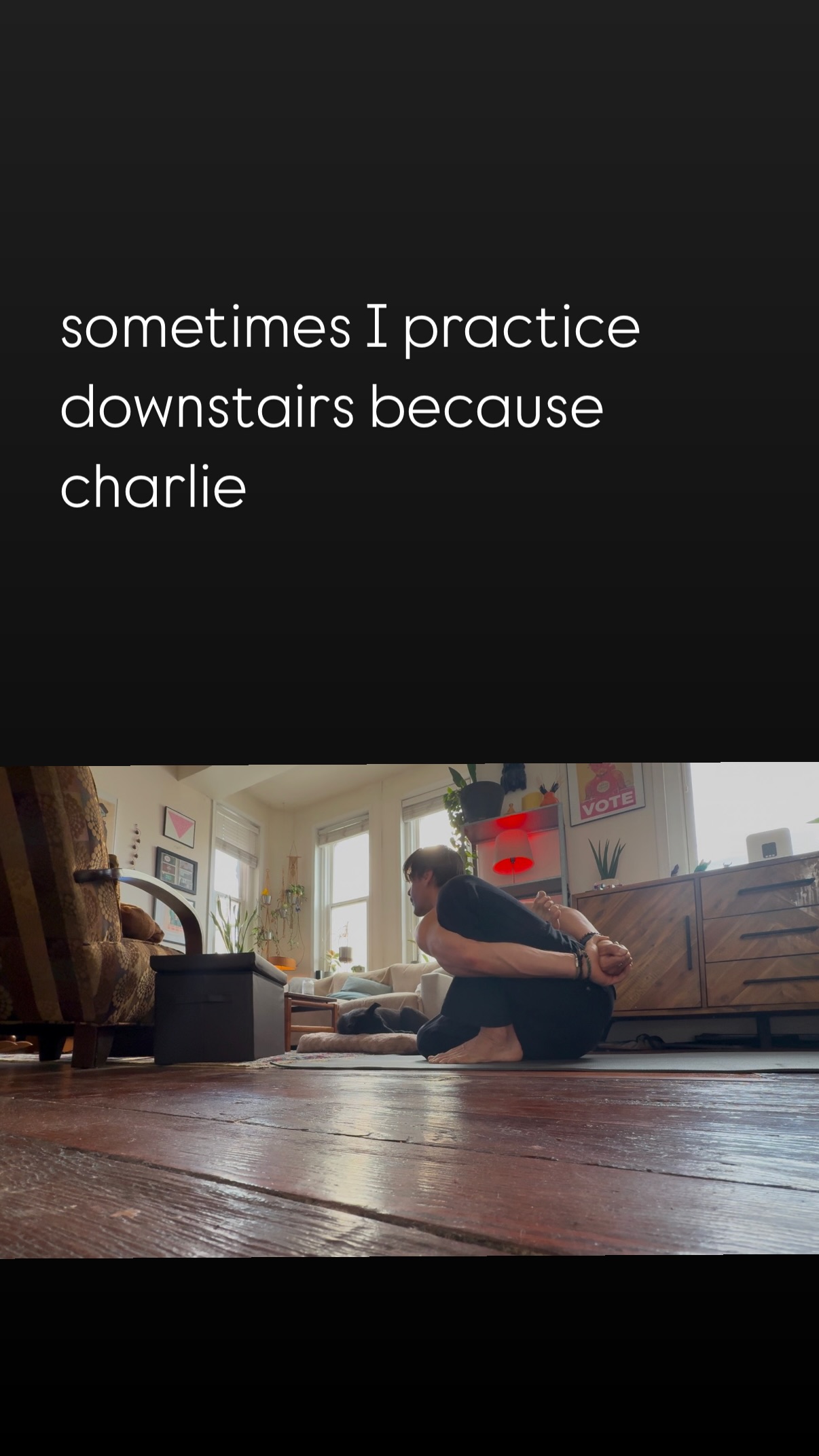
downstairs because
charlie
VOTE

Buzzing into Calm: Mastering Brahmari Pranayama for Inner Peace
Discover the harmonious practice of Brahmari Pranayama, where the gentle buzzing sound of your breath leads you on a transformative journey towards inner peace. In our latest blog, "Buzzing into Calm," we explore how this unique vocal meditation not only balances the throat chakra but also enhances your emotional resilience, clears the mind, and prepares you for deeper meditation. Whether you're looking to soothe anxiety, improve concentration, or simply cultivate an oasis of calm amidst the chaos, Brahmari is a simple yet powerful tool that anyone can master. Join us as we delve into step-by-step instructions, benefits, and the profound effects of this practice on your overall well-being.
Read the essay →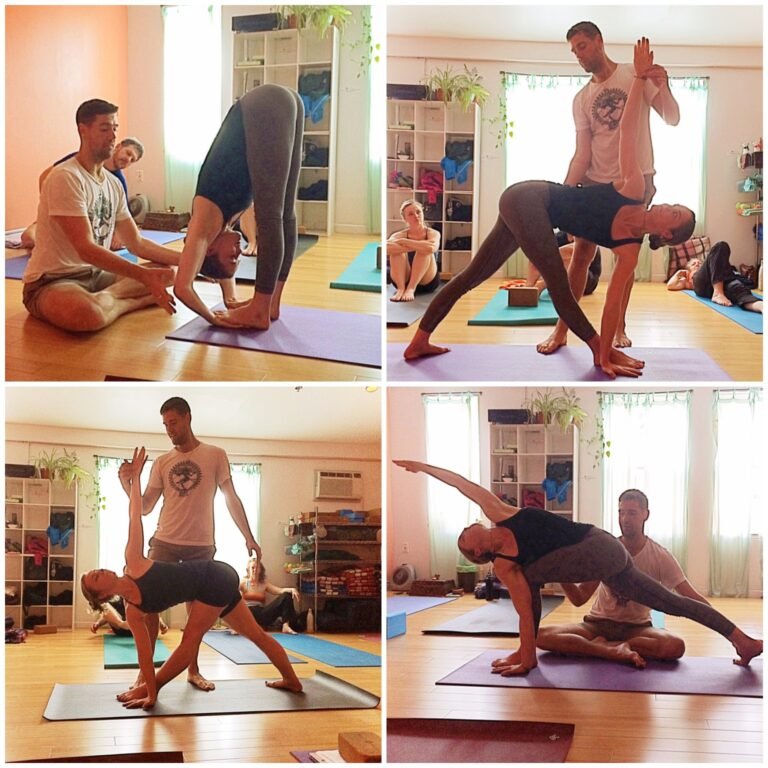
Understanding Mysore Style Ashtanga Yoga: A Practical Guide for Beginners
Step onto the mat and embark on a transformative journey with Mysore Style Ashtanga Yoga, a practice steeped in rich tradition and personal growth. Originating from the vibrant heart of Mysore, India, this unique approach to yoga emphasizes individualized instruction, mindful movement, and a deep connection between breath and body. In our latest blog post, "Understanding Mysore Style Ashtanga Yoga: A Practical Guide for Beginners," we delve into the fundamental elements that make this style so captivating. From personalized guidance that nurtures your unique abilities to the meditative Tristhana method, you'll uncover how each aspect contributes to a profound experience of self-discovery. Whether you're new to yoga or looking to deepen your practice, this guide will illuminate the path towards independence and mastery. Join us as we explore the significance of regular practice and the beauty of progressing at your own pace—an invitation to cultivate clarity, discipline, and mindfulness both on and off the mat. Ready to dive in? Let's unveil the secrets of Mysore Style Ashtanga Yoga together!
Read the essay →UNLOCK SELF
BEYOND OUR OWN

Embracing Change Through Our Ashtanga Practice
I want to acknowledge the challenges many of you may be experiencing. It’s a time of uncertainty, and I understand how it can impact our mental and emotional states. To support you during this period, I’ve updated our newsletter to include a more robust collection of writings focused on wisdom from our practice, as well as systems and processes that can enhance our journey together in Ashtanga Yoga. My intention is to provide you with resources that not only nourish your practice but also offer insights and reflections that can help us navigate these turbulent times.
Read the essay →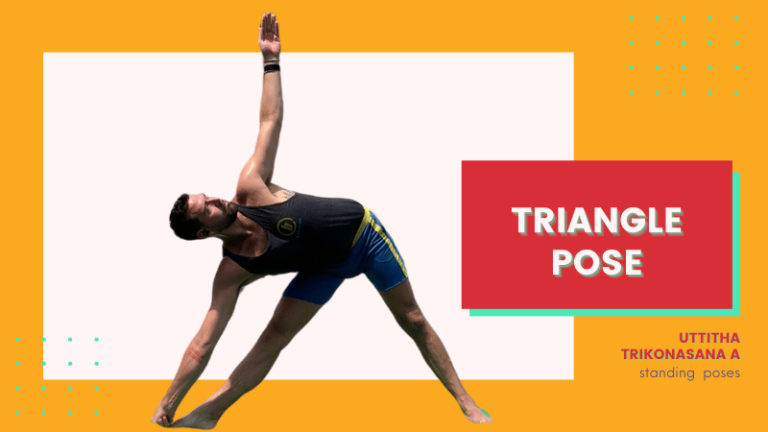
Mastering Uttitha Trikonasana A & B: The Art of the Count in Ashtanga Yoga
Uttitha Trikonasana A & B in Ashtanga Yoga where the art of counting becomes a meditative practice. Explore how the rhythm of breath aligns with each movement, fostering not only physical strength but also mental clarity.
Read the essay →PATH TO CLEAR
MICHAEL JOEL HALL
Ashtanga Yoga Teacher, Shala Director, and Founder
COGNITIVE BIASES
Trust is the connective tissue that holds us together—it allows us to share our challenges and triumphs openly.
By fostering an environment where honesty and compassion coexist, we enable students to engage deeply with their practice. This approach not only enhances individual growth but also strengthens the collective experience.
When we embrace radical candor, we create a feedback loop that nurtures personal development while reinforcing trust. Together, we can navigate the complexities of Ashtanga yoga with clarity and support.
💜✨
#MJHYoga #RadicalCandor #CommunityBuilding #Mysore
A TEACHER WHO
YOU SAY IT WITH
AFTRA, HAS LONG
MICHAEL JOEL HALL
Ashtanga Yoga Teacher, Shala Director, and Founder
HAVE WORKED IN THE
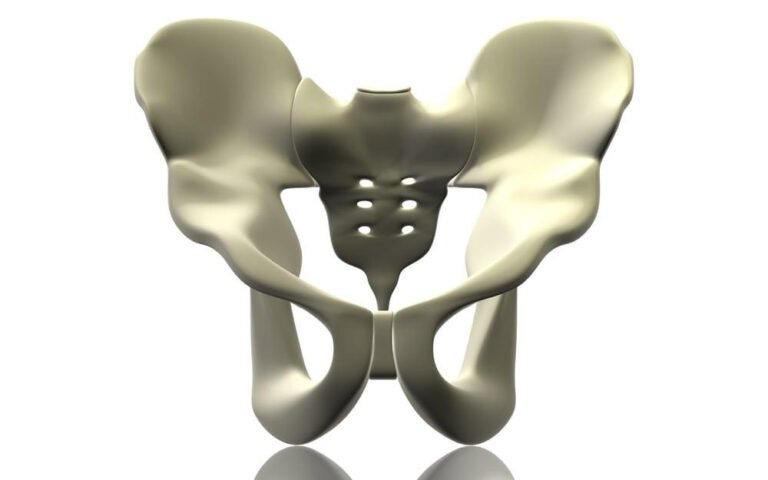
Unlocking Mobility: Mastering Hip Joint Internal Rotation for Enhanced Ashtanga Practice
Discover the transformative power of hip joint internal rotation in your Ashtanga yoga practice! Often overlooked, this vital movement can significantly enhance your strength, flexibility, and alignment across various postures—from deep squats to seated poses like Padmasana. In this insightful blog post, we explore the importance of mastering hip joint internal rotation, how to assess your current mobility, and targeted practices that will unlock new levels of openness in your body. Join me on a journey to elevate your yoga practice by embracing this fundamental aspect of mobility!
Read the essay →
Yoga Enhances Health and Physiological Well-Being
Ashtanga yoga serves as a powerful ally in enhancing health and fostering physiological well-being. From preventative care to symptomatic relief, discover the multifaceted ways in which yoga strengthens our bodily systems and promotes emotional balance. This insightful journey reveals how each practice not only revitalizes physical strength and flexibility but also nurtures mental clarity and emotional resilience. Join us in understanding how this ancient practice can harmonize your life, one breath at a time.
Read the essay →
Overcome Burnout: Reclaim Your Energy with Ashtanga Yoga
Are you feeling overwhelmed and burnt out? Visit michaeljoelhall.com/coaching to book a session if you'd like to chat about your practice.
Read the essay →
Embracing the Tristhana Method: A Beginner’s Guide to the Heart of Ashtanga Yoga
Discover the Tristana method in Ashtanga Yoga, where posture, breath, and focus unite to transform your practice into a meditative and introspective journey.
Read the essay →
Five Unexpected Ways Radical Candor Can Make You a Better Yoga Teacher
Many yoga students walk into class thinking they need to “perform” the poses perfectly. If they struggle, they feel like they’ve failed. But when you use Radical Candor—balancing direct feedback with genuine care—you shift their mindset from perfection to progress. Instead of saying, “That alignment is off,” try: ✔ “I love how focused you are—let’s adjust your stance a little so you can move with more ease.” This tells them you see their effort and want to help them grow, not just critique their form. Let's explore a few more.
Read the essay →
Understanding the Count in Uttitha Parsvakonasana A & B
The counts in Uttitha Parsvakonasana A and B. Discover how these rhythmic breath counts can anchor your practice, creating a seamless flow between movement and mindfulness. With detailed insights on posture, breath, and anatomy, this blog invites you to deepen your connection to each pose. Elevate your practice—one count at a time.
Read the essay →
Power Dynamics in Mysore Style Ashtanga Yoga
This is a video about Power Dynamics in Mysore Style Ashtanga Yoga. Reach out if you want some coaching for you practice. https://michaeljoelhall.com/coaching 00:00 Introduction to Shifting Power Dynamics in Ashtanga Yoga 00:06 The Guru-Disciple Model of the Past 00:23 The Rise of Critical Engagement 00:40 The Need for Autonomy and Self-Organization 00:57 Reckoning with Past and Present Abuses 01:07 Empowering Students in Modern Practice 01:20 Evolving Authority into Responsibility 01:30 Building a Partnership in Teacher-Student Relationships 01:39 Moving Forward: Mutual Respect and Earned Trust
Read the essay →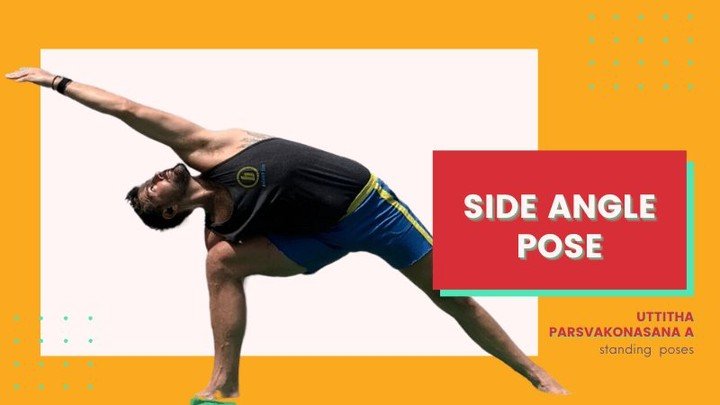
Link to website: https://michaeljoelhall.com/understanding-the-count-in-uttitha-parsvakonasana-a-b/
Adapting Ashtanga Yoga for Life Long Practice
For many, Ashtanga yoga may evoke images of youthful, flexible practitioners twisting gracefully into challenging poses. This perception, deeply rooted in yoga's modern history, suggests that the practice is predominantly tailored for the young and resilient. This belief, however, overlooks an essential truth about yoga's adaptability and its potential as a lifelong practice.
Read the essay →
Understanding the Causes of Suffering
In our journey through life, we often find ourselves entangled in a myriad of struggles, yet beneath these layers lies a singular root cause—avidya, or ignorance. This profound teaching from Yoga Philosophy invites us to explore the intricate relationship between our perceptions of self and the sources of our suffering. As we delve into the depths of dukkha and sukha, we uncover the transformative power of understanding how our thoughts shape our reality.
Read the essay →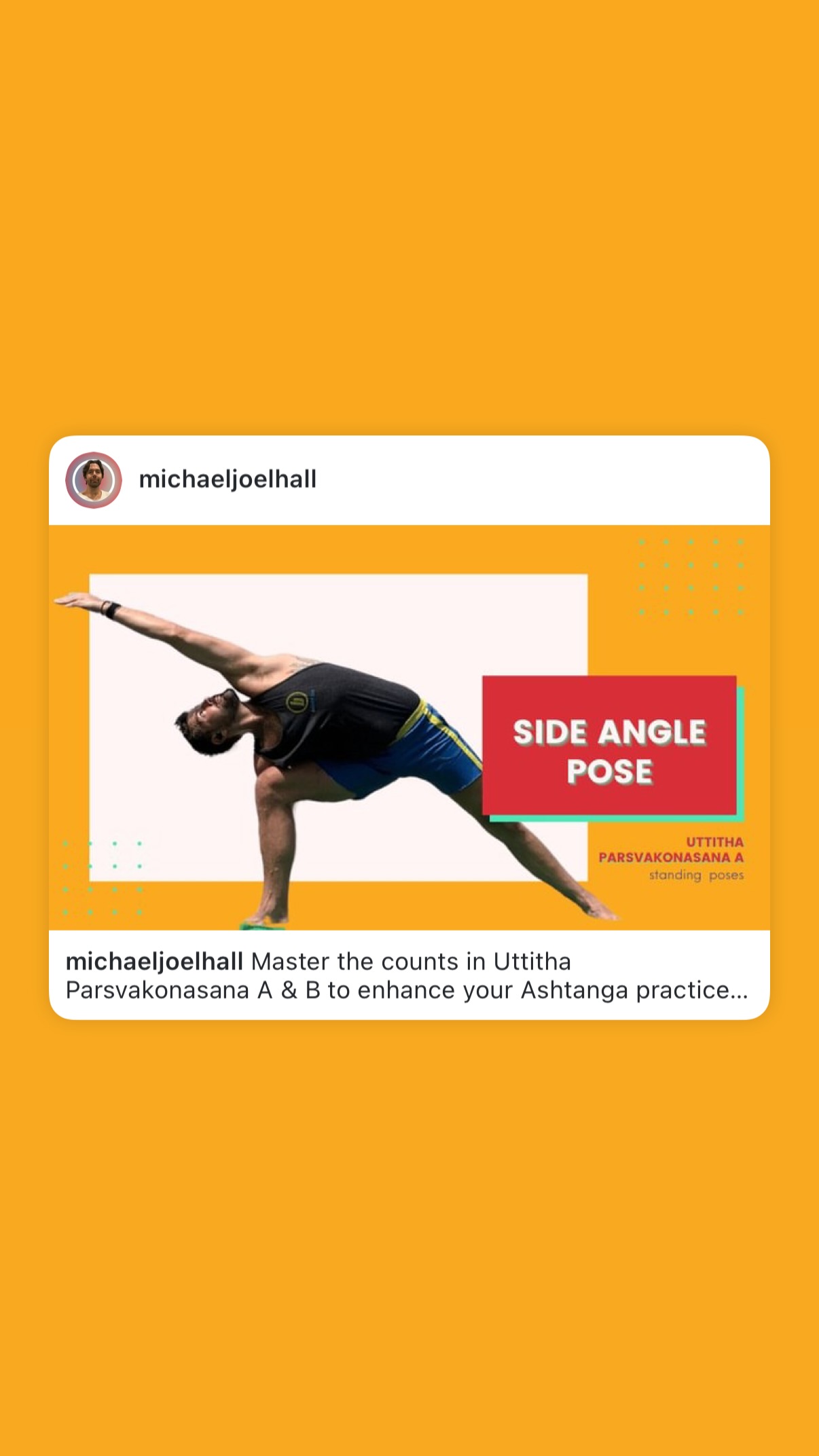
SIDE ANGLE
POSE
UTTITHA
PARSVAKONASANA A
standing poses
michaeljoelhall Master the counts in Uttitha
Parsvakonasana A & B to enhance your Ashtanga practice...
Aligning Insights: Understanding Problem Cues in the Spine and Pelvis for Optimal Ashtanga Practice
Discover the vital relationship between the spine, pelvis, and optimal Ashtanga practice in our latest blog, "Aligning Insights." We’ll explore essential alignment cues such as anterior and posterior tilt, rib flare, and the crucial technique of tucking the tailbone. Learn how to enhance your practice by understanding these problem cues and embodying healthier postural mechanics. With insights drawn from expert research, your journey toward a more aligned and fulfilling yoga experience.
Read the essay →O hai bb charlie.
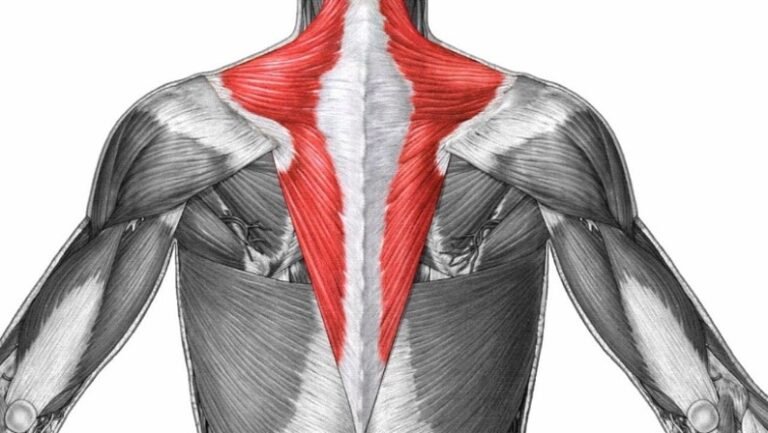
Practical Approaches to Shoulder Range Conditioning
**Unlocking the Power of Your Shoulders: Practical Approaches to Shoulder Range Conditioning** Are your shoulders ready to elevate your ashtanga practice? Often overlooked, shoulder mobility is a cornerstone of injury prevention and overall performance in yoga. In our latest blog post, we explore practical approaches to enhance your shoulder range conditioning—essential for smooth transitions and deeper poses. From Controlled Articular Rotations (CARS) that promote joint health to dynamic stretches and targeted strength training, discover techniques that seamlessly integrate into your routine. Embrace the strength and flexibility of your shoulders, and watch your practice transform. Dive in and learn how to foster mobility that not only supports your physical journey but enriches your mindfulness on the mat.
Read the essay →Find hundreds more of these exercise exercises to make your body feel better at ashtanga.tech
Embracing Props in Ashtanga: A Modern Perspective
The journey of incorporating props in Ashtanga yoga has been met with curiosity and skepticism. Traditionally, there was a belief that props were not part of the Ashtanga practice, often viewed as unnecessary crutches. This perspective suggested that props were a deviation from the purity of traditional practice.
Read the essay →The Importance of Explicit Communication in Teaching
Teaching, at its core, is about conveying information in a way that leads to understanding. Whether it's teaching yoga, guiding students through complex subjects, or addressing legal matters, the clarity and precision of communication are paramount. In my experience, explicit communication has proven to be…
Read the essay →
This quote resonates deeply with my journey through Ashtanga Yoga. As I practice the Tristhana method, I find that focusing on my asanas, ujjayi pranayama, and drishti helps me cultivate a sense of inner calm amid life's challenges. These core elements guide me back to my center, allowing me to connect more profoundly with my breath and body. It's a beautiful reminder that within the flow of movement, I can discover stillness and clarity.
https://michaeljoelhall.com/embracing-the-tristhana-method-a-beginners-guide-to-the-heart-of-ashtanga-yoga/

I'm excited for you to explore these insights further! Head over to the link and read about the profound benefits that yoga brings to our health: https://michaeljoelhall.com/unraveling-the-benefits-how-yoga-enhances-health-and-physiological-well-being/

I'm excited for you to explore these insights further! Head over to the link and read about the profound benefits that yoga brings to our health: https://michaeljoelhall.com/unraveling-the-benefits-how-yoga-enhances-health-and-physiological-well-being/
HEALTH BENEFITS
or yoga
Read More
1
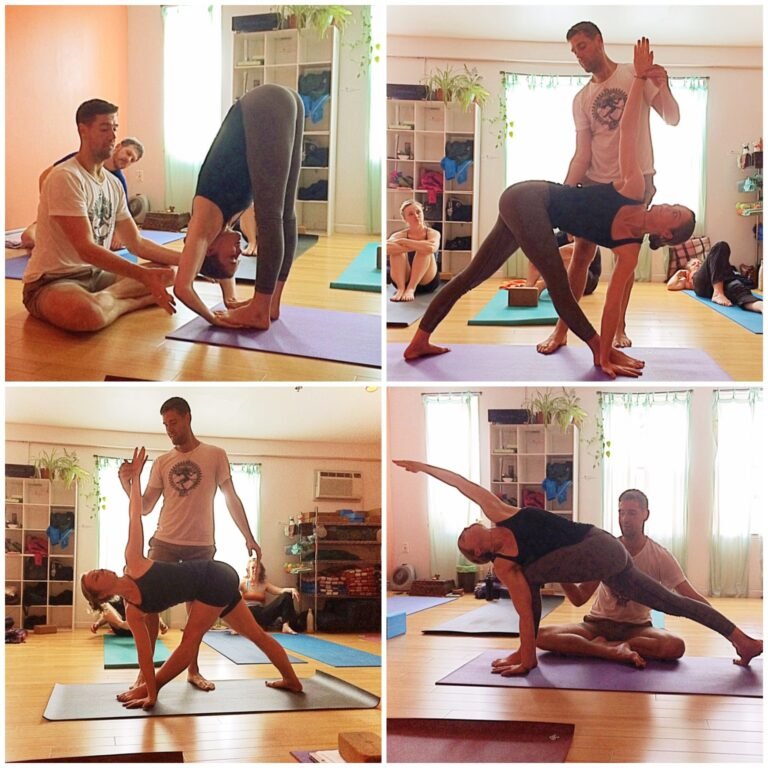
Mysore Style Ashtanga Yoga: Introducing A Personal Journey into Self-Practice
Embark on a transformative journey as we unveil the essence of Mysore Style Ashtanga Yoga—a practice steeped in history and rich with personal discovery. Rooted in the teachings of yoga luminaries Krishnamacharya and Sri K. Pattabhi Jois, Mysore style offers a unique blend of personalized instruction, self-paced progression, and a profound connection to breath and movement. This blog delves into the hallmarks that define this remarkable method, inviting both newcomers and seasoned yogis to deepen their understanding and foster independence on their mats. Whether you seek alignment, mindfulness, or a structured path to self-discovery, join us as we explore how Mysore Style Ashtanga Yoga can become a powerful tool for growth and transformation.
Read the essay →
Navigating Teacher Burnout: Strategies for Self-Care and Healing
Teaching yoga is a profound and fulfilling vocation, yet the weight of responsibility can lead to burnout if we’re not mindful. As Jason Crandell reminds us, the journey is not for the faint-hearted, with challenges such as compassion fatigue, financial worries, and the isolation that can come with the role. In this blog, we’ll explore essential strategies for self-care that will not only help you recognize the signs of burnout but also empower you to take proactive steps towards healing. From nurturing your personal practice to prioritizing rest and connection, discover how you can align your expectations and embrace the journey of teaching without sacrificing your well-being. Join us as we dive into effective self-care techniques designed to rejuvenate your spirit and enhance your teaching capacity—because self-care isn’t just a luxury; it’s a necessity that allows you to shine brighter for your students. Embrace the process and remember, when you prioritize yourself, you elevate your entire practice.
Read the essay →
Uncomplicate Prasarita Padottanasana A-D
This is the most confusing count most folks run into, bar none. The series of poses known as Prasarita Padottanasana A-D, also known as the Spread Feet Intense Stretch Pose, are also a great entryway to researching how we distribute weight, how we establish foundation, and how we draw the energy into the central channel of the body.
Read the essay →
This is the most confusing count most folks run into, bar none. The series of poses known as Prasarita Padottanasana A-D, also known as the Spread Feet Intense Stretch Pose, are also a great entryway to researching how we distribute weight, how we establish foundation, and how we draw the energy into the central channel of the body.
https://michaeljoelhall.com/unraveling-prasarita-padottanasana-a-d-the-power-of-the-count-in-your-ashtanga-practice/?utm_source=SocialAutoPoster&utm_medium=Social&utm_campaign

The Emotional and Physical Challenges of Yoga Practice
Advancing in yoga, particularly in the Ashtanga tradition, is a journey that requires dedication, perseverance, and a willingness to confront both physical and emotional limits. Over the years, I have found myself at the intersection of personal expectations, teacher guidance, and the inevitable boundaries of…
Read the essay →
Ashtanga Yoga Means Personalized Practice
This is a video about Ashtanga Yoga's Personalized Practice. Visit michaeljoelhall.com/coaching to book a session if you'd like to chat about your practice. 00:00 Introduction to Autonomy in Practice 00:07 The Importance of Adaptability 00:27 Factors Influencing Sustainable Practice 01:04 Honoring the Method Through Adaptation 01:17 Challenging Traditional Norms 01:29 The Role of Structure in Practice 01:44 Moving Beyond a Single Way to Practice 02:08 Conclusion and Next Steps
Read the essay →
Advancing in yoga, particularly in the Ashtanga tradition, is a journey that requires dedication, perseverance, and a willingness to confront both physical and emotional limits. Over the years, I have found myself at the intersection of personal expectations, teacher guidance, and the inevitable boundaries of my own body. The process has been as much about internal growth as it has been about mastering the physical postures. In Ashtanga, this challenge is heightened by the structured progression through the series, where each new posture represents both an achievement and a new set of demands. “I will not be cracking. Thanks so […]
https://michaeljoelhall.com/the-emotional-and-physical-challenges-of-yoga-practice/?utm_source=SocialAutoPoster&utm_medium=Social&utm_campaign
This is a video about Ashtanga Yoga's Personalized Practice. Visit michaeljoelhall.com/coaching to book a session if you'd like to chat about your practice.
00:00 Introduction to Autonomy in Practice
00:07 The Importance of Adaptability
00:27 Factors Influencing Sustainable Practice
01:04 Honoring the Method Through Adaptation
01:17 Challenging Traditional Norms
01:29 The Role of Structure in Practice
01:44 Moving Beyond a Single Way to Practice
02:08 Conclusion and Next Steps
https://michaeljoelhall.com/video-ashtanga-yoga-means-personalized-practice/?utm_source=SocialAutoPoster&utm_medium=Social&utm_campaign
Mental Health Considerations
This is a video about Mental Health Considerations for Ashtanga Yoga Practitioners. Visit michaeljoelhall.com/coaching to book a session if you'd like to chat about your practice. 00:00 Introduction: The Struggles in the Yoga Room 00:09 The Intensity of Ashtanga Yoga 00:35 Mental Health and Yoga Practice 01:01 Adapting Yoga for Mental Well-being 01:28 Modifications for Emotional Safety 01:50 Shifting from Tradition to Individual Needs 02:41 Reframing Ashtanga for Mental Health 02:47 Empowering Practitioners 02:53 Conclusion: Meeting Practitioners Where They Are
Read the essay →
Understanding Hip Joint Adduction: An Approach to PAILS & RAILS
**Unlocking Your Hip Mobility: The Power of PAILS & RAILS** Dive deep into the transformative world of hip joint adduction and discover how this often-overlooked movement can elevate your ashtanga yoga practice. By mastering the techniques of Progressive Angular Isometric Loading (PAILS) and Regressive Angular Isometric Loading (RAILS), you’ll not only enhance your strength and flexibility but also cultivate a profound connection to your body’s mechanics. Imagine flowing effortlessly through complex postures like *Utthita Trikonasana* or *Padmasana*, all while reducing your risk of injury. This blog will guide you through practical steps to integrate PAILS and RAILS into your routine, shedding light on how to harness the full potential of your hips. Embrace the journey toward greater stability and mobility—your mat awaits!
Read the essay →
**Unlocking Your Hip Mobility: The Power of PAILS & RAILS**
Dive deep into the transformative world of hip joint adduction and discover how this often-overlooked movement can elevate your ashtanga yoga practice. By mastering the techniques of Progressive Angular Isometric Loading (PAILS) and Regressive Angular Isometric Loading (RAILS), you’ll not only enhance your strength and flexibility but also cultivate a profound connection to your body’s mechanics.
Imagine flowing effortlessly through complex postures like *Utthita Trikonasana* or *Padmasana*, all while reducing your risk of injury. This blog will guide you through practical steps to integrate PAILS and RAILS into your routine, shedding light on how to harness the full potential of your hips. Embrace the journey toward greater stability and mobility—your mat awaits!
https://michaeljoelhall.com/understanding-hip-joint-adduction-an-approach-to-pails-rails/?utm_source=SocialAutoPoster&utm_medium=Social&utm_campaign

Online and Virtual Communities in the Ashtanga Yoga World
This is a video about Online and Virtual Communities in the Ashtanga Yoga World. If you're looking for coaching, find me at michaeljoelhall.com/coaching 00:00 Introduction to Ashtanga Practice 00:15 The Digital Shift in Yoga Practice 00:26 Building Online Communities 00:42 The Evolution of Tradition 00:45 Healthy Growth in Online Spaces 01:03 Accessing Teachers and Support Online 01:11 Benefits of Online Workshops 01:25 Balancing Practice and Discussion 01:31 Challenges of Digital Spaces 01:51 Reinforcing Authentic Connections 02:07 Using Online Communities for Accessibility
Read the essay →
Link at my site.
This is a video about Online and Virtual Communities in the Ashtanga Yoga World. If you're looking for coaching, find me at michaeljoelhall.com/coaching
00:00 Introduction to Ashtanga Practice
00:15 The Digital Shift in Yoga Practice
00:26 Building Online Communities
00:42 The Evolution of Tradition
00:45 Healthy Growth in Online Spaces
01:03 Accessing Teachers and Support Online
01:11 Benefits of Online Workshops
01:25 Balancing Practice and Discussion
01:31 Challenges of Digital Spaces
01:51 Reinforcing Authentic Connections
02:07 Using Online Communities for Accessibility
https://michaeljoelhall.com/video-online-and-virtual-communities-in-the-ashtanga-yoga-world/?utm_source=SocialAutoPoster&utm_medium=Social&utm_campaign

Exploring Pratyahara Practices: Cultivating Inner Awareness Through Sensory Withdrawal
**Unlocking the Power Within: A Journey into Pratyahara** In a world brimming with distractions, the ancient practice of *pratyahara* beckons us to retreat inward, inviting a profound connection to our true selves. This blog delves into the art of sensory withdrawal, providing a rich tapestry of techniques—from controlling sensory input to harnessing the power of sound and mudras. Journey with us as we explore how mindful practices can cultivate inner awareness, allowing you to navigate the chaos of modern life with grace and clarity. Discover how simple shifts in perception can lead to transformative insights, and learn to embrace the tranquility that resides within. Join us in this exploration of *pratyahara*, and unlock the keys to your inner sanctuary.
Read the essay →
[In downward dogl F*ck you.
@evanrosskatz
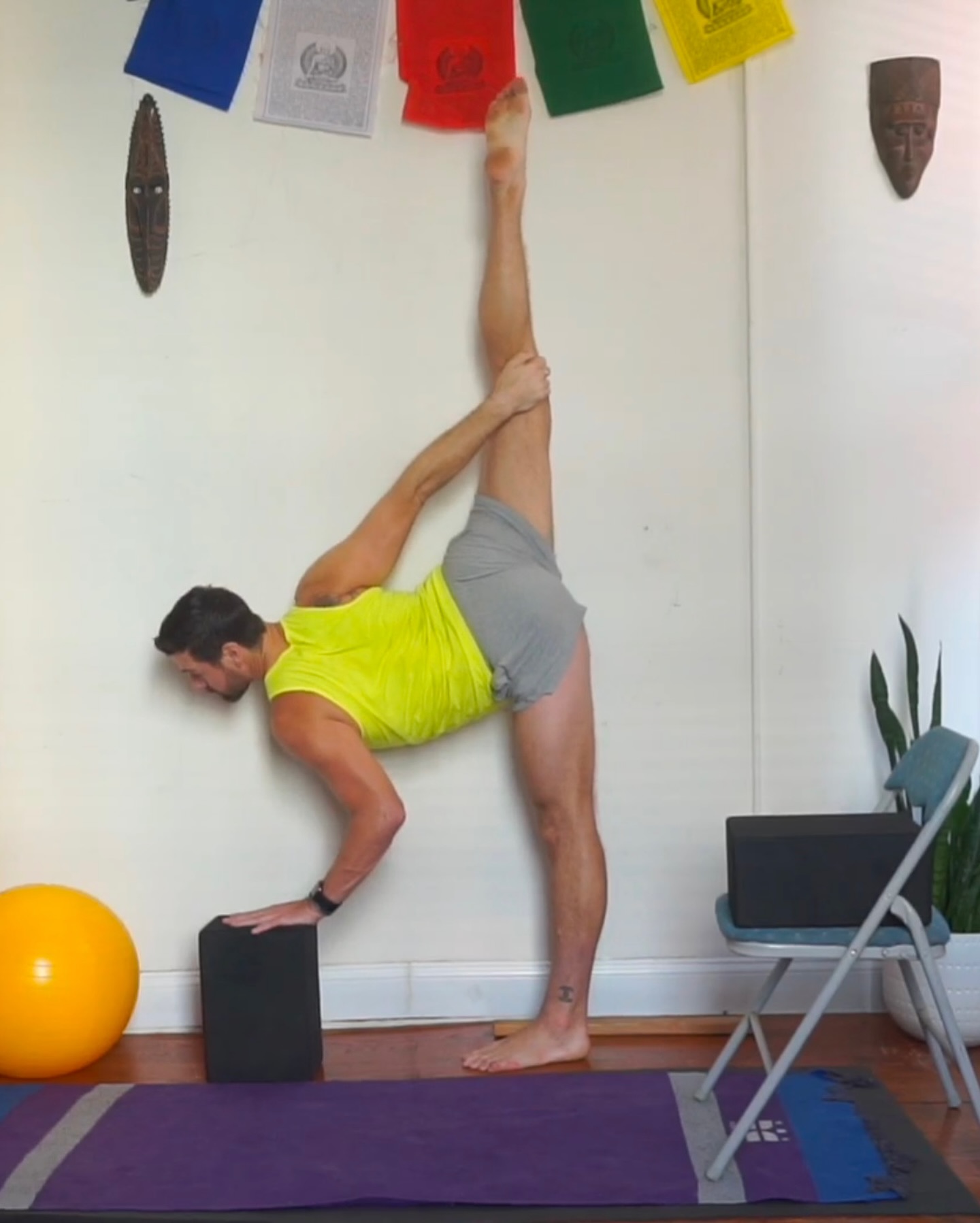



The Power of the Ashtanga Community
This is a video about The Power of the Ashtanga Community. If you're looking for coaching, find me at michaeljoelhall.com/coaching 00:00 Introduction to Yoga Practice 00:10 The Deeper Connection in Ashtanga Yoga 00:26 Community and Consistency in Practice 00:54 Systems Thinking in Yoga 01:07 Building Bonds Through Familiarity 01:41 Accountability and Commitment 02:05 The Lifelong Benefits of Community 02:18 Service and Collective Energy 02:28 Global Perspective on Ashtanga Practice
Read the essay →
This is a video about The Power of the Ashtanga Community. If you're looking for coaching, find me at michaeljoelhall.com/coaching
00:00 Introduction to Yoga Practice
00:10 The Deeper Connection in Ashtanga Yoga
00:26 Community and Consistency in Practice
00:54 Systems Thinking in Yoga
01:07 Building Bonds Through Familiarity
01:41 Accountability and Commitment
02:05 The Lifelong Benefits of Community
02:18 Service and Collective Energy
02:28 Global Perspective on Ashtanga Practice
https://michaeljoelhall.com/video-the-power-of-the-ashtanga-community/?utm_source=SocialAutoPoster&utm_medium=Social&utm_campaign
Digital Detox to Improve Pratyahara
Unplug to Unwind: Elevate Your Pratyahara Journey!
Read the essay →
Addressing Misconduct in Ashtanga Yoga
This is a video about Addressing Misconduct in Ashtanga yoga. If you're looking for coaching, find me at michaeljoelhall.com/coaching 00:00 Addressing Power Imbalances in Ashtanga Yoga 00:20 The Need for Ethical Leadership 00:48 Prioritizing Safety and Trust 01:26 Creating a Culture of Transparency 01:47 Commitment to Ethical Evolution 01:59 Ensuring Respect and Accountability 02:16 The Future of Ashtanga Yoga
Read the essay →
Link in bio.
If you're looking for coaching, find me at michaeljoelhall.com/coaching
00:00 Addressing Power Imbalances in Ashtanga Yoga
00:20 The Need for Ethical Leadership
00:48 Prioritizing Safety and Trust
01:26 Creating a Culture of Transparency
01:47 Commitment to Ethical Evolution
01:59 Ensuring Respect and Accountability
02:16 The Future of Ashtanga Yoga
https://michaeljoelhall.com/video-addressing-misconduct-in-ashtanga-yoga/?utm_source=SocialAutoPoster&utm_medium=Social&utm_campaign
Pratyahara 101
Discover Pratyahara: The Art of Inner Focus
Read the essay →
The Courage to Feel
BUILDING THE CAPACITY TO STAY OPEN To live in a body that is fully connected to its capacity for feeling means opening to being vulnerable. By vulnerable, I’m not meaning without clear boundaries, but rather the capacity to open when openness is needed. The ability…
Read the essay →
Building an Inclusive and Accessible Ashtanga Community
This is a video about Building an Inclusive and Accessible Ashtanga Community. If you're looking for coaching, find me at michaeljoelhall.com/coaching 00:00 Introduction to the System 00:18 Inclusivity and Adaptation 00:41 Welcoming and Modifications 01:06 Evolving Tradition
Read the essay →
This is a video about Building an Inclusive and Accessible Ashtanga Community. If you're looking for coaching, find me at michaeljoelhall.com/coaching
00:00 Introduction to the System
00:18 Inclusivity and Adaptation
00:41 Welcoming and Modifications
01:06 Evolving Tradition
https://michaeljoelhall.com/video-building-an-inclusive-and-accessible-ashtanga-community/?utm_source=SocialAutoPoster&utm_medium=Social&utm_campaign

Brahmari (Bee Breath) Pranayama
Brahmari Pranayama: The Bee Breath Technique for Calm and Clarity This video introduces Brahmari Pranayama, also known as Bee Breath, a powerful yet simple pranayama technique. It involves creating a gentle buzzing sound on the exhale to calm the mind, regulate the nervous system, and enhance awareness. The practice is effective for soothing anxiety, improving concentration, and preparing for meditation. The video guides viewers through the steps of Brahmari, emphasizing a comfortable posture, natural breathing, and the importance of not forcing the exhale. Brahmari is beneficial for speakers, singers, and teachers, supporting speech and vocal clarity. Consistent practice can help cultivate inner stillness and clarity. 00:00 Brahmari (Bee Breath) Video 00:11 Introduction to Brahmari (Bee Breath) 00:32 How to Practice Brahmari 00:46 Benefits of Brahmari 01:00 Tips for Effective Practice 01:10 Conclusion and Consistent Practice
Read the essay →
Counting Parsvottanasana with Mindful Prep
Counting Your Way to Clarity: The Transformative Journey of Parsvottanasana Embark on a transformative journey with Parsvottanasana, the intense side stretch pose. This powerful asana transcends physicality, offering profound insights into both body and mind. As you dive deeper into the pose, discover how the art of counting can illuminate your practice, providing clarity and focus that enhances your ashtanga experience. Anatomy of Parsvottanasana Parsvottanasana challenges the body, inviting the pelvis to rotate towards the front leg while engaging key muscle groups. Seamlessly transitioning from Ardha Chandrasana, this pose not only intensifies the stretch but also awakens various muscle fibers, particularly in your hamstrings and calves. PÄRSVÕTTANASANA (5 MOVEMENTS) 1 EKAM Inhale, open to the right, hands in prayer behind back 2 DVE Exhale, fold 3 TRINI Inhale, up, turn to the front 4 CATVARI Exhale, fold 5 PANCA Inhale, up, open to the side Exhale, Samasthiti Counterbalancing the Mind and Body Each count in Parsvottanasana connects breath, movement, and intention, creating a rhythm that anchors your practice. As you breathe, you cultivate awareness and clarity, harmonizing the mental and physical realms—ultimately discovering the profound interconnectedness of your being. Mindful Preparations Preparation is crucial for a safe and effective Parsvottanasana. Begin in Tadasana with hands in reverse namaste, opening your shoulders and releasing tension. This mindful approach sets the stage for a deeper stretch, inviting clarity into your alignment and practice. Synergizing for Success The pectoralis major collaborates with the subscapularis and teres major to inwardly rotate the upper arm while stretching shoulder external rotators. Upper back muscles pull shoulder blades toward the spine, creating space in the chest. The rectus abdominis stabilizes the fold, while the psoas maintains the extended leg’s position. By harnessing these relationships, you amplify your experience in Parsvottanasana, moving beyond physicality to cultivate clarity both on and off the mat. For deepening your understanding of Parsvottanasana and its counting, explore our detailed guide: Parsvauttanasana - The Count. Ultimately, Parsvottanasana invites us into a dance of awareness—a fusion of physical engagement and mental clarity. Embrace each of the five movements, counting intentionally, and uncover how this practice can enhance your yoga journey and everyday life.
Read the essay →
Counting Your Way to Clarity: The Transformative Journey of Parsvottanasana
Embark on a transformative journey with Parsvottanasana, the intense side stretch pose. This powerful asana transcends physicality, offering profound insights into both body and mind. As you dive deeper into the pose, discover how the art of counting can illuminate your practice, providing clarity and focus that enhances your ashtanga experience.
Anatomy of Parsvottanasana
Parsvottanasana challenges the body, inviting the pelvis to rotate towards the front leg while engaging key muscle groups. Check out Ashtanga Tech for the full anatomy breakdown.
PÄRSVÕTTANASANA (5 MOVEMENTS)
1
EKAM
Inhale, open to the right, hands in prayer behind back
2
DVE
Exhale, fold
3
TRINI
Inhale, up, turn to the front
4
CATVARI
Exhale, fold
5
PANCA
Inhale, up, open to the side
Exhale, Samasthiti

What is Mysore Style Ashtanga Yoga
Understanding Mysore Style Ashtanga Yoga with Michael Joel Hall I practice and teach Mysore style Ashtanga yoga, which is a little different from other styles of yoga. People are often confused about what makes it special and they have a good reason to be so confused. Let's get into it. 00:00 Introduction to Mysore Style Ashtanga Yoga 00:13 Origins and Unique Approach 00:29 Key Methods and Techniques 00:38 Commitment and Benefits 00:47 Historical Roots and Modern Adaptations 00:59 Conclusion: A Path to Transformation
Read the essay →
Exploring the Foundations of Wise Practice
## Exploring the Foundations of Wise Practice: A Journey Within Dive deep into the essence of yoga as we uncover the timeless teachings that form the bedrock of wise practice. In this enlightening exploration, connect with the core principles that transcend lineage and style, revealing how each unique journey on the mat can lead to profound self-discovery. From understanding the true purpose behind every pose to embracing challenges as catalysts for growth, this blog invites you to reflect on qualities that foster genuine progress—sincerity, humility, and discernment. Discover how committing to daily practice, even in small doses, can illuminate your path and enhance your connection to self. Let the wisdom of ancient stories guide you, while practical insights help bridge your practice from the mat to everyday life. Whether you're an experienced yogi or a curious beginner, join us in cultivating a space for transformation, where the journey is as rewarding as the destination. Explore the nuances of wise practice and unlock the secrets to a fulfilling yoga experience. Your journey begins here.
Read the essay →
Balancing Ambition in Yoga
Balancing Ambition in Ashtanga Yoga: A Path to True Transformation In this episode, we explore the allure of Ashtanga Yoga and how youthful enthusiasm for dynamic practices can evolve into a healthy ambition. Visit michaeljoelhall.com/coaching to book a session if you'd like to chat about your practice. 00:00 Introduction to Ashtanga Yoga 00:27 The Power and Purpose of Yoga 00:33 The Pitfalls of Ambition in Yoga 01:04 Balancing Ambition with Mindfulness 01:14 Conclusion: Striving for True Transformation
Read the essay →
Understanding Shoulder Abduction Axials: A Practical Guide
**Unlocking the Power of Your Shoulders: A Guide to Shoulder Abduction Axials** Dive into the heart of ashtanga yoga with our practical guide on understanding shoulder abduction axials. This essential movement—lifting the arms away from the body—plays a pivotal role in your practice, enhancing alignment and preventing injuries. Explore the intricacies of shoulder joint rotations, from internal and external rotations to elevation and depression. Discover transformative exercises like Wall Angels and Resistance Bands that can elevate your technique and deepen your connection to the poses. Join us as we unravel the nuances of shoulder movement, aligning your practice with the anatomy of your body for a more mindful and effective yoga journey. Embrace the art of safe and powerful practice—your shoulders will thank you!
Read the essay →
Pranayama for Balanced Energy
Unlock a wellspring of energy and calm with the harmonious rhythm of Ujjayi pranayama and this easy to follow video. Its a 6-second inhale, 12-second breath retention, 6-second exhale, and 6-second breath hold-- nothin fancy. This controlled breathwork not only enhances breath control but also sharpens your mental focus and reduces stress. Dive into this transformative practice and experience the serenity that lies within your breath, revitalizing your daily life with lasting vitality and mindfulness.
Read the essay →
Learn Patience through Ashtanga Practice
n a world where everyone desires patience but few possess it, we explore why patience is a crucial yet underrated component of any practice. Visit michaeljoelhall.com/coaching to book a session if you'd like to chat about your practice.
Read the essay →
Conquer Negativity with Ujjayi Pranayama: A Superhero’s Guide
Discover the power of Ujjayi Pranayama, the "Victorious Breath," to conquer negativity and achieve inner peace. Embrace mindfulness and enhance your yoga practice!
Read the essay →
Discover the power of Ujjayi Pranayama, the "Victorious Breath," to conquer negativity and achieve inner peace. Embrace mindfulness and enhance your yoga practice!
https://michaeljoelhall.com/conquer-negativity-with-ujjayi-pranayama-a-superheros-guide/?utm_source=SocialAutoPoster&utm_medium=Social&utm_campaign

Ashtanga and Non-Linear Systems
Small changes can lead to monumental impacts, much like the butterfly effect. Visit michaeljoelhall.com/coaching to book a session if you'd like to chat about your practice.
Read the essay →GUIDANCE AS A
THE REAL CHALLENGE
RECOGNITION, I

Time and Lifestyle Adaptations
This is a video about How Ashtanga Yoga Impacts Our Time and Lifestyle-- and how they impact our practice. Visit michaeljoelhall.com/coaching to book a session if you'd like to chat about your practice. 00:00 Introduction: Overachievers and Unrealistic Expectations 00:15 Challenges of Traditional Ashtanga Yoga 00:48 Adapting Yoga for Modern Life 01:56 Flexible Approach to Yoga Practice 02:09 Redefining Progress in Yoga 02:42 Conclusion: Integrating Yoga into Real Life
Read the essay →
Exploring Breath Awareness in Daily Practice
**Excerpt: Exploring Breath Awareness in Daily Practice** In the hustle and bustle of everyday life, how often do we pause to truly notice our breath? Join us as we delve into the transformative meditation practice of breath observation, a powerful tool that deepens our connection to self-awareness and enhances our yoga journey. This blog post guides you through the gentle art of simply observing your breath—no manipulation required. Discover techniques like counting each inhale and exhale, and learn how meaningful phrases can enrich your experience. Embrace the ebb and flow of your breathing with an open heart, allowing distractions to gently fade away as you anchor yourself in the present moment. With each mindful breath, unlock a reservoir of calm, clarity, and connection that not only elevates your practice on the mat but also infuses harmony into your daily life. Let’s embark on this journey of breath awareness together!
Read the essay →It’s quite radical to work from a place of self-love as opposed to seeking outside validation.
When we let our yoga practice do its work, the process nourishes our “mind body organism. ” Thats what my teacher called it, and I reckon an ever abiding kind of self love we’re building. And if theres only one of us here, its good practice, that self love. Because it defies entropy.

Props and Assistance
This is a video about Props and Assistance in Ashtanga Yoga. 00:00 Introduction: The Stigma Around Props 00:15 Reevaluating Props: Tools for Adaptation 00:31 The Evolution of Practice 00:39 Benefits of Props in Yoga 00:55 Intelligent Engagement with Props 01:07 Assistance and Adjustments in Practice 01:37 Embracing an Evolving System 01:53 Conclusion: The Future of Ashtanga Yoga
Read the essay →
Mastering Uttitha Hasta Padangusthasana: A Deep Dive into The Count
Utthita Hasta Padangusthasana (Extended Hand-to-Big-Toe Pose) intricately weaves together elements of balance, strength, and flexibility. Much like the foundational principles found in Tree Pose, this asana demands a narrative across various body parts while balancing on one leg. As you stretch the lifted leg, keep your back elongated to maintain an erect posture.
Read the essay →
Ashtanga Student-Teacher Dynamics in 2025
This is a video about Ashtanga Student-Teacher Dynamics in 2025 00:00 Introduction: The Evolving Teacher-Student Relationship in Ashtanga Yoga 00:10 Balancing Tradition and Modernity in Teaching Methods 00:35 The Role of the Teacher: From Gatekeeper to Guide 01:01 Modern Approaches: Inclusivity and Adaptability 01:40 Finding the Middle Way: Sustainable Teacher-Student Relationships 02:20 Conclusion: Embracing Authenticity in Ashtanga Yoga
Read the essay →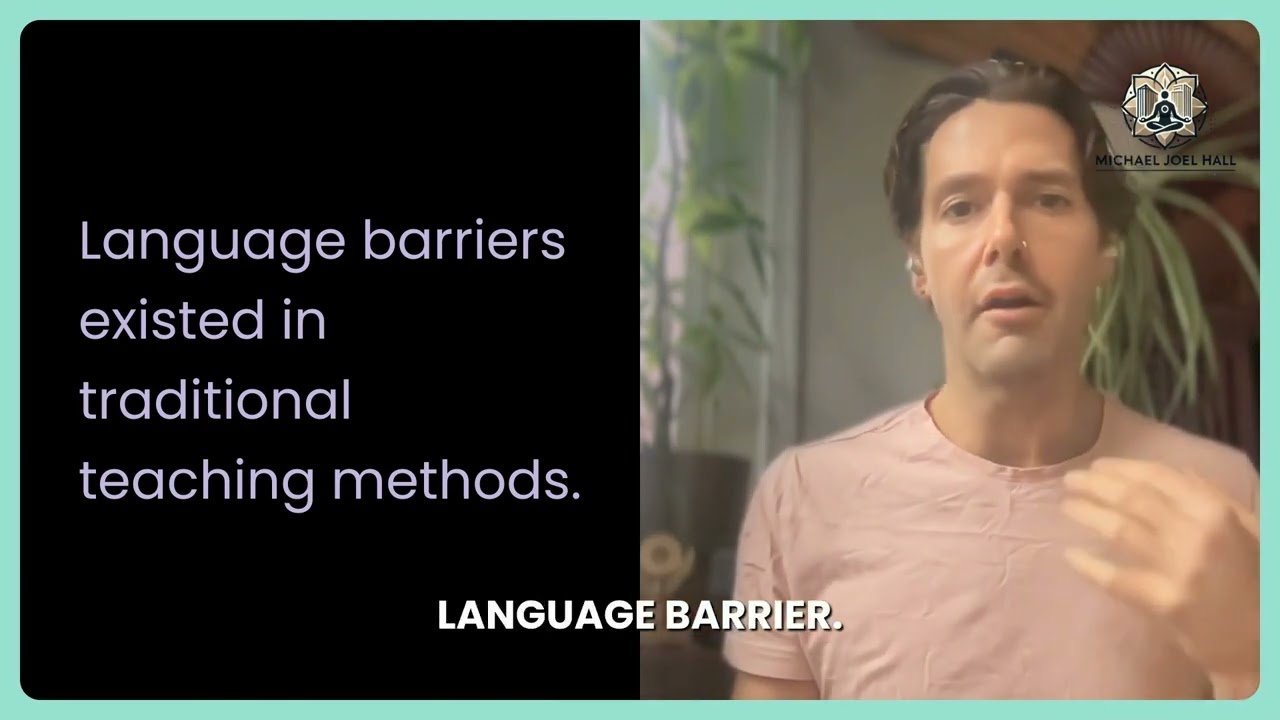
This is a video about Ashtanga Student-Teacher Dynamics in 2025
00:00 Introduction: The Evolving Teacher-Student Relationship in Ashtanga Yoga
00:10 Balancing Tradition and Modernity in Teaching Methods
00:35 The Role of the Teacher: From Gatekeeper to Guide
01:01 Modern Approaches: Inclusivity and Adaptability
01:40 Finding the Middle Way: Sustainable Teacher-Student Relationships
02:20 Conclusion: Embracing Authenticity in Ashtanga Yoga
https://michaeljoelhall.com/video-ashtanga-student-teacher-dynamics-in-2025/?utm_source=SocialAutoPoster&utm_medium=Social&utm_campaign

Overcome Cognitive Biases with Yoga
Discover how Ashtanga yoga acts as a powerful ally in confronting our deepest cognitive biases and illuminating a path towards clear perception. 🌟 In this video, we explore the intricate dance between yoga practice and self-awareness, revealing how understanding biases like the availability heuristic and anchoring bias can enrich our lives. By engaging in the discipline of breath and asana, you unlock a deeper sense of self-awareness, empathy, and understanding. Learn how to use yoga as a mirror, reflecting and dissolving these distortions for greater clarity and personal evolution. Step beyond the veil of groupthink and immerse yourself in the profound benefits of yoga for mental clarity. #YogaForClarity #OvercomeBias #AshtangaMindset
Read the essay →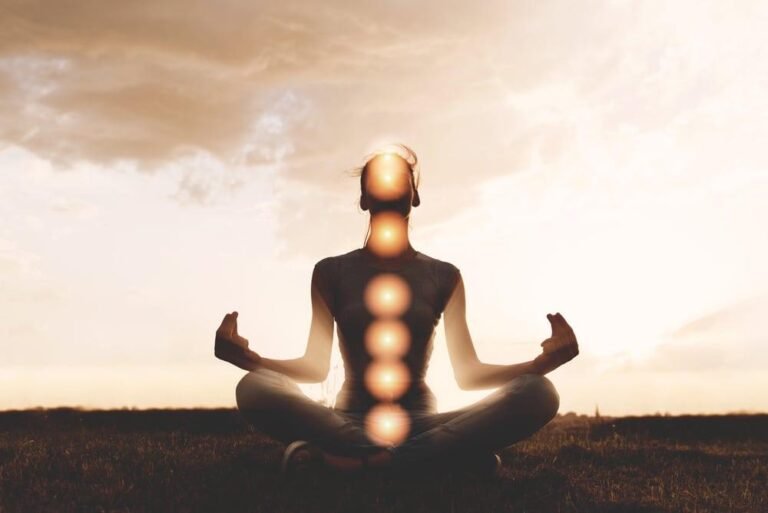
Understanding the Basics of Breath in Ashtanga Yoga
**Unlocking the Power of Breath in Ashtanga Yoga: A Journey Within** Breath is the silent thread that weaves together the fabric of our yoga practice, anchoring us in the present moment and harmonizing body and mind. In "Understanding the Basics of Breath in Ashtanga Yoga," we delve into the essential role of *pranayama*, revealing how mastering your breath can elevate your practice to new heights. From the crucial cautions to consider before beginning your breathing journey to exploring healthy versus restricted breathing patterns, this blog invites you to embrace the transformative potential of conscious breathwork. Discover the art of natural, effortless breathing, which nurtures relaxation and enhances oxygen intake, and learn to recognize the unique characteristics of yogic breathing techniques. Whether you're a seasoned practitioner or just starting your Ashtanga journey, understanding the intricacies of breath will deepen your connection to your practice and foster overall well-being. Join us as we explore these foundational principles and unlock a richer, more fulfilling Ashtanga experience both on and off the mat.
Read the essay →
**Unlocking the Power of Breath in Ashtanga Yoga: A Journey Within**
Breath is the silent thread that weaves together the fabric of our yoga practice, anchoring us in the present moment and harmonizing body and mind. In "Understanding the Basics of Breath in Ashtanga Yoga," we delve into the essential role of *pranayama*, revealing how mastering your breath can elevate your practice to new heights.
From the crucial cautions to consider before beginning your breathing journey to exploring healthy versus restricted breathing patterns, this blog invites you to embrace the transformative potential of conscious breathwork. Discover the art of natural, effortless breathing, which nurtures relaxation and enhances oxygen intake, and learn to recognize the unique characteristics of yogic breathing techniques.
Whether you're a seasoned practitioner or just starting your Ashtanga journey, understanding the intricacies of breath will deepen your connection to your practice and foster overall well-being. Join us as we explore these foundational principles and unlock a richer, more fulfilling Ashtanga experience both on and off the mat.
https://michaeljoelhall.com/understanding-the-basics-of-breath-in-ashtanga-yoga/?utm_source=SocialAutoPoster&utm_medium=Social&utm_campaign
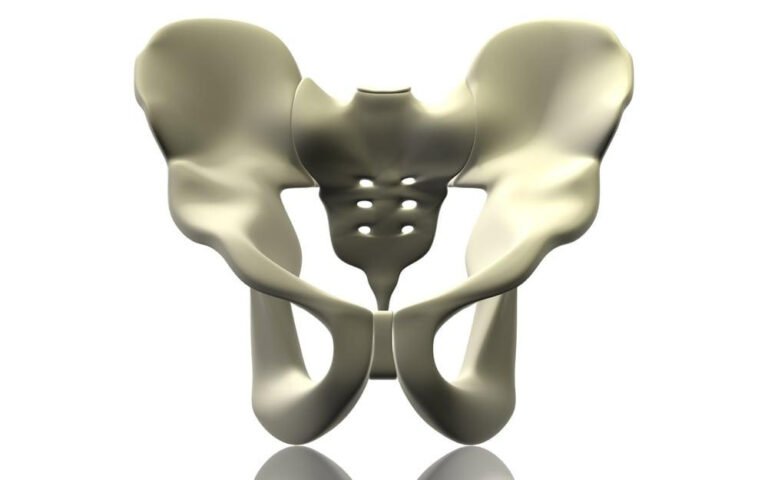
Understanding Hip Joint Flexion: PAILS & RAILS Techniques Explained
**Unlocking Deeper Movement: Mastering Hip Joint Flexion with PAILS & RAILS** Are you ready to elevate your yoga practice? Understanding hip joint flexion is essential for achieving greater mobility and stability on the mat, especially in Ashtanga. In our latest blog post, we delve into the transformative power of PAILS (Progressive Angular Isometric Loading) and RAILS (Regressive Angular Isometric Loading)—two groundbreaking techniques designed to enhance your flexibility and control. Discover how to effectively integrate these methods into your practice, enabling you to push boundaries and explore deeper ranges of motion. Learn the step-by-step approach to strengthen your hip flexors, improve your transitions between poses, and ultimately enhance your overall performance. Join us as we explore not just the mechanics but the profound impact that better hip flexion can have on your daily life. Get ready to move with newfound freedom and confidence! Check out the full article [here](#).
Read the essay →
Breathe with Ease: Exploring the Art of Natural Breathing
**Unveil the Power of Your Breath: Discovering Natural Breathing Techniques** In our fast-paced world, the art of natural breathing often slips through the cracks, leaving us feeling tense and disconnected. Yet, as Denise Benitez beautifully puts it, breathing can transform into a graceful dance — a wellspring of vitality and serenity. Join us in our latest blog post, "Breathe with Ease: Exploring the Art of Natural Breathing," where we delve into the various dimensions of this fundamental practice, from diaphragmatic breathing to effortless flow. Explore how cultivating awareness around your breath can activate your body’s natural calming mechanisms, promote digestion, and even improve posture. Learn practical techniques that not only enhance your yoga practice but also integrate seamlessly into daily life. Unlock the secrets to a more relaxed, vibrant existence. Embrace the journey of breathing with ease, and reconnect with the simple yet profound act that nourishes your being. Dive deeper into the serene world of natural breathing today!
Read the essay →
**Unveil the Power of Your Breath: Discovering Natural Breathing Techniques**
In our fast-paced world, the art of natural breathing often slips through the cracks, leaving us feeling tense and disconnected. Yet, as Denise Benitez beautifully puts it, breathing can transform into a graceful dance — a wellspring of vitality and serenity. Join us in our latest blog post, "Breathe with Ease: Exploring the Art of Natural Breathing," where we delve into the various dimensions of this fundamental practice, from diaphragmatic breathing to effortless flow.
Explore how cultivating awareness around your breath can activate your body’s natural calming mechanisms, promote digestion, and even improve posture. Learn practical techniques that not only enhance your yoga practice but also integrate seamlessly into daily life.
Unlock the secrets to a more relaxed, vibrant existence. Embrace the journey of breathing with ease, and reconnect with the simple yet profound act that nourishes your being. Dive deeper into the serene world of natural breathing today!
https://michaeljoelhall.com/breathe-with-ease-exploring-the-art-of-natural-breathing/?utm_source=SocialAutoPoster&utm_medium=Social&utm_campaign

Breath of Life: Exploring the Philosophy of Pranayama in Ashtanga Yoga
Pranayama is powerful. Prepare to liberate yourself from the confines of restriction and dive deep into the philosophy that encourages you to breathe freely and fully. Join the conversation on the Breath of Life—where every inhale nourishes your being and every exhale releases the barriers that inhibit your potential. Embrace the philosophy of pranayama and unlock the door to a more vibrant you!
Read the essay →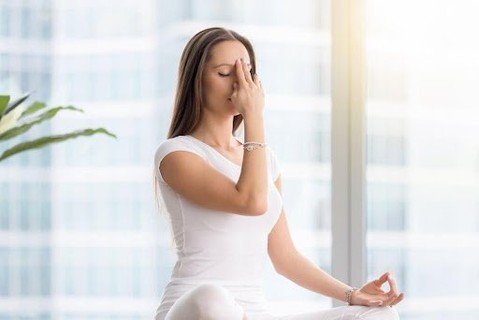
Pranayama is powerful. Prepare to liberate yourself from the confines of restriction and dive deep into the philosophy that encourages you to breathe freely and fully.
Join the conversation on the Breath of Life—where every inhale nourishes your being and every exhale releases the barriers that inhibit your potential. Embrace the philosophy of pranayama and unlock the door to a more vibrant you!
```
https://michaeljoelhall.com/breath-of-life-exploring-the-philosophy-of-pranayama-in-ashtanga-yoga/?utm_source=SocialAutoPoster&utm_medium=Social&utm_campaign

Body Diversity in Ashtanga
This is a video about Body Diversity in Ashtanga. Visit michaeljoelhall.com/coaching to book a session if you'd like to chat about your practice. 00:00 Body Diversity in Ashtanga 00:23 The Functional System of Ashtanga Yoga 00:42 The Myth of the Yoga Body 00:54 Promoting Inclusivity in Yoga 01:09 Embracing an Embodied Practice visit michaeljoelhall.com/coaching to book a session.
Read the essay →TO SOMETHING THAT'S QUITE SIMPLE.
THIS IS REALLY, REALLY GREAT,

This is a video about Body Diversity in Ashtanga. Visit michaeljoelhall.com/coaching to book a session if you'd like to chat about your practice.
00:00 Body Diversity in Ashtanga
00:23 The Functional System of Ashtanga Yoga
00:42 The Myth of the Yoga Body
00:54 Promoting Inclusivity in Yoga
01:09 Embracing an Embodied Practice
visit michaeljoelhall.com/coaching to book a session.
https://michaeljoelhall.com/video-body-diversity-in-ashtanga/?utm_source=SocialAutoPoster&utm_medium=Social&utm_campaign

Body Scan Meditation: A Guided Approach to Awareness
**Unlocking Inner Awareness: The Body Scan Meditation** In our fast-paced world, finding moments of stillness can feel like a luxury. Enter the body scan meditation—a transformative practice that invites you to reconnect with your physical self. Whether integrated into *Savasana*, a restorative pose, or seated meditation, this guided approach encourages you to dive deep into your body’s sensations. Discover how to cultivate awareness, releasing tension and fostering a profound sense of peace. As you explore each body part—from your toes to the crown of your head—allow yourself to simply observe without judgment. Embrace the opportunity to meet your body where it is, noticing sensations both subtle and pronounced. Join us as we delve into the process of tuning in, letting go, and igniting your spirit of aliveness. Ready to transform your practice? Dive into the complete guide and unlock the serenity within!
Read the essay →
**Unlocking Inner Awareness: The Body Scan Meditation**
In our fast-paced world, finding moments of stillness can feel like a luxury. Enter the body scan meditation—a transformative practice that invites you to reconnect with your physical self. Whether integrated into *Savasana*, a restorative pose, or seated meditation, this guided approach encourages you to dive deep into your body’s sensations.
Discover how to cultivate awareness, releasing tension and fostering a profound sense of peace. As you explore each body part—from your toes to the crown of your head—allow yourself to simply observe without judgment. Embrace the opportunity to meet your body where it is, noticing sensations both subtle and pronounced.
Join us as we delve into the process of tuning in, letting go, and igniting your spirit of aliveness. Ready to transform your practice? Dive into the complete guide and unlock the serenity within!
https://michaeljoelhall.com/body-scan-meditation-a-guided-approach-to-awareness/?utm_source=SocialAutoPoster&utm_medium=Social&utm_campaign

Qualifications? For Yoga?
Qualifications? For Yoga? Yes! But what are they and who decides? 00:00 Introduction to Ashtanga Yoga Teaching 00:12 The Evolving Role of a Yoga Teacher 00:32 Qualifications and Expectations 01:02 The Art of Teaching Yoga 01:14 Balancing Tradition and Growth 01:36 Commitment to Lifelong Learning 01:41 Future of Ashtanga Yoga
Read the essay →
Understanding Healthy and Restricted Breathing in Yoga Practice
**Excerpt: Understanding Healthy and Restricted Breathing in Yoga Practice** Breath is the bridge between mind and body, a rhythmic dance that nourishes every cell and influences our emotional landscape. In our latest blog post, we dive deep into the art of breathing—an often-overlooked aspect of yoga practice. Discover how the way you breathe can enhance your wellbeing, impact your stress levels, and even transform your emotional state. From the constraints of modern living that lead to restricted breathing patterns to the liberating potential of conscious breathwork, we explore the nuances of this vital practice. Learn about the common pitfalls of inefficient breathing, the physiological implications, and how mastering your breath can lead to profound shifts in health and awareness. Join us on a journey toward understanding the power of breath in yoga and everyday life, as we unlock the key to a harmonious existence through mindful inhalations and exhalations. Read more to reclaim your breath, and with it, your vitality!
Read the essay →
**Excerpt: Understanding Healthy and Restricted Breathing in Yoga Practice**
Breath is the bridge between mind and body, a rhythmic dance that nourishes every cell and influences our emotional landscape. In our latest blog post, we dive deep into the art of breathing—an often-overlooked aspect of yoga practice. Discover how the way you breathe can enhance your wellbeing, impact your stress levels, and even transform your emotional state.
From the constraints of modern living that lead to restricted breathing patterns to the liberating potential of conscious breathwork, we explore the nuances of this vital practice. Learn about the common pitfalls of inefficient breathing, the physiological implications, and how mastering your breath can lead to profound shifts in health and awareness.
Join us on a journey toward understanding the power of breath in yoga and everyday life, as we unlock the key to a harmonious existence through mindful inhalations and exhalations. Read more to reclaim your breath, and with it, your vitality!
https://michaeljoelhall.com/understanding-healthy-and-restricted-breathing-in-yoga-practice/?utm_source=SocialAutoPoster&utm_medium=Social&utm_campaign
Mutual Growth and Respect in Ashtanga Pedagogy
This is a video about Mutual Growth and Respect in Ashtanga Pedagogy. I've been doing this for a long time now (can you believe it?). Reach out if you want some coaching. https://michaeljoelhall.com/coaching 00:00 Introduction to Student-Teacher Dynamics in Ashtanga Yoga 00:12 Emerging Balanced Perspectives in 2025 00:23 Collaboration Over Hierarchy 00:25 Teachers Learning from Students 00:32 The Importance of Feedback and Reciprocity 00:39 Teachers and Students: A Two-Way Street 01:04 Humility and Mutual Respect 01:29 Moving Beyond Rigid Hierarchies 01:45 Ensuring the Evolution of Tradition
Read the essay →
This is a video about Mutual Growth and Respect in Ashtanga Pedagogy at my site and on youtube. I've been doing this for a long time now (can you believe it?). Reach out if you want some coaching. https://michaeljoelhall.com/coaching
00:00 Introduction to Student-Teacher Dynamics in Ashtanga Yoga
00:12 Emerging Balanced Perspectives in 2025
00:23 Collaboration Over Hierarchy
00:25 Teachers Learning from Students
00:32 The Importance of Feedback and Reciprocity
00:39 Teachers and Students: A Two-Way Street
01:04 Humility and Mutual Respect
01:29 Moving Beyond Rigid Hierarchies
01:45 Ensuring the Evolution of Tradition
https://michaeljoelhall.com/video-mutual-growth-and-respect-in-ashtanga-pedagogy/?utm_source=SocialAutoPoster&utm_medium=Social&utm_campaign

The Counts in Ardha Baddha Padmottanasana
**Unlock the Rhythm of Your Practice: Understanding the Counts in Ardha Baddha Padmottanasana** Dive into the transformative world of Ardha Baddha Padmottanasana, or Half Bound Lotus Forward Bend, a foundational pose in the Ashtanga primary series. This blog unravels the intricate dance of the nine guiding counts that breathe life into this posture. From the gentle lift of your foot to the profound grounding in each exhale, mastering these counts enhances your connection to breath and movement, fostering clarity and confidence on your mat. Join us as we explore how every count not only shapes your practice but also mirrors the ebb and flow of life itself. Embrace the rhythm—your journey towards deeper understanding begins here!
Read the essay →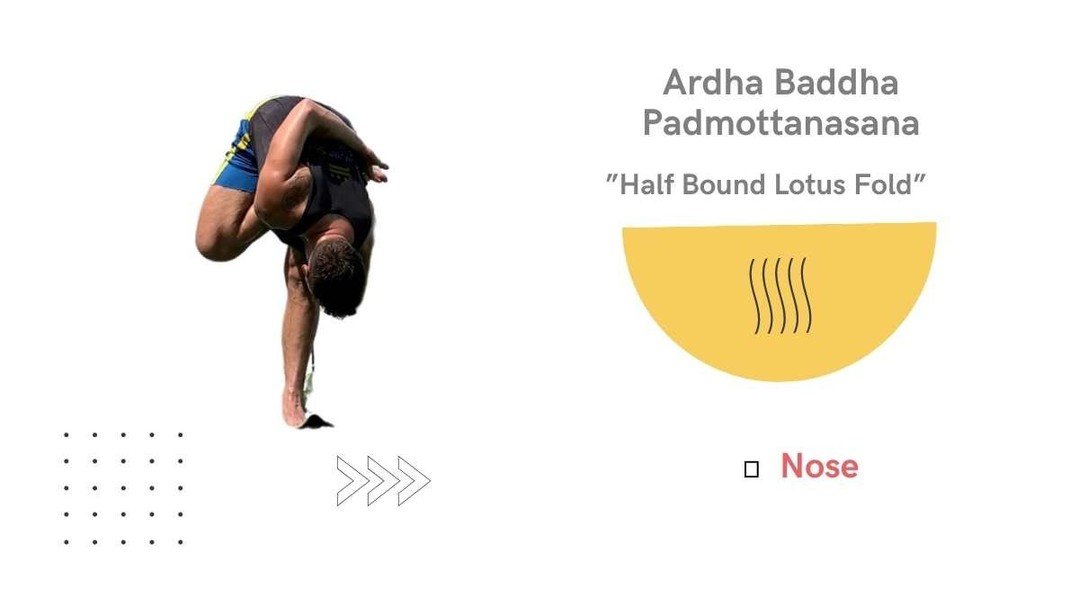
**Unlock the Rhythm of Your Practice: Understanding the Counts in Ardha Baddha Padmottanasana**
Dive into the transformative world of Ardha Baddha Padmottanasana, or Half Bound Lotus Forward Bend, a foundational pose in the Ashtanga primary series. This blog unravels the intricate dance of the nine guiding counts that breathe life into this posture. From the gentle lift of your foot to the profound grounding in each exhale, mastering these counts enhances your connection to breath and movement, fostering clarity and confidence on your mat. Join us as we explore how every count not only shapes your practice but also mirrors the ebb and flow of life itself. Embrace the rhythm—your journey towards deeper understanding begins here!
https://michaeljoelhall.com/the-counts-in-ardha-baddha-padmottanasana/?utm_source=SocialAutoPoster&utm_medium=Social&utm_campaign
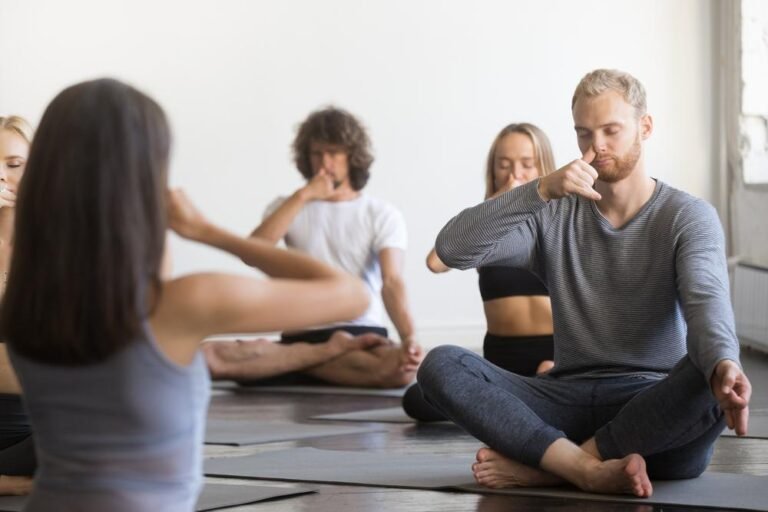
Understanding the Basics of Pranayama: A Guide for Teachers
**Unlocking the Power of Breath: A Teacher's Guide to Pranayama** Dive into the essential art of pranayama, where breath becomes a transformative tool for enhancing your yoga practice. This comprehensive guide equips teachers with the foundational knowledge to harness and share the profound benefits of breath control—aka *pranayama*. Discover how understanding the intricacies of inhalation, exhalation, and retention can deepen connections, cultivate emotional balance, and elevate the overall experience in your classes. Learn how to safely navigate the delicate dance of *kumbhaka* and *bandhas*, and uncover the ancient wisdom that links breath to life force energy. Whether you're a seasoned instructor or just beginning your journey, this guide offers invaluable insights to enrich your teaching and inspire your students to embrace the breath as a pathway to mindfulness and vitality. Join us on this exploration of breath, and empower your practice one inhale at a time.
Read the essay →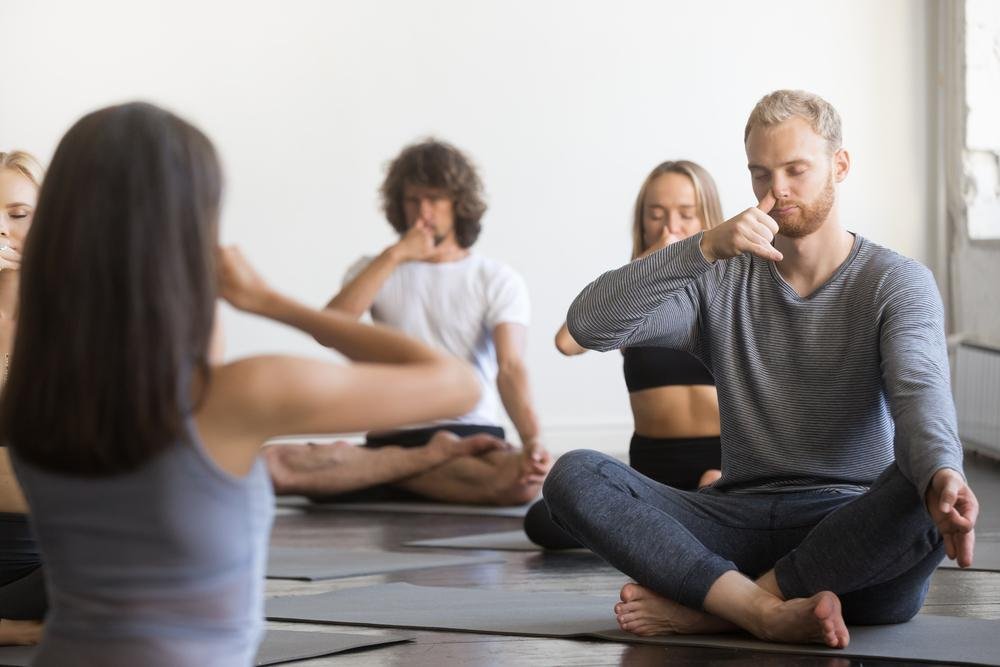
**Unlocking the Power of Breath: A Teacher's Guide to Pranayama**
Dive into the essential art of pranayama, where breath becomes a transformative tool for enhancing your yoga practice. This comprehensive guide equips teachers with the foundational knowledge to harness and share the profound benefits of breath control—aka *pranayama*. Discover how understanding the intricacies of inhalation, exhalation, and retention can deepen connections, cultivate emotional balance, and elevate the overall experience in your classes. Learn how to safely navigate the delicate dance of *kumbhaka* and *bandhas*, and uncover the ancient wisdom that links breath to life force energy. Whether you're a seasoned instructor or just beginning your journey, this guide offers invaluable insights to enrich your teaching and inspire your students to embrace the breath as a pathway to mindfulness and vitality. Join us on this exploration of breath, and empower your practice one inhale at a time.
https://michaeljoelhall.com/understanding-the-basics-of-pranayama-a-guide-for-teachers/?utm_source=SocialAutoPoster&utm_medium=Social&utm_campaign
Beginner Friendly Approaches to Building a Lifelong Ashtanga Practice
This is a video about Beginner Friendly Approaches to building a lifelong Ashtanga Yoga practice. Visit michaeljoelhall.com/coaching to book a session if you'd like to chat about your practice. 00:00 Debunking Ashtanga Yoga Myths 00:19 Challenges for Beginners 00:33 Creating a Sustainable Practice 00:53 Introducing Modifications 01:16 Psychological Barriers 01:46 Ensuring Long-Term Engagement 02:04 Welcoming New Practitioners 02:14 Conclusion: Shifting Our Approach
Read the essay →
Offering and Receiving Guidance in Ashtanga
This is a video about Offering and Receiving Guidance in Ashtanga Yoga. Reach out if you're looking for guidance in Ashtanga Yoga. https://michaeljoelhall.com/coaching 00:00 Introduction to Evolving Teacher-Student Relationships 00:07 Challenges in Modern Ashtanga Yoga 00:42 Personalization in Teaching 01:03 Importance of Communication 01:51 Sustainable and Supportive Learning 02:07 Honoring Tradition Through Adaptation 02:43 Future Directions in Ashtanga Yoga 03:18 Conclusion: Embracing Tradition and Personalization
Read the essay →
Understanding Interconnectedness Through Yoga Practice
In this video, yoga instructor Michael Joel Hall discusses the profound interconnectedness experienced through yoga practice. He shares insights from his 15 years of teaching, highlighting how individual efforts on the mat create a collective energy that enhances the practice for everyone. Michael explains how synchronization of breath and movement among practitioners creates a palpable atmosphere of presence. He delves into the ripple effect of individual breakthroughs and how they uplift the entire room. The video also covers practical approaches to harnessing this interconnectedness, such as collective breathing, shared energy, and mindful transitions. Ultimately, Michael emphasizes that yoga is about recognizing and nurturing the deeper connections that unite us all, transcending time, space, and individual experiences. 00:00 Introduction: The Power of Interconnectedness in Yoga 00:36 The Ripple Effect of Practice 01:26 Beyond Time and Space: Infinite Interconnectedness 02:17 Practical Applications of Interconnectedness 02:55 The Bigger Picture: Interconnectedness in Life and Yoga 03:41 Conclusion: Embracing the Infinite Connection
Read the essay →Untitled
Understanding Interconnectedness Through Yoga Practice As I watched my students move through their morning practice today, I couldn’t help but notice the subtle dance of energy in the room. One person’s breath becoming synchronized with another’s movement, the collective focus creating a palpable atmosphere of…
Read the essay →
Age Related Modifications
Adapting Ashtanga Yoga for a Lifetime. Visit michaeljoelhall.com/coaching to book a session if you'd like to chat about your practice. 00:00 Introduction: Yoga for All Ages 00:09 Adapting Ashtanga for Aging Bodies 00:31 Modifications for Longevity 00:45 Evolving Your Practice 01:02 Sustainability Over Performance 01:15 Embracing Lifelong Adaptability
Read the essay →liberation is political.
Yoga is inherently political if you are in a society where people are oppressed.
liberation is political.
YOU KNOW, THE METHOD OF ASHTANGA
Yoga is inherently political if you are in a society where people are oppressed.
liberation is political.
IMPROVING YOUR YOGA
COMMUNITY UNDERSTANDING CREATES SUPPORTIVE ENVIRONMENTS. TOGETHER.

Understanding the Fundamentals of Breath Training
**Unlocking the Power of Your Breath: A Journey into Breath Training Fundamentals** Dive into a transformative exploration of breath training, where the simple act of inhaling and exhaling becomes a gateway to heightened awareness and profound relaxation. In our fast-paced world, most of us unconsciously breathe shallowly, which can leave us feeling anxious and fatigued. However, by shifting our focus to conscious breathing, we can significantly reduce our breath rate and expand our respiratory capacity. This blog post will guide you through the basics of breath awareness, offering insights into techniques that nurture both body and mind. You’ll learn how deeper, fuller breaths can invigorate your practice and enhance your overall well-being. Whether you're a seasoned yogi or just beginning your journey, understanding these fundamentals will empower you to harness the full potential of your breath and enrich your yoga experience. Join us as we uncover the art of conscious breathing—your path to a calmer, more centered self.
Read the essay →
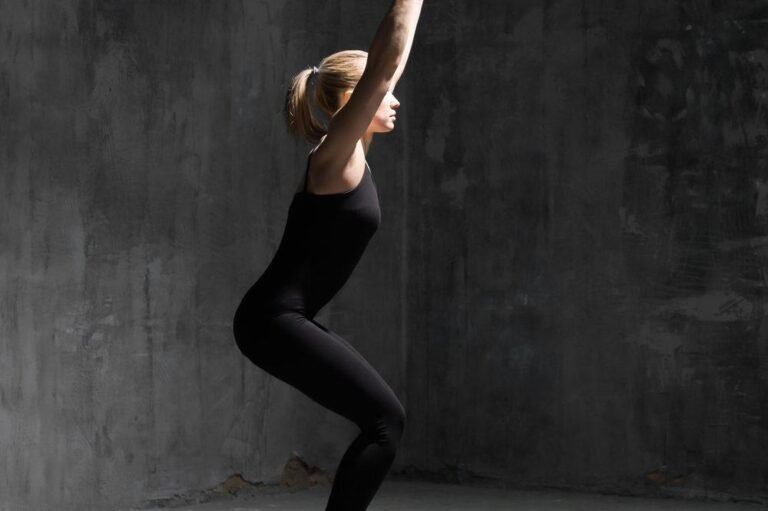
Utkatasana: A Closer Look at the Benefits and Techniques
**Excerpt: Understanding Utkatasana: A Closer Look at the Benefits and Techniques** Step into the transformative world of Utkatasana, or Chair Pose, where strength meets serenity. This foundational asana, often hailed as the "throne pose," invites practitioners to engage deeply with their bodies while cultivating mental clarity. As you simulate the act of sitting in an imaginary chair, you'll discover a multitude of benefits—from building powerful legs and core stability to enhancing flexibility and posture. In this blog post, we dive deeper into the nuances of Utkatasana, exploring essential techniques that can elevate your practice. Learn how to properly align your body for maximum benefit, harness your inner focus, and stimulate your energetic flow. Whether you're a seasoned practitioner or just beginning your yoga journey, mastering Utkatasana offers a unique opportunity to strengthen both body and mind. Embrace the challenge and unlock a new level of empowerment on your mat!
Read the essay →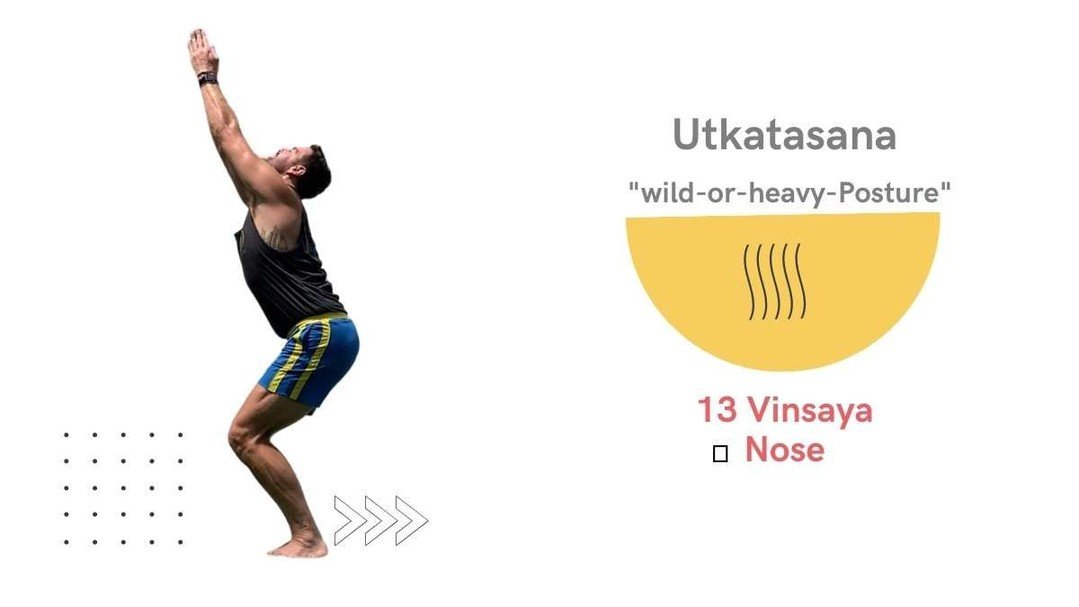
**Excerpt: Understanding Utkatasana: A Closer Look at the Benefits and Techniques**
Step into the transformative world of Utkatasana, or Chair Pose, where strength meets serenity. This foundational asana, often hailed as the "throne pose," invites practitioners to engage deeply with their bodies while cultivating mental clarity. As you simulate the act of sitting in an imaginary chair, you'll discover a multitude of benefits—from building powerful legs and core stability to enhancing flexibility and posture.
In this blog post, we dive deeper into the nuances of Utkatasana, exploring essential techniques that can elevate your practice. Learn how to properly align your body for maximum benefit, harness your inner focus, and stimulate your energetic flow. Whether you're a seasoned practitioner or just beginning your yoga journey, mastering Utkatasana offers a unique opportunity to strengthen both body and mind. Embrace the challenge and unlock a new level of empowerment on your mat!
https://michaeljoelhall.com/utkatasana-a-closer-look-at-the-benefits-and-techniques/?utm_source=SocialAutoPoster&utm_medium=Social&utm_campaign
Is Two Teachers One Too Many?
This is a video about the Ashtanga Yoga Dilemma: Is Two Teachers One Too Many? Reach out for support at https://michaeljoelhall.com/coaching if this is something you're reckoning with. 00:00 Introduction: The Teacher-Student Dynamic 00:13 Traditional Loyalty vs. Modern Needs 00:38 Benefits of Diverse Inputs 01:16 Balancing Depth and Breadth 01:43 Intentional Learning and Discernment 02:08 Conclusion: Evolving Beyond Hierarchical Gatekeeping
Read the essay →
This is a video about the Ashtanga Yoga Dilemma: Is Two Teachers One Too Many?
Reach out for support at https://michaeljoelhall.com/coaching if this is something you're reckoning with.
00:00 Introduction: The Teacher-Student Dynamic
00:13 Traditional Loyalty vs. Modern Needs
00:38 Benefits of Diverse Inputs
01:16 Balancing Depth and Breadth
01:43 Intentional Learning and Discernment
02:08 Conclusion: Evolving Beyond Hierarchical Gatekeeping
https://michaeljoelhall.com/video-is-two-teachers-one-too-many/?utm_source=SocialAutoPoster&utm_medium=Social&utm_campaign
Transfomration Through Consistant Effort
In this video, Michael Joel Hall discusses the transformative power of consistent effort in yoga practice, particularly during the early morning sessions in the Mysore room. Hall emphasizes the significance of facing challenges, not as obstacles, but as vital components of personal growth. He outlines three layers of transformation—physical, mental, and energetic—each contributing to overall change. The power of collective practice is highlighted, showing how individual breakthroughs can positively impact the entire community. Hall concludes by offering practical approaches to foster transformation, such as morning practice, community support, patient persistence, and mindful observation, while encouraging practitioners to embrace their unique journey. 00:00 Introduction: The Quiet Power of Practice 00:32 Embracing Darkness as a Teacher 01:05 The Three Layers of Transformation 01:58 The Power of Collective Practice 03:14 Practical Approaches to Transformation
Read the essay →
Yogic Agency: The Power of Choice in Your Practice
Harnessing Yogic Agency: The Power of Choice in Your Practice Discover the concept of yogic agency in this insightful episode, where we delve into the power of making conscious choices during your yoga practice. Learn how subtle decisions regarding your focus, physical engagement, breath, and overall intentions can lead to profound transformations both on and off the mat. Through intentional practice, find the balance between discipline and freedom, and create a mindful, resilient, and adaptable approach to yoga and life. Empower yourself to take ownership of your practice and its results. 00:00 Introduction to Yogic Agency 00:30 Understanding Yogic Agency 01:20 The Power of Small Decisions 02:16 Creating Your Vision 03:21 Balancing Discipline and Freedom 04:18 Final Thoughts on Yogic Agency
Read the essay →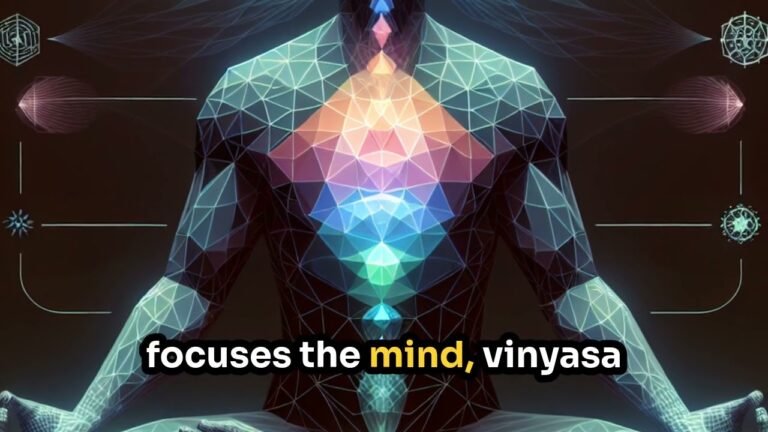
Vinyasa Yoga: Breath & Movement
Brahmari Pranayama: The Bee Breath Technique for Calm and Clarity This video introduces Brahmari Pranayama, also known as Bee Breath, a powerful yet simple pranayama technique. It involves creating a gentle buzzing sound on the exhale to calm the mind, regulate the nervous system, and enhance awareness. The practice is effective for soothing anxiety, improving concentration, and preparing for meditation. The video guides viewers through the steps of Brahmari, emphasizing a comfortable posture, natural breathing, and the importance of not forcing the exhale. Brahmari is beneficial for speakers, singers, and teachers, supporting speech and vocal clarity. Consistent practice can help cultivate inner stillness and clarity. 00:00 Brahmari (Bee Breath) Video 00:11 Introduction to Brahmari (Bee Breath) 00:32 How to Practice Brahmari 00:46 Benefits of Brahmari 01:00 Tips for Effective Practice 01:10 Conclusion and Consistent Practice
Read the essay →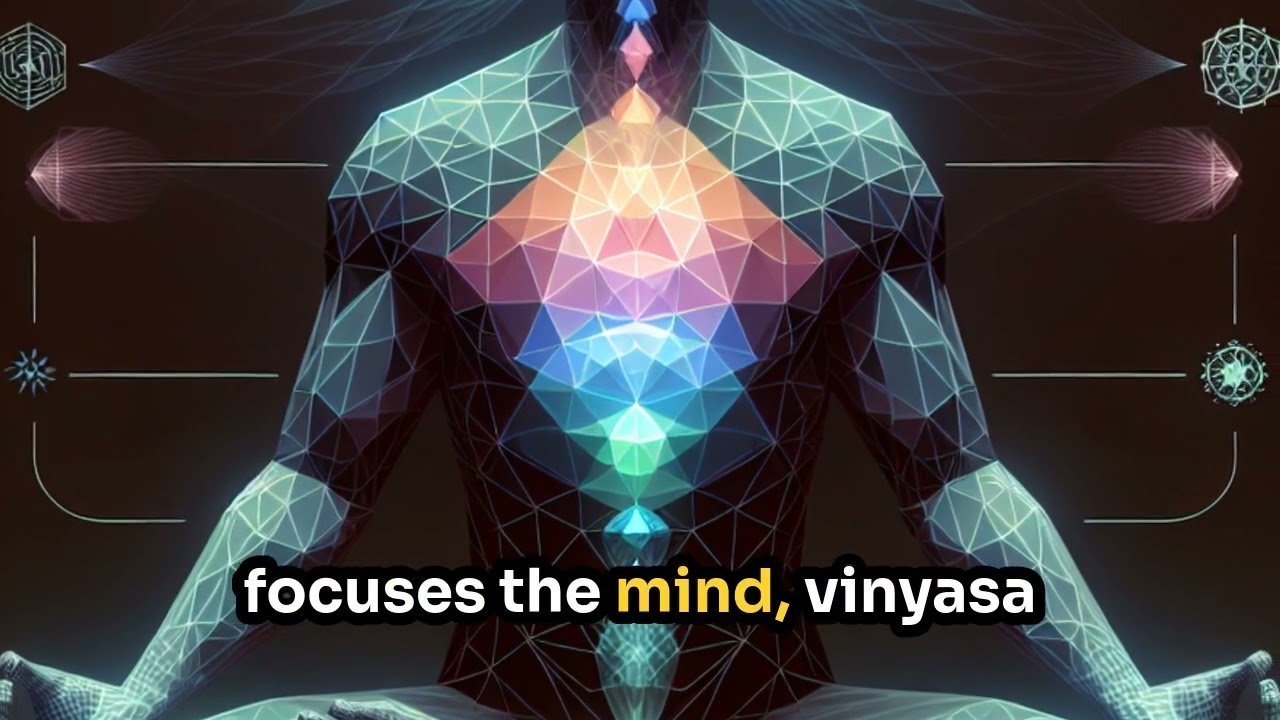
Brahmari Pranayama: The Bee Breath Technique for Calm and Clarity
This video introduces Brahmari Pranayama, also known as Bee Breath, a powerful yet simple pranayama technique. It involves creating a gentle buzzing sound on the exhale to calm the mind, regulate the nervous system, and enhance awareness. The practice is effective for soothing anxiety, improving concentration, and preparing for meditation. The video guides viewers through the steps of Brahmari, emphasizing a comfortable posture, natural breathing, and the importance of not forcing the exhale. Brahmari is beneficial for speakers, singers, and teachers, supporting speech and vocal clarity. Consistent practice can help cultivate inner stillness and clarity.
00:00 Brahmari (Bee Breath) Video
00:11 Introduction to Brahmari (Bee Breath)
00:32 How to Practice Brahmari
00:46 Benefits of Brahmari
01:00 Tips for Effective Practice
01:10 Conclusion and Consistent Practice
https://michaeljoelhall.com/video-vinyasa-yoga-breath-movement/?utm_source=SocialAutoPoster&utm_medium=Social&utm_campaign
WATCH YOUR INTERNAL
PRACTICE TO BE MORE
WATCH YOUR INTERNAL
Cognitive Biases and Their Impact on Your Ashtanga Yoga Practice
In this insightful video, Michael Joel Hall delves into the concept of cognitive bias and its significant implications for Ashtanga Yoga practitioners. He explains how biases are systematic deviations from the norm and how they can lead to judgment errors and groupthink. Hall emphasizes the importance of recognizing and checking these biases to achieve a clear and unclouded perception crucial for yoga. He details common biases such as availability heuristic, anchoring bias, confirmation bias, and hindsight bias, while illustrating how Ashtanga Yoga practices offer tools for critical thinking and self-awareness. Ultimately, the video encourages practitioners to use these insights to enhance their awareness, make better decisions, and transcend cognitive biases for a more impactful yoga practice. 00:00 Introduction to Cognitive Bias and Ashtanga Yoga 00:43 Understanding Cognitive Bias 04:31 Types of Cognitive Bias 07:20 Mitigating Cognitive Bias with Ashtanga Yoga 08:42 Building Awareness and Critical Thinking 09:29 Conclusion and Final Thoughts
Read the essay →
In this insightful video, Michael Joel Hall delves into the concept of cognitive bias and its significant implications for Ashtanga Yoga practitioners. He explains how biases are systematic deviations from the norm and how they can lead to judgment errors and groupthink. Hall emphasizes the importance of recognizing and checking these biases to achieve a clear and unclouded perception crucial for yoga. He details common biases such as availability heuristic, anchoring bias, confirmation bias, and hindsight bias, while illustrating how Ashtanga Yoga practices offer tools for critical thinking and self-awareness. Ultimately, the video encourages practitioners to use these insights to enhance their awareness, make better decisions, and transcend cognitive biases for a more impactful yoga practice.
00:00 Introduction to Cognitive Bias and Ashtanga Yoga
00:43 Understanding Cognitive Bias
04:31 Types of Cognitive Bias
07:20 Mitigating Cognitive Bias with Ashtanga Yoga
08:42 Building Awareness and Critical Thinking
09:29 Conclusion and Final Thoughts
https://michaeljoelhall.com/video-cognitive-biases-and-their-impact-on-your-ashtanga-yoga-practice/?utm_source=SocialAutoPoster&utm_medium=Social&utm_campaign
THE FULL PRIMARY
IDEA THAT ASHTANGIS
TAKE A LEAD
MAKING AND OVERLY
MICHAEL JOEL HALL
Ashtanga Yoga Teacher, Shala Director, and Founder
BECAUSE ASHTANGA IS

What Is a Yoga Executive?
Mastering the Yoga Executive Mindset: Leadership and Purpose in Practice Discover how to approach your yoga practice and life with intentional leadership, clarity, and purpose. Learn about the key principles such as visionary thinking, yogic agency, systems thinking, adaptability, discernment, and balance. This episode guides you on crafting your vision, setting intentional goals, practicing with purpose, adapting to changes, and celebrating your progress. Become a self-directed leader using yoga to build a purposeful and meaningful life. 00:00 Introduction to the Yoga Executive Mindset 00:32 Visionary Thinking in Yoga 00:56 Yogic Agency: The Power of Choice 01:20 Systems Thinking in Yoga Practice 01:39 Adaptability and Strategic Flexibility 01:57 Discernment and Balance in Practice 02:15 Qualities of a Yoga Executive 03:19 Becoming a Yoga Executive: Steps and Practices 04:09 Final Thoughts on the Yoga Executive
Read the essay →
Mastering the Yoga Executive Mindset: Leadership and Purpose in Practice
Discover how to approach your yoga practice and life with intentional leadership, clarity, and purpose. Learn about the key principles such as visionary thinking, yogic agency, systems thinking, adaptability, discernment, and balance. This episode guides you on crafting your vision, setting intentional goals, practicing with purpose, adapting to changes, and celebrating your progress. Become a self-directed leader using yoga to build a purposeful and meaningful life.
00:00 Introduction to the Yoga Executive Mindset
00:32 Visionary Thinking in Yoga
00:56 Yogic Agency: The Power of Choice
01:20 Systems Thinking in Yoga Practice
01:39 Adaptability and Strategic Flexibility
01:57 Discernment and Balance in Practice
02:15 Qualities of a Yoga Executive
03:19 Becoming a Yoga Executive: Steps and Practices
04:09 Final Thoughts on the Yoga Executive
https://michaeljoelhall.com/video-what-is-a-yoga-executive/?utm_source=SocialAutoPoster&utm_medium=Social&utm_campaign

Virabhadrasana A & B: Understanding the Count and Its Flow
**Unlocking the Warrior Within: A Journey Through Virabhadrasana A & B** Step onto your mat and prepare to unleash the vibrant energy of the Warrior! In our latest blog, "Virabhadrasana A & B: Understanding the Count and Its Flow," we delve into the essence of these powerful standing poses. Discover how the intricate interplay between breath and movement cultivates strength, stability, and an expansive heart. Join us as we break down the 14 transformative actions that guide each posture, ensuring your practice flows with intention and grace. From the grounding stance of Warrior I to the energizing lift of Warrior II, learn the anatomical nuances that foster alignment and engagement. Whether you're a seasoned practitioner or just beginning your yogic journey, this exploration promises to deepen your understanding and enhance your connection to each pose. Let the rhythm of the count become your ally as you dance through the asanas—transforming not just your practice, but your life off the mat as well. Dive in for insights that will empower your practice today! 🌟
Read the essay →
**Unlocking the Warrior Within: A Journey Through Virabhadrasana A & B**
Step onto your mat and prepare to unleash the vibrant energy of the Warrior! In our latest blog, "Virabhadrasana A & B: Understanding the Count and Its Flow," we delve into the essence of these powerful standing poses. Discover how the intricate interplay between breath and movement cultivates strength, stability, and an expansive heart.
Join us as we break down the 14 transformative actions that guide each posture, ensuring your practice flows with intention and grace. From the grounding stance of Warrior I to the energizing lift of Warrior II, learn the anatomical nuances that foster alignment and engagement.
Whether you're a seasoned practitioner or just beginning your yogic journey, this exploration promises to deepen your understanding and enhance your connection to each pose. Let the rhythm of the count become your ally as you dance through the asanas—transforming not just your practice, but your life off the mat as well.
Dive in for insights that will empower your practice today! 🌟
https://michaeljoelhall.com/virabhadrasana-a-b-understanding-the-count-and-its-flow/?utm_source=SocialAutoPoster&utm_medium=Social&utm_campaign

Ashtanga: Healthy Ambition for Collaboration Instead of Competition
Is your competition truly 'friendly,' or is it just burning you out? Visit michaeljoelhall.com/coaching to book a session if you'd like to chat about your practice.
Read the essay →Make Ashtanga inviting for beginners. TOO HARD FOR
TO INVITE PEOPLE IN
The Debate Around Practice Intensity
Michael Joel Hall discusses the paradox of Ashtanga Yoga, highlighting how it demands effort while requiring patience. The practice's slow, methodical progression is designed to build physical ability, resilience, discipline, and self-awareness. Hall explains that progress in Ashtanga isn't linear, focusing not just on mastering poses, but on readiness and overall emotional steadiness. He addresses the challenges of dealing with time delays in visible progress and emphasizes the importance of small, consistent efforts. Hall concludes that true advancement in Ashtanga is not about rushing forward but deepening presence in the moment. 00:00 Introduction to Ashtanga Yoga 00:21 The Non-Linear Path of Progress 00:43 The Psychological Challenges of Delayed Progress 01:16 Shifting Focus to the Present Moment
Read the essay →
Complimentary Forms of Exercise for Ashtanga Yoga
In this video, Michael Joel Hall discusses the ongoing debate within the Ashtanga yoga community about incorporating complementary exercises, such as swimming, running, and strength training, into their routines. He addresses how these activities can enhance cardiovascular endurance, joint stability, and overall strength without detracting from the primary yoga practice. Michael emphasizes the importance of integrating these exercises mindfully to prevent repetitive strain injuries and maintain a sustainable yoga practice over a lifetime. 00:00 Introduction to Ashtanga Yoga 00:10 The Need for Cross Training 00:30 Benefits of Cross Training 01:04 Integration and Balance 01:18 Conclusion: Sustaining a Lifelong Practice
Read the essay →
Transform Your Yoga Practice with CRM Systems
Discover how CRM systems can revolutionize your yoga teaching business with Michael Joel Hall! Learn the power of CRM tools in managing student relationships, automating administrative tasks, and creating a thriving yoga practice. In this video, we'll explore: - How CRM systems build stronger connections with students by personalizing communication and tracking progress. - The benefits of automating scheduling, invoicing, and financial management for yoga teachers who desire more freedom and efficiency. - How to use CRM for designing and managing classes, workshops, and retreats smoothly. Unlock the potential for predictable income and professional growth, all while focusing on your passion for teaching yoga. Don't miss this opportunity to take your yoga business to the next level! Subscribe for more insights and tips: [Your Channel Link] #YogaBusiness #CRMSystems #YogaTeachers
Read the essay →
Enhance Yoga Engagement with CRM Strategies
Discover how a CRM can transform your yoga classes into a highly engaging environment. Learn the secrets of using student profiles to tailor your communication and build a supportive community with Michael Joel Hall. 🧘♀️ By effectively using student segmentation, you can personalize experiences, whether you're sending breathing exercises or advanced workshops to the right audience. Find out how FluentCRM ensures timely and meaningful communication that strengthens student connections and retention. Implement these strategies for a thriving yoga practice and community today! #YogaEngagement #CRMforYoga #FluentCRM
Read the essay →NINETY MINUTE BOX,
MINDSET IS THE REAL CHALLENGE, THEY ARE DOING, AND

It Should Be a Spiritual Focus, Shouldn’t It
Michael Joel Hall discusses the practice of Ashtanga Yoga as a vehicle for self-inquiry, awareness, and transformation. He emphasizes that it is more than just physical postures, involving breath, movement, and meditation to foster presence and stillness. Hall highlights the importance of ethical principles and turning practice into a way of living. The objective is to cultivate flexibility of the mind, recognizing deeper transformations that align practice with life. 00:00 Introduction to Ashtanga Yoga 00:15 Beyond Physical Postures 00:32 Ethical Principles and Living Practice 00:42 Spiritual and Physical Connection 00:56 Deeper Transformations 01:05 Applying Meditation in Life
Read the essay →
Michael Joel Hall discusses the practice of Ashtanga Yoga as a vehicle for self-inquiry, awareness, and transformation. He emphasizes that it is more than just physical postures, involving breath, movement, and meditation to foster presence and stillness. Hall highlights the importance of ethical principles and turning practice into a way of living. The objective is to cultivate flexibility of the mind, recognizing deeper transformations that align practice with life.
00:00 Introduction to Ashtanga Yoga
00:15 Beyond Physical Postures
00:32 Ethical Principles and Living Practice
00:42 Spiritual and Physical Connection
00:56 Deeper Transformations
01:05 Applying Meditation in Life
https://michaeljoelhall.com/video-it-should-be-a-spiritual-focus-shouldnt-it/?utm_source=SocialAutoPoster&utm_medium=Social&utm_campaign
EVOLVING SYSTEM,
that we're trying to block
improve your back bend
ITS ROOTS?
WITHOUT LOSING ITS

Integrating the Physical and the Spiritual
This video features Michael Joel Hall discussing the inherent link between physical mastery and spiritual depth in Ashtanga Yoga. Hall explains the integrative approach of the Tristhana method which combines breath (pranayama), posture (asana), and gaze (drishti) to create a holistic path of transformation. He emphasizes the symbiotic relationship between body and spirit, where physical practice enhances mental clarity and emotional balance, and spiritual engagement infuses intention into movements. Progress in Ashtanga Yoga is measured by how the philosophy is applied to physical postures and further integrated into everyday life. 00:00 Introduction to Ashtanga Yoga 00:18 The Trisana Method: Breath, Posture, and Gaze 00:42 Symbiotic Relationship Between Body and Spirit 01:03 Applying Philosophy to Practice 01:35 Conclusion
Read the essay →Evolving approach keeps practice. PRACTICE IS NOT
Ive recieved a lot of shame and pressure from my colleagues over the years about my open approach — an approach that is now considered the gold standard in circles that respect both the science of strength and conditioning and yoga as an indigenous insight practice.
Am I mad? No. I’m too busy being blessed.
Since my parents needed full-time care for a while (and my clientele has been largely in person) ive been busy. My book got backburnered for a few months. I want the world to have it.
Im so happy that people who dont have the same caretaking work that I have are available to usher in the conversations i want to be having. And I hope my little talking heads have been valuable to you guys. Sometimes my colleagues get a bit myopic and territorial. I’m appaled by that, especially since my approach dismantles that.
As the federal government’s yoga consultant, ive been busy. You get it.
Since i work with people in real life, these systems and processes I have refined over the last 10 years have been siloed. I want them out in the open.
YOU'RE NOT THE PERSON WHO'S SELLING IT.
HISTORICALLY,

Tha bandhas pushing
& pulling blood
37.9°C
36
@simonborgolivier
Lineage and Authority in Ashtanga Yoga
Michael Joel Hall discusses the complexities of lineage and authority within the practice of Ashtanga Yoga. He explores the significance of understanding and responsibility over titles, questioning whether adherence to a single teacher or learning from multiple sources is more beneficial. Hall addresses the traditional value of direct transmission from teacher to student and the modern debates on loyalty and credibility in teaching. He highlights the ongoing tension between Mysore-authorized teachers and self-taught instructors, emphasizing that true teaching skill is reflected in understanding, embodiment, and ethical leadership rather than formal authorization. 00:00 Introduction: Questioning Titles and Responsibility 00:26 The Complexity of Lineage and Authority in Ashtanga 00:59 Debating the Value of Multiple Teachers 01:22 The Issue of Authorization and Teaching Integrity
Read the essay →WHEN YOU SEE A CONTEMPORARY
my thoughts on ashtanga community:
IT REALLY IS SAYING
LOOK AT
HEIGHTENED
APPRECIATION.
Cultural and Philosophical Discussions in Ashtanga Communities
In this video, Michael Joel Hall discusses how Ashtanga Yoga is more than just a sequence of postures; it represents a lineage, a philosophy, and an extensive system rooted in ancient traditions. As the practice spreads globally, Hall emphasizes the need to honor its origins while ensuring its relevance today. He raises important questions about engaging with the philosophical foundations of Ashtanga beyond the physical practice, balancing tradition with necessary evolution, and discerning the line between adaptation and appropriation. The future of Ashtanga, according to Hall, lies in how it is taught, practiced, and questioned, ensuring the practice remains strong through thoughtful evolution. 00:00 Introduction to Ashtanga Yoga 00:40 Honoring Tradition in Modern Practice 01:12 Navigating Change and Evolution
Read the essay →
Pragmatically Integrating Philosophy into Ashtanga Yoga to Ensure Best Outcomes
In this video, Michael Joel Hall discusses the importance of integrating all eight limbs of Ashtanga yoga, rather than focusing solely on the physical practice of asanas. He addresses the potential pitfalls of modern practices, such as the risk of turning yoga into just another workout, the impact of social media on the practice, and the ethical dilemmas faced in a performance-driven culture. Hall advocates for a more comprehensive approach that includes elements like meditation, ethical study, and understanding of foundational texts to truly cultivate a holistic yoga practice. 00:00 Introduction to Modern Ashtanga Yoga 00:08 Criticism and Holistic Approach 00:44 Ethical Dilemmas in Social Media 01:18 Integrating All Eight Limbs 01:31 Conclusion
Read the essay →
In this video, Michael Joel Hall discusses the importance of integrating all eight limbs of Ashtanga yoga, rather than focusing solely on the physical practice of asanas. He addresses the potential pitfalls of modern practices, such as the risk of turning yoga into just another workout, the impact of social media on the practice, and the ethical dilemmas faced in a performance-driven culture. Hall advocates for a more comprehensive approach that includes elements like meditation, ethical study, and understanding of foundational texts to truly cultivate a holistic yoga practice.
00:00 Introduction to Modern Ashtanga Yoga
00:08 Criticism and Holistic Approach
00:44 Ethical Dilemmas in Social Media
01:18 Integrating All Eight Limbs
01:31 Conclusion
https://michaeljoelhall.com/video-pragmatically-integrating-philosophy-into-ashtanga-yoga-to-ensure-best-outcomes/?utm_source=SocialAutoPoster&utm_medium=Social&utm_campaign
Transform Your Yoga Studio with Automated CRM Solutions
Unlock the potential of your yoga studio by integrating CRM solutions to automate and personalize student interactions! 🌟 As a dedicated Mysore style Ashtanga yoga teacher, discover how a robust CRM system can streamline processes, bring consistency, and enhance satisfaction in your studio. Learn to manage student profiles effortlessly and explore the magic of automated communication workflows using FluentCRM for an unparalleled yoga teaching experience. ⚡ Be ready to explore: - Automated student onboarding processes - Personalized communications via email and SMS - Efficiently managed student data and preferences Dive into the video and revolutionize your teaching methodology today! #Yoga #CRM #StudioAutomation
Read the essay →
Home Practice Challenges for Ashtanga Yoga Practitioners
In this video, Michael Joel Hall discusses the challenges and benefits of practicing yoga at home without a teacher. He emphasizes the importance of self-awareness, consistency, and accountability. Hall warns about potential misalignments and the misuse of mirrors or video recordings, suggesting relying on internal systems like breath and mindful repetition. He stresses the significance of the Triana method, which includes breath, posture, and gaze, in maintaining a structured practice. Hall concludes that home practice should be approached with intention, focusing on self-discipline rather than perfection. 00:00 Introduction to Self-Discipline in Practice 00:15 Challenges of Home Practice 00:32 Tools and Techniques for Self-Feedback 00:54 The Triana Method and Its Importance 01:03 Balancing Consistency and Flexibility 01:15 Cultivating Self-Discipline and Awareness
Read the essay →SELF INQUIRY.
Ashtanga Yoga Teacher, Shala Director, and Founder
SPACE, FOCUSING ON
COMMUNITY ISN'T
ASHTANGA'S FUTURE
w/ a chair

Who Am I? The Journey to Discover Your True Self
Ever asked yourself 'Who am I?' and found no simple answer? 🌿 Welcome to day 1 of our transformative course, 'Dharma Intention and Wisdom,' where we dive deep into this profound question. Discover how self-inquiry leads to wisdom and alignment with your true purpose. You’ll explore: 🔹 The essence of self-inquiry in Ashtanga yoga 🔹 Moving beyond societal labels 🔹 Using patience for deeper insights Start your journey of self-discovery today and unlock the wisdom within. #SelfInquiry #Dharma #PersonalGrowth
Read the essay →NOT ABOUT REJECTING
EARLY BIRDS BOOK NOW
Come retreat with us Dec 3-8 (early bird price thru Jun 1)
Ashtanga Yoga Teacher, Shala Director, and Founder
PAST CONTROVERSIES
AUTHORITATIVELY AND
There was a time when I practiced Ashtanga yoga and I had a real idea of getting ahead— more poses, prettier, stronger. But as many of you know, ive had major challenges along the way—body and mind. But my spirit… I noticed that when my feelings around practices moved towards sorrow or frustration, a friction would arise. Sometimes you just have to watch yourself get hot, ya know? Its so important not to flinch or look away from your feelings! Periods of difficulty or ‘stink’ are just inherent to pursuing ambition.
The frustration I experienced within my yoga practice is of what I think I want my practice to be, and it has a way of stealing the joy from whatever my practice is. Youve heard these things before.
Once youve seen it, the way that our reactions dont align with our espoused beliefs— and appreciating the humanity in it - it takes hypeocict and turns it into levity— its FUNNY to be so bent out of shape about something so full of joy.
Healthy ambition must exist in the realm of non harming, and so when our desires for advancement bring us suffering, we must know it isn’t just about advancement— be ause a real yoga is equimonious. No, it’s about fear of death and the reality of dying before i get some brass ring (or perpetually moving goalpost).
But like I said, once youve seen see it, you cant unsee it.
And, ya know, im still having fun.
And when I’m not, I say something like “try to have a good time before ya die, wouldnt ya, hall?”
Come retreat with us Dec 3-8
(early bird price thru Jun 1)
Mayan Mysore Adventure
Come retreat with us Dec 3-8 (early bird price thru Jun 1)

1. Why resistance bands work for end-range strength
Resistance bands provide what’s called variable resistance: the further you stretch them, the more resistance they provide. This makes them perfect for training end-range strength—that’s the strength required when your muscles are either fully lengthened or fully shortened. Think of the top of a backbend, the deepest point in Supta Kurmasana, or holding your leg behind your head: these are all end-range positions.
Unlike free weights, bands make it harder as you move deeper into the range, which is the opposite of most real-life strength patterns (where you tend to be weakest at the extremes). So by training at those extremes with resistance bands, you’re preparing your muscles and joints to be strong, stable, and supported in yoga’s most demanding positions.
2. Why that’s good for Ashtanga yoga
In Ashtanga, especially the Intermediate Series and beyond, we are constantly exploring the limits of flexibility and control. But:
• Flexibility without strength is like stretching a rubber band with no tension—it’ll snap or sag.
• End-range strength helps prevent injury by supporting joints in vulnerable positions—like Kapotasana or Karandavasana.
• It also helps balance the nervous system’s stretch reflex. If your nervous system doesn’t trust you to be strong at end-range, it will limit your flexibility. But when it feels you’re strong and stable, it lets you go deeper—safely.
3. Systems Thinking
From a systems view, resistance bands act as an elegant feedback mechanism. They amplify the demand precisely when the system (your body) is most vulnerable—end-range. By strengthening the feedback loop between mobility, control, and proprioception, bands help shift the whole system (your practice) toward resilient adaptability—aka fewer injuries and deeper poses with less drama.
They are really great for proprioception and intrinsic stability.
ashtanganurse
Practicing yoga is a privilege.
So is choosing to vaccinate your kids... more
®
IS YOGA JUST A
PERSOI '.
PRACTICE?
know what you're thinking.
4 likes • 1 reply

Individualized Sequencing in Ashtanga Yoga
Individualized Sequencing in Ashtanga Yoga --- **Introduction** Hello! Michael Joel Hall here, diving into the world of individualized sequencing in Ashtanga Yoga. While Ashtanga is known as a structured system, it's crucial to realize that adaptability is its core strength. Without it, the practice becomes fragile. The traditional sequence, developed throughout the late 20th century, is designed to cultivate strength, flexibility, and resilience through its progressive and intentional design. But what happens when the system faces the individual realities of injuries, physical limitations, and unique biomechanics? --- **Understanding Challenges and Adaptations** Ashtanga Yoga, like any practice, meets unique individual challenges. When faced with pain, limitations in breath stability, or when a posture aggravates an existing injury, adjustments become essential. It’s vital to adapt intelligently without compromising the essence of the practice. Obstacles such as existing injuries or unique physical structures can sometimes act as barriers that cannot be overcome by sheer determination or force. --- **Integrating Therapeutic Adaptations and Vinyasa Flow** Therapeutic adaptations can be integrated smoothly without breaking the vinyasa count, by maintaining the rhythm of breath and incorporating regressive movements that facilitate appropriate breathing and motion. The core purpose of Vinyasa is to preserve the continuous flow of energy. As long as substitutions support these core goals rather than disrupt them, why not embrace them? This way, the integrity of the system remains intact. --- **Balancing Tradition with Sustainability** One of the significant challenges in modern Ashtanga Yoga is balancing tradition with the sustainability of practice. As we incorporate our western conditions and lifestyles, rigid adherence can lead to more injuries or create unnecessary exclusion. There’s a misconception that modifying the practice will dismantle its structure, but that only happens if modifications are made without discernment. Understanding why the sequence exists and adapting it with respect and intelligence gives it a long-term vision. For me, this practice extends beyond a single session. It’s an insight practice—a lifelong journey. Don’t you want a practice that offers lifetime insights? --- In conclusion, individualized sequencing in Ashtanga Yoga is about making intelligent adaptations to honor both the tradition and personal needs. This nuance allows for sustainability and inclusivity, ensuring that the practice benefits each practitioner uniquely over their lifetime.
Read the essay →Not a class. A practice.
What is Mysore Style Ashtanga Yoga?

Managing Your Energy in Ashtnaga Yoga
Title: Harnessing Energy in Ashtanga Yoga: From Grounding to Expansion --- **Introduction to Energy Management in Ashtanga Yoga** Hello, hello, hello! Michael Hall here, and today I want to share some insights on managing your energy within the practice of Ashtanga Yoga. This practice transcends the physical; it's an intricate system working harmoniously with your nervous and energetic systems. The sequence of postures is methodically designed to guide prana—your life force—through the body, balancing effort with ease and integrating activation with relaxation. --- **Understanding the Primary Series** Each series in Ashtanga has a deliberate arc, beginning with the Primary Series. This series is all about building stability—it wrings out the body, ensuring your hips and shoulders can twist and your spine can move freely. Beyond its physicality, the Primary Series teaches you how to ground yourself, directing your prana downwards into the earth, known as Ana. This foundational grounding is crucial as it sets the stage for understanding the upward rising energies in later series. --- **Exploring the Intermediate Series** Progressing into the Intermediate Series, the practice shifts focus to an upward energy flow. This series activates your internal awareness and internal rotations, requiring greater breath regulation and a sharper mental focus. It’s not just about moving energy up; it's about mastering the internal aspects of your practice to cultivate an expansive, inward journey. --- **Advancing to the Advanced Series** Carrying the principles of the previous series forward, the Advanced Series amplifies both strength and the feeling of lightness and expansion. These poses are wildly intense, demanding refined control to maintain ease amidst the challenge. This series is about finding balance through strength, enhancing your ability to manage energy in demanding postures. --- **Optimizing Energy in Practice** Practicing multiple series calls for energy optimization, not merely endurance. Some practitioners fall into the trap of overexerting early on, leaving little energy for later postures. Effective energy management involves using your breath to contain and channel prana wisely, avoiding unnecessary leakage of effort that leads to exhaustion. --- **Breath Control and Pacing** Maintaining a steady breath is vital, as erratic breathing can quickly drain your energy. Mastering breath control requires pacing your intensity, resisting the urge to push too early, thereby maintaining balance and ensuring consistent energy throughout your practice. --- **Self-Regulation and Wise Energy Use** The structure of Ashtanga Yoga is self-regulating, teaching practitioners to use their energy wisely. The challenge lies not just in your physical capacity to perform each posture, but in learning to harness your energy efficiently so that your practice becomes an energizing, rather than exhausting, experience. --- **Conclusion: Energizing Your Practice** Ultimately, the goal of energy management in Ashtanga Yoga is to leave practice feeling energized, not depleted. By understanding the arcs of each series, utilizing breath control, and pacing your intensity, you harness your energy effectively, fortifying the union of body, mind, and spirit. Embrace the journey of mastering your energy in Ashtanga Yoga, and transform your practice into a source of vitality and inner balance.
Read the essay →
Adding More Poses, Adding New Series_ Ashtanga Asana
Title: Embracing Progress: Adding More Poses and Exploring New Series in Ashtanga Yoga --- **Introduction to Ashtanga Yoga** Hello, I've been reflecting on the Ashtanga Asana practice, specifically about integrating more poses and exploring new series. Advancing in Ashtanga yoga isn't about simply adding new postures. Perhaps you've heard this before, but it's important to emphasize its truth. **Understanding the Purpose of New Postures** Ashtanga yoga is fundamentally a system for personal insight and growth. The progression to new postures allows us to deepen our understanding and application of previous learnings. This journey from one series to the next, for instance, from the primary to the intermediate series, is built upon developing depth in practice. The primary series serves as therapy for the physical body, while the intermediate series, as Rolf highlights, focuses on cleansing the nervous system. Introducing poses from the next series requires knowing the purpose they serve and breaking them down into manageable pieces. This understanding ensures these stimulating postures enhance your practice without disrupting your life. **Balancing Primary and Intermediate Series** Maintaining balance as you transition from primary to intermediate series is crucial. You must ground yourself in the primary series, observing your breath and nervous system, before taking on new challenges. Progression should offer a challenge, not overwhelming pressure. Deciding when to progress is equally critical. Some teachers may suggest a gradual introduction, like combining half of the primary with half of the intermediate series. Such strategies provide a mix of benefits beyond rigid sequential orders, catering to students ready to deepen their practice. Feeling integrated and effortless in your primary postures can signal readiness for the next series. Steady breath through back-bending and effective energy management will also be necessary for what follows. **Transitioning Between Series** Recovery and readiness are essential before embracing a new series. Chronic depletion suggests you're not ready for something new. Understanding the shift from primary’s external rotation focus to intermediate’s internal rotation and spine extension is key. Premature advancement can lead to overstimulation and agitation instead of nourishment and transformation. Success in Ashtanga isn't about perfecting postures, but evolving understanding through practice. Advancement means readiness to embrace each series with the honor it deserves. The best transitions are those that respect your past learnings and future aspirations without rushing past present lessons. Embrace the practice at your pace, whether you're in the midst of transitioning or building foundational strength. Remember, Ashtanga is as much about the journey as it is about the destination. Enjoy and respect each stage of your practice as it unfolds.
Read the essay →MYSORE MORNING
@mysore_shala14
GRACIAS POR CADA DÍA QUE INICIAMOS JUNTXS 💚
community amor
JUEVES MYSORE MORNING @mysorе_chula14 GRACIAS POR CADA DÍA QUE INICIAMOS JUNTXS 💚 community amor
I follow a push/pull/leg split, 3/on 1/off. I dont follow a neat m/w/f 7 day a week schedule— I rotate as best I can.
I like to lift and then practice shortly after, or I try to practice early and lift later (8 hours later, in fact).
When I’m short on time, I do a full body work out 2-3x a week, alternating between compound pushing and pulling movements.
If I’m in a hypertrophy (mass building) phase, im lifting for about an hour. If I’m in a maintenance phase, its about 30 minutes. If i need an attitude adjustment, its a group class.
Bench Press
RDL
Come retreat with us Dec 3-8 (early bird price thru Jun 1)
Early bird ends this weekend!!
Early bird ends june 1!!
Come retreat with us Dec 3-8 (early bird price thru Jun 1)
3 years after getting hit by a car. 2 years after getting hit by a bike. Then one day the feeling of potential movement returns, the heart opens again, and the pieces wedge back into place.
Patience, patience. All the slow and tedious and beautiful work that is so mundane to behold sans context has set conditions for continuing on.
Yoga practice done without attachment to outcome — with a sincere desire for non violence, honesty, and not wanting too much has a way of providing all the outcome one might need for well being.
We must practice for both skill and pleasure.
At first its scales, and then its compositions. Soon, we create our own music. We iterate and iterate. We remix. Freedom comes through experience and discipline.
At some point we burn the method. We destroy the reference. The joy in creation must be met in equal parts by destruction for the dance to be sustained. And this is how a purposeful life becomes art.
Only from formlessness can a form be created.
part of the process of karma
creation mindset where we are
I’m sort of known for my resilience, which is a nice way of saying I’ve seen some sh*t and seem fairly well adjusted. I even got to write about resilience during times of political unrest for @yogajournal . I’m also known as well as my transparent, explicit approach to yoga and life.
I’m full of nonsense and laughter— with high concienciousness, and low agreeability. I help people understand yoga by becoming a team player— again, with high conscienciousness and low agreeability 😅😅 Independent thinkers who can be team players are like improv triple threats.
The secret to life is “Yes, and.”
Here’s my CV For the last half decade, including the trauma porn.
2020 Covid + RIP Brother & Sister-in-Law + first Functional Ashtanga training + Parents in lockdown in Mexico after moving w/brother & him dying.
2021 Opened @theyoga.club (omg no way)
2022 Evolved functional Ashtanga to Ashtanga Tech with Cory & Heather
+ Hit by car while biking + broken wrist and rib
2023 Turned 40
+ Hit by bicyclist and broken ankle and reinjured rib + huge success with peer support initiatives
2024 Quit Drinking and kept on rehabbing + changed my body radically (again) + took on the neighborhoods drug problems
2025 Infinite Possibilities
I’m the friendly neighborhood ashtanga yoga teacher, whose mysore program has been going at it uninterruptedly since 2013.
I struggle to marry commerce and art in this format, so do bear with the high brow-low brow of it. I have a lot of opinions after doing this for 12 Years, and I hope to cast a wide net. .
+ Hit by bicyclist / broken ankle / reinjured rib
2024 Quit Drinking + kept on my yoga + took some responsibility
The Yoga of Synthesis is a holistic approach to spiritual practice that integrates the four major yogic paths—Karma Yoga (selfless service), Bhakti Yoga (devotion), Jnana Yoga (knowledge), and Raja Yoga (meditation and mind control)—to develop all aspects of the practitioner: body, heart, intellect, and soul. Popularized by Swami Sivananda, it acknowledges that most individuals benefit from a balanced cultivation of these diverse faculties rather than an exclusive focus on one path.
In the context of Ashtanga Yoga, this synthesis naturally unfolds through the eight limbs outlined by Patanjali, where physical practice (asana), ethical living (yama and niyama), breath work (pranayama), and meditative absorption (dhyana and samadhi) together mirror this integrative approach.
It’s systems thinking in spiritual form: each element supports and influences the others, creating a dynamic interplay that guides the practitioner toward self-realization.
the world.
The natural entropy that is
Oppressors going to oppress.
Its your body, its your choice.
These aphorisms help push back against self-reinforcing loops of domination—social, cultural, political, even spiritual. It’s a systems insight dressed in streetwise wisdom. Could I be any more explicit? Hello!
In Systems Thinking, Donella Meadows would call this a reinforcing feedback loop—where the outputs of a system feed back into it and amplify its behavior. Oppression, like colonization, is often maintained not by a single decision or act, but by persistent patterns, institutions, and narratives that replicate themselves over time.
This is why practices like Ashtanga Yoga can be quietly revolutionary. When practiced with awareness, they cultivate true inner freedom—and the ability to see, question, and ultimately disrupt these harmful loops. But yoga divorced from its roots—or co-opted by the very systems of oppression it seeks to dissolve—can also become just another tool of colonization. Which is why the how and why of practice matter as much as the what.
Discipline matters, but independent thinking, high conscientiousness and empowered agency should be the emergent properties from practice.
In reclaiming bodily autonomy, ethical clarity, and collective responsibility, you’re not just doing yoga—you’re decolonizing it.

agcu
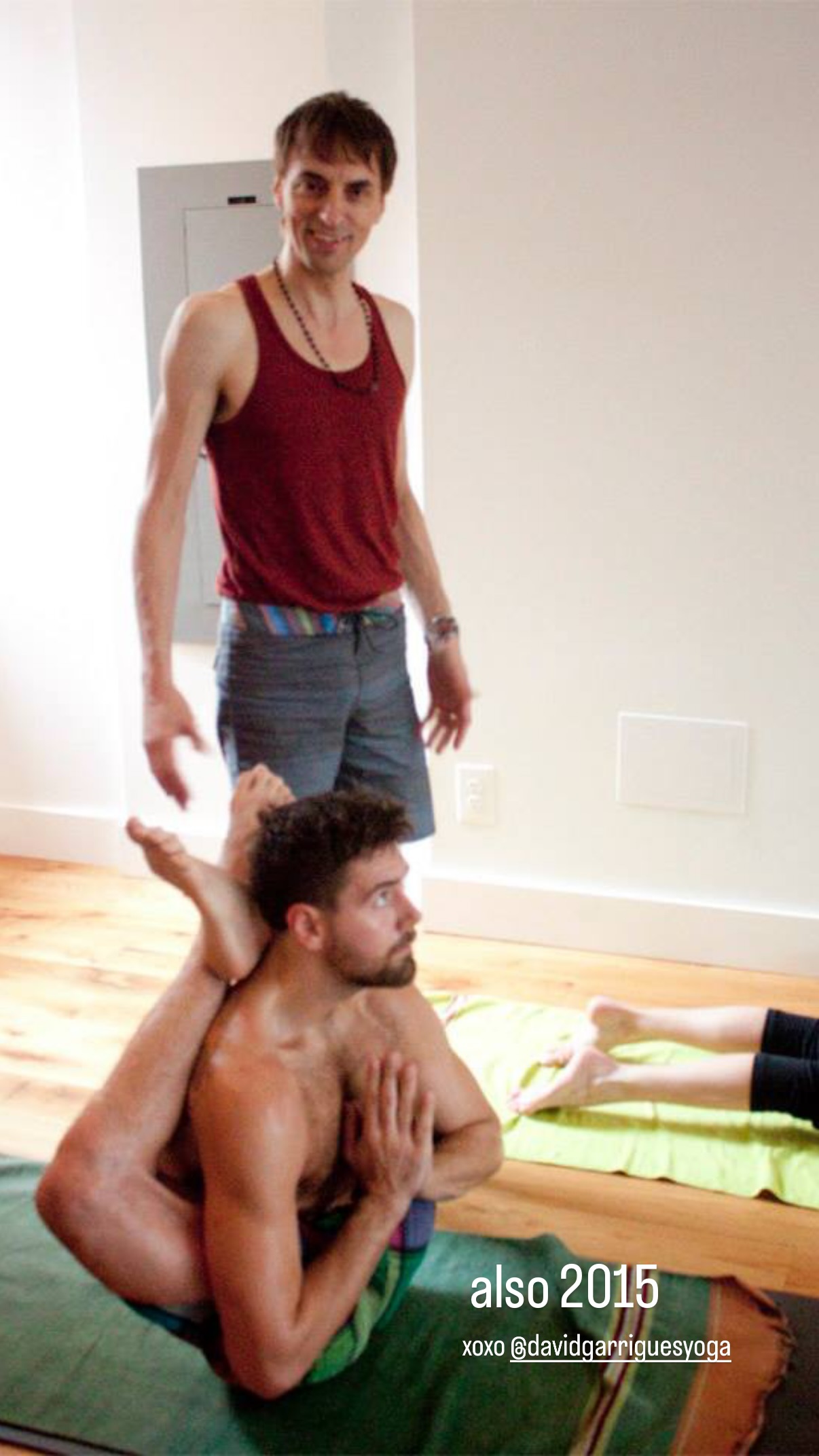
хохо Gdavidgarriguesyoga
ashtangayoga_one and oneyoga_shala
to my teachers
bringing honor to my teachers
precious bellweather, my daily crucible
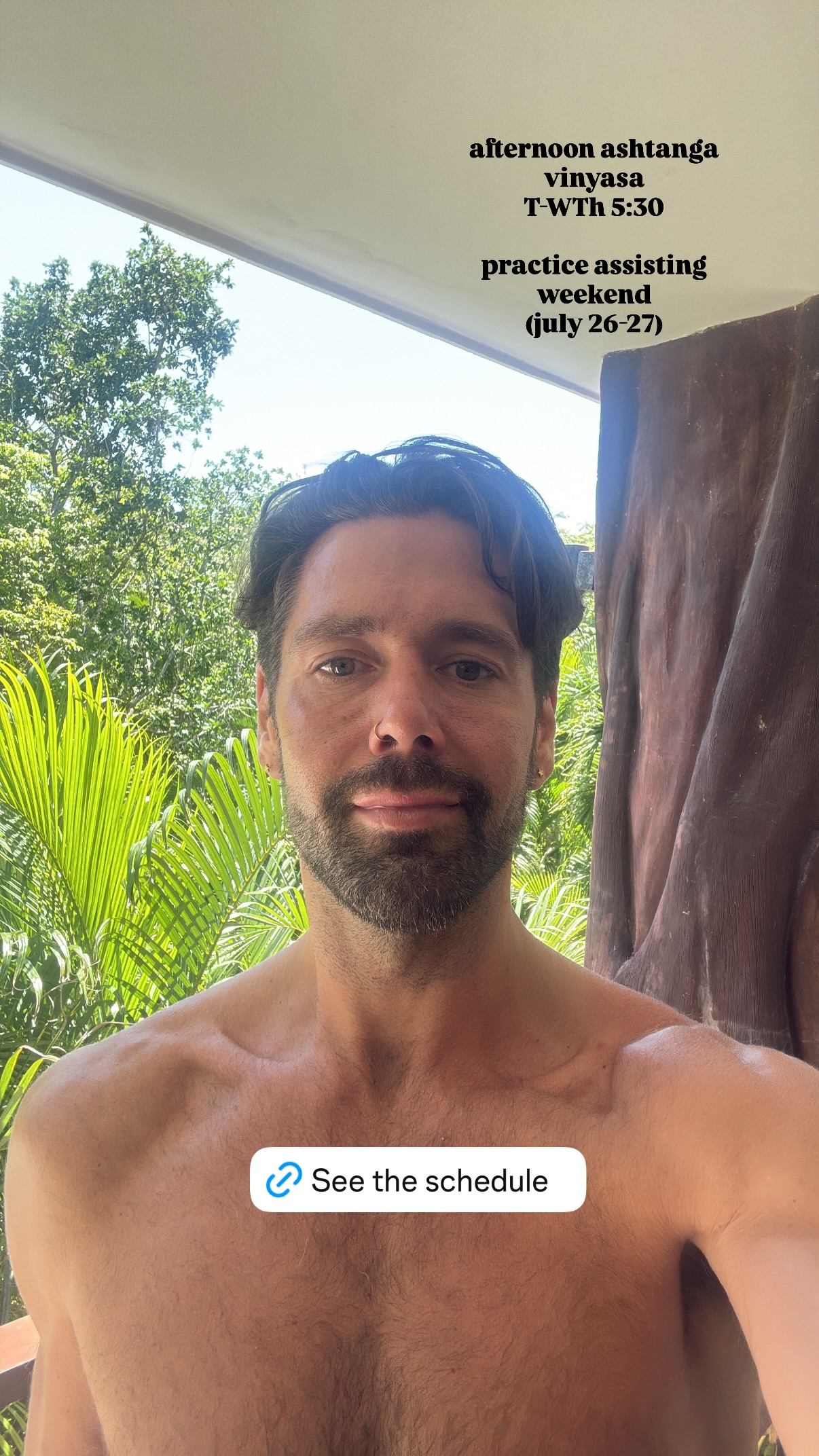
T-WTh 5:30
practice assisting weekend
(july 26-27)
vinyasa
T-WTh 5:30
practice assisting
weekend
(july 26-27)
в
See the schedule
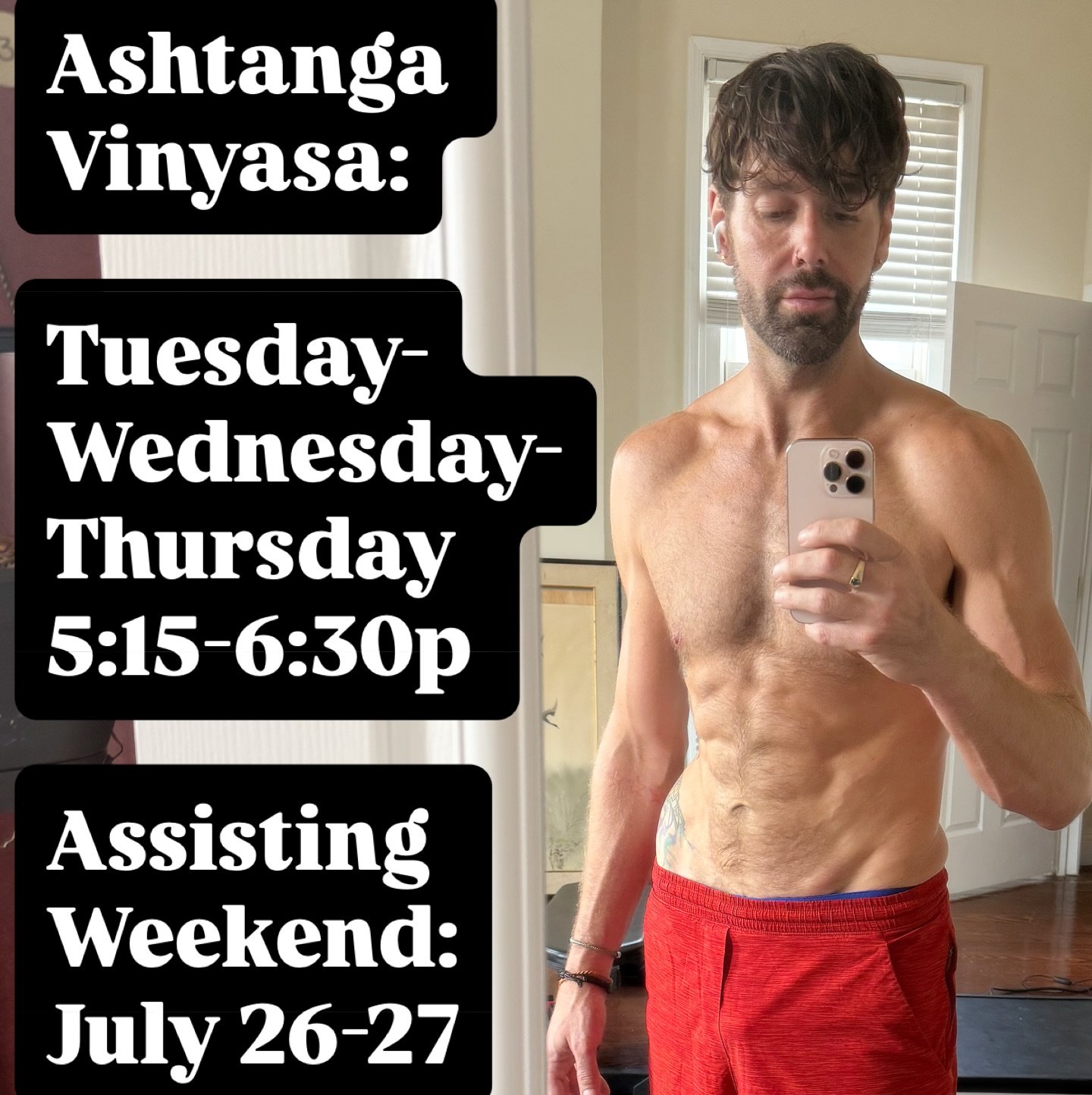
Ashtanga Inspired Vinyasa
Tuesday, Wednesday, Thursday: 5:15-6:30p
in person and online @theyoga.club
Assisting Weekend
July 26-27
Peer support and play!
I’ve often spoken about systems and how they behave, and what I see happening with Ashtanga, particularly on platforms like Instagram, is a classic example of a distortion of purpose within a system.
We have a practice, Ashtanga, that by its very nature demands discipline, patience, and internal focus – tools for transformation and self-realization. It’s designed to help us understand ourselves and regulate our nervous systems, to feel better from the inside out.
Yet, what we often see is a system, driven by commercial imperatives, that reduces it to a “visual commodity.” Suddenly, it’s about aesthetics, hyperflexible bodies, and “bite-sized” content.
This isn’t the whole picture, is it? It’s a feedback loop where what’s easily digestible and visually appealing gets amplified, even if it sacrifices the true essence.
Even I, in my own work, might find myself in a situation where I’m participating in the very system I critique, currently running an ad and using my six-pack (fleeting though she may be) as a vehicle for presenting information to get people into yoga and meditation.
That’s the challenge of working within complex systems – there’s often a degree of complicity just by being a part of them. But the critical point is to always remember the true goal of the system.
Ashtanga, despite these external pressures and misrepresentations, persists. Why? Because, as with any truly effective system, it works. It provides real self-love and deep understanding for those willing to commit and dig deeper. It’s a powerful reminder that while external pressures can distort and simplify, the underlying purpose and effectiveness of a well-designed system can still endure for those who seek its authentic benefits.
Come practice.
know, POSES
EMBRACE ITS
PATIENCE, AND AN
Real talk about Ashtanga Yoga with @MichaelJoelHall Amazing teacher and a true forever student of the practice
MICHAEL JOEL HALL
Ashtanga Yoga Teacher, Shala Director, and Founder
AND YET, I JUST RAN
Real talk about Ashtanga Yoga with @MichaelJoelHall amazing teacher and a true forever student of the practice
This implies that the asana and sequence are what make it authentic— get a grip. Authenticity in Ashtanga Yoga isn’t owned by a family’s sequence.
This is an indigenous insight practice.
It’s a living system.
Held up by people all over the world.
Taught in basements, bedrooms, clubs, and community halls.
Passed down not just by bloodline, but by commitment.
Yes—social media can flatten it, can turn philosophy into posture.
But it can also connect, educate, expand access.
It’s not the platform.
It’s how we use it.
I don’t have to code switch to belong here.
Queer, white, scrappy, tall, vain, neurospicy—I practice.
That’s the thread.
Study. Integrity. Self-reflection. Daily tools.
They make us easier to be around.
That’s the real flex.
And that’s what keeps Ashtanga alive.
#ashtangayoga #authenticyoga #mysorestyle #livingtradition #yogaphilosophy #yogaispractice #systemsnotstyles
IT'S, WHEN I USE
WHO LOOKS LIKE ME
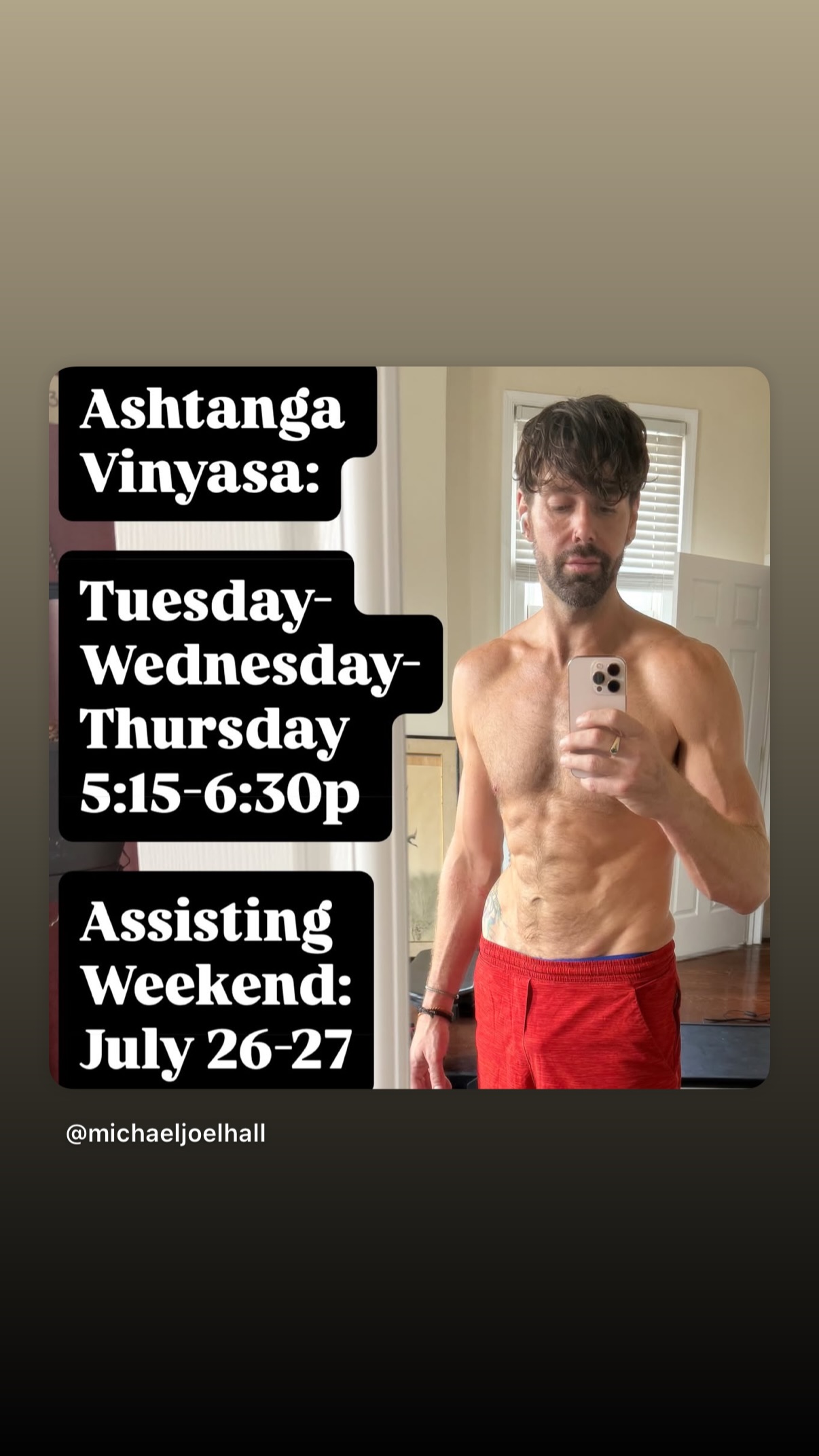
Vinyasa:
Tuesday-
Wednesday-
Thursday
5:15-6:30p
Assisting
Weekend:
July 26-27
@michaeljoelhall
Ashtanga Vinyasa Inspired Flow
75 Minutes 6:12:12:6 grower pranayama Touch & Go Standing Intermediate A Advanced A Primary Marichi Maitri Meditation
Read the essay →
WTF is an Ashtanga Influencer? #ashtangayoga
Read the essay →The internet is creating celebrities instead of role models— and it sounds more Bravo Housewife than it does richard alpert at harvard.
Being visible doesn’t mean being knowledgable.
Having followers doesn’t mean having integrity.
And floating in handstand doesn’t make you a leader.
Influence isn’t wisdom.
Popularity isn’t pedagogy.
Pretty doesn’t equal prepared.
Teaching Ashtanga—really teaching it—takes time, mentorship, oversight, and a commitment to serve.
Not just perform.
And definitely not to posture. How much “peer support” is really a marketing/influence tactic?
We’ve already seen what happens when charisma outpaces ethics. Look around. They physical embodiments of this read are taking money out if the hands of local economies and putting it in their own. Its Ashtanga Amyway, and if youre buying, your supplying. Ask any one of my chilean or argentinian ashtanga friends. Theyll tell you how global white teachers fuck their marketplace.
Lets hear it for one more sexual impropriety!
Ashtanga Yoga is a wisdom tradition.
A system of tools to help you show up better, live better, lead better.
We don’t need more influencers.
We need better leaders.
Support your local Ashtanga shala.
#ashtangayoga #yogaintegrity #ethicsinleadership #notjustasana #ashtangawisdom #yogaisasystem #truthmatters
But the system that tried to contain it? That one cracked.
When leadership is centralized, the whole thing topples with a single loss.
When authority is gatekept, the system can’t adapt.
But Mysore-style was always meant to be self-practice.
Passed hand to hand.
From one dedicated practitioner to another.
You breathe, you move, you grow.
Someone notices. They ask.
Suddenly, you’re teaching.
No fanfare. No certification ceremony.
Just the work.
Decentralization isn’t the death of tradition.
It’s how it survives.
#decentralizedashtanga #ashtangayoga #mysorestyle #globalsangha #selfpractice #notfragile #theyogaclub
MEANINGFUL ON
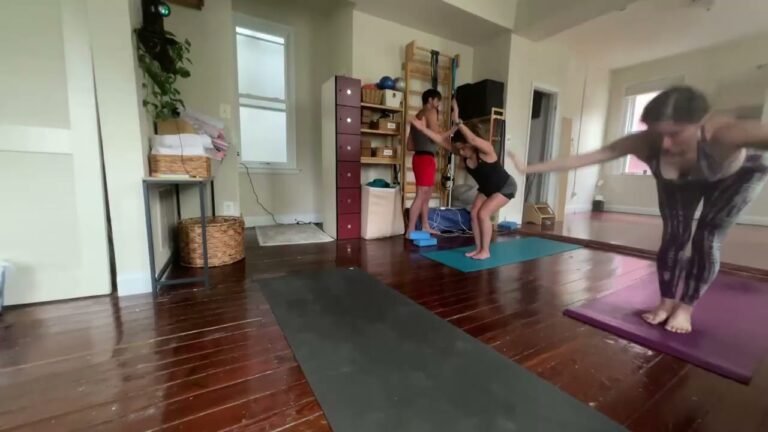
Ashtanga Vinyasa Inspired Power Yoga and Breathwork
This is class is 75 minutes. It is a bit of third, second, and first. We begin with a nice alternate nostril pranayama
Read the essay →
my mentor —
I really
appreciate this
If you're in the
Washington DC
area, I recommend
you study with
gmichaeljoelhall
and his amazing
community that
provides equitable
pay
• to all of the
teachers.
GMICHAELJOELHALL
MEMBERSHIP SUPPORTS EQUITABLE COMPENSATION
Home
THE YOGA CLUB
Grown
Yoga
love from
my mentor -
Ireally
appreciąte this
REAL YOGA
REAL PEOPLE
7:30-10:00A
SLIDING SCALE
MEMBERSHIP
MYSORE STYLE
ASHTANGA YOGA
SCIENCE-BACKED
E INDIVIDUALIZED
EFFECTIVE
MORE INFORMATION
@THEYOGA.CLUB
THEYOGA.CLUB/
Turning the practice into some sort of like rigid stick that has a sharp edge rather than a dynamic process of growth. Alignment should serve internal balance, not just external aesthetic. Forcing form can cause harm. Alignment should support the body, not push it into shapes. It isn't ready for.
Ashtanga Yoga Teacher, Shala Director, and Founder
CHASING PERFECT
FRUSTRATION, AND,
EXTERNAL AESTHETIC.
Avoiding Fixation on Perfect Form in Ashtanga Yoga
The Trap of Perfect Alignment in Yoga: Embrace Internal Balance Michael Joel Hall discusses the pitfalls of obsessing over perfect alignment in yoga Asana. He emphasizes that the body is dynamic and that chasing an idealized form can lead to strain, frustration, and injury. Hall advocates for alignment that supports internal balance and sustainable practice rather than just external aesthetics. He reminds viewers that progress in Ashtanga Yoga is about stability, breath, and awareness, and that pain should be seen as a warning sign, not a marker of progress. 00:00 Introduction to Alignment in Yoga and Perfection's Pitfalls 00:43 True Alignment: Internal Balance and Awareness
Read the essay →Secret Yoga Club
Mysore magic thanks to @michaeljoelhall @theyoga.club
Just what jefe needed after a 6hr flight and 4hrs of sleep 💀
Secret Yoga Club
Mysore magic thanks to @michaeljoelhall @theyoga.club
Just what jefe needed after a 6hr flight and 4hrs of sleep 💀
Daily dose of misfit medicine 💊

Alignment and Form in Ashtanga Yoga
Michael Joel Hall shares his insights on alignment and form in Ashtanga Yoga, emphasizing the importance of functionality over aesthetics in postures. He discusses how stability, internal awareness, and breath play pivotal roles in developing both strength and flexibility. Hall highlights that true depth in practice arises from understanding the purpose and mechanics of poses rather than merely striving for visually perfect forms. 00:00 Introduction to Alignment in Ashtanga Yoga 00:12 Principles and Practice of Functional Alignment 00:00 Introduction to Alignment in Ashtanga Yoga 00:12 Principles and Practice of Functional Alignment
Read the essay →
Introduction to Collaborative Dynamics in Ashtanga Yoga: Subjective Experience vs Objectivity
Subjectivity vs. Objectivity in Ashtanga Yoga Practice In this video, Michael Joel Hall discusses the important balance between subjectivity and objectivity in Ashtanga yoga practice. He explores how personal experience and objective observation impact our practice and progress. Michael emphasizes the need to balance inner experiences with feedback from teachers, historical standards, and self-reviews. The video highlights the significance of having worthy mentors and using feedback constructively to enhance practice and self-awareness. 00:00 Introduction to Subjectivity vs. Objectivity in Ashtanga Yoga 00:52 Balancing Personal Experience and Objective Observation 01:39 The Role of Feedback and Blind Spots 02:12 Trust and the Inner Compass 03:21 Conclusion and Final Thoughts
Read the essay →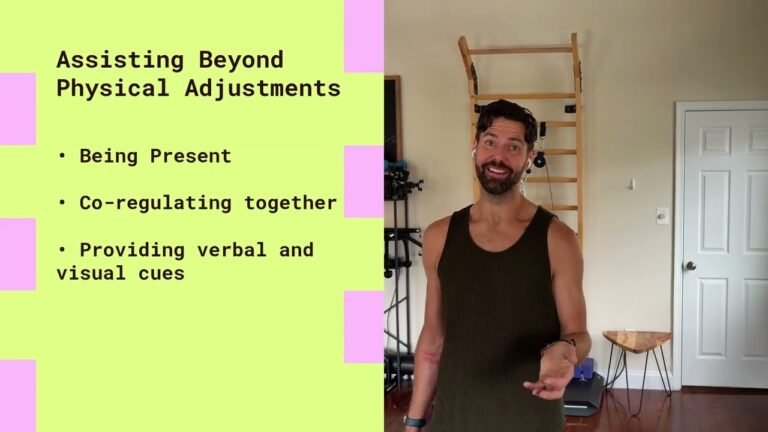
The Art of Assisting in Ashtanga Yoga: Beyond Physical Adjustments
The Art of Assisting in Ashtanga Yoga: Beyond Physical Adjustments In this video, Michael Joel Hall, a seasoned Ashtanga Yoga teacher based in Washington DC, delves into the nuanced art and responsibility of assisting in yoga practice. Hall emphasizes that assisting is not about fixing students but about supporting their personal practice through presence and understanding. Drawing on systems thinking and yoga philosophy, he discusses the significance of verbal, visual, and physical assists, the importance of consent and trauma awareness, and the spiritual dimension of assisting within the framework of the eight limbs of yoga. The key message is to support the students' exploration and self-organization rather than imposing corrections, advocating for a holistic approach that respects individual needs and fosters mutual growth. 00:00 Introduction and Welcome 00:08 The Art and Responsibility of Assisting 01:04 Purpose of Assisting in Ashtanga Yoga 01:48 Supporting an Intelligent System 03:21 Spiritual Practice of Assisting 05:50 Types of Assists: Verbal, Visual, Physical 08:17 Consent, Touch, and Trauma Awareness 10:27 Feedback Loops in Assisting 12:36 Adaptation and Individualization
Read the essay →
Using Objective Analysis and Inner Perception in Ashtanga Yoga
In this episode, I delve into the importance of balancing objectivity and subjectivity in Ashtanga Yoga practice. Objective analysis focuses on measurable aspects such as alignment, breath length, stance, and body placement. However, maintaining awareness of your subjective experience—your personal journey and internal responses—is equally crucial. The video also highlights the role of a skilled teacher and the significance of developing your internal compass to guide your practice, empowering you to adapt practices to your unique needs. 00:00 Objective Analysis of Practice 00:26 Embracing Subjective Experience 00:53 The Role of the Teacher 01:11 Developing Your Inner Compass
Read the essay →Assisting is a mirror and it shows you how you show up. Are you pushing? Are you fixing, over identifying with students' success?
Spiritual Assistance Principles
ASSIST WITH INTENTION
Approach assisting as a meaningful act of spiritual support.
FOCUS ON YAMA/NIYAMA
Emphasizing ethical disciplines enriches the assistance experience.
TAPAS WITH AHIMSA ON PURPOSE
Non-harming forms the foundation of effective and compassionate and practice assistance. Do it on purpose.
ENCOURAGE SELF-STUDY
Promote svadhyaya to deepen personal understanding in yoga.
Spiritual Assistance Principles
1. ASSIST WITH INTENTION – Approach assisting as a meaningful act of spiritual support.
2. FOCUS ON YAMA/NIYAMA – Emphasizing ethical disciplines enriches the assistance experience.
3. TAPAS WITH AHIMSA ON PURPOSE – Non-harming forms the foundation of effective and compassionate and practice assistance. Do it on purpose.
4. ENCOURAGE SELF-STUDY – Promote svadhyaya to deepen personal understanding in yoga.
5. SURRENDER TO THE PROCESS – Ishvara pranidhana cultivates trust and openness during assis

Ashtanga Teacher Qualifications ( Uh Oh)
In this episode, MJH delves into the methods of qualification for an Ashtanga Yoga teacher, contrasting traditional practices with modern approaches. Hall discusses the historical context of authorization by Patabi the current certification processes. He highlights issues with evaluation models, explaining the benefits of a non-linear understanding of system dynamics over linear assessments. Hall shares personal experiences, including conflicts in teaching methods, and emphasizes the importance of ethical frameworks and personal growth for both teachers and students in Ashtanga Yoga. 00:00 Ashtanga Yoga Assessment Paradigms 00:13 Historical vs. Modern Certification Methods 01:15 Challenges in Modern Certification 02:18 Open Systems, Closed Systems, and Narrow Minds 03:11 Personal Teaching Conflicts and Adaptations 04:13 Linear vs. Non-Linear System Dynamics 05:57 Holistic Criteria for Assessing Teachers 06:26 Balancing Physical and Ethical Development 07:16 Questions for Personal Practice and Teaching 08:35 Conclusion: The Importance of Ethical Teaching
Read the essay →
Ashtanga Yoga: Your Practice, Your Choice, and Your Subjective Experience
This episode is on the topic of subjectivity in Ashtanga Yoga. This video emphasizes the importance of internal experiences over external instructions, highlighting how true understanding comes from doing rather than merely discussing. Learn about the role of breath (pranayama), the significance of bandhas, and how individual taste and preference can shape your practice. Michael also touches on the balance between subjective experience and objective assessment, providing insights into refining your yoga journey for both nourishment and growth. 00:00 Introduction and Greeting 00:03 Understanding Subjectivity in Ashtanga Yoga 00:33 The Importance of Internal Experience 01:08 The Role of Bandhas and Breath 02:12 Developing Personal Practice 03:36 Balancing Subjectivity and Objectivity 04:03 Challenges in Self-Assessment 05:08 Community Influence and Objectivity 05:42 Conclusion and Final Thoughts
Read the essay →
The Toxic Teacher Trap in Ashtanga Yoga: When Subjectivity Masquerades as Objectivity
In this video, Michael Joel Hall discusses the 'Ashtanga Yoga Teacher Trap,' a scenario where personal experiences of yoga teachers are misconstrued as universal truths. Highlighting the dangers of authoritarianism and high-demand dynamics in yoga communities, Hall emphasizes the importance of honoring individual experiences, promoting self-awareness, and fostering personal agency. He stresses the need for discernment, humility, and open dialogue, both from teachers and students, to ensure yoga remains a personal and explorative practice. 00:00 Introduction to the Ashtanga Yoga Teacher Trap 00:11 Subjectivity vs. Objectivity in Teaching 00:59 The Dangers of Authoritarian Teaching 01:26 High Demand Dynamics and Cult-like Behavior 02:03 The Importance of Honoring Student Experience 03:22 The Role of Humility and Discernment in Teaching 03:46 Conclusion: Maintaining Dialogue in Practice
Read the essay →Feedback turns into obedience.
risk drifting
and dynamics:
unquestioned
amed as
ion."
Warning: Authoritarianism DIALOGUE DISAPPEARS | Points reframed as [provoc]ation." | Once [one] believes thei[r view is] the truth,
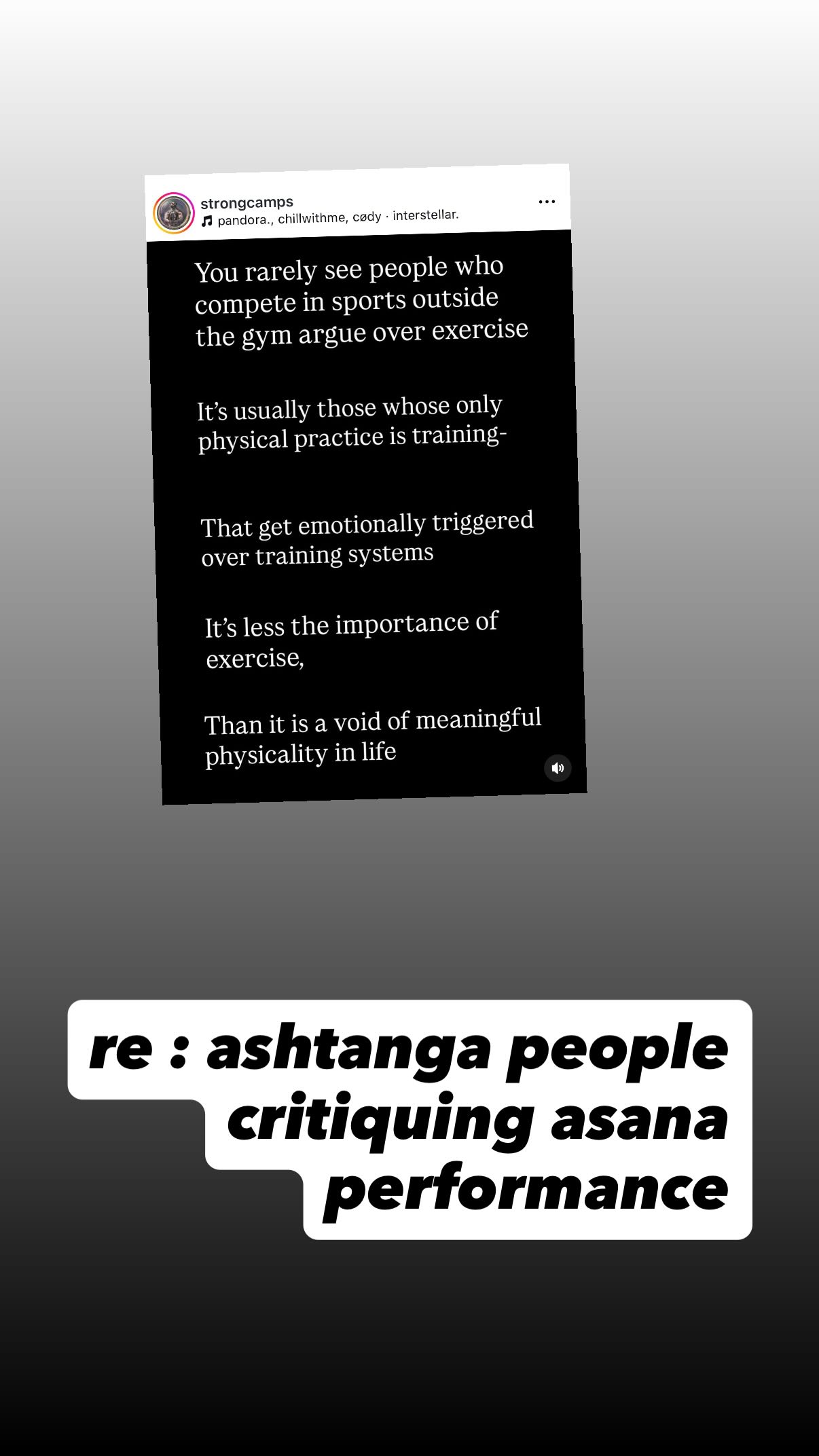
J pandora., chillwithme, cødy • interstellar.
You rarely see people who
compete in sports outside
the gym argue over exercise
It's usually those whose only
physical practice is training-
...
That get emotionally triggered
over training systems
It's less the importance of
exercise,
Than it is a void of meaningful
physicality in life
re : ashtanga people
critiquing asana
performance
More over on my youtube.
• Emphasis on internal experience over external instruction
• Talking vs. Doing
• Understanding through practice

Dismantling Authoritarianism with Ashtanga Yoga: Power, Practice, Justice
In this video, we unbox the concept of decolonizing your yoga practice by removing authoritarianism and emphasizing self-study. This episode covers the cultural context of Ashtanga Yoga, the impact of colonialism and capitalism in shaping Western yoga practices, and the need for open-source teaching. Michael discusses historical gender biases, the guru-student power dynamic, and the issues of gatekeeping and groupthink in yoga communities. Learn about the importance of making yoga accessible and fostering community-centered approaches while balancing tradition with the evolution of Ashtanga Yoga. Discover how decommodification and recognizing inner intelligence can lead to true liberation in your practice. 00:00 Dismantling Authoritarianism with Ashtanga Yoga: Power, Practice, Justice 00:01 Introduction to Decolonizing Yoga 00:15 Historical Context and Cultural Impact 01:12 Examining Patriarchal Elements 02:14 Power Dynamics and Gatekeeping 03:37 Cultural Imperialism in Teaching 04:50 Appropriation vs. Appreciation 06:43 Open Source Teaching as Solution 08:12 Making Yoga Accessible 10:12 Balancing Tradition with Evolution 11:49 Self-Education and Awareness 14:05 Conclusion: Path to Liberation
Read the essay →
Bless her—I have been sharing my videos with her like *that* little boy dying to tell you all about dinosaurs
C
Smichaeljoelhall (my model for this
deep cut joke) is having some
seriously SMART conversations these
days.
authoritarianism and ashtanga
When youre new to led class + the teacher says
TRYANGMUKHAEKAPADAPASCHIMATTANASANA
SUPTA!!
* you just go with it even though
you're PRETry SURE
they made
that name up.
@unrulyascetic
I admire my friends art.
Bless her-I have been
sharing my videos with
her like *that* little boy
dying to tell you all about
dinosaurs
A good teacher combats cognitive dissonance and spiritual bypassing by openly discussing advantages AND lamenting the disadvantages inherent in each of us as we take on spiritual practice.
See my whole video “Ashtanga Teacher Qualifications (uh oh!)” on youtube. Link in bio.
Two Models of Teachers
Linear Judgement
Judged by Visible Achievements
Workshops & Certifications
Physical Abilities
Modern
Want to practice longer?
Enjoy it.
Practitioners who grasp non-linear systems can sustain longer and more beneficial practices.
You don't always run into the necessity of deep learning when you're privlidged
• Emphasis on internal experience over external instruction
• Talking vs. Doing
• Understanding through practice
These are from my videos about balancing subjectivity and objectivity as practitioners/teachers of Ashtanga Yoga to grow in your practice(s).
I’ll include a download in my newsletter on Friday.
Listening to oneself enhances growth and development in practice.
BALANCING PRACTICE EVOLUTION
Seek mentors to refine techniques and deepen understanding of practice.
Regular practice builds a strong foundation for long-term growth.
Listening to oneself enhances growth and development in practice.
Ashtanga continues to adapt while maintaining its core principles.
These are from my videos about balancing subjectivity and objectivity as practitioners/teachers of Ashtanga Yoga to grow in your practice(s).
I’ll include a download in my newsletter on Friday.
Posture Sequencing Matters
Learning specific postures in a defined sequence aids practice development.
Ashtanga Assessment Guide
Posture Sequencing Matters
Learning specific postures in a defined sequence aids practice development.
Teacher as Cartographer
Instructors read and interpret visible markers of your progress.
Recognize Body Shifts
Teachers observe and note subtle yet significant physical adjustments.
These are from my videos about balancing subjectivity and objectivity as practitioners/teachers of Ashtanga Yoga to grow in your practice(s).
I’ll include a download in my newsletter on Friday.
Finding balance creates a sustainable approach to achieving goals.
Balanced Integration Principles
01 Finding balance creates a sustainable approach to achieving goals.
02 Balancing discipline and individual needs fosters long-term commitment and success.
03 Intentional practice directs focus, enhancing overall personal development journey...
These are from my videos about balancing subjectivity and objectivity as practitioners/teachers of Ashtanga Yoga to grow in your practice(s).
I’ll include a download in my newsletter on Friday.
Balancing guidance and respect
Focus on avoiding dogmatic teaching styles for diverse student needs.
When to push students
Identify moments to challenge students while respecting their individual limits.
Teacher's Dilemma Explained
Balancing guidance and respect
Focus on avoiding dogmatic teaching styles for diverse student needs.
When to push students
Identify moments to challenge students while respecting their individual limits.
Understanding student experiences
Recognize and integrate students' backgrounds into teaching practices effectively.
Differentiating instruction
Adapt learning materials based on students' varying skill levels.
Encouraging high-achievers
Motivate advanced students without overlooking their physical constraints.
Setting realistic expe
These are from my videos about balancing subjectivity and objectivity as practitioners/teachers of Ashtanga Yoga to grow in your practice(s).
I’ll include a download in my newsletter on Friday.
Feedback from peers can enhance personal growth and understanding.
VALIDATION IN COMMUNITY
VALIDATION IN COMMUNITY
1 Peer feedback's importance
Feedback from peers can enhance personal growth and understanding.
2 Insight through repetition
Hearing advice restated can offer new perspectives on learning.
3 Impact of online culture
Online communities shape how practitioners are perceived and evaluated.
4 Certification debate
Concerns arise over validity and depth of new teacher certifications.
These are from my videos about balancing subjectivity and objectivity as practitioners/teachers of Ashtanga Yoga to grow in your practice(s).
I’ll include a download in my newsletter on Friday.
Personal awareness enhances yoga practice, guiding your movements and breath.
Balanced Ashtanga Practice
Objective judgment counts
External feedback from teachers helps clarify and improve your practice.
Balanced Ashtanga Practice
Constructive critique essential
Receiving feedback from teachers refines your alignment and technique effectively.
Embrace personal growth
Each session offers unique insights into your evolving physical and mental state.
Maintain self-awareness
Being attuned to your body fosters deeper connections in your practice.
Inner experience matters
Personal awareness enhances yoga practice, guiding your movements and breath.
Objective judgment counts
External feedback from teachers helps clarify and improve your practice.
These are from my videos about balancing subjectivity and objectivity as practitioners/teachers of Ashtanga Yoga to grow in your practice(s).
I’ll include a download in my newsletter on Friday.
Subjective experience matters
Dialogue is crucial
A personal perspective is essential but not the universal truth.
Subjectivity vs. Objectivity
01 Subjective experience matters — A personal perspective is essential but not the universal truth.
02 Dialogue is crucial — Healthy teaching encourages open conversation and collaborative exploration.
03 Beware of authoritarianism — Rigid adherence to one viewpoint suppresses student agency and growth.
04 Feedback vs. obedience — Students should feel empowered to question and explore guidance.
05 [handshake icon]
These are from my videos about balancing subjectivity and objectivity as practitioners/teachers of Ashtanga Yoga to grow in your practice(s).
I’ll include a download in my newsletter on Friday.
Embrace personal sensations
Personal sensations shape your unique journey in yoga practice.
Practitioner's Inner Journey
Feel your breath
Breath awareness can transform your approach to yoga practice.
These are from my videos about balancing subjectivity and objectivity as practitioners/teachers of Ashtanga Yoga to grow in your practice(s).
I’ll include a download in my newsletter on Friday.
Linear progression follows a straight path of predictable steps.
Linear Progression Defined
Nonlinear Approaches Explained
Behavioral Analysis Importance
Understanding behavior boosts effectiveness in broader systems thinking.
Nonlinear progression involves complex interactions and unpredictable outcomes.
Linear progression follows a straight path of predictable steps.
These are from my videos about balancing subjectivity and objectivity as practitioners/teachers of Ashtanga Yoga to grow in your practice(s).
I’ll include a download in my newsletter on Friday.
Objectiveity vs Subjectivity and it's Tension in Ashtanga
Nonlinear practice dynamics
Assessment through practice
Global practice evolution
These are from my videos about balancing subjectivity and objectivity as practitioners/teachers of Ashtanga Yoga to grow in your practice(s).
I’ll include a download in my newsletter on Friday.
BELIEFS SHAPE EXPERIENCES
Our beliefs directly influence how we perceive and interpret experiences.
Mental Models Overview
BELIEFS SHAPE EXPERIENCES
Our beliefs directly influence how we perceive and interpret experiences.
COGNITIVE BIAS AWARENESS
Recognizing cognitive biases helps us make better self-assessments.
SELF-DOUBT REFLECTIONS
Struggling poses reveal deeper layers of our self-doubt issues.
CRITICAL THINKING IMPORTANCE
These are from my videos about balancing subjectivity and objectivity as practitioners/teachers of Ashtanga Yoga to grow in your practice(s).
I’ll include a download in my newsletter on Friday.
Engage in practice like an artist, making thoughtful choices.
Balance tradition with innovation Respect past practices while integrating innovative approaches for growth. View practice as artistry Engage in practice like an artist, making thoughtful choices. Encourage creative expression Create environments encouraging personal exploration and unique participation levels.
These are from my videos about balancing subjectivity and objectivity as practitioners/teachers of Ashtanga Yoga to grow in your practice(s).
I’ll include a download in my newsletter on Friday.
Finding harmony between discipline and personal needs is essential.
Identify personal needs
Understanding one's individual needs is the first step toward achieving a balanced integration in practice or lifestyle.
Incorporate short-term goals
Utilizing Vikalpa or short-term goals helps in creating achievable milestones that contribute to overall progress and satisfaction.
Practice mindfulness regularly
Regular mindfulness practice cultivates awareness of needs and intentions, resulting in better balance and integration in daily life.
Set higher intentions
Establishing Sankalpa or higher intentions guides individuals toward meaningful and fulfilling journeys, providing purpose in their pursuits.
Engage in community service
Participating in community activities fosters a sense of belonging and enhances personal growth through collective engagement.
Reflect on experiences
Regular reflection helps individuals recognize their growth, understand their challenges, and adjust their paths accordingly.
Objectiveity vs Subjectivity and it's Tension in Ashtanga
Nonlinear practice dynamics
Assessment through practice
Global practice evolution
dc >> playa
playa >> dc
Suerte de tener a mis amigos.
Last pracky of this season in this beautiful place @torresdeselma
Amix I remember you every time in wearing the dc ashtanga shirt @michaeljoelhall
dc >> playa playa >> dc Suerte de tener a mis amigos. Last pracky of this season in this beautiful place @torresdeselma Amix I remember you every time in wearing the dc ashtanga shirt @michaeljoelhall
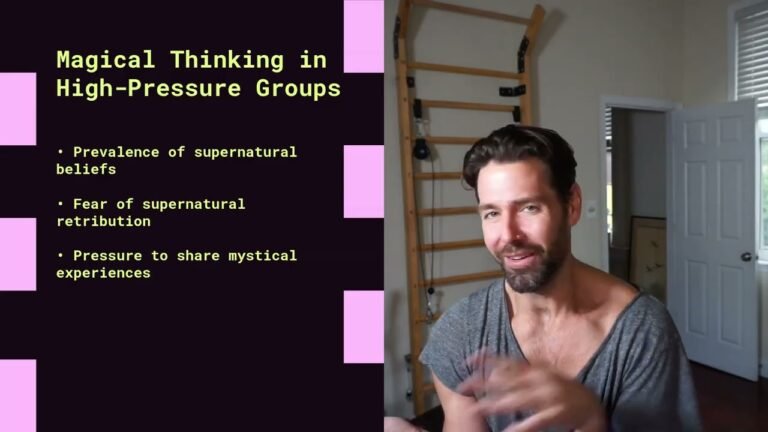
Stop Making Ashtanga a Cult! Part 1: The Problem
Michael Joel Hall offers a different approach to Ashtanga Yoga grounded in humanist values, personal agency, and inclusivity, rather than dogma or hierarchy. Inspired by Dr. Anastasia Somerville Wong’s work on non-religious pastoral support, Hall emphasizes creating a supportive community that encourages critical thinking, personal experience, and mutual care. Hall outlines signs of high-pressure, cult-like communities, such as suppression of critical thought, encouragement of self-doubt, prevalence of magical thinking, authoritarian leadership, non-accountability, excessive and intrusive rules, and financial and sexual exploitation. He contrasts these with healthy community traits like open discussion, personal autonomy, and ethical integrity. Hall's philosophy aims to decentralize power, foster critical thinking, and honor each practitioner's unique journey. 00:00 Introduction and Setup 01:44 Critical Thought in Healthy Groups 04:20 Encouraging Self-Esteem 05:42 Magical Thinking in Cults 07:26 Reason and Evidence-Based Approach 07:56 Charismatic Leaders and Special Knowledge 10:38 Authoritarian Leadership 11:46 Accountable vs. Authoritarian Leaders 13:11 Leaders Above the Law 14:25 Draconian and Intrusive Rules 17:08 Censorship and Control of Information 18:23 Elitism and Inner Circles 19:31 Threats to Those Who Leave 19:48 Financial and Physical Penalties 20:28 Respect vs. Shunning 21:33 Slander and Vilification of Outsiders 21:45 Us vs. Them Mentality in Yoga Communities 22:26 Spotting Negative Group Dynamics 23:13 Isolation from Outside Relationships 24:20 Group Identity vs. Individual Identity 26:05 Secrecy and Elitism in Groups 26:51 Negative Group Rituals and Punishment 27:23 Transparency vs. Secrecy 27:34 Mind-Altering Practices and Conformity 28:22 Managing Expectations and Consent 29:38 Shame, Guilt, and Fear in Group Control 30:31 Supportive vs. Controlling Environments 30:51 Obsessive Loyalty and Critical Thinking 32:30 Recruitment and Growth Obsession 33:55 Genuine Community vs. Aggressive Recruitment 34:55 Love Bombing and Idealistic Goals 36:42 Financial Exploitation in Groups 39:16 Punitive Punishment and Abuse 41:56 Sexual Exploitation in High-Pressure Groups 44:03 Gender Equality vs. Gender Control 45:29 Gossip and Community Safety 46:15 Normalization of Deception 46:40 Justifying Bad Behavior for Group's Sake 47:03 Real Integrity and Ethical Standards 47:17 Values and Honesty in Tough Times 47:27 Maintaining High Ethical Standards
Read the essay →
Stop Making Ashtanga a Cult! Part 2: Strategies
Michael Joel Hall discusses his intervention strategies to address unhealthy group dynamics in Ashtanga Yoga practice. He emphasizes the need for critical thinking, encouraging student autonomy, and fostering an open, transparent, and inclusive environment. Hall advocates for a student-centric approach, prompting open dialogue, respecting individual choices, and avoiding hierarchical or dogmatic practices. He stresses the importance of evidence-based teaching, open leadership, and peer support. Hall highlights the necessity of maintaining ethical standards, respecting personal autonomy, and fostering genuine community connections without creating high-pressure commitments or abusive dynamics. The script underscores the significance of maintaining integrity, transparency, and community well-being in yoga teaching and leadership. 00:00 Introduction and Purpose 00:01 Addressing Unhealthy Group Dynamics 01:15 Critical Thinking in Yoga Practice 01:40 Encouraging Student Independence 02:26 Building Trust and Normalizing Doubt 02:57 Grounding Practice in Biomechanics 04:57 Fostering Democratic Leadership 05:40 Being Open to Oversight 07:00 Respecting Personal Choices 07:28 Avoiding Dogmatic Views 07:44 Promoting Inclusivity and Accessibility 08:36 Equal Standards and No Inner Circles 09:26 Transparency and Ethical Standards 18:10 Authentic Relationships Beyond Yoga 18:58 Financial Transparency and Community Support 19:44 Avoiding Abuse and Humiliation 21:17 Ethical Mentorship and Equity 23:13 Maintaining Integrity and Being Yourself 26:10 Community Membership as a Practice 26:51 Transparency in Teaching and Learning 28:56 Data-Driven Success and Community Impact 29:38 Personal Challenges and Community Support 30:10 Long-Term Practice and Growth 30:27 Adapting and Innovating in Yoga 30:58 Conclusion and Farewell
Read the essay →
sarahraenelson_bodywork
@michaeljoelhall speaks
to this thought of
decentralizing teachers
much more eloquently
than I
Take a listen
YouTube vid
S
theory in practice
praxis: theory in practice
Dr. Anastasia Somerville Wong's Work

Kiss of the Spider Woman: Ashtanga, Authoritarianism and Art
Michael Joel Hall recounts his visit to the Gala Theater in Columbia Heights to watch a Spanish production of 'Kiss of the Spider Woman.' He reflects on the themes of deception, honesty, and betrayal within the play and draws parallels to his experiences in the federal government, nonprofits, and his Ashtanga yoga community. Hall discusses the damaging impact of small betrayals by well-meaning but mediocre people in positions of power and stresses the importance of radical honesty as a countermeasure to authoritarian tendencies. He concludes by highlighting the importance of integrity in maintaining the spiritual health of a community. 00:00 Kiss of the Spider Woman 00:21 The Play: Kiss of the Spider Woman 00:43 Themes of Deception and Betrayal 03:25 Personal Reflections and Broader Implications 06:56 Conclusion: Honesty and Community
Read the essay →Which is it?
Magical Thinking vs Reason & Evidence
Reason & Evidence
Values evidence and
Encourages dive... experiences
Emphasizes th...
Replace
unde...
Magical Thinking and High-Pressure Groups
Which is it?
Magical Thinking vs Reason & Evidence
Reason & Evidence
Values evidence and
Encourages diverse experiences
Emphasizes th
Replace
unde
Magical Thinking and High-Pressure Groups
Which is it? / Magical Thinking vs Reason & Evidence / Reason & Evidence / Values evidence and / Encourages diverse experiences / Emphasizes th / Replace unde
Magical Thinking and High-Pressure Groups
Which is it?
Magical Thinking vs Reason & Evidence
Reason & Evidence
Values evidence and
Encourages diverse experiences
Emphasizes th
Replace unde
The federal government is now monitoring people for anti-authrotiarian views on the Internet and blocking critics of the right from entering the united states. Its not just geopolitics, though.
I once had an Ashtanga Yoga Teacher so high on her own stash she contacted a trusted friend @chocoestates and mentor of mine to tell them that @pegmulqueen was a danger to me because she regularly encouraged me to write.
People are so out of their own scope of practice, and they dont even know it.
Prg and Kristen (not friends independently) regularly made me believe Imy words were powerful and worthy. that ashtanga professor made me believe i was untrustworthy. People are sooooo controlling, and I missed it!
Im amicably divorced— my charisma is both fine and it has its limits. i’m old enough now to have enough data about myself to understand that.
It’s really simple – – are the rules of your organization in place to foster an independent community based on values and personal mastery, or is the organization solely designed to establish the leader in a position of unquestionable authority? More on YouTube!
Disobedience is Punished
Are your decisions being control. | Opposition to Critical Thought | der-approved sources encouraged | Contradictory or confu
Right?
Opposition to Critical Thought
der-approved sources encouraged
Contradictory or confu...
Surveillance occurs not in the community spirit but in a way.
Disobedience is Punished
Are your decisions being control. Opposition to Critical Thought der-approved sources encouraged Contradictory or confu
Right?
Opposition to Critical Thought
der-approved sources encouraged
Contradictory or confu...
Surveillance occurs not in the community spirit but in a way.
Disobedience is Punished
Are your decisions being control.
Opposition to Critical Thought
der-approved sources encouraged
Contradictory or confus
Right?
Opposition to Critical Thought
der-approved sources encouraged
Contradictory or confu
Surveillance occurs not in the community spirit but in a way.
Disobedience is Punished
Are your decisions being control.
Opposition to Critical Thought
der-approved sources encouraged
Contradictory or confu
Right?
Opposition to Critical Thought
der-approved sources encouraged
Contradictory or confu
Manipulation comes in all kinds of forms— intellectual, emotional, professional.
Look for shunning and a lack of respect for nonmembers. Looks for discrediting. If an organization lacks transparency and accountability, it’s likely toxic.
Financial penalties
Respects decision
Respect for De[parture]
Threats for Leaving vs Respect for Departure
Threats for Leaving
Employs[ment]
Slande[r]
potential friction points in
Financial penalties
Respects decision
Respect for De[parture]
Threats for Leaving vs Respect for Departure
Threats for Leaving
Employs[...]
Slande[r]
discussed, you're going to
potential friction points in
Financial penalties
Respects decision
Respect for De[parture]
Threats for Leaving vs Respect for Departure
Threats for Leaving
Employs[...]
Slande[r]
discussed, you're going to
andon pipeline growth in
paranoia and Conflict in Yoga Communities
More on youtube!
Meanwhile, a group identity demands you only do their activities have their
Does it encourage personal development and critical thinking? Groupthink Beliefs Promotes critical thinking Fosters individuality Unique Individuality Identity Loss vs Unique Individuality Identity Loss k" dominates
Individuality is often suppressed in favor of group think.
Meanwhile, a group identity demands you only do their activities have their | Group Identity vs Individual Identity | Group Identity | Individual Identity | Rights | Activities | Beliefs | Groupthink | promotes critical thinking | unique Individuality
Does it encourage personal development and critical thinking? Groupthink Beliefs Promotes critical thinking Fosters individuality Unique Individuality Identity Loss vs Unique Individuality Identity Loss k" dominates
More on youtube!
Be upfront about what you're doing and look for consent. Content Disclosure & Consent Mind-Altering Practices vs Content Disclosure & Consent Mind-Altering Practices pressured into vn rituals Experienced frequ
so many times without knowing what it meant. | Mind-Altering Practices vs Content Disclosure & Consent | Mind-Altering Practices | Participants pressured into unknown rituals | Experienced frequ... | Dread
In DC, we have a few different teachers, each with differences in approach, each with people who vibe with that approach. It’s nice that people have choice here, and in a healthy community you’ll see as much ease with referring out as you will see recruiting in. Easy come, easy go. Why? These are people, not revenue streams or clout bolsters.
More on YouTube!
Loss of critical judgment
Activities centered around recruitment
Narrow Focus
In Ashtanga Yoga, many senior teachers have commoditized their relationships | Loss of critical judgment | Activities centered around recruitment | Narrow Focus | personal development | communal development
This is not genuine, not personal, and not communal development. | Loss of critical judgment | Overlook communal development | Activities centered around recruitment | Narrow Focus
believe what I say and it grow through selling something that sells well. | Loss of critical judgment | ok communal development | personal ment | Activities centered around recruitment | Narrow Focus
In Ashtanga Yoga, many senior teachers have commoditized their relationships | Loss of critical judgment | Activities centered around recruitment | Narrow Focus
This is not genuine, not personal, and not communal development. | Loss of critical judgment | Overlook communal development | Activities centered around recruitment | Narrow Focus
believe what I say and it grow through selling something that sells well.
Loss of critical judgment
Activities centered around recruitment
Narrow Focus
ook communal development
In Ashtanga Yoga, many senior teachers have commoditized their relationships | Loss of critical judgment | Activities centered around recruitment | Narrow Focus | personal development
This is not genuine, not personal, and not communal development.
believe what I say and it grow through selling something that sells well.
In Ashtanga Yoga, many senior teachers have commoditized their relationships | Loss of critical judgment | Activities centered around recruitment | Narrow Focus | personal development
This is not genuine, not personal, and not communal development.
Loss of critical judgment
Overlook communal development
Activities centered around recruitment
Narrow Focus
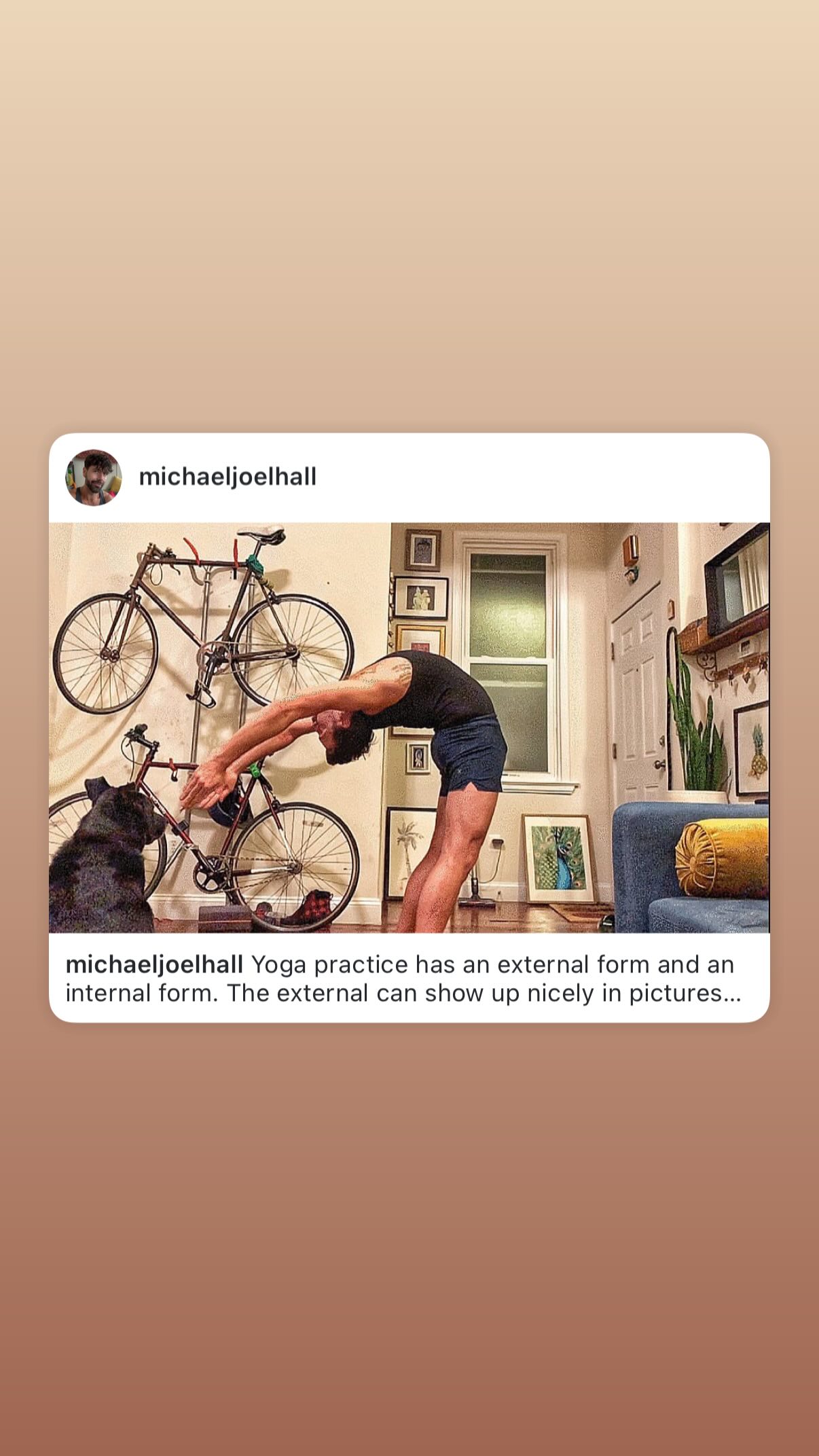
michaeljoelhall Yoga practice has an external form and an
internal form. The external can show up nicely in pictures...
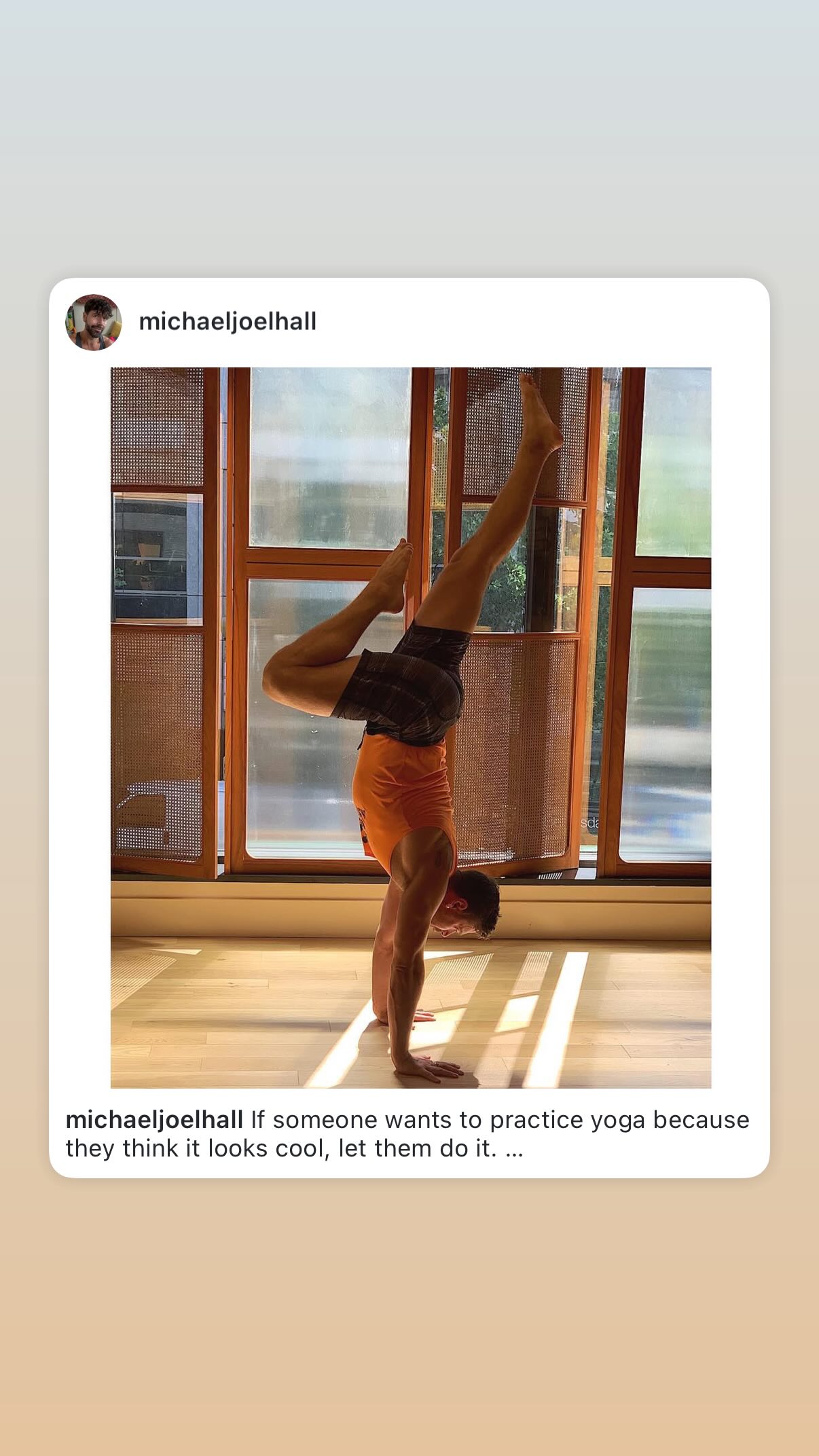
ol
michaeljoelhall If someone wants to practice yoga because
they think it looks cool, let them do it....

woman's chips
10:39 AM //
While she was swimming.
10:39 AM V/
Hahaha
10:39 AM
She was kinda rude to the
staff-- so I died laughing.
10:39 AM V/
Karma
10:40 AM
How is practice?
@michaeljoelhall
10:41 AM
notes from india 2016

NOTFA POKE MON
Zü5
YOU DO NOT NEED TO
U-DO
CATCH
EMALL
@michaeljoelhall
If teaching Mysore is a labor of love, it’s nice that the students know. But burn out happens when financial needs arent being met. It’s OK to talk about this stuff.
If your organization is values based, it’s not a crazy assumption to hold that the leader or director should also hold those values.
if doing the right thing, we’re always profitable, everyone would always do it. but just because it isn’t always profitable, doesn’t mean it can’t be.
More on YouTube.
Financial records open
Financial
omic Exploitation Financial Transparenc
bers pressured for donations
Economic Exploitation
I always wonder how are these people sharing their power? | Financial records open | Financial | Economic Exploitation | Unclear finances | Financial Transparenc | ic Exploitation | bers pressu donations
You can't pressure people for donations more than what you communicated. Financial records open Financial Economic Exploitation Unclear finances
You'll see this happens often and there's likely goingto be a lack of
Financial records open
Financial
Economic Exploitation Financial Transparency
bers pressured for donations
Economic Exploitation
I always wonder how are these people sharing their power? Financial records open Financial Economic Exploitation Financial Transparency Economic Exploitation Unclear finances
You can't pressure people for donations more than what you communicated. | Financial records open | Financial | Economic Exploitation | Unclear finances
You'll see this happens often and there's likely goingto be a lack of | Financial records open | Financial | Economic Exploitation | members pressured for donations | Financial Transparenc | omic Exploitation
I always wonder how are these people sharing their power?
Financial records open
Financial
Economic Exploitation
Unclear finances
Financial Transparenc
ic Exploitation
bers pressu
donations
You can't pressure people for donations more than what you communicated. | Financial records open | Financial | Economic Exploitation | Unclear finances
You'll see this happens often and there's likely goingto be a lack of | Financial records open | Financial | Economic Exploitation | members pressured for donations | omic Exploitation Financial Transparenc
I always wonder how are these people sharing their power?
Financial records open
Financial
ic Exploitation
Financial Transparenc
bers pressu
donations
Economic Exploitation
Unclear finances
You can't pressure people for donations more than what you communicated. | Financial records open | Financial | Economic Exploitation | Unclear finances
My student was feeling stuck in a particularly sticky pose, and the friction from other places allowed for weird dynamics. i didn’t understand those dynamics yet. I see clearly now how the dynamic of keeping someone at a pose when they feel ready to move on fosters a loss of agency and fosters authoritarianism and inadvertently becomes a power move, whether you mean it like that or not. I was in my first five years, and had yet to start disassembling the pedagogy. At some points, my buttons got pushed by that students behavior. I yelled and told them to leave the room. I was sooooooooo out of line. And boy, did I owe that student an apology. It was that moment that broke my illusion: I did not like this dynamic and it felt abhorrent to the nature of Ashtanga and yet somehow also baked in. I am grateful for that students forgiveness and for our mutual respect making clear something needed to shift, and it would be my responsibility. Students shouldn’t be yelled at, most especially the devoted ones who are questioning their discipline to a dysmorphic degree.
Those dynamics needn’t exist.
Unclear finances
Punitive Punishment
Characteris...
cal Abuse
tional Abuse
nishment
Ty...
I made real changes.
Unclear finances
Punitive Punishment
Characteris[tics]
[Pu]nishment
[Physi]cal Abuse
Ty[pes]
[Emo]tional Abuse
Hu[miliation]
Sometimes I think teachers don't share what they learned because they're
Unclear finances
Punitive Punishment
Types
tional Abuse
cal Abuse
nishment
Characteris
I'll never forget it.
Unclear finances
Punitive Punishment
Characteris[tics]
[Pu]nishment
[Physi]cal Abuse
Ty[pes]
[Emo]tional Abuse
I made real changes.
Unclear finances
Punitive Punishment
Characteris...
cal Abuse
tional Abuse
nishment
Typ...
Hu...
Sometimes I think teachers don't share what they learned because they're
Unclear finances
Punitive Punishment
Types
cal Abuse
tional Abuse
nishment
Characteris
I'll never forget it. | Unclear finances | Punitive Punishment | Characteris... | nishment | cal Abuse | tional Abuse | Ty...
I made real changes.
Unclear finances
Punitive Punishment
Characteris[tics]
[Pu]nishment
[Physi]cal Abuse
Typ[es]
[Emo]tional Abuse
Hu[miliation]
Sometimes I think teachers don't share what they learned because they're
Unclear finances
Punitive Punishment
Types
cal Abuse
tional Abuse
nishment
Characteris
VALUE YOUR CREATIVE
PRACTICE AND YOUR
UNLIMITED POTENTIAL.
YUMI SAKUGAWA
@yumisakugawa
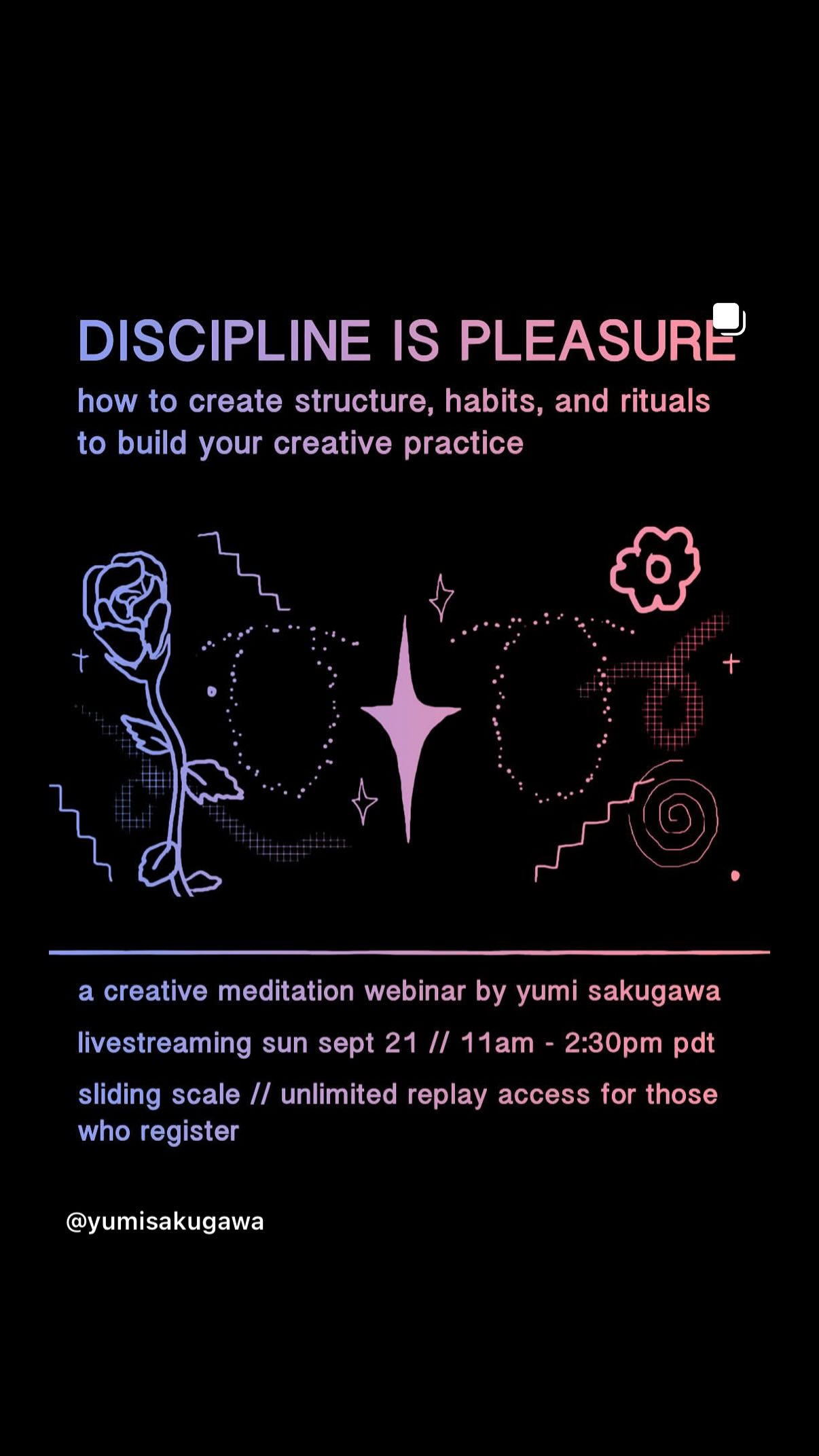
how to create structure, habits, and rituals
to build your creative practice
a creative meditation webinar by yumi sakugawa
livestreaming sun sept 21 // 11am - 2:30pm pdt
sliding scale // unlimited replay access for those
who register
@yumisakugawa
VOICE FOR EVERYONE.
my thoughts on ashtanga community:
AND YOU'RE HAPPY FOR THEM PART OF YOU

laurenashtangayoga
my friends and I have real talk.
XOXO Viev
Valid critique
Gmichaeljoelhall
Boost post
• • •
laurenashtangayoga 2d • Author
@michaeljoelhall what are your
thoughts?
Reply
michaeljoelhall 2d
@laurenashtangayoga | think it's
overly vague, doesn't identify Taylor
Hunt, and doesn't speak to other
levels of abuse beyond sexual. It's a
nothing statement and I fear that it's
meant to preempt further
conversation. I don't trust that it's in
good faith by everyone who signed it. I
would wonder if the people who have
come forward are pleased with it. It is
so tone deaf. I can't imagine that they
are.
Reply
Hide
michaeljoelhall 2d

Hi, I’m Michael. Check out DC Ashtanga.
This is just a little bit about me, Michael Joel Hall. I posted this as part of my welcome letter at DC Ashtanga. Join the community at DCashtanga.com to take free courses on Decentralizing Ashtanga, built proudly in Washington, DC.
Read the essay →Join DC Ashtanga for free courses
Encouraging Student Independence
Join DC Ashtanga for free courses
Get Real
reason and evidence.
of me is like the Himbo. 2007 2025
These practices are humanist and secular in nature and I've had the good
• Humanist
• Secular
• Versatile Applications

You're still
doing
Ashtanga if...
READ THIS IF YOU HAVE IMPOSTER SYNDROME.
@jenreneyoga
Long time Ashtanga Yoga Teachers who no longer teach, why not? Please share in the comments.
over this period of time.
depth date but don't anymore and I'm curious as to why they don't teach
YOU ABOUT MY
ONLY KEPT MEDITATION OOPS
Notes on Physical Assists
https://dcashtanga.com/portal/course/decentralized-ashtanga/lessons/assisting-as-spiritual-practice/view https://dcashtanga.com/portal/course/scope-of-practice/lessons/strength-conditioning-best-practices-for-yogis-copy-1759266519/view https://dcashtanga.com/portal/course/scope-of-practice/lessons/strength-conditioning-best-practices-for-yogis-copy-1759266519/view https://m.youtube.com/watch?v=6chi4KadlO8&pp=ygUbTWljaGFlbCBqb2VsIGhhbGwgYXNzaXN0aW5n https://ashtanga.tech/portal/course/teaching-arts/lessons/asana-adjustment-assisting-guidelines/view https://michaeljoelhall.com/wp-admin/post.php?post=14789&action=edit
Read the essay →Reimagining Ashtanga Community Leadership
Introduction For nearly two decades, I’ve witnessed the profound impact that leadership styles have on yoga communities. As both student and teacher in the Ashtanga tradition, I’ve experienced firsthand how the decisions, behaviors, and communication patterns of those in positions of authority shape not just…
Read the essay →Creating Safe Spaces for Practice
“Creating safe spaces isn’t about perfection – it’s about consistent commitment to embodying the respect we claim to value.” Introduction: The Sacred Vulnerability of Practice Every time someone steps on a yoga mat, they bring their entire being with them — heart, body, history, hope.…
Read the essay →Peer Support as a Living System: Tending the Roots of Practice
In the ecosystem of Ashtanga Yoga, peer support isn’t a side dish. It’s the mycelium under the forest floor — the network of connection, communication, and shared resilience that keeps the whole thing alive. When done with intention, peer support can shift the dynamics of…
Read the essay →Balance Between Tradition and Evolution in Yoga
In every Mysore room, behind every counted vinyasa, and underneath every cue to “fold forward,” there’s an unspoken question humming through the breath and bodies: How do we honor the roots of yoga while making it relevant and accessible in today’s world? This isn’t just…
Read the essay →Decolonizing Yoga Practice
Honoring Roots, Dismantling BarriersYoga is a practice of liberation — of body, mind, and spirit. But when we look closely at the modern global yoga scene, especially in the West, we find a paradox: a practice rooted in freedom that is often taught, consumed, and…
Read the essay →Teamwork Makes the Dream Work: Individual Breakthroughs Impact Collective Energy
There’s something odd about a Mysore room. No blaring playlists. No teacher on a headset shouting “FIND YOUR INNER FIRE!” Just a bunch of sweaty people breathing like Darth Vader and bending like origami — all in near silence. It looks calm. It’s not. Underneath…
Read the essay →The Yamas and Niyamas in Modern Practice
There’s something odd about a Mysore room. No blaring playlists. No teacher on a headset shouting “FIND YOUR INNER FIRE!” Just a bunch of sweaty people breathing like Darth Vader and bending like origami — all in near silence. It looks calm. It’s not. Underneath…
Read the essay →Body Awareness and Alignment in Yoga Teaching
The Art of Saying It So They Actually Feel ItIf you've ever stood in front of a room full of yogis and said something like “engage your core,” only to be met with blank stares or wildly different interpretations (someone holds their breath, another tenses…
Read the essay →Adapting Poses for Individual Needs
Adapting Poses for Individual Needs You know that moment when you cue “step your right foot forward between your hands,” and someone’s foot ends up somewhere between left field and the front row? That’s not failure — that’s anatomy doing its thing. Welcome to the…
Read the essay →Fostering Self-Awareness Through Yoga
Introduction The unique intersection of physical and mental in yoga practice Thesis: Yoga offers a powerful mirror for self-discovery by revealing how physical patterns reflect deeper mental models I. The Body as a Messenger How physical sensations carry deeper information Quote: “The body never lies…
Read the essay →Three Radical Shifts as You Grow in Yoga
Three Radical Shifts as You Grow in Yoga There’s a moment—somewhere between your second Utkatasana and your fourth sun salutation—when you realize yoga is working on more than just your hamstrings. Sure, you came to class for the promise of better posture or to finally…
Read the essay →
Balancing the Scales: Subjectivity versus Objectivity in Ashtanga Yoga Practitioner Development
IntroductionThere’s a certain push-and-pull that lives at the heart of every serious Ashtanga practice. On one side, there’s the deeply personal, lived experience—the hum of your own breath, the way your body feels in Kapotasana today compared to last Tuesday, the private territory only you…
Read the essay →The Five Obstacles to Yoga
The Five Obstacles to Yoga Introduction Every yogi, whether fresh-faced on the mat or seasoned from years of practice, eventually bumps into... something. A wall, a plateau, a discomfort, or an inexplicable resistance. In yoga philosophy, these aren’t random speed bumps — they are known,…
Read the essay →The Evolution of an Ashtanga Teacher
The Evolution of an Ashtanga Teacher Introduction Change and iteration? I'm good with those. I started out verbose—talking too much, explaining every little thing. Then I swung the pendulum toward the stereotypical Ashtanga script: minimal instruction, no props, traditional cues only. But ultimately, I came…
Read the essay →
Spiritual Rot Caused By Siloing and Wealth (and how to avoid it)
In his compelling article, “Plutocrat Archipelagos” in MacGuffin Magazine, Jack Self offers an unflinching look into the secluded, fortified worlds of the ultra-wealthy. Through vivid descriptions of razor-wire fences, bodyguards, and gated communities, Self explores how these enclaves of extreme wealth serve as both physical…
Read the essay →AND IT DOESN'T
I have not listened to the album, thanks for asking (nobody asked ).
have not listened to the
allbum, thanks for asking
(nobody asked).
@incorrectmethod
Me realizing I don't have to
practice six days a week in order
to practice yoga every day
@incorrectmethod
What Ashtanga Yoga Teachers Can Learn from NFL Coaching Excellence
The Performance Paradox In 2007, Tony Dungy became the first African American head coach to win a Super Bowl. But his real legacy wasn’t built on that February night in Miami—it was constructed over the following decade through youth mentorship programs, education reform initiatives, and…
Read the essay →Collider: Why Ability Privilege Perpetuates Itself
In systems thinking, a collider is a variable influenced by two or more independent factors—and Ashtanga’s authorization system contains a perfect example that explains why the current model is so resistant to change. Consider the collider: “Becoming an Authorized Teacher” This outcome is influenced by…
Read the essay →What Is a Collider? How Ashtanga Practice Teaches Systems Thinking Through the Body
What Is a Collider? In systems thinking, a collider is a variable that sits at the convergence point of two or more independent causal pathways. Unlike a mediator (which transmits influence from one variable to another) or a confounder (which influences multiple variables), a collider…
Read the essay →Introduction to Causal Inference
The eight basic rules for causal inference from Peder M. Isager’s blog provide an excellent framework for understanding how causal relationships emerge and interact with observable data. These rules resonate with core principles in both systems thinking and Ashtanga Yoga. Let’s explore this connection. 1.…
Read the essay →Causal Inference Rules and How to Use Them
In systems thinking and yoga alike, progress requires recognizing hidden confounders and addressing them directly rather than being misled by surface-level correlations. When practitioners address the root cause, both seemingly related symptoms often resolve harmoniously. Rule 1: Independent Variables Are Not Correlated This rule states that…
Read the essay →Getting Better at Causal Loops and Drawing Inferences
Revisiting Rule 1: Independent Variables Are Not Correlated Restating the Argument In Ashtanga Yoga, not all elements of practice are causally connected. For example, focusing solely on aesthetic performance (e.g., how a posture looks) often leads to false assumptions about progress. Understanding this independence helps practitioners…
Read the essay →Introduction to Ashtanga Collider Theory
Introduction: When Effects Distort Our Understanding of Causes In 1946, statistician Joseph Berkson noticed something peculiar in hospital patient data: diseases that should have been independent appeared to be negatively correlated. Cancer patients seemed less likely to have diabetes, and vice versa. This observation seemed…
Read the essay →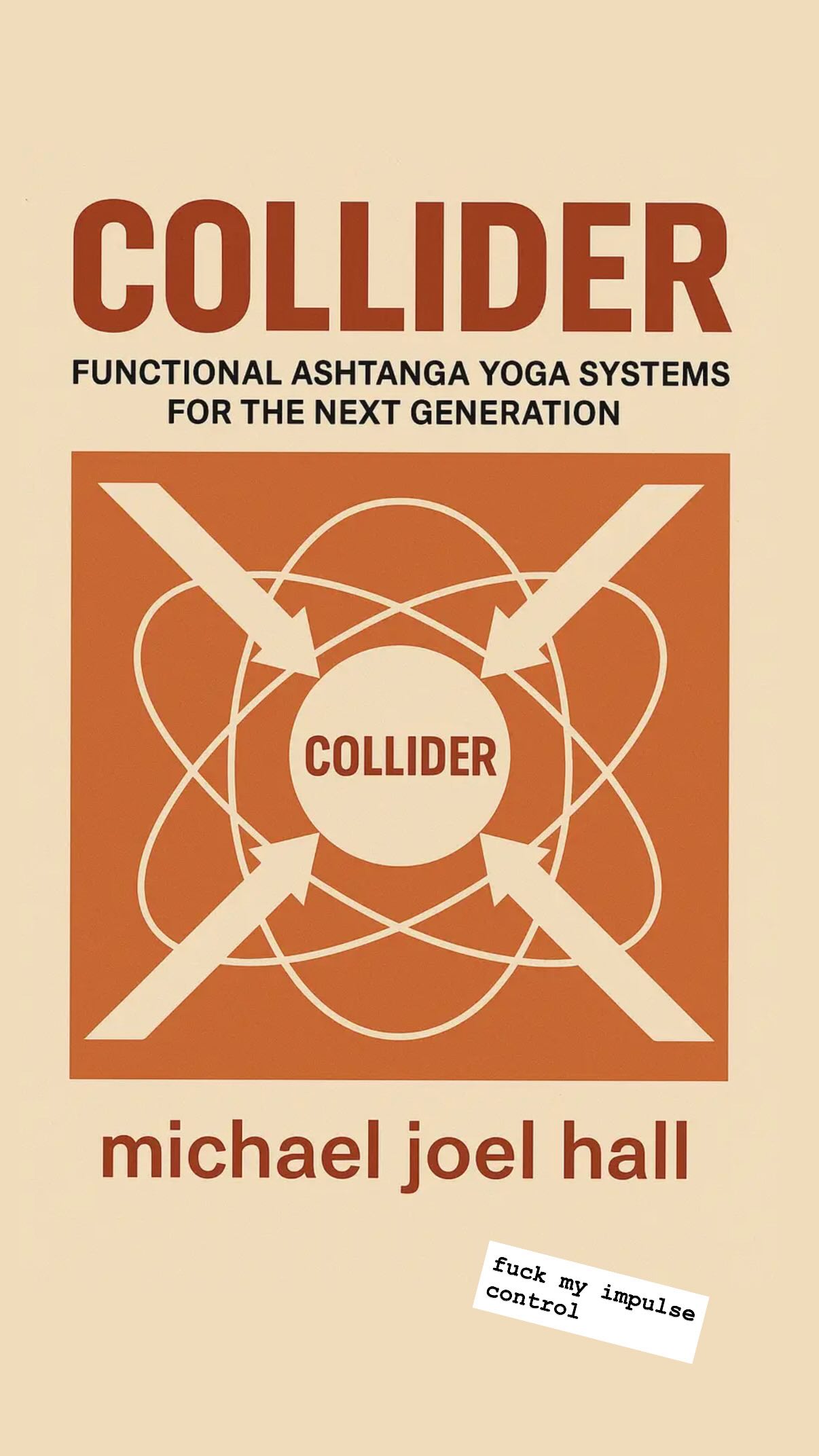
FUNCTIONAL ASHTANGA YOGA SYSTEMS
FOR THE NEXT GENERATION
COLLIDER
michael joel hall
fuck
my impulse
control

Regenerating Trust in Local Communities After Toxicity
What happens when charismatic teachers extract value from communities and leave? This is about the hard work of regeneration — in yoga communities, in local spaces, and in ourselves.
Read the essay →
Holding Space for Political Engagement in Diverse Communities
Protest as Practice Have you noticed how diverse our community is? I'm not gonna lie... it brings me so much joy. So many races, countires of origin, sexual identities, and ages-- all practicing in one spot. Straight dudes, Fem Dykes, Catholics, Central American Mystics, and one…
Read the essay →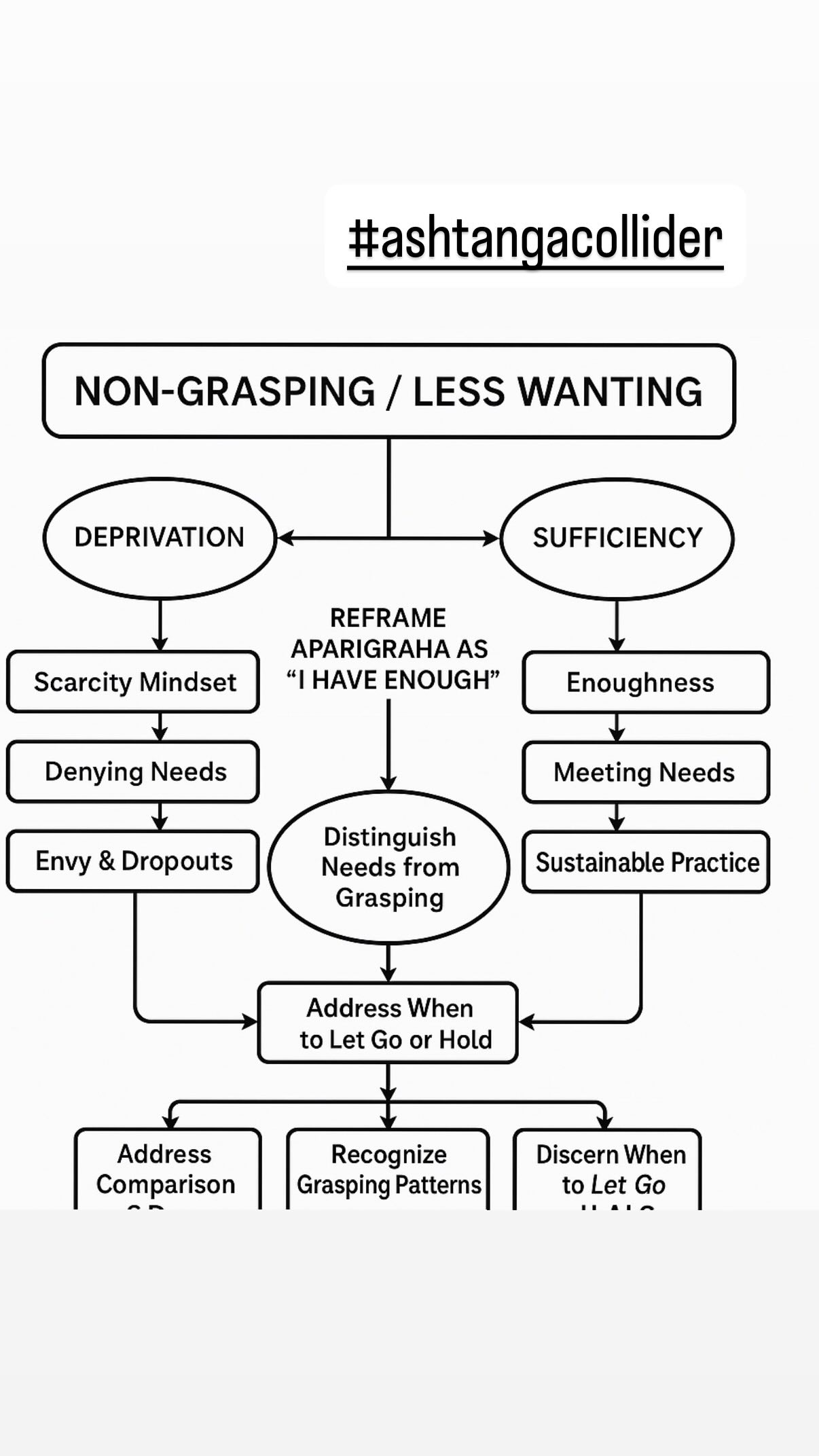
NON-GRASPING / LESS WANTING
DEPRIVATION
SUFFICIENCY
Scarcity Mindset
REFRAME
APARIGRAHA AS
"I HAVE ENOUGH"
Enoughness
Denying Needs
Envy & Dropouts
Distinguish
Needs from
Grasping
Meeting Needs
Sustainable Practice
Address When
to Let Go or Hold
Address
Comparison
Recognize
Grasping Patterns
Discern When
to Let Go
....
Mayan Mysore Adventure Dec 4 - 8 YOGA AND MEDITATION RETREAT

Jungle Physicians and Insight Through Ancient Wisdom and Modern Practice
In an age of relentless distraction, the quest for insight—that deep, intuitive understanding of ourselves and our place in the world—has never been more urgent. We seek clarity in a sea of information, purpose in a world of fleeting trends, and connection in an era…
Read the essay →Get MichaelFilter
Enter your email. We'll send a one-tap link to read today's edition free, in your browser — the link works for 24 hours. Membership unlocks every issue, PDFs, and transcripts.
Already a member of theyoga.club or ashtanga.tech? You're already on file — no re-registration. We won't add you to any list.