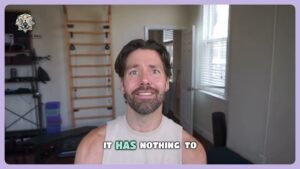
Body Diversity in Ashtanga

This is a video about Body Diversity in Ashtanga. Visit michaeljoelhall.com/coaching to book a session if you’d like to chat about your practice.

00:00 Body Diversity in Ashtanga
00:23 The Functional System of Ashtanga Yoga
00:42 The Myth of the Yoga Body
00:54 Promoting Inclusivity in Yoga
01:09 Embracing an Embodied Practice

visit michaeljoelhall.com/coaching to book a session.

Similar Posts

  • Transform Your Yoga Practice with CRM Systems

    Discover how CRM systems can revolutionize your yoga teaching business with Michael Joel Hall! Learn the power of CRM tools in managing student relationships, automating administrative tasks, and creating a thriving yoga practice.

    In this video, we’ll explore:
    – How CRM systems build stronger connections with students by personalizing communication and tracking progress.
    – The benefits of automating scheduling, invoicing, and financial management for yoga teachers who desire more freedom and efficiency.
    – How to use CRM for designing and managing classes, workshops, and retreats smoothly.

    Unlock the potential for predictable income and professional growth, all while focusing on your passion for teaching yoga. Don’t miss this opportunity to take your yoga business to the next level!

    Subscribe for more insights and tips: [Your Channel Link]

    #YogaBusiness #CRMSystems #YogaTeachers
  • You’re Practicing the Picture, Not the Pose

    A student once asked me whether a quadriplegic could do chaturanga. She meant it as a trap — obviously not, so stop being precious about “functional” versions and admit some poses require certain bodies. I said: it depends on what chaturanga is for. She looked at me like I’d lost my mind. Chaturanga is that low push-up position. Four limbs, chest hovering above the floor, elbows at ninety degrees. Everyone knows what chaturanga looks like. And that’s exactly the problem. We’ve confused the pose with the picture of the pose. Chaturanga creates specific joint actions: shoulder extension, elbow flexion, scapular protraction, trunk stabilization. That’s what it’s for. The aesthetic — the specific arrangement of limbs we call chaturanga — is one body’s solution to creating…

  • The Count Is the Practice

    Surrendering to an external count transforms your breath into the breath—and that’s where the practice deepens.

    There’s a led count for Intermediate Series on YouTube that I’ve been using for years. Not because it’s perfect. Not because it solves all my problems. But because sometimes you need someone else to decide when five breaths is actually five breaths. You know how this goes. You’re in a bind. Your breath is shallow. You start negotiating. Maybe six breaths today. Maybe seven. The count says five and you move, even though your hip flexor is staging a protest and your mind is writing a strongly worded letter about fairness. That’s the thing about a led class. The decision is made for you.

    —
    Read the full article: https://theyoga.club/the-count-is-the-practice/
    Original source: https://www.youtube.com/watch?v=Myk53CzOdQ8
    All content: https://mjh.yoga

    Concepts: Tapas · Vinyasa · Drishti · Pranayama

    #ashtanga #yoga #ashtangayoga #yogapractice #theyogaclub

  • The Yamas and Niyamas in Modern Practice

    There’s something odd about a Mysore room. No blaring playlists. No teacher on a headset shouting “FIND YOUR INNER FIRE!” Just a bunch of sweaty people breathing like Darth Vader and bending like origami — all in near silence. It looks calm. It’s not. Underneath that still surface? Pure chaos, transformation, and the occasional emotional meltdown masked as a backbend. And weirdest of all? When one person has a breakthrough — sticks a jump-back, drops into kapo, or finally breathes through their existential dread in supta kurmasana — it somehow lifts everyone. Welcome to the group project you didn’t know you signed up for: The Collective Energy Field™ — where your personal practice is apparently everybody’s business. I. The Science of Collective Energy (or, Why…

  • The Body Won’t Let You Lie

    You already know what you should do. That’s not the problem. The problem is that knowing doesn’t hold. You mean well, right up until there’s something at stake. A competitive moment. A conversation that matters. A situation where the right thing is expensive. And then some other mechanism takes over, and you do the thing you didn’t quite mean to do. You have a story about it afterward. Everyone has this experience. The interesting question isn’t why — evolution explains that clearly enough. The interesting question is whether there’s a different foundation for ethics. One that doesn’t depend on willpower in the moment. Here’s what the yoga tradition actually says about this, which is not what most teachers say. Ahimsa — non-harming — shows up…

  • Understanding the Movements of the Spine in Ashtanga Yoga

    Ashtanga yoga is a dynamic and challenging practice that requires a deep understanding of the movements of the spine. In this blog post, we will explore the six directions of spinal movement and how they inform our practice. We will also discuss the importance of spinal alignment and how to apply this knowledge to different categories of asana. Ashtanga yoga is a dynamic and challenging practice that requires a deep understanding of the movements of the spine. In this blog post, we will explore the six directions of spinal movement and how they inform our practice. We will also discuss the importance of spinal alignment and how to apply this knowledge to different categories of asana. The Six Directions of Spinal Movement A balanced yoga…

Notes from the field

No notes yet · members & customers welcome

  1. No notes yet. Be the first to leave one.

Leave a note

Want more? (optional — commenting alone never subscribes you)
Comments are for members & customers. We’ll email a one-tap link to confirm it’s you.