
A silhouetted figure stands between desert and savannah, faint animal tracks forming patterns in the sand while distant shapes of a crocodile and lion suggest the land is watching back.

Your Body Speaks in Patterns

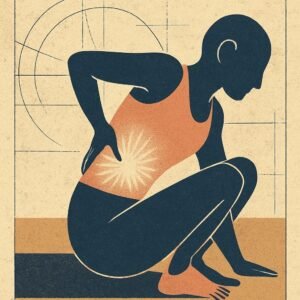
“Listen to your body.” If I had a dollar for every time someone said this in a yoga class without explaining how, I could fund a retreat center. The problem isn’t the sentiment. Your body does have things to say. The problem is the advice assumes your body broadcasts in real time, in plain language, and that you already have the vocabulary to understand it. Most people don’t. What they experience is blur: something hurts, something doesn’t, something feels okay. That’s not body literacy. That’s just having a body. Body literacy is learnable. But it requires pattern recognition, not tuning in. Not a single session. Many sessions. Here’s what’s happening under the surface. Your body compensates constantly. When one part can’t do something, other parts…

A silhouette stretches in a doorway while a foggy corridor of identical doorframes extends behind them, symbolizing flexibility that never progresses.

The Intermediate Trap

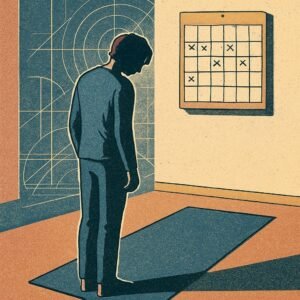
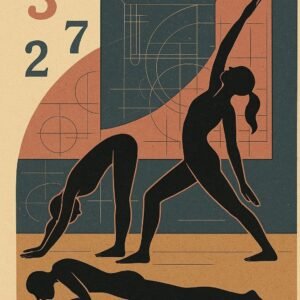
Three years in and you have the sequence memorized. You know the Sanskrit names, or most of them. You can get through Primary without stopping to think about what comes next. You have also stopped noticing anything. That is the intermediate trap. You learned the shapes and skipped the system. This is the thing about yoga that nobody tells you at the beginning, mostly because it sounds like a contradiction: the people who are often practicing best are the ones who have just started. Not because they are more flexible or more focused. Because they are paying attention to what is actually happening, instead of managing how it looks. A beginner has no performance to maintain. They arrive, they try, they fall. They breathe because…

how does compression work help you find concavity without fighting your hips?

how does compression work help you find concavity without fighting your hips?

This is Ashtanga Yoga Tech Support. Real questions from the yoga community, answered. The Question I've been thinking about using compression work with my legs parallel so I can find the concave quality in my stomach while letting my hips move naturally. Does that make sense as a way to work? — from a MJH note Our Response Yes. That’s exactly the direction.Compression work with parallel legs gives you a container. You get to feel what your abdomen does when your hips aren’t externally rotated, when there’s no flinch pattern steering you away from the midline.


Read more: https://ashtanga.tech/tech-support/how-does-compression-work-help-you-find-concavity-without-fighting-your-hips/
All content: https://mjh.yoga

#ashtanga #yoga #ashtangayoga #techsupport #ashtangatech