What Do You Enjoy Doing?
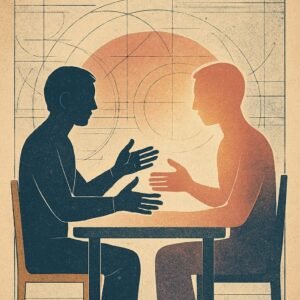
The first twenty minutes go the same way every time. A new client comes in and we inventory the damage. Where it hurts, how long it’s been hurting, what they’ve tried, what failed, what the doctor said. It’s useful information. I need it. But after a while it starts to sound like a case file, and a case file isn’t a person.
So I change the subject.
“What do you enjoy doing?” I ask. Not what they used to enjoy before the injury. Not what they plan to get back to eventually. What do they do for fun, right now, this week, in their actual life.
The question lands strangely. There’s always a pause. Not a polite one — a real pause, the kind that means the brain just shifted gears. I watch shoulders drop. I watch breath deepen. I watch faces change from the concentrated frown of someone doing medical history into something softer and harder to name.
They’re not performing wellness. They’re accessing something real.
This isn’t a therapeutic detour. I’m not asking to give them a break from the clinical frame. I’m asking because I want data. Joy is diagnostic. What you love doing tells me what your nervous system knows how to regulate toward. It tells me what your body considers its natural state — before the pain, underneath the dysfunction, prior to whatever brought you to my door.
And it tells me something even more important: it tells both of us that you are more than the thing that’s broken.
That sounds obvious. It isn’t, not when you’ve been inside a problem for long enough. Pain is totalizing. Anxiety fills the available space. When something has been wrong for months or years, the wrong thing becomes the main fact about you — first in your own mind, then in every clinical encounter where the intake form only asks about problems. You start to experience yourself as a collection of deficits.
The question interrupts that. Not forever. Not even for long. But for a moment, the client remembers they are a larger system than their stuck places. The pain is real. It’s also not the whole story.
This is where the actual work begins.
I’ve learned to think of the body the way I think about any complex system: you can’t understand it only through its failure modes. A diagnostic frame that only looks at what’s wrong will keep finding things wrong — and keep missing the functional intelligence that was there all along. Every person who walks in carrying a diagnosis has also been, somewhere in the background, walking and sleeping and laughing and eating and maintaining some version of a life. That’s not separate from their healing. That’s the evidence that healing is possible.
When someone tells me they love swimming, or cooking, or playing guitar badly in a room by themselves, I’m hearing about a system that knows how to organize itself toward something it wants. That’s the same system I’m working with. Not despite its dysfunction — alongside it.
The shoulder drop happens because they’ve stopped bracing against the frame of the session. The breath deepens because they’ve stopped narrating their case. For a moment, the problem isn’t the foreground anymore. There’s a whole background behind it, and they have access to it.
That access is not a luxury. It’s a prerequisite. You cannot change what you cannot see beyond. If the condition is all there is, then managing the condition is all there is to do. But if the condition exists inside a larger life — a life that includes things the person actually cares about — then there’s somewhere to move toward, not just something to move away from.
I ask every new client this question. And I ask it before I have a treatment plan, before I’ve assessed their movement, before I know what I’m going to do with any of it. Because it doesn’t come after the important things. It is one of the important things.
What you enjoy is not beside the point. It is the point.