The Sticky Moment
Why the hardest part of Ashtanga isn’t a pose, but the quiet shift from following instructions to actually inhabiting the practice.
Why the hardest part of Ashtanga isn’t a pose, but the quiet shift from following instructions to actually inhabiting the practice.
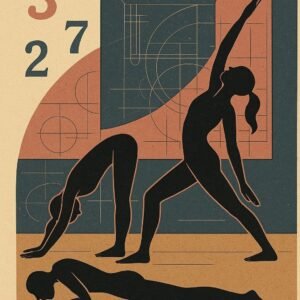
A student once asked me whether a quadriplegic could do chaturanga. She meant it as a trap — obviously not, so stop being precious about “functional” versions and admit some poses require certain bodies. I said: it depends on what chaturanga is for. She looked at me like I’d lost my mind. Chaturanga is that low push-up position. Four limbs, chest hovering above the floor, elbows at ninety degrees. Everyone knows what chaturanga looks like. And that’s exactly the problem. We’ve confused the pose with the picture of the pose. Chaturanga creates specific joint actions: shoulder extension, elbow flexion, scapular protraction, trunk stabilization. That’s what it’s for. The aesthetic — the specific arrangement of limbs we call chaturanga — is one body’s solution to creating…

Nearly everything my nervous system does, it does without me. The breath is the one input I can grab on purpose — so instead of just saying so, I built eight guided courses to teach it like it matters.

“Listen to your body.” If I had a dollar for every time someone said this in a yoga class without explaining how, I could fund a retreat center. The problem isn’t the sentiment. Your body does have things to say. The problem is the advice assumes your body broadcasts in real time, in plain language, and that you already have the vocabulary to understand it. Most people don’t. What they experience is blur: something hurts, something doesn’t, something feels okay. That’s not body literacy. That’s just having a body. Body literacy is learnable. But it requires pattern recognition, not tuning in. Not a single session. Many sessions. Here’s what’s happening under the surface. Your body compensates constantly. When one part can’t do something, other parts…
The method saved my body and my attention. The power structure around it nearly cost me both. I could have written a post about it. I built a platform instead.
Knowing what your mind does won’t stop it—but practice shortens the gap between recognition and reaction.
Three years in and you have the sequence memorized. You know the Sanskrit names, or most of them. You can get through Primary without stopping to think about what comes next. You have also stopped noticing anything. That is the intermediate trap. You learned the shapes and skipped the system. This is the thing about yoga that nobody tells you at the beginning, mostly because it sounds like a contradiction: the people who are often practicing best are the ones who have just started. Not because they are more flexible or more focused. Because they are paying attention to what is actually happening, instead of managing how it looks. A beginner has no performance to maintain. They arrive, they try, they fall. They breathe because…
A student asked me why the closing sequence comes last, and I heard how much of what I knew was inheritance, not understanding. I could have written a post about it. Instead I built the map — 81 lessons, on a platform I own. The thing is the proof.
The values audit behind Foundations of Praxis: I kept teaching that beginners deserve to understand from day one — then I stopped talking about it and built the on-ramp. Designed sequence, guided audio, count videos, a Practice Recorder you own.
I ran a values audit on myself and didn’t like how cheap talk is. So instead of posting that practitioners should be able to practice alone, I built the tool that makes it possible — every pose, both sides, counted breath by breath, on a platform I own.