The Sticky Moment
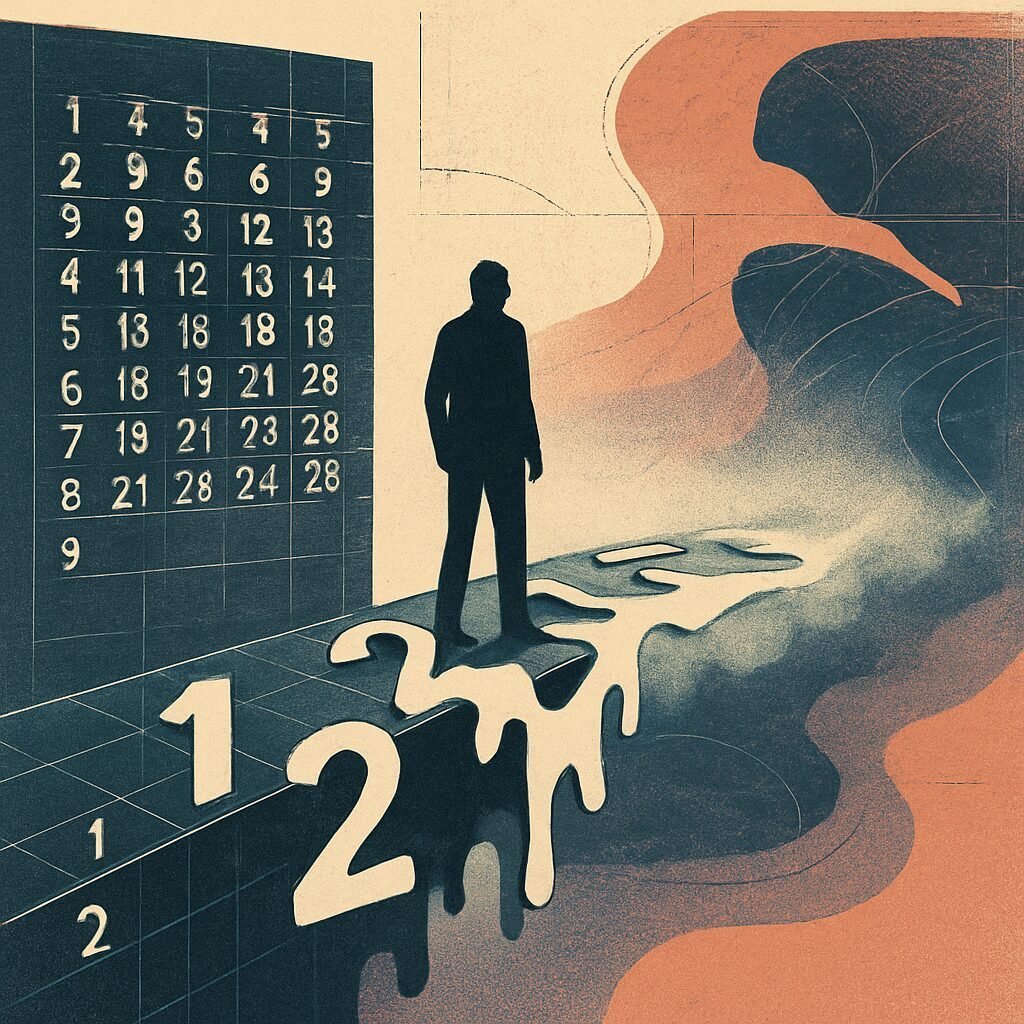
A student sits across from me after practice, somewhere between frustrated and embarrassed. She knows Primary Series. Has for two years. She can name every posture, recite its vinyasa count, describe the dristi. She just got through the whole thing by narrating it to herself in real time. Every breath labeled. Every transition announced. She finished tired in a way that had nothing to do with her legs.
She says: “I still don’t know if I’m doing it right.”
What she means is: she’s still counting. And she knows it.
There’s a gap between knowing a sequence and inhabiting it. Not a small one. Most people who’ve struggled with Ashtanga assume the counting is the obstacle — the numerology, the Sanskrit, the rigid prescription. Strip all that away, they think, and the thing might breathe. But the counting isn’t the obstacle. The counting is the vehicle. The obstacle is what happens when the vehicle has to disappear.
Think about a piece of music you’ve known for twenty years. You’re not reading notation when you hum it. You’re not tracing intervals. At some point you crossed a threshold where retrieval stopped being something you operate and became something you trust. The pattern runs itself. That is not a metaphor for practice. That is practice.
Cognitive scientists call this the shift from explicit to tacit knowledge. Explicit: you can state it, count it, describe it step by step. Tacit: you can’t easily verbalize it, and you don’t need to. Expert surgeons don’t think through incision sequences — their hands know. Chess masters don’t calculate twenty moves ahead — they see. This isn’t special; it’s what happens when any system gets rehearsed past the point of conscious management.
In Ashtanga, the counts scaffold the beginner’s nervous system. Exhale, step back, lower, inhale. Numbers give you something to hold while the body learns the shape. The problem isn’t the counts. The problem is believing the counts are the destination.
The signal that the shift has happened is pratyahara. That word usually gets translated as “withdrawal of the senses,” which is accurate and almost entirely useless until you’ve felt it. Here’s what it actually feels like: you stop tracking the practice and the practice tracks you. The room gets quieter. Not because anything external changes, but because you’ve stopped working so hard to listen.
You’re inside the music instead of following the sheet.
You cannot get there while narrating your own transitions in real time. The narration is the last cognitive load before the drop. That’s where you’re able to take that discursive way of it and turn it into tacit — that’s where the shift occurs that allows pratyahara to kick in. Not through relaxing the structure. Through trusting it so completely that it stops requiring your attention.
People call Ashtanga rigid. Same sequence. Same room. Same order every time. The critique misses the point entirely.
You cannot build tacit knowledge on a moving target. The system has to be stable long enough to become transparent. This is why jazz musicians spend years on scales before they improvise. Not to play scales forever. To eventually stop hearing them. The scale disappears and the music arrives.
Ashtanga’s fixed sequence works exactly this way. The root memorization is not a phase you survive before the practice begins. It is the practice. The rigidity is load-bearing.
The student I mentioned at the start is close. She can’t see it yet, but I can. There’s a difference between counting because you’re lost and counting because you haven’t yet trusted yourself to stop. She passed lost a while ago. She’s at the threshold.
What I can do is name it. Tell her the narration running in her head isn’t failure — it’s the last thing before the transition. I can make the room steady. I can make sure she comes back tomorrow.
Whatever that sticky piece is, it’s one of the hardest things in this practice, maybe the hardest — the shift from a practitioner who knows their sequence to one who inhabits it — and no one carries a student across that gap, not a teacher, not a method, not even a well-placed metaphor, because the crossing happens entirely in the body that does the work.