
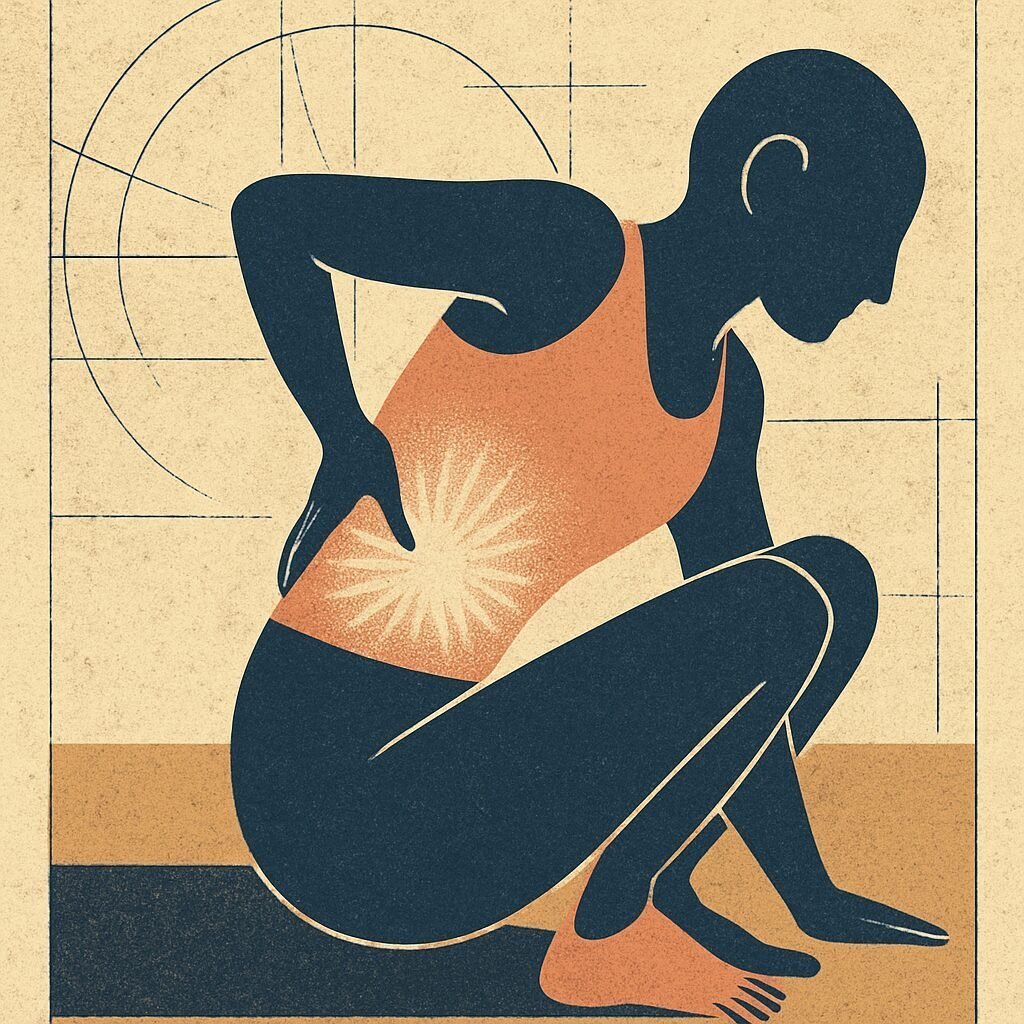
The Body Won’t Let You Lie
You already know what you should do. That’s not the problem.
The problem is that knowing doesn’t hold. You mean well, right up until there’s something at stake. A competitive moment. A conversation that matters. A situation where the right thing is expensive. And then some other mechanism takes over, and you do the thing you didn’t quite mean to do. You have a story about it afterward.
Everyone has this experience. The interesting question isn’t why — evolution explains that clearly enough. The interesting question is whether there’s a different foundation for ethics. One that doesn’t depend on willpower in the moment.
Here’s what the yoga tradition actually says about this, which is not what most teachers say.
Ahimsa — non-harming — shows up as one of the foundational ethical observances in Patanjali’s system. Most people present it as a rule: don’t harm. Try not to harm. Be the kind of person who doesn’t harm.
That’s not what it is.
After enough correct practice, something shifts in perception. Not in belief — in what you actually experience. The boundary between self and other, which felt like a fixed fact, starts to feel like a habit. A useful one, usually. But not the only available view.
And when you’ve spent enough time in that other view — when you’ve actually experienced that the awareness operating in you is the same awareness operating in everyone around you — harming someone else produces immediate feedback. Not metaphorically. Not in a nice spiritual sense. The feedback loop just got that tight.
Patanjali’s image for this is precise: it would be like your left hand attacking your right hand. Not “it would feel bad.” It would be self-defeating. The structure of the action would be wrong.
That’s a completely different foundation for ethics than “try to be good.”
Rule-following fails under pressure because rules require enforcement. You have to remember them. You have to want to follow them in the moment when following them is inconvenient. Most ethical failures aren’t cruelty — they’re moments when the enforcement lapses. Someone gets tired. Someone gets scared. The rule loses its grip.
But when non-harming stops being a rule and becomes self-protection — when harming someone else produces immediate negative feedback in your own system — the ethics don’t require enforcement. They’re just what’s true.
The feedback loops do get tighter. Not in an abstract sense. Eat something that disagrees with you, you feel it sooner. Take an action out of alignment, the dissonance lands in your body before your mind has finished constructing a justification. Have a conversation where you’re performing slightly — not lying, just not quite present — and there’s a texture to it you couldn’t have detected before, because the signal used to be too faint against the noise.
This produces what looks like a paradox: more compassion and zero tolerance for bullshit. At the same time. In the same person.
Both come from the same source. Once you can actually see clearly — not philosophically, but perceptually — you can’t participate in systems that depend on everyone staying confused. Not because you’re nobly refusing. Because participation produces immediate internal cost. The body won’t cooperate.
The compassion also isn’t effortful. A fundamental warmth toward other people shows up — not romantic, not personal, not dramatic. More like the way you’d feel toward your own hand. You’re not performing warmth toward your hand. You’re just not inclined to smash it in a door.
People find it hard to believe both can coexist. They can’t picture being more loving and harder to manipulate simultaneously.
But both require the same thing: seeing clearly.
Sentimentality — performing warmth while not seeing clearly — tolerates dysfunction because tolerating dysfunction feels like kindness. Real compassion sees clearly, wants the best outcome, and stops pretending that dysfunction is fine.
The more interesting question is why we prefer moral rules when this alternative exists. The answer is: rules are for people who haven’t yet had the perceptual shift that makes rules redundant. They’re training wheels. Useful, but not the point.
The traditions are unanimous about what the point is. Not better behavior. Better vision.
You become more ethical not because you’re trying harder. Because you’ve seen what’s actually true. And once you’ve seen it, the not-seeing becomes the harder thing.