Access Is the Practice
What it really means to build access as a yoga teacher inside institutions that were never built for you.


What it really means to build access as a yoga teacher inside institutions that were never built for you.

How advanced Ashtanga turned into a status ladder—and why so many who climbed it forgot how to support anyone else.
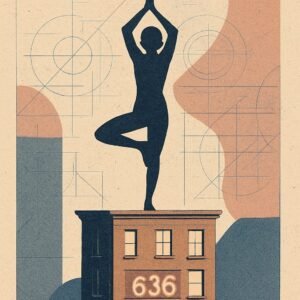
How decades of below-market rent — not discipline or talent — quietly underwrote a yoga teaching career that’s no longer possible to build.

What if the care you feel counts, even when it comes out sounding like a whistle instead of a hug?

For years I could recite my lineage and couldn’t have told you which parts were history and which were marketing. So I ran an audit on my own values — and built the answer instead of only preaching it. Culture and Context is the humanities companion that lets you hold the source, not the paraphrase.
I learned to teach yoga long before I learned to make a living from it. So I built the business I wish someone had handed me — and then built the program that hands you the same playbook.

Becoming a teacher isn’t just about mastering postures—it’s about something harder to measure.
In this episode, MJH delves into the methods of qualification for an Ashtanga Yoga teacher, contrasting traditional practices with modern approaches. Hall discusses the historical context of authorization by Patabi the current certification processes. He highlights issues with evaluation models, explaining the benefits of a non-linear understanding of system dynamics over linear assessments. Hall shares personal experiences, including conflicts in teaching methods, and emphasizes the importance of ethical frameworks and personal growth for both teachers and students in Ashtanga Yoga.
—
Read the full article: https://theyoga.club/who-gets-to-say-youre-ready/
Original source: https://michaeljoelhall.com/video-ashtanga-teacher-qualifications-uh-oh/
All content: https://mjh.yoga
Concepts: Svadhyaya · Dharma · Tapas · Ethics
#ashtanga #yoga #ashtangayoga #yogapractice #theyogaclub
The Evolution of an Ashtanga Teacher Introduction Change and iteration? I’m good with those. I started out verbose—talking too much, explaining every little thing. Then I swung the pendulum toward the stereotypical Ashtanga script: minimal instruction, no props, traditional cues only. But ultimately, I came back to being real. The journey wasn’t a straight line. I had poor mentorship modeling early on in my Ashtanga career. It took a while to trust myself—to teach from what I knew to be true, not just what I was shown. I. The Early Years: Strict Adherence to Tradition In the early years of teaching, I thought I needed to model exactly what had been handed down to me. That meant ditching props—even though I had used them before…
The Five Obstacles to Yoga Introduction Every yogi, whether fresh-faced on the mat or seasoned from years of practice, eventually bumps into… something. A wall, a plateau, a discomfort, or an inexplicable resistance. In yoga philosophy, these aren’t random speed bumps — they are known, predictable, and profoundly human. Enter the kleshas — the five obstacles. These obstacles aren’t about flexibility or how long you can hold a handstand. They’re inner blocks that cloud perception, distort behavior, and make spiritual evolution feel like wading through peanut butter in a wet blanket. Understanding them doesn’t magically solve them (sorry), but it does provide a framework for self-inquiry, personal growth, and a yoga practice that transcends hamstrings. I. Avidya (Ignorance): The Root Obstacle In yoga, avidya is…
Adapting Poses for Individual Needs You know that moment when you cue “step your right foot forward between your hands,” and someone’s foot ends up somewhere between left field and the front row? That’s not failure — that’s anatomy doing its thing. Welcome to the beautiful chaos of individualized yoga teaching, where no two bodies are the same, and your one-size-fits-all cue just made sense to exactly one person. Effective teaching isn’t about making everyone look the same — it’s about helping each student discover how yoga fits their body, not the other way around. Let’s dive into how smart, thoughtful adaptation — rooted in both biomechanics and compassion — transforms the practice for everyone. I. Understanding Individual Body Differences People come to yoga with…