The $636 Rent Subsidy That Built My Yoga Career (And Won’t Build Yours)
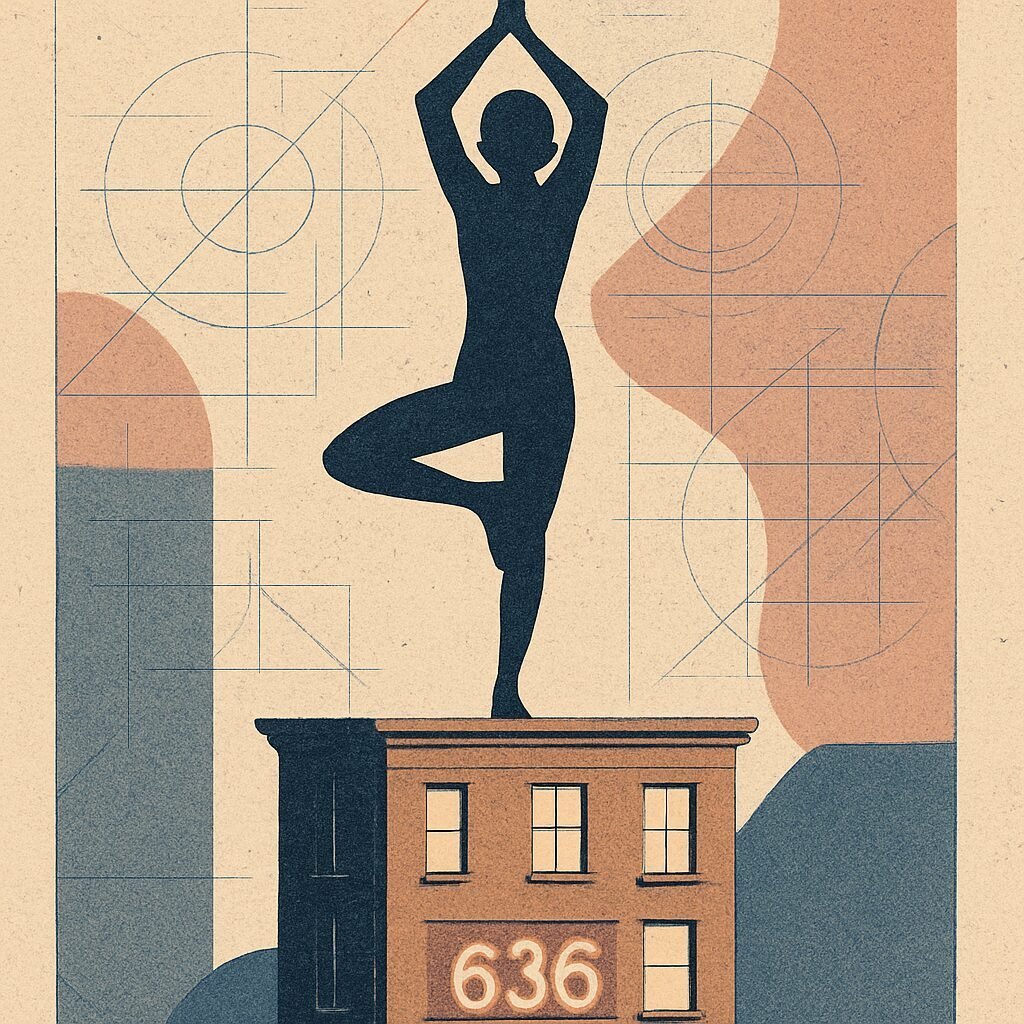
2003. Washington, DC. A landlord who lived in the same building, and rent — I remember this exactly — of $636 a month. That’s where the yoga career starts. Not in a dramatic renunciation of a comfortable life, not in some pivot point of spiritual crisis, but in a lease negotiated well enough that you could actually survive on what yoga teachers make.
There’s a cleaner story. The one where the practice found me, I committed, I showed up every day, and eventually I was standing in front of a room of people with something worth saying. Devotion as origin story. Discipline as infrastructure. I’ve told that story. It’s not false. It just leaves out the number.
That rent got me out of poverty. Not metaphorically. When you spend years paying below-market rent in a city like DC, you build something that looks, from the outside, like stability — but is actually just breathing room. Not wealth. Not savings in any serious sense. Just the capacity to not be entirely consumed by the arithmetic of survival every single month. You can make rent on a yoga teacher’s income. You can build a practice library, spend time studying, show up every day, not burn out from a second job. That’s the actual runway. Housing is the runway.
I’ve watched enough people leave teaching to know this is true. They didn’t leave because they lost the faith. They left because the math stopped working. The city got more expensive, the studio cut rates, the class sizes shrank, the landlord sold the building. They were just as devoted as anyone still in a teaching role. Some of them were better teachers than me. The variable wasn’t practice. The variable was rent.
The yoga world is unusually committed to the mythology of non-attachment. Letting go as spiritual technology. The discipline to release what isn’t yours. There’s nothing wrong with that teaching — it’s what I’ve spent twenty years trying to understand and transmit. But I’ve noticed something about the people who talk most loudly about letting go: they often had something stable underneath them when they did. A family with money. A spouse with a salary. A $636 apartment in DC and a landlord they could negotiate with. You can preach radical impermanence with a lot more confidence when the rent is taken care of.
This isn’t cynicism. It’s what I’d call systems literacy: any system runs on inputs. Some of those inputs are discipline, attention, decades of study, showing up when you don’t want to. Some of them are cheap rent and a landlord who doesn’t raise the price every year just because the market will bear it. We’re comfortable naming the first set. We almost never name the second. And that omission is a kind of lie — one that makes it harder for the next person to understand what they’re actually building toward, and what they’ll need in order to build it.
Post-pandemic made things harder. The subsidy got thinner. But by then, the conditions that created it were already unrepeatable — the city had changed, the neighborhood had changed, the economics of who gets to stay somewhere long enough to build something had shifted. I watched entire cohorts of artists and practitioners and teachers leave DC in the years I stayed. Priced out. I don’t know exactly what a city loses when that happens. I’m pretty sure cities find out eventually.
There’s a version of this essay that ends with advice. Find your equivalent. Negotiate your lease. Understand your inputs. I’m not going to write it. The conditions that created my specific subsidy were specific — a particular landlord, a particular city at a particular moment when it still had the economic texture to let someone like me find a foothold. I didn’t engineer those conditions. I benefited from them. Saying so is the least I can do.
What I can do is name it plainly: this career was built on material preconditions almost nobody in the yoga industry admits to in public. The devoted practice mattered. The consistency mattered. The thousands of hours of study mattered. And also: a below-market apartment in a city where you could teach and write and figure out who you were going to be, because the rent was $636 a month and the landlord lived downstairs. Both things are true. The first gets the story. The second built the runway. And the runway is gone.