Time Capsule Treasure Hunt

In the summer of 1996, my cousins and I buried a time capsule in my parents’ backyard. My mother is the oldest of seven sisters. Five of those six sisters got pregnant within about a year of each other. I was the only boy in that batch.

Due to our close proximity in age—and one of my aunt’s early passing—we spent a lot of time together in the summers. I loved the summer.

On the rural dirt roads and sandy private beaches of Colonial Beach, Virginia, for three months every year, I felt less like an only child and more like a sibling. I have brothers, but they were out of the house by the time I was ten. Colonial Beach gave me peers my own age—comrades, a cohort. It could be lonely growing up in a town with more cows than people, and more bullshit than brains.

Inside the coffee can our folks gave us, we squirreled the treasures of preteens—self-styled young adults. Before we started digging, none of us could remember exactly what those treasures were, but we knew they had to be important.

A cedar-sided rambler with a wrap-around deck built by my father’s hands. We’d marked the spot near the stairs in our minds. Like the burnt-red stain on those planks, our memories had faded with time.

What we remembered placing for posterity was a bit more personal: letters. Each of us wrote notes envisioning our futures. I knew I wanted to be in local politics. Always the little lawyer. Kind of an asshole.

I don’t know what my cousins put in their letters, but I’m certain none of them said, “I’m going to be a single mother,” any more than mine was likely to say, “I’m going to be assaulted on the street for being queer.” I can’t imagine the can holding secrets like “My family won’t speak to me for years because I had an intimate wedding.”

You just don’t expect to find that kind of realness inside. Pogs, maybe. Playing cards? Sure.

But the real stuff? I dunno. We didn’t talk about the realities of meth addiction, about HIV risk for single white women, or about the radio silence when times get too tough to process. Like Mom says, when asked what happens if you marry the wrong man: “You divorce the mother-fucker.” Pragmatism doesn’t always fly at that age.

She’s been married to my dad for a very long time, so don’t misconstrue the quip. We all have choices. We aren’t trapped. Good or bad, we make our own decisions. And besides, maybe mine did say something about being beat up—it happened a lot at that age, too. I don’t want to put holes in my own memory.

Speaking of holes, it was harder than you’d think to find the capsule. Not that I’m a great digger or anything, but I wanted to get my hands dirty. Uncle Mark couldn’t help himself—came over to supervise, then started shoveling. We appreciated that. Little Nathan, Krista’s kid, came to watch what his Grampa and Mom were up to.

Memories fade and change. Get blurry. We all had a different idea of where the past was buried. Holes, holes, holes.

A couple of years ago, after the car industry shit the bed, my folks got out of their twilight project—an old country car dealership—and took on retirement. They’d been active their whole lives. They’re the kind that like to work. Retirement didn’t suit them.

Realizing this, they sold everything and rented out the house. Mom texted me a photo after the last Craigslist buyer picked up the remnants of their furniture.

Me: “Mom! That picture makes me so sad.”

Mom: “Oh, Michael. Don’t be sad. It’s the most free I’ve ever felt. You have no idea how good it feels to let go of stuff.”

My Mom, the big yogi.

After two years on the road seeing America, they came home.

For my family, the Fourth of July is a big deal. Secular, no forced gift culture—just pools, food, and sun. For most of my aunts and uncles, I realize now, this was the only vacation anyone got.

Picture it: cousins aplenty, holding shovels and smiles. Uncle chipping in, Dad supervising. The bushes alongside the deck had changed over the years. The flower bed gave no clues. Time and erosion had almost certainly changed the depth of our prize.

Nervous about never finding it, we dug a few shallow holes. Nothing. We decided to see if technology could help. Dad came out with a metal detector. Beep. Beep. Beep.

Fail.

We dug a hole to the left of the azaleas. We dug another to the right. All we were doing was putting holes in our yard.

Finally, deferring to our elders’ memories, we returned to the first patch, just under the stairs.

Instead of putting holes all over the yard, we decided to dig in one spot.

And dig we did. Deeper. Wider. Mulch and time had changed the depth. Erosion, right? The landmarks had shifted too. How long had that bush been there, anyway? No one could remember.

We just kept going.

When we hit clay, we switched to a pickaxe. Undeterred. A little deeper, and then the telltale sound:

Chink.

Chink. Chink.

The pickaxe had struck the old duct-taped Folgers can.

The years had not been kind to the tin. Rusted out, the plastic lid was destroyed.

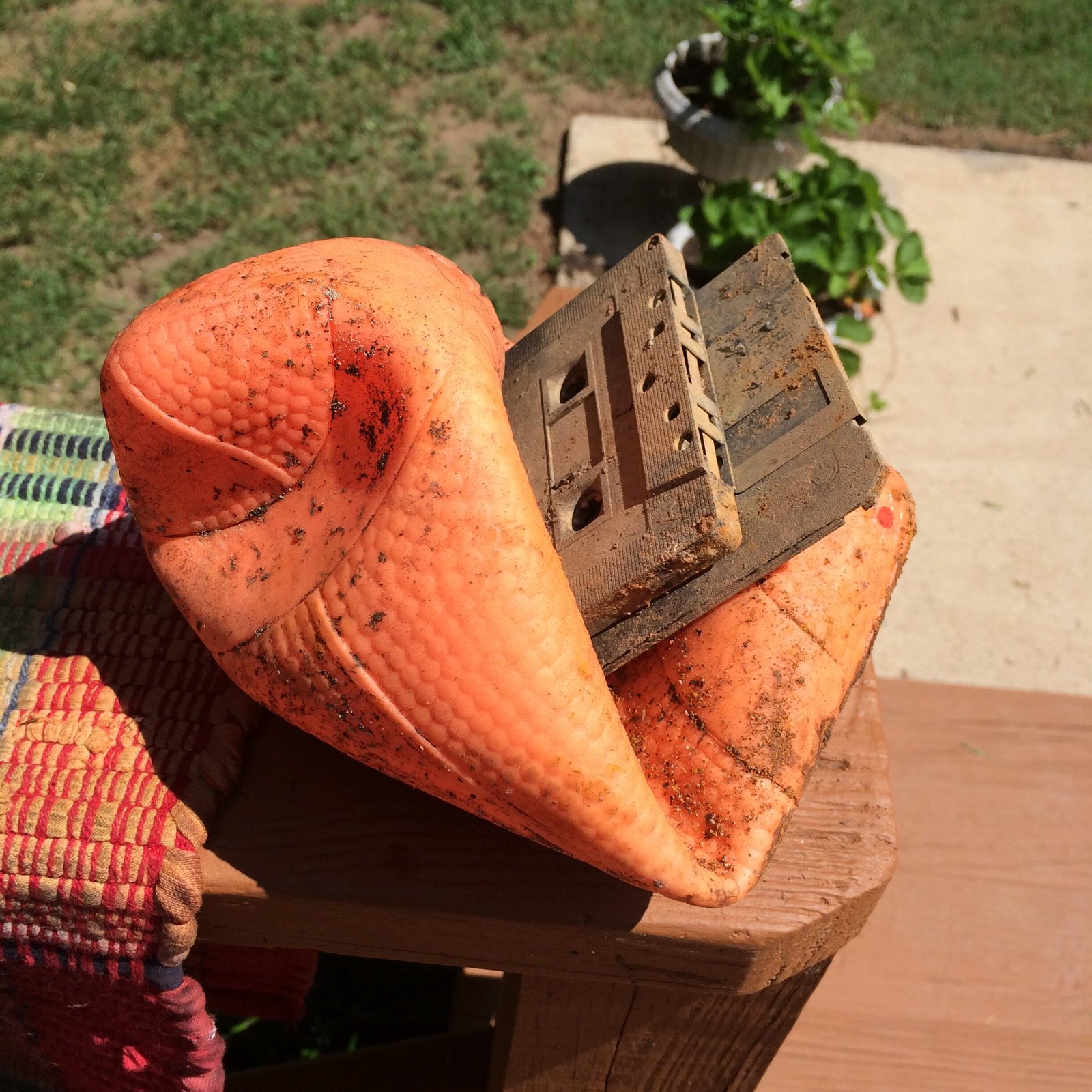
What did we find? A cassette tape of our group rendition of Ace of Base’s “I Saw the Sign,” a deflated basketball, and a floppy disk.

But what of our aspirational letters? Our teenage dreams?

They didn’t make it to the future, thank god.

This is a happy story.

Similar Posts

  • Echoes from the Forest: Insights for a Thriving Mysore Community

    Today’s post intertwines the wisdom of my mentor, Kristen Krash, with my work as a mysore style Ashtanga Yoga teacher. Kristen, an inspiring figure in both my life and in her groundbreaking work regenerating a cloud forest in Ecuador, offers profound insights into the interconnectedness of all things.  Kristen’s article “Why those big-tree planting projects fail. And why ours is succeeding”  is a story of resilience, regeneration, and the intricate tapestry of community building— all in a forest environ. The gist of it is that it takes more than a bunch of big trees to make a forest. I see parallels between Kristen’s observations about forest regeneration and the nurturing environment of a Mysore yoga community. I believe these insight offers a unique perspective on how…

  • Power Dynamics in Mysore Style Ashtanga Yoga

    This is a video about Power Dynamics in Mysore Style Ashtanga Yoga. Reach out if you want some coaching for you practice. https://michaeljoelhall.com/coaching

    00:00 Introduction to Shifting Power Dynamics in Ashtanga Yoga
    00:06 The Guru-Disciple Model of the Past
    00:23 The Rise of Critical Engagement
    00:40 The Need for Autonomy and Self-Organization
    00:57 Reckoning with Past and Present Abuses
    01:07 Empowering Students in Modern Practice
    01:20 Evolving Authority into Responsibility
    01:30 Building a Partnership in Teacher-Student Relationships
    01:39 Moving Forward: Mutual Respect and Earned Trust

  • Stop Making Ashtanga a Cult! Part 2: Strategies

    Michael Joel Hall discusses his intervention strategies to address unhealthy group dynamics in Ashtanga Yoga practice. He emphasizes the need for critical thinking, encouraging student autonomy, and fostering an open, transparent, and inclusive environment. Hall advocates for a student-centric approach, prompting open dialogue, respecting individual choices, and avoiding hierarchical or dogmatic practices. He stresses the importance of evidence-based teaching, open leadership, and peer support. Hall highlights the necessity of maintaining ethical standards, respecting personal autonomy, and fostering genuine community connections without creating high-pressure commitments or abusive dynamics. The script underscores the significance of maintaining integrity, transparency, and community well-being in yoga teaching and leadership.

    00:00 Introduction and Purpose
    00:01 Addressing Unhealthy Group Dynamics
    01:15 Critical Thinking in Yoga Practice
    01:40 Encouraging Student Independence
    02:26 Building Trust and Normalizing Doubt
    02:57 Grounding Practice in Biomechanics
    04:57 Fostering Democratic Leadership
    05:40 Being Open to Oversight
    07:00 Respecting Personal Choices
    07:28 Avoiding Dogmatic Views
    07:44 Promoting Inclusivity and Accessibility
    08:36 Equal Standards and No Inner Circles
    09:26 Transparency and Ethical Standards
    18:10 Authentic Relationships Beyond Yoga
    18:58 Financial Transparency and Community Support
    19:44 Avoiding Abuse and Humiliation
    21:17 Ethical Mentorship and Equity
    23:13 Maintaining Integrity and Being Yourself
    26:10 Community Membership as a Practice
    26:51 Transparency in Teaching and Learning
    28:56 Data-Driven Success and Community Impact
    29:38 Personal Challenges and Community Support
    30:10 Long-Term Practice and Growth
    30:27 Adapting and Innovating in Yoga
    30:58 Conclusion and Farewell

  • The Business of Yoga: A Guide for Mindful Ashtanga Practitioners

    Are you an Ashtanga yoga practitioner who is considering becoming a yoga teacher? Or are you already a yoga teacher who wants to improve your business skills? Then this guide is for you! In this article, we will explore the business aspect of yoga teaching and give you tips on how to run a mindful business. The Importance of Your Niche As a yoga teacher, it’s important to find your niche. Your niche is the area of focus within yoga teaching that sets you apart from other teachers. For example, you may specialize in teaching Ashtanga yoga for beginners or yoga for athletes. By choosing a niche, you can build a brand around your expertise and attract students who are looking for that specific type…

  • Transportation and Communication, pt 1

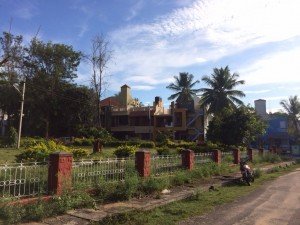
    I couldn’t have been more frustrated. More people in India have mobile phones than running water– and yet, here we were stopped in front of Sandesh the Prince — another palace cum hotel, not a one of us with an address or telephone number for Sandhya’s. Did I mention that this was a group of people who, in general, didn’t much care for groups of people? Figuratively and literally, we’d been down this road before. A week prior, we had ended up at Sandesh, our driver having misheard our request for Sandhya’s. This time, we had made SURE that the driver knew where we were going, asking repeatedly and determinedly if he knew that we meant the yellow house near the park. You know, the…

Notes from the field

No notes yet · members & customers welcome

  1. No notes yet. Be the first to leave one.

Leave a note

Want more? (optional — commenting alone never subscribes you)
Comments are for members & customers. We’ll email a one-tap link to confirm it’s you.