Ashtanga: Healthy Ambition for Collaboration Instead of Competition
Is your competition truly ‘friendly,’ or is it just burning you out? Visit michaeljoelhall.com/coaching to book a session if you’d like to chat about your practice.

Is your competition truly ‘friendly,’ or is it just burning you out? Visit michaeljoelhall.com/coaching to book a session if you’d like to chat about your practice.

This is a video about Beginner Friendly Approaches to building a lifelong Ashtanga Yoga practice. Visit michaeljoelhall.com/coaching to book a session if you’d like to chat about your practice.
00:00 Debunking Ashtanga Yoga Myths
00:19 Challenges for Beginners
00:33 Creating a Sustainable Practice
00:53 Introducing Modifications
01:16 Psychological Barriers
01:46 Ensuring Long-Term Engagement
02:04 Welcoming New Practitioners
02:14 Conclusion: Shifting Our Approach
This is Ashtanga Yoga Tech Support. Real questions from the yoga community, answered. The Question I want to get into yoga to help with my mentality and body. I have lots of anxiety and stress constantly and i feel like i need to release it. Also i suffer with back pain from my poor posture due to always studying. I was wondering if yoga can tone the body? submitted by /u/jellyolo12 — via r/yoga Our Response Short answer: yes. But probably not the way you're imagining. You mentioned anxiety, stress, back pain from bad posture.
—
Read more: https://ashtanga.tech/tech-support/can-yoga-help-with-toning-your-body/
All content: https://mjh.yoga
#ashtanga #yoga #ashtangayoga #techsupport #ashtangatech
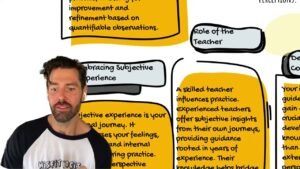
In this episode, I delve into the importance of balancing objectivity and subjectivity in Ashtanga Yoga practice. Objective analysis focuses on measurable aspects such as alignment, breath length, stance, and body placement. However, maintaining awareness of your subjective experience—your personal journey and internal responses—is equally crucial. The video also highlights the role of a skilled teacher and the significance of developing your internal compass to guide your practice, empowering you to adapt practices to your unique needs.
00:00 Objective Analysis of Practice
00:26 Embracing Subjective Experience
00:53 The Role of the Teacher
01:11 Developing Your Inner Compass
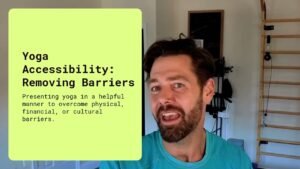
In this video, we unbox the concept of decolonizing your yoga practice by removing authoritarianism and emphasizing self-study. This episode covers the cultural context of Ashtanga Yoga, the impact of colonialism and capitalism in shaping Western yoga practices, and the need for open-source teaching. Michael discusses historical gender biases, the guru-student power dynamic, and the issues of gatekeeping and groupthink in yoga communities. Learn about the importance of making yoga accessible and fostering community-centered approaches while balancing tradition with the evolution of Ashtanga Yoga. Discover how decommodification and recognizing inner intelligence can lead to true liberation in your practice.
00:00 Dismantling Authoritarianism with Ashtanga Yoga: Power, Practice, Justice
00:01 Introduction to Decolonizing Yoga
00:15 Historical Context and Cultural Impact
01:12 Examining Patriarchal Elements
02:14 Power Dynamics and Gatekeeping
03:37 Cultural Imperialism in Teaching
04:50 Appropriation vs. Appreciation
06:43 Open Source Teaching as Solution
08:12 Making Yoga Accessible
10:12 Balancing Tradition with Evolution
11:49 Self-Education and Awareness
14:05 Conclusion: Path to Liberation

This is Ashtanga Yoga Tech Support. Real questions from the yoga community, answered. The Question I've been thinking about using compression work with my legs parallel so I can find the concave quality in my stomach while letting my hips move naturally. Does that make sense as a way to work? — from a MJH note Our Response Yes. That’s exactly the direction.Compression work with parallel legs gives you a container. You get to feel what your abdomen does when your hips aren’t externally rotated, when there’s no flinch pattern steering you away from the midline.
—
Read more: https://ashtanga.tech/tech-support/how-does-compression-work-help-you-find-concavity-without-fighting-your-hips/
All content: https://mjh.yoga
#ashtanga #yoga #ashtangayoga #techsupport #ashtangatech
There’s something odd about a Mysore room. No blaring playlists. No teacher on a headset shouting “FIND YOUR INNER FIRE!” Just a bunch of sweaty people breathing like Darth Vader and bending like origami — all in near silence. It looks calm. It’s not. Underneath that still surface? Pure chaos, transformation, and the occasional emotional meltdown masked as a backbend. And weirdest of all? When one person has a breakthrough — sticks a jump-back, drops into kapo, or finally breathes through their existential dread in supta kurmasana — it somehow lifts everyone. Welcome to the group project you didn’t know you signed up for: The Collective Energy Field™ — where your personal practice is apparently everybody’s business. I. The Science of Collective Energy (or, Why…
No notes yet · members & customers welcome
Michael Joel Hall’s daily reading — the field journal, critical-thinking cards, and synthesis — as a membership.
$5.50/month · cancel anytime
Join — $5.50/mo →Secure checkout on theyoga.club. A yearly option ($55) is available there too.