Overcome Burnout: Reclaim Your Energy with Ashtanga Yoga
Are you feeling overwhelmed and burnt out? Visit michaeljoelhall.com/coaching to book a session if you’d like to chat about your practice.


Are you feeling overwhelmed and burnt out? Visit michaeljoelhall.com/coaching to book a session if you’d like to chat about your practice.

adapted from the DC Ashtanga Newsletter for April Ashtanga yoga is practiced six days a week. So, when is it okay to take a day off from yoga… and when should we reconsider canceling? Inertia is a funny thing. Objects at rest tend to stay at rest. Objects in motion, when in a straight path with nothing slowing them down, tend to stay in motion. With this little bit o’ physics, we can say that getting up and doing your practice can become its own perpetual motion machine, right? Yoga + Science = Win! (?) Not so fast. When is it appropriate to take off a day from practice? Saturday. Maybe do an oil bath. We have a six day a week practice, right? Saturday is a great…

This is Ashtanga Yoga Tech Support. Real questions from the yoga community, answered. The Question Hi all, I'm new to ashtanga and I want to start building a realistic home practice with a long-term vision. Where do I start and how do I keep going? I've been going to led classes 2x a week for a few months now with a great teacher. At the same time, don't want to be dogmatic about Ashtanga. Is this possible? I'm still a relative beginner with yoga in general and love exploring different styles, but so far ashtanga has touched me the most. submitted by /u/philosop…
—
Read more: https://ashtanga.tech/tech-support/how-to-start-a-realistic-home-practice-as-a-beginner/
All content: https://mjh.yoga
#ashtanga #yoga #ashtangayoga #techsupport #ashtangatech

A student once asked me whether a quadriplegic could do chaturanga. She meant it as a trap — obviously not, so stop being precious about “functional” versions and admit some poses require certain bodies. I said: it depends on what chaturanga is for. She looked at me like I’d lost my mind. Chaturanga is that low push-up position. Four limbs, chest hovering above the floor, elbows at ninety degrees. Everyone knows what chaturanga looks like. And that’s exactly the problem. We’ve confused the pose with the picture of the pose. Chaturanga creates specific joint actions: shoulder extension, elbow flexion, scapular protraction, trunk stabilization. That’s what it’s for. The aesthetic — the specific arrangement of limbs we call chaturanga — is one body’s solution to creating…

I ran a values audit on myself and didn’t like how cheap talk is. So instead of posting that practitioners should be able to practice alone, I built the tool that makes it possible — every pose, both sides, counted breath by breath, on a platform I own.
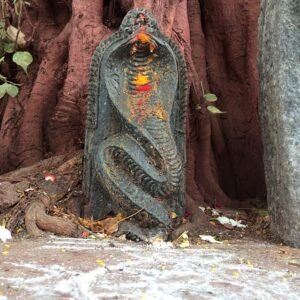
The count in Ashtanga Yoga is a key component of the practice, helping students maintain a steady rhythm and focus their attention on the breath. In Ashtanga Yoga, each posture is performed with a specific number of breaths, known as the vinyasa count. The count is typically given by the teacher, but it’s important for students to also learn the count themselves as a way to deepen their understanding of the practice. The primary and intermediate series of Ashtanga Vinyasa Yoga include a total of 72 postures, which are performed in a specific order. In a guided class, they often use a Sanskrit count. The postures in these series are considered “half vinyasa” because we don’t return to the top of the mat in between…
Individualized Sequencing in Ashtanga Yoga
—
**Introduction**
Hello! Michael Joel Hall here, diving into the world of individualized sequencing in Ashtanga Yoga. While Ashtanga is known as a structured system, it’s crucial to realize that adaptability is its core strength. Without it, the practice becomes fragile. The traditional sequence, developed throughout the late 20th century, is designed to cultivate strength, flexibility, and resilience through its progressive and intentional design. But what happens when the system faces the individual realities of injuries, physical limitations, and unique biomechanics?
—
**Understanding Challenges and Adaptations**
Ashtanga Yoga, like any practice, meets unique individual challenges. When faced with pain, limitations in breath stability, or when a posture aggravates an existing injury, adjustments become essential. It’s vital to adapt intelligently without compromising the essence of the practice. Obstacles such as existing injuries or unique physical structures can sometimes act as barriers that cannot be overcome by sheer determination or force.
—
**Integrating Therapeutic Adaptations and Vinyasa Flow**
Therapeutic adaptations can be integrated smoothly without breaking the vinyasa count, by maintaining the rhythm of breath and incorporating regressive movements that facilitate appropriate breathing and motion. The core purpose of Vinyasa is to preserve the continuous flow of energy. As long as substitutions support these core goals rather than disrupt them, why not embrace them? This way, the integrity of the system remains intact.
—
**Balancing Tradition with Sustainability**
One of the significant challenges in modern Ashtanga Yoga is balancing tradition with the sustainability of practice. As we incorporate our western conditions and lifestyles, rigid adherence can lead to more injuries or create unnecessary exclusion. There’s a misconception that modifying the practice will dismantle its structure, but that only happens if modifications are made without discernment. Understanding why the sequence exists and adapting it with respect and intelligence gives it a long-term vision.
For me, this practice extends beyond a single session. It’s an insight practice—a lifelong journey. Don’t you want a practice that offers lifetime insights?
—
In conclusion, individualized sequencing in Ashtanga Yoga is about making intelligent adaptations to honor both the tradition and personal needs. This nuance allows for sustainability and inclusivity, ensuring that the practice benefits each practitioner uniquely over their lifetime.
No notes yet · members & customers welcome
Michael Joel Hall’s daily reading — the field journal, critical-thinking cards, and synthesis — as a membership.
$5.50/month · cancel anytime
Join — $5.50/mo →Secure checkout on theyoga.club. A yearly option ($55) is available there too.