
Field Ledger Archive
13,278 entries across the years, 2003–2026.

ICE is targeting
delivery drivers in
D.C. during Trump's
immigration crackdown
POLICE
FIELD TRAINING OFFICER
CORDASH
(Andrew Leyden/Getty Images)
@washingtonpost
Didn't expect something that profound to come out of that microwave 😢

deployed in D.C. are now
allowed to carry guns
(Jose Luis Gonzalez/Reuters)
@washingtonpost
le sigh

Ashtanga Teacher Qualifications ( Uh Oh)
In this episode, MJH delves into the methods of qualification for an Ashtanga Yoga teacher, contrasting traditional practices with modern approaches. Hall discusses the historical context of authorization by Patabi the current certification processes. He highlights issues with evaluation models, explaining the benefits of a non-linear understanding of system dynamics over linear assessments. Hall shares personal experiences, including conflicts in teaching methods, and emphasizes the importance of ethical frameworks and personal growth for both teachers and students in Ashtanga Yoga. 00:00 Ashtanga Yoga Assessment Paradigms 00:13 Historical vs. Modern Certification Methods 01:15 Challenges in Modern Certification 02:18 Open Systems, Closed Systems, and Narrow Minds 03:11 Personal Teaching Conflicts and Adaptations 04:13 Linear vs. Non-Linear System Dynamics 05:57 Holistic Criteria for Assessing Teachers 06:26 Balancing Physical and Ethical Development 07:16 Questions for Personal Practice and Teaching 08:35 Conclusion: The Importance of Ethical Teaching
Read the essay →Assisting is a mirror and it shows you how you show up. Are you pushing? Are you fixing, over identifying with students' success?
Spiritual Assistance Principles
ASSIST WITH INTENTION
Approach assisting as a meaningful act of spiritual support.
FOCUS ON YAMA/NIYAMA
Emphasizing ethical disciplines enriches the assistance experience.
TAPAS WITH AHIMSA ON PURPOSE
Non-harming forms the foundation of effective and compassionate and practice assistance. Do it on purpose.
ENCOURAGE SELF-STUDY
Promote svadhyaya to deepen personal understanding in yoga.
Spiritual Assistance Principles
1. ASSIST WITH INTENTION – Approach assisting as a meaningful act of spiritual support.
2. FOCUS ON YAMA/NIYAMA – Emphasizing ethical disciplines enriches the assistance experience.
3. TAPAS WITH AHIMSA ON PURPOSE – Non-harming forms the foundation of effective and compassionate and practice assistance. Do it on purpose.
4. ENCOURAGE SELF-STUDY – Promote svadhyaya to deepen personal understanding in yoga.
5. SURRENDER TO THE PROCESS – Ishvara pranidhana cultivates trust and openness during assis

proposed that
a good life is a
psychologically
rich life, marked by
novel experiences,
perspective-shifting
insights and
complexity, but also
more discomfort and
challenges than
a happy life or
a meaningful life.
®
(uiustraton by George wyiesovror ine wasnineton rosu
@washingtonpost

from my
fire escape
G
The view
from my
fire escape

rules over you,
simply find out
who you are
not allowed
to criticize."
- Voltaire
@larryghobbs

Using Objective Analysis and Inner Perception in Ashtanga Yoga
In this episode, I delve into the importance of balancing objectivity and subjectivity in Ashtanga Yoga practice. Objective analysis focuses on measurable aspects such as alignment, breath length, stance, and body placement. However, maintaining awareness of your subjective experience—your personal journey and internal responses—is equally crucial. The video also highlights the role of a skilled teacher and the significance of developing your internal compass to guide your practice, empowering you to adapt practices to your unique needs. 00:00 Objective Analysis of Practice 00:26 Embracing Subjective Experience 00:53 The Role of the Teacher 01:11 Developing Your Inner Compass
Read the essay →
found out, then
fucked around
again because
you never
learn.
@ disappointingallirmations
@disappointingaffirmations
Do proportions matter?
of course.
duh.
Let's rock! (CORE drills)
Thanks @michaeljoelhall for the inspo!
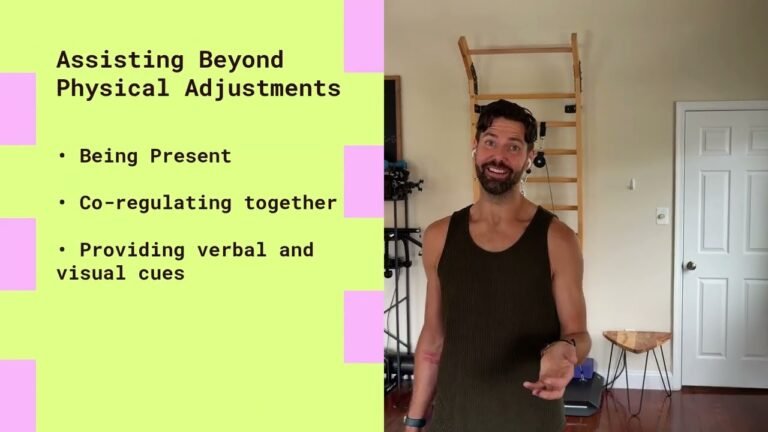
The Art of Assisting in Ashtanga Yoga: Beyond Physical Adjustments
The Art of Assisting in Ashtanga Yoga: Beyond Physical Adjustments In this video, Michael Joel Hall, a seasoned Ashtanga Yoga teacher based in Washington DC, delves into the nuanced art and responsibility of assisting in yoga practice. Hall emphasizes that assisting is not about fixing students but about supporting their personal practice through presence and understanding. Drawing on systems thinking and yoga philosophy, he discusses the significance of verbal, visual, and physical assists, the importance of consent and trauma awareness, and the spiritual dimension of assisting within the framework of the eight limbs of yoga. The key message is to support the students' exploration and self-organization rather than imposing corrections, advocating for a holistic approach that respects individual needs and fosters mutual growth. 00:00 Introduction and Welcome 00:08 The Art and Responsibility of Assisting 01:04 Purpose of Assisting in Ashtanga Yoga 01:48 Supporting an Intelligent System 03:21 Spiritual Practice of Assisting 05:50 Types of Assists: Verbal, Visual, Physical 08:17 Consent, Touch, and Trauma Awareness 10:27 Feedback Loops in Assisting 12:36 Adaptation and Individualization
Read the essay →
Introduction to Collaborative Dynamics in Ashtanga Yoga: Subjective Experience vs Objectivity
Subjectivity vs. Objectivity in Ashtanga Yoga Practice In this video, Michael Joel Hall discusses the important balance between subjectivity and objectivity in Ashtanga yoga practice. He explores how personal experience and objective observation impact our practice and progress. Michael emphasizes the need to balance inner experiences with feedback from teachers, historical standards, and self-reviews. The video highlights the significance of having worthy mentors and using feedback constructively to enhance practice and self-awareness. 00:00 Introduction to Subjectivity vs. Objectivity in Ashtanga Yoga 00:52 Balancing Personal Experience and Objective Observation 01:39 The Role of Feedback and Blind Spots 02:12 Trust and the Inner Compass 03:21 Conclusion and Final Thoughts
Read the essay →
PLEASE
DO NOT
TOUCH
touch what tho

"You just had to roll up your sleeve,
sir"
ELBER
CAMALA

a better version
of yourself.
Don't just be a fuckup,
be the best fuckup
that you can be.
@disappointingalli
@disappointingaffirmations

Alignment and Form in Ashtanga Yoga
Michael Joel Hall shares his insights on alignment and form in Ashtanga Yoga, emphasizing the importance of functionality over aesthetics in postures. He discusses how stability, internal awareness, and breath play pivotal roles in developing both strength and flexibility. Hall highlights that true depth in practice arises from understanding the purpose and mechanics of poses rather than merely striving for visually perfect forms. 00:00 Introduction to Alignment in Ashtanga Yoga 00:12 Principles and Practice of Functional Alignment 00:00 Introduction to Alignment in Ashtanga Yoga 00:12 Principles and Practice of Functional Alignment
Read the essay →Secret Yoga Club
Mysore magic thanks to @michaeljoelhall @theyoga.club
Just what jefe needed after a 6hr flight and 4hrs of sleep 💀
Secret Yoga Club
Mysore magic thanks to @michaeljoelhall @theyoga.club
Just what jefe needed after a 6hr flight and 4hrs of sleep 💀
Daily dose of misfit medicine 💊
what you actually

THE JOHN A. WILSON BUILDING
1350 PENNSYLVANIA AVENUE, N.W.
WASHINGTON, D.C. 20004
CONTACT:
RELEASE:
Lindsey Walton
Iwalton@dccouncil.gov
FOR IMMEDIATE
Monday August 11, 2025
DC COUNCIL STATEMENT IN RESPONSE TO PRESIDENTIAL
ANNOUNCEMENT
WASHINGTON, DC - This is a manufactured intrusion on local authority. Violent crime
in the District is at the lowest rates we've seen in 30 years. Federalizing the Metropolitan
Police Department is unwarranted because there is no Federal emergency. Further, the
National Guard has no public safety training or knowledge of local laws. The Guard's role
does not include investigating or solving crimes in the District. Calling out the National
Guard is an unnecessary deployment with no real mission.
strategies. We must ensure that in our pursuit of safety, we do not create an atmosphere of
сео о ое ноне на .
Public safety is built on trust, consistent enforcement, and community-based
Our local police department is the best in the country, and it is our police officers
who should be leading the efforts to keep our communities safe-not the National Guard.
The President was unable to cite any evidence that our MPD is not able to do the job. Let's
Our local government regularly partners with the federal government. The federal
government plays a role through the United States Attorney's Office prosecuting violent
crime, the Senate confirming judges to serve on our courts, the federal supervision agencies
to follow up with people who are released on parole, and Congress passing a budget fix so
that DC residents can spend their own tax dollars to pay our police and firefighters the
wages they deserve. Taking over our police department and deploying hundreds of National
Guard members is not the hard work of public safety - it is a show of force without impact.
It is our job to regularly look at our laws and ensure they are serving our residents'
interests. That's what we did in 2024 when the Council came together to pass Secure DC,
an omnibus with over 100 interventions to drive down crime. We did it again when the
Council in June 2025 passed Peace DC legislation that puts the city on a path to more
sustainable safety. And in the last two years where we have been laser focused on driving
down crime, we have decreased violent crime by nearly 50% of what it was, yielding the
lowest violent crime numbers our city has seen in 30 years.
xe ointe

procrastinating joy?
• Notice the trap: If you catch
yourself delaying positive things,
stop.
• Change the friction level: If you
want to do something positive,
make it easier to do it.
• Schedule fun: Making a rule to
do something enjoyable at a set
time could make it easier to
follow through.
• Change your mindset about
what's special: Trying to get over
the trap of specialness may be key.
@washingtonpost
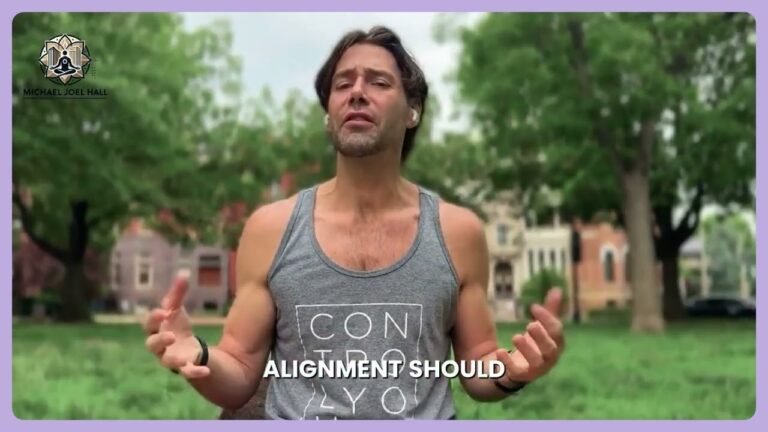
Avoiding Fixation on Perfect Form in Ashtanga Yoga
The Trap of Perfect Alignment in Yoga: Embrace Internal Balance Michael Joel Hall discusses the pitfalls of obsessing over perfect alignment in yoga Asana. He emphasizes that the body is dynamic and that chasing an idealized form can lead to strain, frustration, and injury. Hall advocates for alignment that supports internal balance and sustainable practice rather than just external aesthetics. He reminds viewers that progress in Ashtanga Yoga is about stability, breath, and awareness, and that pain should be seen as a warning sign, not a marker of progress. 00:00 Introduction to Alignment in Yoga and Perfection's Pitfalls 00:43 True Alignment: Internal Balance and Awareness
Read the essay →Turning the practice into some sort of like rigid stick that has a sharp edge rather than a dynamic process of growth. Alignment should serve internal balance, not just external aesthetic. Forcing form can cause harm. Alignment should support the body, not push it into shapes. It isn't ready for.
Ashtanga Yoga Teacher, Shala Director, and Founder
CHASING PERFECT
FRUSTRATION, AND,
EXTERNAL AESTHETIC.

WHOLE FOODS
MARKET
Organic
Pickle
KOMBUCHA
Naturally Flavored
16 FL. OZ (473mL)
Live & Actie
Cultun-es
forced to pick up the pace
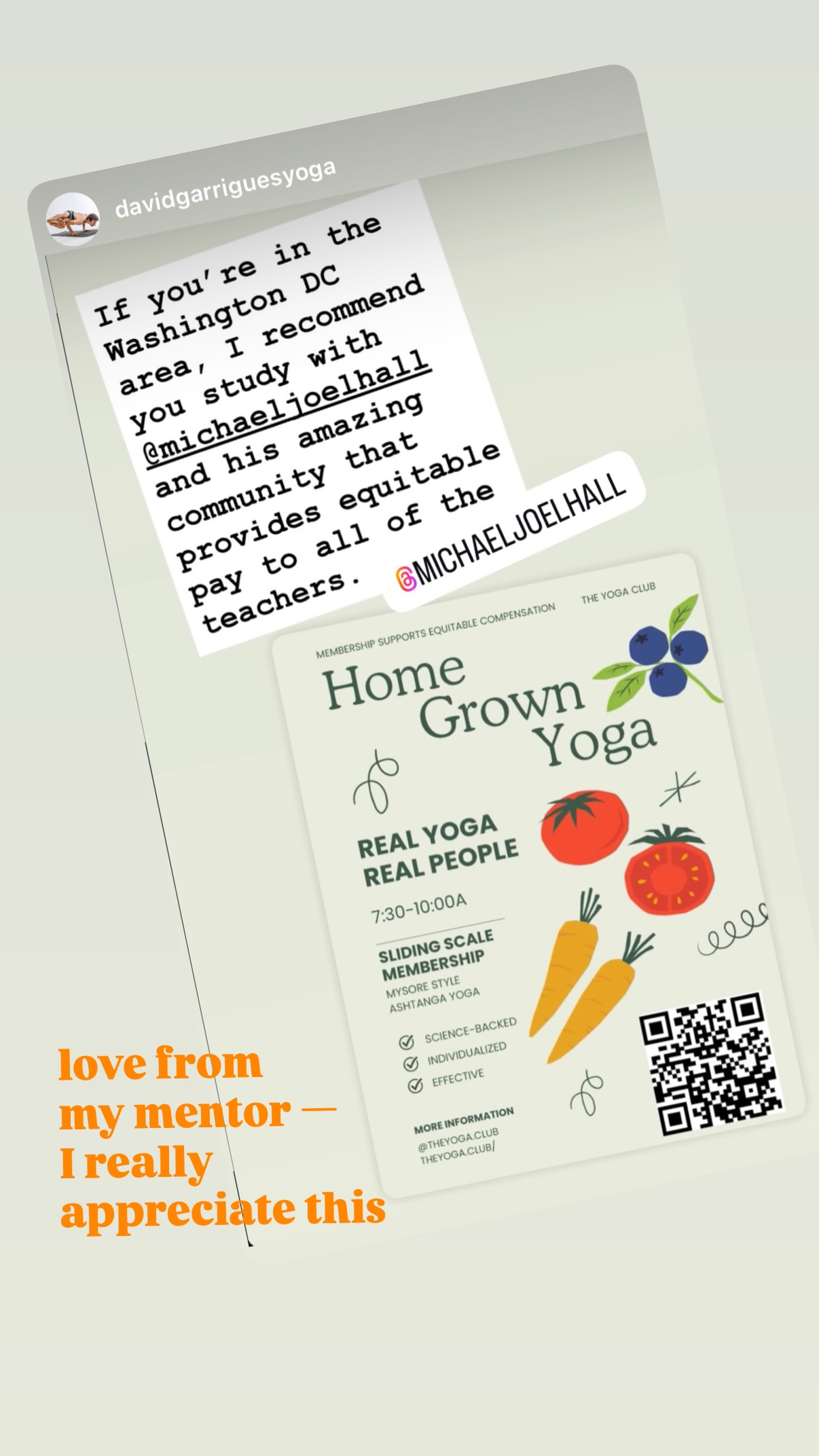
my mentor —
I really
appreciate this
If you're in the
Washington DC
area, I recommend
you study with
gmichaeljoelhall
and his amazing
community that
provides equitable
pay
• to all of the
teachers.
GMICHAELJOELHALL
MEMBERSHIP SUPPORTS EQUITABLE COMPENSATION
Home
THE YOGA CLUB
Grown
Yoga
love from
my mentor -
Ireally
appreciąte this
REAL YOGA
REAL PEOPLE
7:30-10:00A
SLIDING SCALE
MEMBERSHIP
MYSORE STYLE
ASHTANGA YOGA
SCIENCE-BACKED
E INDIVIDUALIZED
EFFECTIVE
MORE INFORMATION
@THEYOGA.CLUB
THEYOGA.CLUB/
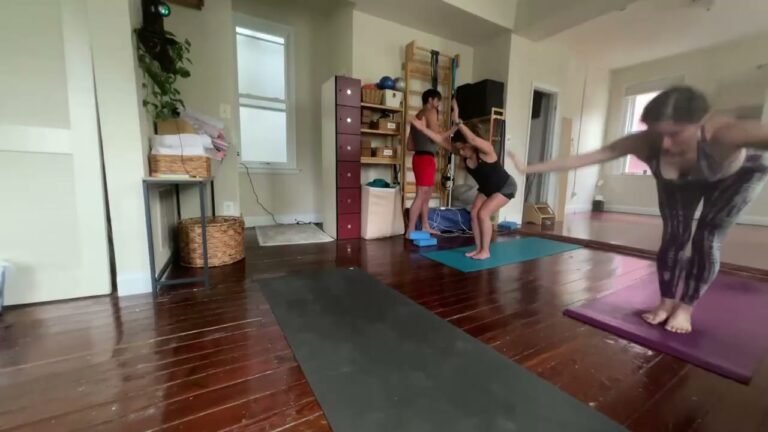
Ashtanga Vinyasa Inspired Power Yoga and Breathwork
This is class is 75 minutes. It is a bit of third, second, and first. We begin with a nice alternate nostril pranayama
Read the essay →Supersets save time without sacrificing your ability to gain strength and mass. Basically, pick two exercises, do them back to back, then take your break. You can choose complimentary muscle or oppositional muscle groups (or both) in your programming. you can also easily add reps and a set to progressively overload in a straightforward way.
3 Rounds of 15 reps
60-90 seconds off between supersets. Move quickly between individual sets (of course).
Superset A:
Pull throughs - cable & rope
Calf Raises - cable & rope
Superset B:
Leg Extension - cable & strap
Hamstring curl - cable & strap
night
favorites
drinktastelli and thefamousjet
Get MichaelFilter
Enter your email. We'll send a one-tap link to read today's edition free, in your browser — the link works for 24 hours. Membership unlocks every issue, PDFs, and transcripts.
Already a member of theyoga.club or ashtanga.tech? You're already on file — no re-registration. We won't add you to any list.