
Field Ledger Archive
13,295 entries across the years, 2003–2026.
Judith has seen the same difficult situation repeatedly throughout her career.
Someone suffers a medical crisis or develops cognitive impairment and can no longer manage important decisions. Family members may live far away, or there may be no trusted person available to step in.
By then, it's often too late for the individual to choose who will represent them.
The family may have to ask a court to appoint a guardian or conservator.
The good news? Much of this uncertainty can be avoided by planning while you're still healthy and able to make your own decisions.
2. Without a Plan, a Court May Decide Who Manages Your Healthcare and Finances.
When someone becomes legally incapacitated and no adequate, less restrictive alternative exists, a court may appoint another person to make decisions on their behalf.
Guardianship generally concerns personal and healthcare decisions, while conservatorship concerns money, property, and financial affairs.
Judith describes both as a "last resort."
By the time a court becomes involved, you may no longer be able to explain your wishes, identify someone you trust, or object to the person chosen.
Planning ahead lets you choose who will act for you, rather than leaving that decision to a court.
3. A Will Protects Your Wishes After Death. Powers of Attorney Help Protect You While You're Alive.
Most people know they need a will. But a will doesn't address what happens if you're alive and unable to manage your affairs.
That's where two important documents come in:
Financial power of attorney: Authorizes someone you choose to manage financial responsibilities, such as paying bills, handling banking matters, and overseeing property or investments.
Healthcare power of attorney: Authorizes someone you trust to make healthcare decisions when you cannot. An advance healthcare directive or living will can also document your treatment preferences.
But Judith emphasizes that signing these documents is only the beginning.
Your decision-maker needs to understand not just what you own, but what matters most to you.
For example, suppose your highest priority is to remain in your own home, even if it means spending significant savings on caregivers or home modifications.
Will the person managing your finances understand and honor that priority?
Your money should support the life you want—not simply be preserved for your heirs.
4. Being Family Doesn't Automatically Make Someone a Safe Choice to Manage Your Money.
Naming a spouse, child, or sibling may feel natural. And sometimes it's the perfect choice.
But Judith has also seen what happens when a family member misuses the authority entrusted to them.
Some relatives don't understand their legal obligations. Others begin treating an older person's savings as "family money," particularly when facing financial pressures of their own.
Financial exploitation can happen even within loving families.
The person you choose should have the integrity, competence, and judgment to put your interests first—not simply share your last name.
If no one in your family or circle of friends is right for that responsibility, you have another option.
5. No Trusted Family Member or Friend? You Can Appoint a Professional Fiduciary.
A professional fiduciary is someone who accepts legal responsibilities to act in another person's interests.
Depending on the arrangement, a fiduciary may serve as a financial agent under a power of attorney, healthcare agent, trustee, guardian, or conservator.
Judith's firm offers professional fiduciary services for people who want an experienced, independent person to help protect their interests.
Importantly, attorneys who serve as fiduciaries are subject to professional and ethical obligations. As Judith explains, misconduct could put her law license at risk.
Although DC, Maryland, and New York don't have a separate, general professional fiduciary licensing system, attorneys remain accountable to their profession and applicable fiduciary laws.
You don't have to place your future in the hands of someone you're uncomfortable choosing. You can hire an experienced professional whose responsibility is to act in your interests.
6. The Best Time to Choose Your Fiduciary Is Years Before You Need One.
You don't have to wait for a medical emergency or a loss of independence to begin a relationship with a professional fiduciary.
In fact, Judith encourages people to start early.
That gives her time to understand their finances, healthcare preferences, family relationships, personal values, and goals for aging.
"We're a stranger," Judith acknowledges, "but we're not going to be a stranger for long."
As circumstances change, the fiduciary can become more involved, consistent with the authority granted and the person's needs.
Judith's firm uses hourly billing rather than charging a percentage of the client's assets. Attorneys handle legal and fiduciary matters, while support staff handle appropriate administrative work at different rates.
For clients who aren't yet receiving extensive services, the firm maintains a small retainer and conducts quarterly check-ins.
There's also an internal succession plan to provide continuity if an individual fiduciary becomes unavailable, subject to the appropriate legal arrangements.
The goal is to build a trusted relationship before a crisis—so someone who understands your wishes is prepared to help when the time comes.
7. Your Care Dream Team Needs Two Essential Players: Someone to Care for You and Someone to Handle the Business of Your Life.
One of the most important insights from our conversation was that aging well often requires two very different kinds of support.
Your Aging Life Care Manager handles the personal side of aging.
This is your 3 a.m. call when you're in the hospital. The person who helps coordinate medical appointments, arrange in-home assistance, manage day-to-day care needs, and make sure you're comfortable and supported.
A professional Aging Life Care Manager brings specialized experience to this role, but some personal support responsibilities may also be handled by a capable spouse, child, cousin, or trusted neighbor.
Your professional fiduciary handles the business side of fulfilling your wishes.
This means making sure bills are paid, banking matters are handled, mortgages and insurance are kept current, property maintenance records are organized, and financial and legal responsibilities are addressed accurately and on time.
A professional fiduciary like Judith brings experience, discipline, and accountability to these responsibilities, acting within the legal authority they've been given.
Your care manager helps ensure you receive the care you need. Your fiduciary helps ensure the money, paperwork, and legal details are managed to make that care possible.
Why Two People Are Often Better Than One
Someone who's wonderful at providing emotional support, attending healthcare appointments, and responding to personal emergencies may not have the expertise or desire to handle complicated finances.
Likewise, an excellent attorney or financial professional may not be the right person to accompany you to a doctor's appointment or coordinate your household needs.
Being great at one role doesn't automatically make someone suited for the other.
For example, you might have a loving adult child or trusted cousin who is happy to help with your personal care. You could then appoint a professional fiduciary like Judith to handle the financial and legal responsibilities.
Or you might hire both a professional Aging Life Care Manager and a professional fiduciary.
Imagine your care manager notices that you're having difficulty navigating the stairs in your home. They recommend installing a stairlift so you can continue living independently.
Your fiduciary can evaluate the financial implications, coordinate authorized payments, and ensure the expense aligns with your wishes.
One person looks after your daily well-being. The other makes sure the business of your life is handled. Together, they help protect your independence.
8. The Ultimate Goal Isn't to Take Away Your Independence. It's to Protect It.
I asked Judith what she most wanted people to understand about working with a professional fiduciary.
Her answer centered on personal agency.
Her firm's role isn't to take over someone's life. It's to walk alongside them through different stages of aging, understand what matters to them, and provide the appropriate level of assistance as their needs evolve.
And if you decide you'd prefer someone else, you can generally change your power of attorney arrangements while you retain the legal capacity to do so, subject to applicable requirements.
The purpose of your Care Dream Team is to give you the right support, from the right people, at the right time—so you remain in control of your life for as long as possible.
1. The Biggest Risk Isn't Aging Alone. It's Waiting Until a Crisis to Make a Plan.
Judith has seen the same difficult situation repeatedly throughout her career.
Someone suffers a medical crisis or develops cognitive impairment and can no longer manage important decisions. Family members may live far away, or there may be no trusted person available to step in.
By then, it's often too late for the individual to choose who will represent them.
The family may have to ask a court to appoint a guardian or conservator.
The good news? Much of this uncertainty can be avoided by planning while you're still healthy and able to make your own decisions.
2. Without a Plan, a Court May Decide Who Manages Your Healthcare and Finances.
When someone becomes legally incapacitated and no adequate, less restrictive alternative exists, a court may appoint another person to make decisions on their behalf.
Guardianship generally concerns personal and healthcare decisions, while conservatorship concerns money, property, and financial affairs.
Judith describes both as a "last resort."
By the time a court becomes involved, you may no longer be able to explain your wishes, identify someone you trust, or object to the person chosen.
Planning ahead lets you choose who will act for you, rather than leaving that decision to a court.
3. A Will Protects Your Wishes After Death. Powers of Attorney Help Protect You While You're Alive.
Most people know they need a will. But a will doesn't address what happens if you're alive and unable to manage your affairs.
That's where two important documents come in:
Financial power of attorney: Authorizes someone you choose to manage financial responsibilities, such as paying bills, handling banking matters, and overseeing property or investments.
Healthcare power of attorney: Authorizes someone you trust to make healthcare decisions when you cannot. An advance healthcare directive or living will can also document your treatment preferences.
But Judith emphasizes that signing these documents is only the beginning.
Your decision-maker needs to understand not just what you own, but what matters most to you.
For example, suppose your highest priority is to remain in your own home, even if it means spending significant savings on caregivers or home modifications.
Will the person managing your finances understand and honor that priority?
Your money should support the life you want—not simply be preserved for your heirs.
4. Being Family Doesn't Automatically Make Someone a Safe Choice to Manage Your Money.
Naming a spouse, child, or sibling may feel natural. And sometimes it's the perfect choice.
But Judith has also seen what happens when a family member misuses the authority entrusted to them.
Some relatives don't understand their legal obligations. Others begin treating an older person's savings as "family money," particularly when facing financial pressures of their own.
Financial exploitation can happen even within loving families.
The person you choose should have the integrity, competence, and judgment to put your interests first—not simply share your last name.
If no one in your family or circle of friends is right for that responsibility, you have another option.
5. No Trusted Family Member or Friend? You Can Appoint a Professional Fiduciary.
A professional fiduciary is someone who accepts legal responsibilities to act in another person's interests.
Depending on the arrangement, a fiduciary may serve as a financial agent under a power of attorney, healthcare agent, trustee, guardian, or conservator.
Judith's firm offers professional fiduciary services for people who want an experienced, independent person to help protect their interests.
Importantly, attorneys who serve as fiduciaries are subject to professional and ethical obligations. As Judith explains, misconduct could put her law license at risk.
Although DC, Maryland, and New York don't have a separate, general professional fiduciary licensing system, attorneys remain accountable to their profession and applicable fiduciary laws.
You don't have to place your future in the hands of someone you're uncomfortable choosing. You can hire an experienced professional whose responsibility is to act in your interests.
6. The Best Time to Choose Your Fiduciary Is Years Before You Need One.
You don't have to wait for a medical emergency or a loss of independence to begin a relationship with a professional fiduciary.
In fact, Judith encourages people to start early.
That gives her time to understand their finances, healthcare preferences, family relationships, personal values, and goals for aging.
"We're a stranger," Judith acknowledges, "but we're not going to be a stranger for long."
As circumstances change, the fiduciary can become more involved, consistent with the authority granted and the person's needs.
Judith's firm uses hourly billing rather than charging a percentage of the client's assets. Attorneys handle legal and fiduciary matters, while support staff handle appropriate administrative work at different rates.
For clients who aren't yet receiving extensive services, the firm maintains a small retainer and conducts quarterly check-ins.
There's also an internal succession plan to provide continuity if an individual fiduciary becomes unavailable, subject to the appropriate legal arrangements.
The goal is to build a trusted relationship before a crisis—so someone who understands your wishes is prepared to help when the time comes.
7. Your Care Dream Team Needs Two Essential Players: Someone to Care for You and Someone to Handle the Business of Your Life.
One of the most important insights from our conversation was that aging well often requires two very different kinds of support.
Your Aging Life Care Manager handles the personal side of aging.
This is your 3 a.m. call when you're in the hospital. The person who helps coordinate medical appointments, arrange in-home assistance, manage day-to-day care needs, and make sure you're comfortable and supported.
A professional Aging Life Care Manager brings specialized experience to this role, but some personal support responsibilities may also be handled by a capable spouse, child, cousin, or trusted neighbor.
Your professional fiduciary handles the business side of fulfilling your wishes.
This means making sure bills are paid, banking matters are handled, mortgages and insurance are kept current, property maintenance records are organized, and financial and legal responsibilities are addressed accurately and on time.
A professional fiduciary like Judith brings experience, discipline, and accountability to these responsibilities, acting within the legal authority they've been given.
Your care manager helps ensure you receive the care you need. Your fiduciary helps ensure the money, paperwork, and legal details are managed to make that care possible.
Why Two People Are Often Better Than One
Someone who's wonderful at providing emotional support, attending healthcare appointments, and responding to personal emergencies may not have the expertise or desire to handle complicated finances.
Likewise, an excellent attorney or financial professional may not be the right person to accompany you to a doctor's appointment or coordinate your household needs.
Being great at one role doesn't automatically make someone suited for the other.
For example, you might have a loving adult child or trusted cousin who is happy to help with your personal care. You could then appoint a professional fiduciary like Judith to handle the financial and legal responsibilities.
Or you might hire both a professional Aging Life Care Manager and a professional fiduciary.
Imagine your care manager notices that you're having difficulty navigating the stairs in your home. They recommend installing a stairlift so you can continue living independently.
Your fiduciary can evaluate the financial implications, coordinate authorized payments, and ensure the expense aligns with your wishes.
One person looks after your daily well-being. The other makes sure the business of your life is handled. Together, they help protect your independence.
8. The Ultimate Goal Isn't to Take Away Your Independence. It's to Protect It.
I asked Judith what she most wanted people to understand about working with a professional fiduciary.
Her answer centered on personal agency.
Her firm's role isn't to take over someone's life. It's to walk alongside them through different stages of aging, understand what matters to them, and provide the appropriate level of assistance as their needs evolve.
And if you decide you'd prefer someone else, you can generally change your power of attorney arrangements while you retain the legal capacity to do so, subject to applicable requirements.
The purpose of your Care Dream Team is to give you the right support, from the right people, at the right time—so you remain in control of your life for as long as possible.

Why Don’t They Believe You?
◈ 18:44 Insight number two find and earned secret great ideas tend to stem from an insight that you learned through firsthand experience something that not a lot of other people know then Horowitz is a venture capitalist who invested in Airbnb he said that……
Open the pick →
He Thinks He’s the Face
Trump isn’t just a villain; he thinks he’s the hero doing a dramatic turn, and enough Americans are watching the same show.
Read the essay →
Patanjali’s Diagnostic
Most people encounter the Yoga Sutras as a list. Four books. 196 aphorisms. The eight limbs, in order, sometimes memorized, sometimes printed on laminated studio cards. Sutra 1.2 gets cited constantly — yogas chitta vritti nirodhah, yoga is the cessation of mental fluctuations — usually…
Read the essay →
Pride
Liz is already a doctor of physical therapy. Becky isn't far behind — neither is Victoria. All three pursued their doctorates while keeping a serious practice. They've each thanked me, at different points, for fostering their curiosity. For never letting them forget what they were…
Read the essay →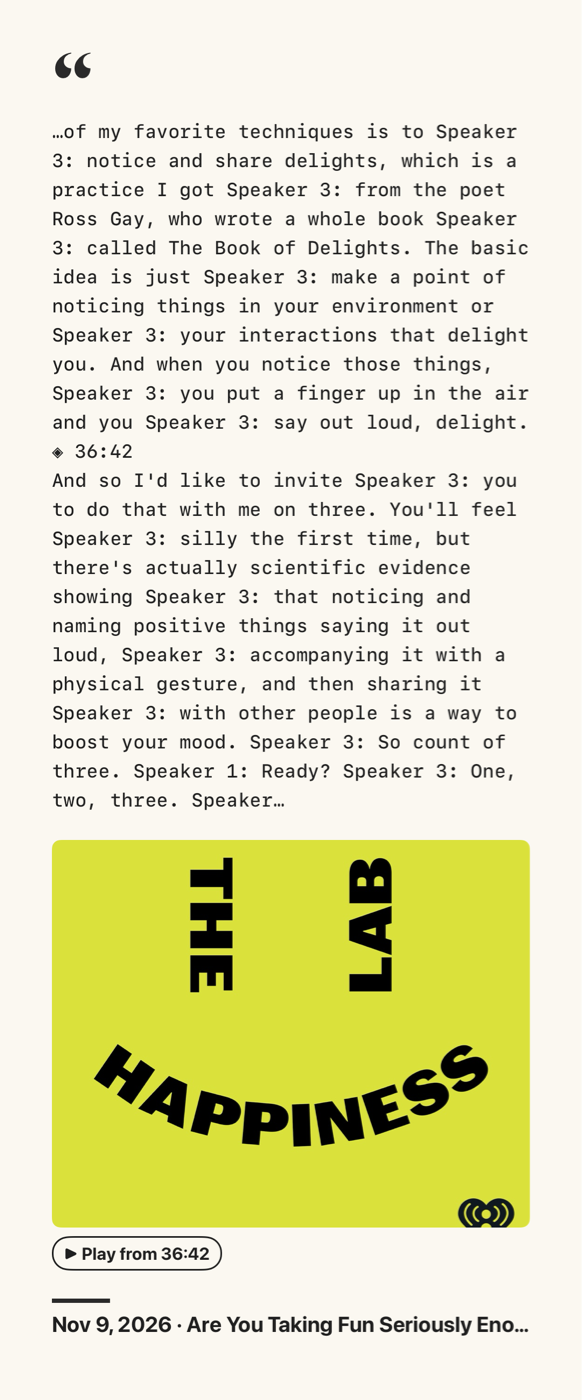

Are You Taking Fun Seriously Enough?
…of my favorite techniques is to notice and share delights, which is a practice I got from the poet Ross Gay, who wrote a whole book called The Book of Delights. The basic idea is just make…
Open the pick →
Airport and Ivy League — on writing for everyone
The first time I said it out loud, I was describing a podcast — Next Big Idea, the one where they take two recent books and have the authors on for twelve-minute snippets of takeaways — and I heard myself say: I appreciate the skillfulness…
Read the essay →
Action Indicates Priority
I'm sending these out because I quit social media and I need attention. What I actually want is for you to reply and tell me you're coming. I'll drop one every night at midnight. You can register in the morning when you get up —…
Read the essay →Breathing Through Depression
Both high-dose and low-dose yoga with breathing exercises significantly reduced depressive symptoms in adults with Major Depressive Disorder over 12 weeks.
Read the essay →
Built to Collapse
She ran the shala for nineteen years. Three hundred students across two decades. She knew every body in the room, every injury, every limitation, every breakthrough. The curriculum lived inside her. The culture was her personality. The place was, in every meaningful sense, her. Then…
Read the essay →
The Name Creates the Gap
Jordan wanted a handstand for two years. Every class. He watched other people float up, watched himself not. Something grinding and grasping in his chest, increasingly desperate. He got the handstand. That's not the interesting part. The interesting part is what happened six months before…
Read the essay →
If AI Is Doing the Work, Who Owns the Upside?
If AI takes the labor, we either tax the winners harder or make everyone a shareholder.
Read the essay →
Why Beginners Quit: Replacing the Wall of Poses With an On-Ramp
For years I handed new practitioners the entire sequence on day one and watched most of them quietly disappear. The problem was never their discipline — it was my dosage. So instead of writing one more post about consistency, I built the thing that enforces it.
Read the essay →
Safety Is Not Real: Why the Alarm Is Not a Fire
If you feel unsafe, you’re either in danger or your alarm system is broken — and it helps to know which.
Read the essay →
Access Is the Practice
What it really means to build access as a yoga teacher inside institutions that were never built for you.
Read the essay →
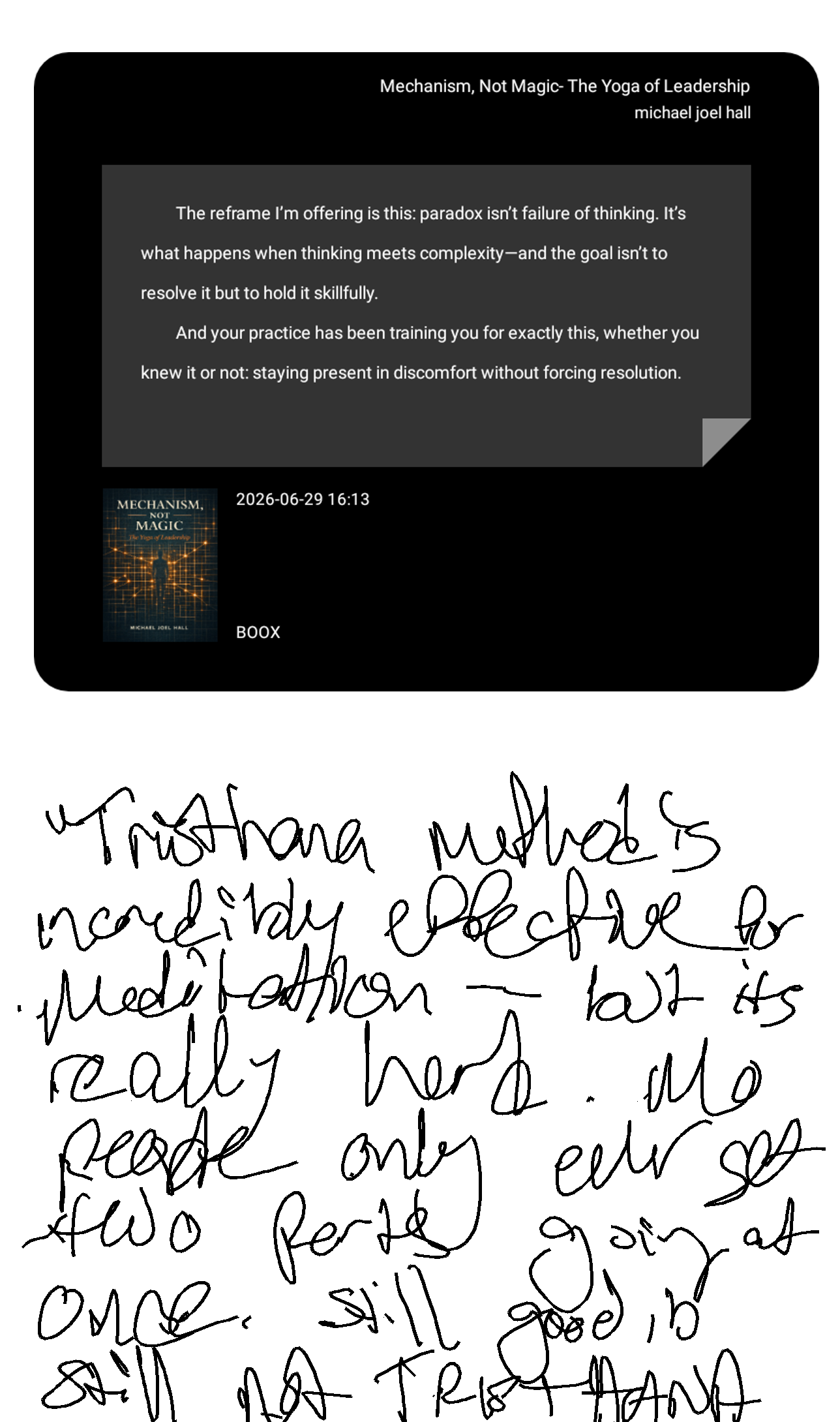
Meditation, the Limb I Kept Skipping: Building a Method for Stillness
For years I treated meditation as the part of the practice you get to eventually. Here is why I finally built it a real curriculum, on a platform I own — and who it is for.
Read the essay →
Ancient Wisdom Didn’t Know Why It Worked — And That’s the Point
A student stayed after class and asked me, a little apologetically, whether the practice actually regulates the nervous system or whether that's just a thing teachers say. Fair question. The honest answer is that the people who built this had no idea what a nervous…
Read the essay →
Quantum Consciousness and the Yoga of Savasana
Savasana is where everything gets suspicious. Not suspicious in a bad way — suspicious in the way of something you can't quite account for. You finish the last posture. You lie down. The sweat is still cooling. And then, for some practitioners, there's a moment…
Read the essay →
The Laboratory: What I’m Actually Building
Four websites, a book, and a teaching studio that all do one thing — and what that thing is.
Read the essay →
The Sticky Moment
Why the hardest part of Ashtanga isn’t a pose, but the quiet shift from following instructions to actually inhabiting the practice.
Read the essay →
Time Capsule Treasure Hunt
In the summer of 1996, my cousins and I buried a time capsule in my parents' backyard. My mother is the oldest of seven sisters. Five of those six sisters got pregnant within about a year of each other. I was the only boy in…
Read the essay → ggwash.orgHow can DC get out of its downward financial spiral?Washington DC lost 83,000 jobs and $10.9 billion in worker earnings since 2020. The article argues DC's recovery depends on strengthening export sectors (federal contracting, consulting, advocacy, law, higher ed) that bring money into the city, plus building enough housing to avoid displacing worker✦ Read ad free and get the full MichaelFilter · $5.50
The Comeback Was a Business Model
The podcast host said something about aspect ratios. That's what got me. Not the feminist reading of Valerie Cherish, not the bit about the laugh track—something about the way the camera in Room and Board, the show-within-the-show, was always slightly wider, flatter, more exposed than…
Read the essay →
The Breath Was the Lever All Along: Teaching the Nervous System
Nearly everything my nervous system does, it does without me. The breath is the one input I can grab on purpose — so instead of just saying so, I built eight guided courses to teach it like it matters.
Read the essay → embedded.substack.comHow to have fun at press events aloneKate Lindsay describes navigating press events alone as a freelancer, rejecting traditional networking advice in favor of a self-focused approach. Instead of forced mingling, she advocates doing the event exactly how you want—treating it as personal experience rather than professional obligation.✦ Read ad free and get the full MichaelFilter · $5.50

The Constraint Is Me
What it looks like to build a sustainable creative business when your own time is the bottleneck everything bends around.
Read the essay →
Waiting to Be Given the Next Pose: Reclaiming Authority Over My Practice
The method saved my body and my attention. The power structure around it nearly cost me both. I could have written a post about it. I built a platform instead.
Read the essay →
Yoga Filter #1: Who Decides What’s Real
This is Yoga Filter!
Read the essay →
Yoga Broke the Pain-Depression Cycle in New Study
A 2020 study found that yoga significantly improved pain levels, mood, and functional capacity in people living with both chronic pain and depression.
Read the essay →
Performing the Practice vs. Reading It: Why Inheritance Isn’t Understanding
A student asked me why the closing sequence comes last, and I heard how much of what I knew was inheritance, not understanding. I could have written a post about it. Instead I built the map — 81 lessons, on a platform I own. The thing is the proof.
Read the essay →
The Impossible Scroll
For two thousand years, the Herculaneum scrolls were unreadable. Carbonized by Vesuvius in 79 AD. Touch one and it crumbles. Unroll it and you destroy the only copy. So they sat there — full of text, completely sealed.
Read the essay →
Equity in the Practice Room
A student in the front row can't hinge forward. She's seated, legs extended, trying to reach toward her feet. Her pelvis won't move. Her spine is rounding from the base. Her face is doing the thing faces do when the body refuses and the person…
Read the essay → wtop.comTaylor Farms recalls lettuce shipped to 27 states over cyclospora riskTaylor Farms recalled iceberg lettuce shipped to 27 states due to cyclospora contamination linked to a multistate outbreak. The parasite, transmitted through fecal-contaminated water used in irrigation or washing, has sickened over 1,645 people in 2025. The recall follows identification of Mexican-s✦ Read ad free and get the full MichaelFilter · $5.50
Good Teacher, Broke Teacher: The Business Skills Yoga Training Ignores
I learned to teach yoga long before I learned to make a living from it. So I built the business I wish someone had handed me — and then built the program that hands you the same playbook.
Read the essay →
From Obedience to Inquiry: When I Started Asking Why in Practice
The values audit behind Foundations of Praxis: I kept teaching that beginners deserve to understand from day one — then I stopped talking about it and built the on-ramp. Designed sequence, guided audio, count videos, a Practice Recorder you own.
Read the essay →The Future of Yoga Economies
A companion to The Digital Caste and The Architecture of Generosity. The conversation about yoga economics runs the same loop. Teachers can't make a living. Studios can't stay open. Students can't afford classes. Everyone assumes the problem is price — find the right number and…
Read the essay → futurism.comRich People Can Afford Good Education for Their Kids. They’re Raising Them on AI Slop Anyways.Alpha School, a $75,000/year private network backed by wealthy tech figures and promoted by the Trump administration, uses AI tutors to compress education into two-hour sessions. Former employees report the AI curriculum is poorly structured, students need far more than two hours daily, and the scho✦ Read ad free and get the full MichaelFilter · $5.50
 npr.orgMilitant LGBTQ+ rights group 'the Lavender Panthers' was founded on this day in 1973In 1973, gay preacher Ray Broshears founded the Lavender Panthers, a street vigilante group protecting LGBTQ+ people in San Francisco's Tenderloin from violent attacks. Though controversial and problematic, the group exemplified community-led mutual aid filling gaps left by a homophobic society, and✦ Read ad free and get the full MichaelFilter · $5.50

MJH INC: Building a Personal Sovereign Internet
From chatrooms at thirteen to running a world in Ultima Online to building communities for companies — a life spent tending rooms online. Now I'm turning that instinct on my own data: pulling twenty years of my life off the platforms and onto ground I own, and building the habit of micro-journaling in my own garden instead of Meta's.
Read the essay →Get MichaelFilter
Enter your email. We'll send a one-tap link to read today's edition free, in your browser — the link works for 24 hours. Membership unlocks every issue, PDFs, and transcripts.
Already a member of theyoga.club or ashtanga.tech? You're already on file — no re-registration. We won't add you to any list.