If AI Is Doing the Work, Who Owns the Upside?
The Economist piece ran to about 3,000 words. I had Claude summarize it while I was walking to my car — not because I’m lazy, but because I have ADHD, and a language model that can hold the thread of a long argument while I pace around a parking lot is a cognitive exoskeleton, not a replacement for thinking. I still have to care. I still have to ask the right questions. What I’ve offloaded is the part where paragraphs dissolve before I finish them.
The summary was clean. I thought: this is what it feels like when a tool fits.
Then I found a note I’d scrawled in the margin of my paper copy — I keep a print subscription for exactly this reason. It read: I never signed up to be humiliated.
I’d written it somewhere in the middle of the article and forgotten. Reading it again, I knew exactly what I meant.
The Economist’s point is this: for over a century, the split between labor income and capital income has held at roughly two-to-one. Two dollars to workers, one dollar to owners — a ratio stable enough that governments built their entire fiscal architecture around it. The average OECD country pulls about half its tax revenue directly from labor. Payroll taxes. Income taxes. The whole scaffold.
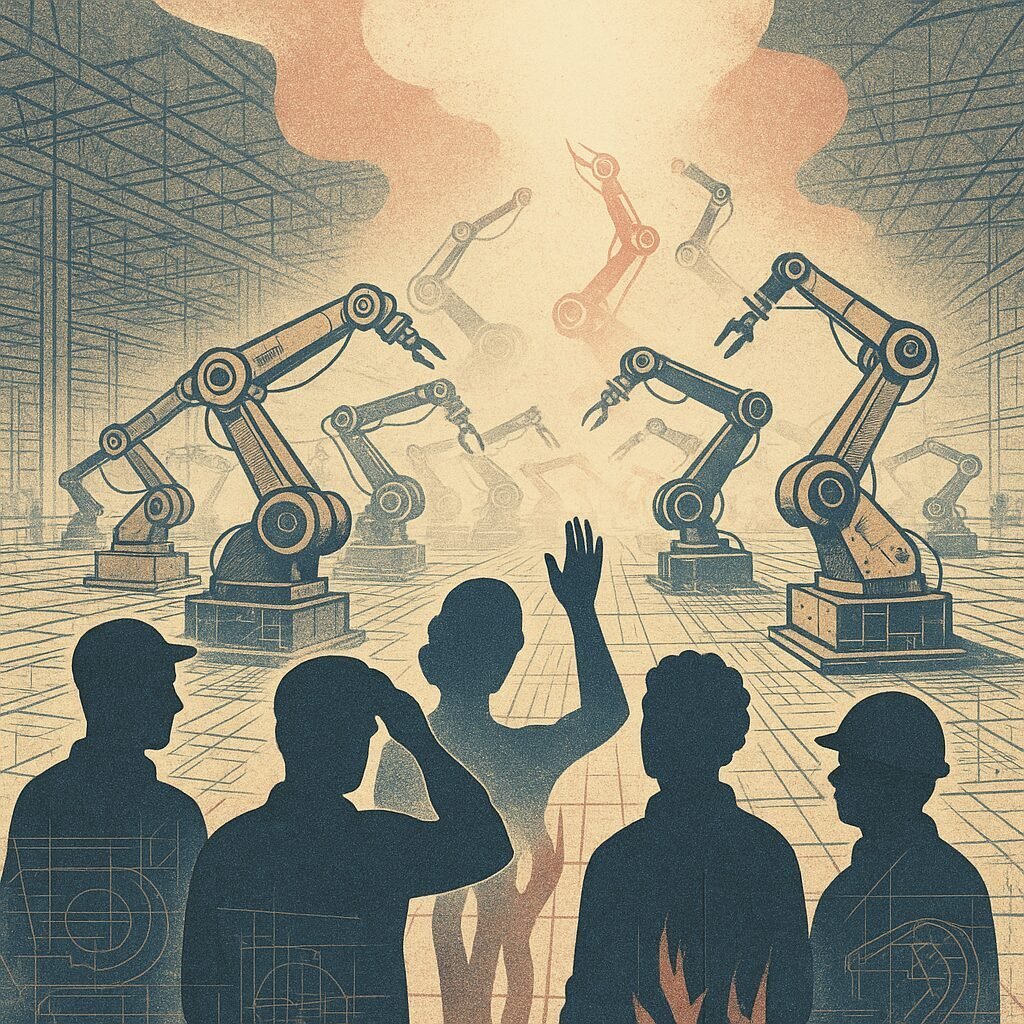
AI changes the input. If wages shrink relative to capital returns, the tax base built on wages shrinks with it. Not gradually. Structurally.
The conventional fixes are already in circulation: higher VATs, capital gains taxes, consumption levies, a robot tax. They’re patches. They redistribute the spoils after the fact. They don’t touch the question of who holds the asset in the first place.
Cereal costs three dollars now. That’s not a metaphor — it’s the actual math of standing in a grocery aisle doing arithmetic in your head. Real wages have been stagnant for fifty years. The middle class has not meaningfully shared in productivity gains since roughly the 1970s. And the most powerful productivity tool in human history is being deployed at scale by companies structured to capture almost all of the value it creates.
The data that trained these models wasn’t blank. It was everyone’s search queries, emails, forum posts, social history — the accumulated cognitive output of billions of people who were never asked and will never be compensated. We were the raw material before we were the displaced.
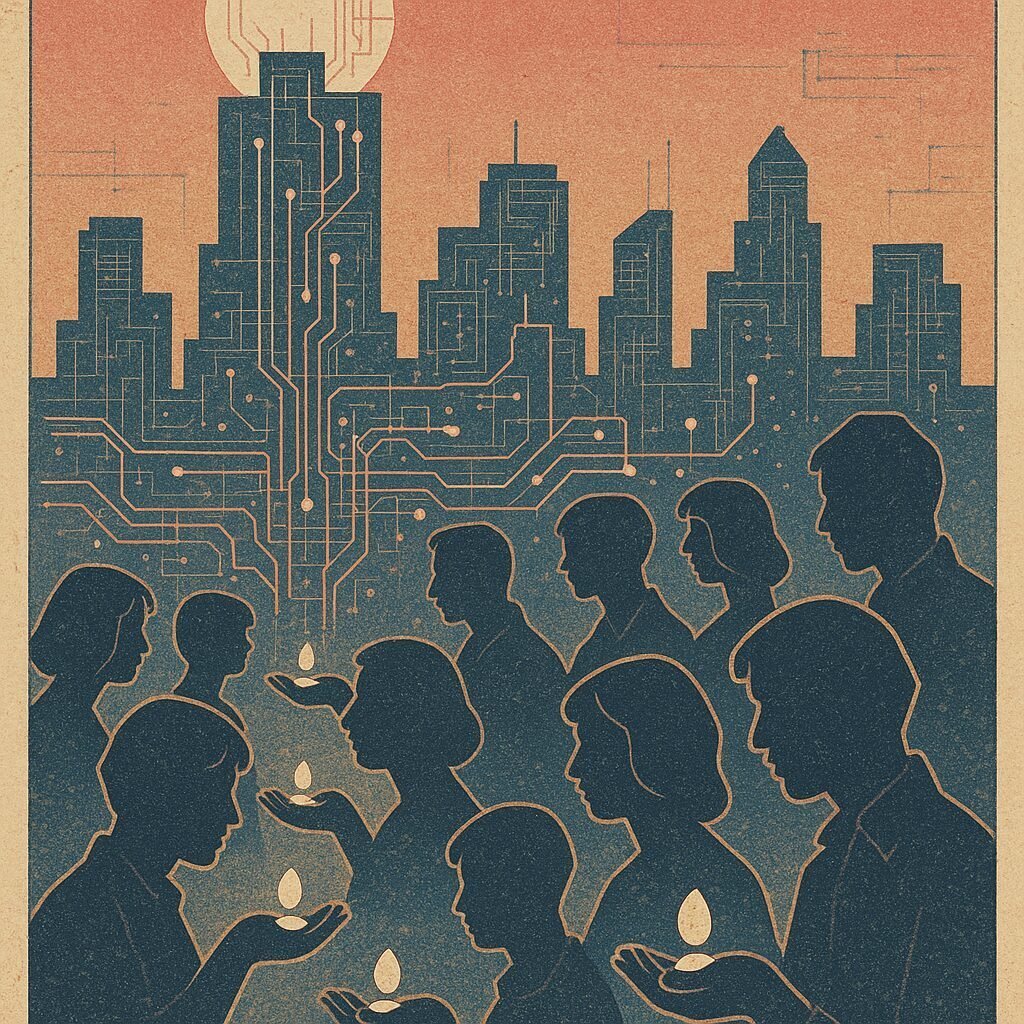
There’s a version of this story where the technology is the hero. Infinite leverage for the small operator. Every solopreneur with a one-person output that used to require a team. I live some of that version every week. But the hero story requires ignoring who owns the infrastructure. The model runs on servers I don’t own, trained on data I didn’t consent to provide, generating returns that flow to shareholders I’ll never be. I get access. Access is not equity.
That asymmetry is the entire game.
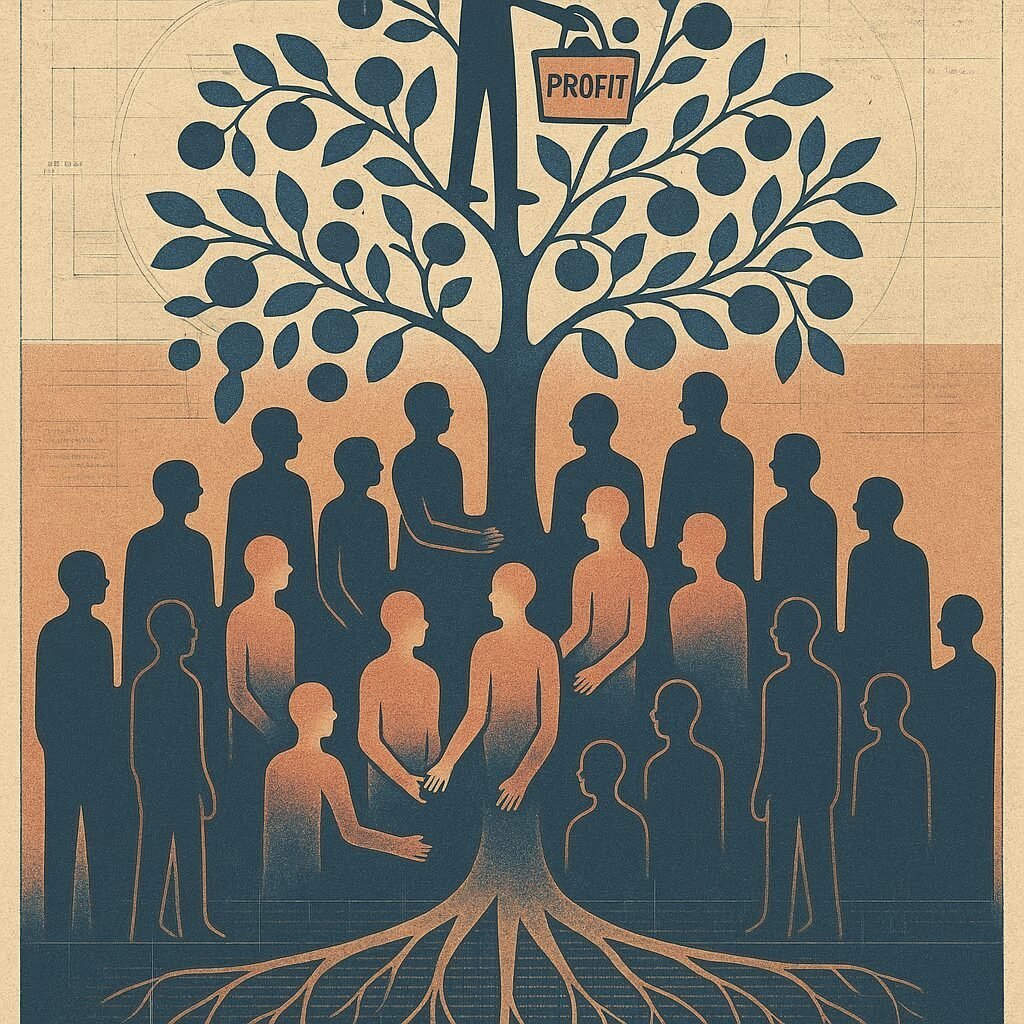
The Economist floats the alternative almost shyly: “A more radical option is to offer workers direct stakes in the progress of AI.” Pre-distribution, not redistribution. Equity, not charity. The structure exists — sovereign wealth funds, broad ownership programs, the Alaska Permanent Fund. What doesn’t exist is the political will to treat an AI windfall the way we treat mineral rights.
We chose capitalism for this technology. That wasn’t cosmically ordained. It was a decision, made by specific people in rooms most of us never entered. Having made it, exactly one more choice remains: whether to make this a form of shareholder capitalism that includes everyone, or one that concentrates ownership in whoever was already positioned when the models shipped.
“If everyone is being used to create the product,” I wrote in that margin, “then everyone should have equity in the product.” That’s not socialism. It’s just accounting.
The window for making it true closes the same day the wealth finishes concentrating — and those two events are closer together than the quarterly earnings reports suggest.