Laundry Tips for Sweaty Yogis
Discover effective ways to banish stubborn odors from your yoga clothes. From prevention to vinegar soaks, we’ve got you covered. Say goodbye to post-yoga funk!

Discover effective ways to banish stubborn odors from your yoga clothes. From prevention to vinegar soaks, we’ve got you covered. Say goodbye to post-yoga funk!

Introduction: Welcome fellow yogis! Today we are going to explore the diverse branches of yoga and understand their origins. This guide will help deepen our understanding of Bhakti, Jnana, Raja, Tantra, and Hatha Yoga. So, roll out your mat, breathe, and let’s get started. Bhakti: Yoga of Devotion Bhakti yoga is known as the path of devotion. Those who practice Bhakti yoga see the divine in all. They believe in invoking love and feeling a sense of closeness to the divine through their thoughts, words, and deeds. The practices of Bhakti yoga include chanting mantras and kirtan. Krishna has explained this yogic path in “The Bhagavad Gita.” Karma: Yoga of Action Karma yoga is known as the path of service or union through action. Karma…

Unleash Your Strength with Functional Range Conditioning!

What is Pranayama? Pranayama, or breath control, is an ancient practice that is a cornerstone of many forms of yoga. The practice of pranayama is said to improve overall health through deep, mindful breathing exercises and techniques. Through its ability to strengthen the connection between the mind and body, pranayama can be used to reduce stress and tension, increase focus, increase energy, and improve general wellbeing. Though it has been practiced for thousands of years, in recent times pranayama has become more popular and accessible to the public. In this blog post, we will explore what pranayama is and how individuals can benefit from its practice. 1. Pranayama is a yogic practice that involves controlling the breath If you’ve ever heard of pranayama and wanted…

If you’ve made it this far, you already know that yoga is an ancient practice that has been around for centuries and is beloved by many for its physical, mental, and spiritual benefits. But did you know that there is a special type of yoga that is even more advanced and powerful? It’s called the yoga of synthesis and it is a unique approach that combines a variety of yogic traditions to provide a holistic experience. In this blog post, we’ll take a look at what the yoga of synthesis is, as well as how it differs from other types of yoga. We’ll explore how this approach can help to bring peace, balance, and well-being into your life. Lastly, we’ll provide some tips on how…
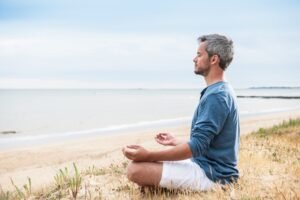
Mysore Style Ashtanga Yoga is a powerful practice that has been gaining in popularity in the yoga world for many years now. Mysore Style Ashtanga Yoga is a dynamic, flowing and meditative practice that cultivates strength, flexibility and concentration. In fact, it is an excellent way to build strength and increase flexibility, while also calming the mind and the body. In this blog post, we will take a look at the basics of Mysore Style Ashtanga Yoga, to help you get a better understanding of what this type of practice entails. We’ll also explore how it differs from other types of yoga, and how it can be beneficial to anyone looking to improve their physical and mental health. So, without further ado, let’s dive into…
This is an introduction to the Functional Ashtanga Yoga Training Program
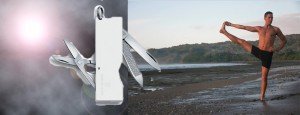
One of the most brilliant aspects of the ashtanga vinyasa yoga physical practice lies in its adaptability. Not unlike the swiss army knife housing a blade, a toothpick, and a bottle opener, the ashtanga yoga practice works effectively across a spectrum of applications. Not confined to being solely a central axis meditation, one could also consider the vinyasa practice a kind of physical therapy. After all, Guruji referred to the primary series of ashtanga yoga as “yoga therapy” — yoga chitiksa. The premise here is that this practice, when done correctly, heals the body. What needs healing, one might ask? To my mind, its an easing of chronic pain, the kind that subsist long after trauma has been healed. The other is acute pain, the…
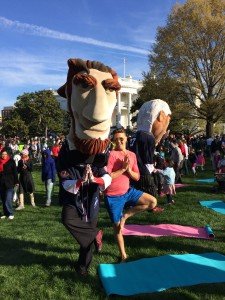
After I was assaulted and hospitalized in 2012, I became something of a media spectacle. We needed money for my surgery (titanium plates run about 14k a pop, and I needed a few), and my community rallied around me. From yogis to drag queens, so many people gave that we had to tell folks to stop. It was pretty amazing. There were even lots of news articles. I shouldn’t have read the comments in those articles. I know a lot about victim blaming now. Shortly after my recovery period, the non-profit activist group Collective Action for Safe Spaces (formerly: Hollaback!) approached me to raise some awareness for their cause: stopping street harassment. It should be a no brainer: you should be able to walk home without getting…
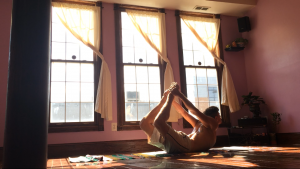
Talking about ashtanga can make you crazy. Or not. Or both. “Whenever we practice, we quickly run into paradox… this is what happens when we start to cling to any one formula or any one technique. We quickly run into this sense that it isn’t complete– when we run into another viewpoint coming up in the background– there is this sense of paradox. And, whenever this happens, we know that the yoga is starting to work. Its considered to be a very auspicipous sign. “ — Richard Freeman “The Self-Reference Paradox” With the right google search, you can find someone confirming any belief you’ve been kicking around. Confirmation bias takes us out of our present moment. It sets paramaters for our capacity to feel. And, I…