Discovering Zen: A Journey with Alan Watts

Are you an Ashtanga practitioner ready to explore Zen philosophy through the lens of Alan Watts? Join us as we dive into the captivating documentary “Zen: The Best of Alan Watts” and discover how Zen principles can enhance our Ashtanga journey. Expand your understanding of yoga and find inner calm amidst the challenges of your practice. Embrace a deeper connection with yourself and the world around you. Let Alan Watts guide you on this beautiful path of self-discovery. Happy watching and happy practicing!
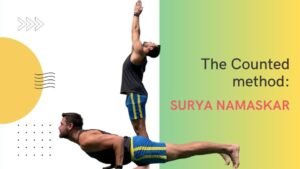
Surya Namaskar A: The Full Vinyasa Count in English and Sanskrit

Surya Namaskar A: The Full Vinyasa Count in English and Sanskrit

Surya Namaskar A (9 movements) English Count Sanskrit Count English Instruction 1 EKAM Inhale, arms up 2 DVE Exhale, fold forward 3 TRINI Inhale, look up, lengthen 4 CATVARI Exhale, jump back, Chaturanga 5 PANCA Inhale, Upward-Facing Dog 6 SAT Exhale, Downward-Facing Dog 7 SAPTA Inhale, jump forward, look up, lengthen 8 ASTAU Exhale, fold forward 9 NAVA Inhale, arms up Exhale, Samasthiti SURYANAMASKARAḤ B (17 movements) 1 EKAM Inhale, Utkatasana 2 DVE Exhale, fold forward 3 TRINI Inhale, look up, lengthen 4 CATVARI Exhale, jump back, Chaturanga 5 PANCA Inhale, Upward-Facing Dog 6 SAT Exhale, Downward-Facing Dog 7 SAPTA Inhale, right side Virabhadrasana A 8 ASTAU Exhale, Chaturanga 9 NAVA Inhale, Upward-Facing Dog 10 DASA Exhale, Downward-Facing Dog 11 EKĀDASA Inhale, left side Virabhadrasana…

Ashtanga Vinyasa Yoga Count

Ashtanga Vinyasa Yoga Count

The count in Ashtanga Yoga is a key component of the practice, helping students maintain a steady rhythm and focus their attention on the breath. In Ashtanga Yoga, each posture is performed with a specific number of breaths, known as the vinyasa count. The count is typically given by the teacher, but it’s important for students to also learn the count themselves as a way to deepen their understanding of the practice. The primary and intermediate series of Ashtanga Vinyasa Yoga include a total of 72 postures, which are performed in a specific order. In a guided class, they often use a Sanskrit count. The postures in these series are considered “half vinyasa” because we don’t return to the top of the mat in between…

The Importance of a Healthy Spine in Ashtanga Yoga

Ashtanga yoga is a dynamic and physically challenging practice that requires strength, flexibility, and balance. But did you know that all of these elements depend on the health of your spine? In this article, we will explore the functions of the spine and the attributes of a healthy spine, and how they relate to your Ashtanga yoga practice. The Functions of the Spine The spine is a complex structure that serves many important functions in the body. It houses the spinal cord, which provides communication between the brain and the rest of the nervous system. It also transmits loads between the upper body and the lower body, and creates attachment points for muscles and bones, allowing for flexible movement in a range of directions. Finally,…

Get to Know Your Spine: A Guide for Ashtanga Yogis

Welcome to the world of Ashtanga Yoga, where we align our breath and movement to create a sense of calm and balance in our lives. One of the most important parts of our physical practice is the spine, the central axis of our body that supports our movements and protects our nervous system. In this guide, we’ll take a closer look at the anatomy of the spine, its different regions, and how we can enhance our practice by understanding our body’s structure. Section 1: The Anatomy of the Spine Let’s start with the basics. The spine is also known as the spinal column, the vertebral column, or the backbone. It’s made up of 33 specialized bones called vertebrae, which are divided into five regions: the…