Untitled
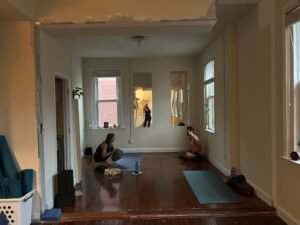
Understanding Interconnectedness Through Yoga Practice As I watched my students move through their morning practice today, I couldn’t help but notice the subtle dance of energy in the room. One person’s breath becoming synchronized with another’s movement, the collective focus creating a palpable atmosphere of presence. It’s in these moments that I’m reminded of a profound truth I’ve discovered through over 15 years of teaching: we are all infinitely connected, in ways that transcend our physical presence on the mat. The Ripple Effect of Practice When we step onto our mats, we often think we’re embarking on a solitary journey. In reality, every breath we take, every posture we hold, creates ripples that extend far beyond our personal space. I’ve observed this countless times in my Mysore room – when one practitioner finds a breakthrough in their practice, it somehow lifts the energy of the entire room. This isn’t just spiritual poetry; it’s a tangible phenomenon. Recently in class, we explored this concept through our work with hip opening. As students worked with their progressive and regressive muscles, I noticed how their individual focus created a collective field of concentration that made the practice deeper for everyone present. Beyond Time and Space The beauty of interconnectedness lies in its infinite nature. When we practice, we’re not just connecting with those present in the room – we’re tapping into a lineage of practitioners that stretches back through time. Every time we move through a vinyasa, we’re participating in a tradition that has transformed countless lives across generations. But it goes even further than that. In my experience, this interconnection transcends the boundaries of time and space. When we truly open ourselves to our practice, we begin to recognize that the artificial boundaries we’ve created between ourselves and others, between past and present, between individual and collective experience, begin to dissolve. Practical Applications How do we work with this understanding in our daily practice? Here are some approaches I’ve found helpful: 1. Collective Breathing: Start your practice by tuning into the breath of those around you. Notice how your breathing naturally begins to synchronize with the room’s rhythm. 2. Shared Energy: When working with challenging postures, draw strength from the collective energy of the room. Feel how your individual effort contributes to and is supported by the group’s practice. 3. Mindful Transitions: Pay attention to how your movements and energy affect those practicing near you. Use this awareness to move with consideration and purpose.