Ashtanga Yoga Tech Support #2: Solace, Sex, and Strength

Ashtanga Yoga Tech Support #2: Solace, Sex, and Strength

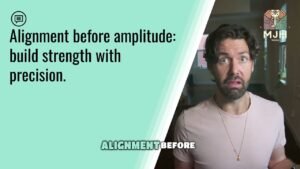
Welcome back to Tech Support Tuesday. Each week, I pull questions from the yoga corners of Reddit and answer them on video. This week’s session covers three questions — grief on the mat, yoga’s quieter effects on intimacy, and whether this practice can actually change your body.

visit ashtanga.tech to learn more!
visit theyoga.club for more yoga!
visit mjh.yoga for more from Michael Joel Hall!

🕊️ Navigating Grief in Yoga Practice
One listener returned to yoga to find solace after their father passed away. During Shavasana, the tears flowed. That’s not a problem with your practice — that is your practice. Shavasana holds power in its stillness. When you’re moving through postures, your body and mind are occupied. Lying down removes those distractions and lays bare whatever you’re carrying.

Crying on the mat is bearing witness. Your body has been waiting for you to stop, to allow for rest. Shavasana may have been the first time you gave it that chance.

☯️ Permission to Grieve and Move Forward
If Shavasana feels too overwhelming, it’s okay to skip it occasionally. The first rule is do no harm. The yoga mat is one of the few places where you don’t need to explain yourself — nor should you judge yourself. Communicate with your teacher if necessary. Your journey on the mat is deeply personal, and sometimes laying still and letting emotions flow is the whole point.

Going back to practice after a week? That says something about you. A lot of people wouldn’t. Don’t rush. You’ve got time.

🌟 Transforming Physical and Emotional Landscapes
Another question explores yoga’s impact on intimacy. The physical stuff is obvious — stamina improves, you’re stronger, more flexible in every sense. Ujjayi breathing coordinates your nervous system. You learn to down-regulate on demand, and that means you’re actually present with your partner instead of stuck in your head.

But the bigger shift is subtler. Ashtanga trains you to stay present with intense sensation without reacting to it. To breathe through discomfort. To notice what’s happening in your body without narrating it. These are transferable skills. When you stop bracing against your own body, everything changes — including intimacy.

⚖️ Beyond Aesthetic Goals
Can yoga tone your body? Sure. Ashtanga will absolutely change your body composition — you’re holding your own weight in ways that build lean, functional muscle. Sun salutations are progressions of a push-up. Your arms, core, and legs will all get worked.

But here’s the thing. Once you start practicing, you’ll probably notice something shift. You stop caring as much about what your body looks like and start caring about what it can do. Santosha — contentment — changes how you show up in every physical relationship. Self-love looks good on everyone.

✨ The Side Effects Are the Point
Start with what hurts — anxiety, back pain, whatever brought you here. The toning, the calm, the adamantine body the Yoga Sutra talks about? Those are side effects. Remarkable ones. But side effects nonetheless.

That’s Tech Support Tuesday #2. Three questions. Grief, connection, and what your body is actually for. Bring yours next week.
00:00 The Question
00:21 Why Shavasana Is Hard
00:49 Your Practice Is Working
01:10 The Grief Will Change
01:51 Permission to Grieve
02:41 Moving Forward
03:16 The Question
03:37 Physical Benefits
04:00 Presence & Breathwork
04:45 Body Acceptance
05:10 Connection & Self-Love
05:38 The Question
05:58 Posture & Spine Health
06:41 Anxiety & Flow State
07:28 Pain Relief
07:42 Body Composition & Strength
08:19 Beyond Aesthetics
09:08 The Takeaway

The 40Hz Protocol: Ashtanga Yoga as a Multimodal Gamma Entrainment System

The 40Hz Protocol: Ashtanga Yoga as a Multimodal Gamma Entrainment System

Neuroscientists are designing elaborate protocols to induce gamma oscillations in the human brain — flickering lights, transcranial currents, near-infrared light helmets. A 2024 review in Frontiers in Neuroscience catalogues four distinct stimulation methods to achieve what the brain needs to perceive clearly, move well, and regulate emotion. Reading it, I kept having the same thought: Ashtanga yoga already does all of this. Not metaphorically. Simultaneously, and without a single device

Jungle Physicians and Insight Through Ancient Wisdom and Modern Practice

Jungle Physicians and Insight Through Ancient Wisdom and Modern Practice

In an age of relentless distraction, the quest for insight—that deep, intuitive understanding of ourselves and our place in the world—has never been more urgent. We seek clarity in a sea of information, purpose in a world of fleeting trends, and connection in an era of digital isolation. The answers, as a series of profound questions suggest, may not lie in the latest technology, but in the timeless wisdom of ancient traditions and the rigorous discipline of practices designed to turn our awareness inward. By exploring indigenous ways of knowing, the offerings of wisdom traditions, the nature of consciousness-altering states, and the cultural calls for awareness, we can chart a course toward a more insightful existence. At the center of this journey lies Ashtanga yoga,…

Breath of Life: Exploring the Philosophy of Pranayama in Ashtanga Yoga

Breath of Life: Exploring the Philosophy of Pranayama in Ashtanga Yoga

Pranayama is powerful. Prepare to liberate yourself from the confines of restriction and dive deep into the philosophy that encourages you to breathe freely and fully. Join the conversation on the Breath of Life—where every inhale nourishes your being and every exhale releases the barriers that inhibit your potential. Embrace the philosophy of pranayama and unlock the door to a more vibrant you!

Counting Parsvottanasana with Mindful Prep

Counting Parsvottanasana with Mindful Prep

Counting Your Way to Clarity: The Transformative Journey of Parsvottanasana Embark on a transformative journey with Parsvottanasana, the intense side stretch pose. This powerful asana transcends physicality, offering profound insights into both body and mind. As you dive deeper into the pose, discover how the art of counting can illuminate your practice, providing clarity and focus that enhances your ashtanga experience. Anatomy of Parsvottanasana Parsvottanasana challenges the body, inviting the pelvis to rotate towards the front leg while engaging key muscle groups. Seamlessly transitioning from Ardha Chandrasana, this pose not only intensifies the stretch but also awakens various muscle fibers, particularly in your hamstrings and calves. PÄRSVÕTTANASANA (5 MOVEMENTS) 1 EKAM Inhale, open to the right, hands in prayer behind back 2 DVE Exhale, fold 3 TRINI Inhale, up, turn to the front 4 CATVARI Exhale, fold 5 PANCA Inhale, up, open to the side Exhale, Samasthiti Counterbalancing the Mind and Body Each count in Parsvottanasana connects breath, movement, and intention, creating a rhythm that anchors your practice. As you breathe, you cultivate awareness and clarity, harmonizing the mental and physical realms—ultimately discovering the profound interconnectedness of your being. Mindful Preparations Preparation is crucial for a safe and effective Parsvottanasana. Begin in Tadasana with hands in reverse namaste, opening your shoulders and releasing tension. This mindful approach sets the stage for a deeper stretch, inviting clarity into your alignment and practice. Synergizing for Success The pectoralis major collaborates with the subscapularis and teres major to inwardly rotate the upper arm while stretching shoulder external rotators. Upper back muscles pull shoulder blades toward the spine, creating space in the chest. The rectus abdominis stabilizes the fold, while the psoas maintains the extended leg’s position. By harnessing these relationships, you amplify your experience in Parsvottanasana, moving beyond physicality to cultivate clarity both on and off the mat. For deepening your understanding of Parsvottanasana and its counting, explore our detailed guide: Parsvauttanasana – The Count. Ultimately, Parsvottanasana invites us into a dance of awareness—a fusion of physical engagement and mental clarity. Embrace each of the five movements, counting intentionally, and uncover how this practice can enhance your yoga journey and everyday life.

Mysore Style Ashtanga Yoga: Introducing A Personal Journey into Self-Practice

Mysore Style Ashtanga Yoga: Introducing A Personal Journey into Self-Practice

Embark on a transformative journey as we unveil the essence of Mysore Style Ashtanga Yoga—a practice steeped in history and rich with personal discovery. Rooted in the teachings of yoga luminaries Krishnamacharya and Sri K. Pattabhi Jois, Mysore style offers a unique blend of personalized instruction, self-paced progression, and a profound connection to breath and movement. This blog delves into the hallmarks that define this remarkable method, inviting both newcomers and seasoned yogis to deepen their understanding and foster independence on their mats. Whether you seek alignment, mindfulness, or a structured path to self-discovery, join us as we explore how Mysore Style Ashtanga Yoga can become a powerful tool for growth and transformation.

MJH on “Get Your Sanskrit On: The Language of Yoga”

As Ashtanga yoga practitioners, we are familiar with the Sanskrit names of the yoga poses, or asanas. But have you ever wondered about the origins of this ancient language and its significance in the yoga tradition? In this post, we will explore the fascinating world of Sanskrit and its connection to our practice. What is Sanskrit? Sanskrit is an ancient language that originated in India over 3,000 years ago. It is considered to be the mother of all Indo-European languages and is one of the oldest languages on Earth. The…

https://yogateachercentral.com/wp-content/uploads/2017/04/meditation-nature-serene-peace-ocean-beach-shutterstock_249383920.jpg

What is Mysore Style Ashtanga Yoga?

Mysore Style Ashtanga Yoga is a powerful practice that has been gaining in popularity in the yoga world for many years now. Mysore Style Ashtanga Yoga is a dynamic, flowing and meditative practice that cultivates strength, flexibility and concentration. In fact, it is an excellent way to build strength and increase flexibility, while also calming the mind and the body.  In this blog post, we will take a look at the basics of Mysore Style Ashtanga Yoga, to help you get a better understanding of what this type of practice entails. We’ll also explore how it differs from other types of yoga, and how it can be beneficial to anyone looking to improve their physical and mental health. So, without further ado, let’s dive into…