
The Pharmacology of Tapas, Part 1: The Silence We Keep

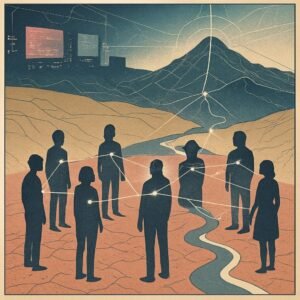
She teaches six days a week, adjusts with precision, and hasn’t missed a Mysore practice in three years. She’s also been on tirzepatide for eight months. She hasn’t told anyone. Not her teacher. Not her students. Not her practice partner who shares a cup of chai with her every Saturday. When someone compliments her “discipline” or asks about her “transformation,” she deflects to “clean eating” and “consistency.” The lie tastes like ash, but the alternative—admitting she’s on a GLP-1 agonist—feels impossible in a culture that treats pharmacological support as spiritual failure. She’s not alone. 🤫 The Substances We Don’t Discuss Across yoga studios and Mysore rooms, practitioners are quietly managing their bodies with tools they cannot name aloud: peptides for tendon healing, biologics for autoimmune…

Epigenetics and the Role of DNA in Gene Expression

Grasping DNA and its Influence on Wellness Let’s get this straight: the simplistic notion of biological determinism—the outdated belief that our genes are puppeteers pulling the strings of our health—has been thrown out the window. In the old days, genes were seen as tyrannical blueprints ruling over biological function. But after the Human Genome Project wrapped up in 2003, it was more like, “Hey, genes are just suggestions, not orders, depending on the company they keep.” Sure, those genetic quirks may seem like a family gift that keeps on giving, but remember, environment and lifestyle also hold the pen in this narrative. Diet, toxins, mood management, and stress? All these shape gene expressions, a ballgame known as epigenetics. It’s about factors “above” or “beyond” the…

External vs Internal Cueing — and why deliberate self‑observation is the teacher’s work

Teachers live in language. The words we choose to cue a pose or movement change where a student puts their attention, and that shift changes how the body organizes itself. In motor‑learning research the distinction between “external” and “internal” cueing is now a fundamental principle—and it was a woman, researcher Gabriele Wulf, whose work beginning in the late 1990s helped define and popularize this idea. Her experiments and reviews showed repeatedly that directing learners’ attention to the effect of a movement (external focus) often produces better performance and learning than directing attention to body parts or muscle actions (internal focus). (frontiersin.org) What the two cue types mean What the evidence says (brief) Important nuance for teachers: neither cue type is “evil” or a silver bullet…

The Blind Spot Paradox: What Cognitive Science Reveals About Avidya

Here’s a paradox that would have made Patanjali smile: the smarter you are, the more confident you are in your own objectivity—and the more wrong you’re likely to be about it. Research on what psychologists call the “bias blind spot” reveals something the yogis named millennia ago: we see clearly the biases in others while remaining remarkably blind to our own. In Sanskrit, this fundamental blindness has a name: avidya. Usually translated as “ignorance” or “spiritual blindness,” avidya is identified in the Yoga Sutras as the root klesha—the foundational obstacle from which all other suffering flows. It’s not ignorance of facts, but something more subtle: a distorted perception that mistakes the impermanent for permanent, the impure for pure, the painful for pleasurable, and the not-self…

Two Kinds of Stillness: With Seed and Without

We’ve spent several articles looking at what brain science reveals about practice—shrinking amygdalas, thickening prefrontal cortexes, immediate metabolic shifts across seven brain regions. Today we turn to what the yogis themselves said about where this all leads. In Book One of the Yoga Sutras, Patanjali describes two distinct forms of samadhi. Getting them confused can mean mistaking a way station for the destination. 🪷 Samprajñāta: With Seed The first type—samprajñāta, also called sabīja or “with seed”—is blissful, luminous, real. But consciousness still relates to an object. A trace remains. This is the samadhi most practitioners touch in deep meditation—the quiet mind, the sense of expansion, the peace that seems to pervade everything. It’s valuable. It’s part of the path. But it still leaves seeds—vāsanās, mental…

One Practice, Seven Brain Regions: The Immediate Effects of Primary Series

The previous two studies showed what happens over years—shrinking amygdalas, thickening prefrontal cortexes. This one shows what happens in ninety minutes. A 2020 study took 25 healthy adults, ages 24 to 52, and divided them into two groups. One completed the Ashtanga yoga primary series. The other performed an assigned series of physical exercises. Both groups underwent PET/MR brain scans before and immediately after. The finding: the yoga group showed altered glucose metabolism—the brain’s energy consumption—in seven distinct regions. The exercise group didn’t. 🧠 The Seven Regions The areas that changed tell a story: Hippocampus and parahippocampus — memory formation and spatial navigation. Where we encode experience. Striatum — reward processing and habit formation. Where repetition becomes pattern. Amygdala — fear and emotional processing. The…

The Thickening: How Yoga Builds What Time Takes Away

l Last week we looked at research showing that sustained practice reduces the brain’s fear center. Today, a different direction: what practice builds. A 2017 study compared brain images of 21 female yogis aged 60 and older to a control group. The finding: yogis had thicker left prefrontal cortexes—the region that typically thins over time, leading to impaired memory and attention. The women in the study had practiced for an average of eight years. The researchers concluded that the longer you practice yoga, the more you protect your brain. 🧠 The Architecture of Attention The prefrontal cortex governs executive function—working memory, attention, decision-making, the ability to hold something in mind while doing something else. It’s what allows us to stay present rather than scattered. It’s…

Winter Practice Wisdom: What Cold Weather Reveals About Our Bodies

The stiffness you feel during a winter workout isn’t just inconvenient—it’s your body’s intelligent response to cold, redirecting blood toward vital organs to keep you alive. But as sports medicine specialists explain, this survival mechanism comes with trade-offs that yoga practitioners should understand. ❄️ The Physiology of Cold When exposed to cold temperatures, the body initiates a cascade of protective responses: blood vessels in your extremities narrow to redirect blood toward your core, causing muscles and joints to stiffen. Shivering generates heat through involuntary muscle contractions. Blood pressure elevates as the heart works harder to circulate blood through narrowed vessels. And balance becomes impaired as stiff muscles lead to unsteady ankles and knees. Dr. Adam Tenforde of Harvard Medical School explains that rigid muscles “aren’t…

The Testimony: When Practice Meets the Courtroom

The courtroom felt different that morning—smaller, more intimate than I’d imagined immigration court would be. A lot of blue: the walls (a cheap matte blue), his lawyer’s suit, Sergey’s eyes. He sat beside his attorney, hands clasped in his lap, the picture of contained dignity despite the weight of what hung in the balance. I knew Sergey in ways the government attorney could never understand. We’d been dating for about a year. My friend Pam had set us up, thinking we’d hit it off. We did. Sergey was a charmer. Affable, goal-oriented, handsome too. His nose stood a bit crooked—a visible reminder of why someone might need asylum in the first place. Being murdered by your own government for being gay isn’t theoretical in Moscow….

The Gratitude Prescription: What Harvard’s Longevity Study Reveals About Santosha

Nine percent. That’s the difference in mortality risk between people with the highest gratitude scores and those with the lowest, according to a landmark study published in JAMA Psychiatry in July 2024. Following nearly 50,000 women over four years, Harvard researchers found what yogis have intuited for millennia: the practice of santosha—contentment—isn’t just philosophy. It might be medicine. The study, led by Dr. Tyler VanderWeele at Harvard’s Human Flourishing Program, represents the first rigorous examination of gratitude’s effects on longevity. Participants ranked their agreement with statements like “I have so much in life to be thankful for” and “If I had to list everything I felt grateful for, it would be a very long list.” Four years later, those with higher gratitude scores showed measurably…