

Similar Posts
Unlocking the Secrets of Systems Theory!
Have you ever wondered how everything from ecosystems to social structures interconnects? Welcome to the intriguing realm of systems theory! 🌐 In this video, we unravel the mysteries of complex relationships and interactions that define various systems, from how a crane operates to the intricate workings of the human mind. Systems theory provides universal insights that span across disciplines, allowing us to anticipate changes and understand the bigger picture. Join us as we delve into applying this fascinating framework across different fields and transform your perspective forever. #SystemsTheory #ComplexityUnraveled #InterdisciplinaryKnowledge
The Count Is the Practice
Surrendering to an external count transforms your breath into the breath—and that’s where the practice deepens.
There’s a led count for Intermediate Series on YouTube that I’ve been using for years. Not because it’s perfect. Not because it solves all my problems. But because sometimes you need someone else to decide when five breaths is actually five breaths. You know how this goes. You’re in a bind. Your breath is shallow. You start negotiating. Maybe six breaths today. Maybe seven. The count says five and you move, even though your hip flexor is staging a protest and your mind is writing a strongly worded letter about fairness. That’s the thing about a led class. The decision is made for you.
—
Read the full article: https://theyoga.club/the-count-is-the-practice/
Original source: https://www.youtube.com/watch?v=Myk53CzOdQ8
All content: https://mjh.yoga
Concepts: Tapas · Vinyasa · Drishti · Pranayama
#ashtanga #yoga #ashtangayoga #yogapractice #theyogaclub

Pratyahara via Digital Detox: Unlock Clarity!
Feeling drained in our hyper-connected world? It’s time to embrace the transformative power of a Digital Detox! Visit michaeljoelhall.com/coaching to book a session if you’d like to chat about your practice.

Vinyasa Yoga: Breath & Movement
Brahmari Pranayama: The Bee Breath Technique for Calm and Clarity
This video introduces Brahmari Pranayama, also known as Bee Breath, a powerful yet simple pranayama technique. It involves creating a gentle buzzing sound on the exhale to calm the mind, regulate the nervous system, and enhance awareness. The practice is effective for soothing anxiety, improving concentration, and preparing for meditation. The video guides viewers through the steps of Brahmari, emphasizing a comfortable posture, natural breathing, and the importance of not forcing the exhale. Brahmari is beneficial for speakers, singers, and teachers, supporting speech and vocal clarity. Consistent practice can help cultivate inner stillness and clarity.
00:00 Brahmari (Bee Breath) Video
00:11 Introduction to Brahmari (Bee Breath)
00:32 How to Practice Brahmari
00:46 Benefits of Brahmari
01:00 Tips for Effective Practice
01:10 Conclusion and Consistent Practice
Building an Inclusive and Accessible Ashtanga Community
This is a video about Building an Inclusive and Accessible Ashtanga Community. If you’re looking for coaching, find me at michaeljoelhall.com/coaching
00:00 Introduction to the System
00:18 Inclusivity and Adaptation
00:41 Welcoming and Modifications
01:06 Evolving Tradition
The Art of Assisting in Ashtanga Yoga: Beyond Physical Adjustments
The Art of Assisting in Ashtanga Yoga: Beyond Physical Adjustments
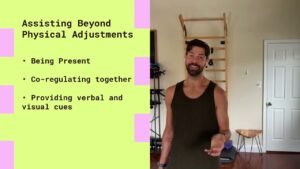
In this video, Michael Joel Hall, a seasoned Ashtanga Yoga teacher based in Washington DC, delves into the nuanced art and responsibility of assisting in yoga practice. Hall emphasizes that assisting is not about fixing students but about supporting their personal practice through presence and understanding. Drawing on systems thinking and yoga philosophy, he discusses the significance of verbal, visual, and physical assists, the importance of consent and trauma awareness, and the spiritual dimension of assisting within the framework of the eight limbs of yoga. The key message is to support the students’ exploration and self-organization rather than imposing corrections, advocating for a holistic approach that respects individual needs and fosters mutual growth.
00:00 Introduction and Welcome
00:08 The Art and Responsibility of Assisting
01:04 Purpose of Assisting in Ashtanga Yoga
01:48 Supporting an Intelligent System
03:21 Spiritual Practice of Assisting
05:50 Types of Assists: Verbal, Visual, Physical
08:17 Consent, Touch, and Trauma Awareness
10:27 Feedback Loops in Assisting
12:36 Adaptation and Individualization