Ashtanga Yoga: Your Practice, Your Choice, and Your Subjective Experience
This episode is on the topic of subjectivity in Ashtanga Yoga.

This episode is on the topic of subjectivity in Ashtanga Yoga.

A companion to The Digital Caste People talk about yoga economics as if the central question is price. Class rates. Membership tiers. What a teacher should earn. Price matters — but it isn’t the variable that governs everything else. Overhead is. Overhead determines what prices are even possible. And once prices are fixed, the culture of a space starts to bend around them. I learned this slowly. Like most teachers, I spent years looking for the price that felt fair — one that worked for the student waking up at 5am on a teacher’s salary and also for the one who’d just come from the office. Same discipline. Different bank accounts. Eventually it became clear: this wasn’t a pricing problem at all. In many yoga…

When you’re practicing far from the “real” yoga scene, yama and niyama are the parts that still work anywhere—and they tell you what’s healthy.

It’s about how to learn from imperfect teachers without swallowing their whole worldview along with the useful stuff.
Michael Joel Hall offers a different approach to Ashtanga Yoga grounded in humanist values, personal agency, and inclusivity, rather than dogma or hierarchy.
I started teaching yoga because a friend of mine caught dengue fever.
Ashtanga Tech — the podcast. Keep the practice, lose the guru. Michael Joel Hall on Ashtanga yoga without the authoritarianism.
🎧 Listen to the podcast: https://pub-477a42ee397942aa87e96485ef790f2c.r2.dev/podcast/ashtanga-tech/feed.rss
If a stuck practice or a bad room is on your mind — text CULT to 202-816-5612.

For years I mistook obedience for depth. The day I started reading my practice as a system instead of a set of instructions — and started instrumenting it like one — everything I’d called discipline turned out to be drift.

Your office wired one side of your neck on and the other side off. Marichyasana D pays the price.

“Don’t guess, assess” is a data thesis. We turned every posture into a diagnostic you can actually read — joint by joint, no guru required.
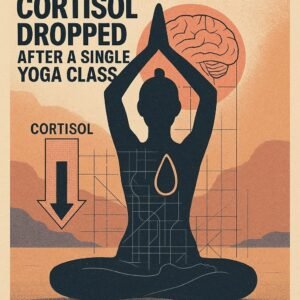
A 2007 study found that people new to yoga experienced significant decreases in cortisol, the primary stress hormone, after just one class.