Lessons from Led Intermediate

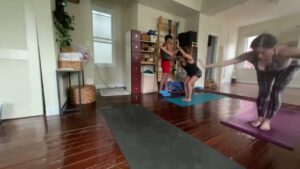
We practiced Led Intermediate at The Yoga Club this past week, and so I wanted to share a little bit of the wisdom and nuggets I’ve gathered from my experiences practicing it and guiding it. People get so funny and weird about doing a led intermediate– which cracks me up.

It’s a practice that has the power to be whatever you make of it, a journey where you can choose to relax, enjoy, or even dive deep into the challenge—it’s all up to you. Think of it as a road trip; what kind of car do you want to be in? The super uptight stressed-out car, or the one with mellow tunes playing in the background? After all, what’s the rush?

1. Have a Plan, But Stay Flexible

In Led Intermediate, it’s beneficial to have a plan for your postures. Identify your MVP (Most Viable Posture) – the one that suits you best and provides the most benefit. It’s like having a roadmap for your journey. However, stay flexible. Sometimes, the road takes unexpected turns, and it’s okay to adjust your plan accordingly. The essence of Ashtanga is not rigidity but adaptability.

2. Relax and Enjoy—or Not

One of the beautiful aspects of Led Intermediate is that you have the freedom to choose your approach. Guided classes are HIGHLY gamifiable. You can relax, enjoy the flow, and savor each posture’s nuances. Alternatively, you can choose to challenge yourself, pushing the boundaries of your practice, or try to keep up with the person next to you. It’s all valid; it’s all your journey.

3. Enjoy the Ride

Consider Led Intermediate like a road trip. What kind of car do you want to ride in? A stressed-out car, constantly rushing from one site to the next, trying to get absolutely every detail of the agenda in the shortest amount of time? Or are you the car that’s cruising, with mellow tunes playing, taking in the scenery and enjoying the process? It’s your choice, and it can make all the difference in your practice experience. I’ll tell ya what, though– if I’m LEADING the led intermediate, I’m gonna ask that you chill the F*** out.

4. Practice as a Mirror

Your yoga practice is like a mirror, and what you see in it can reveal a lot about your mindset. If you find yourself fixated on what you couldn’t do during Led Intermediate, it might be an indicator of a fixed mindset. But, here’s the magic: you can choose to incorporate a growth mindset. Instead of dwelling on limitations, focus on growth, progress, and the journey of improvement.

5. Learning from Challenges

We all have those moments in Led Intermediate when we feel like we couldn’t quite accomplish a particular posture. But here’s the beauty of it: those moments are teachers. They offer insights into your practice and your approach. What kept you from using the Most Viable Posture (MVP)? Was it a lack of clarity? Perhaps something else? Use this valuable information to strategize your approach for next time. It’s not about failure; it’s about learning and evolving.

7. Embracing the Long View

It’s not about nailing a particular posture today; it’s about the continuous journey of self-improvement over time. The subtle changes, the gradual progress—they all add up to a transformative experience.

8. Patience and Persistence

Led Intermediate teaches us the virtues of patience and persistence. As we work on challenging postures and encounter obstacles, we learn to navigate through them with grace and determination. Remember that every step, no matter how small, is a step forward. Your practice is a testament to your commitment and resilience.

9. Celebrating Growth Mindset

As you incorporate a growth mindset, learn from challenges, and embrace the long view, you’ll find yourself celebrating growth in unexpected ways. There is so much to enjoy– and yes, perhaps even the postures you couldn’t do before become more accessible, not because you forced them, but because you nurtured your practice with patience and dedication. Perhaps we also learn to celebrate when things go away and it doesn’t hurt so bad, too. Growth comes in many forms.

Similar Posts

  • Breathe with Ease: Exploring the Art of Natural Breathing

    **Unveil the Power of Your Breath: Discovering Natural Breathing Techniques**

    In our fast-paced world, the art of natural breathing often slips through the cracks, leaving us feeling tense and disconnected. Yet, as Denise Benitez beautifully puts it, breathing can transform into a graceful dance — a wellspring of vitality and serenity. Join us in our latest blog post, “Breathe with Ease: Exploring the Art of Natural Breathing,” where we delve into the various dimensions of this fundamental practice, from diaphragmatic breathing to effortless flow.

    Explore how cultivating awareness around your breath can activate your body’s natural calming mechanisms, promote digestion, and even improve posture. Learn practical techniques that not only enhance your yoga practice but also integrate seamlessly into daily life.

    Unlock the secrets to a more relaxed, vibrant existence. Embrace the journey of breathing with ease, and reconnect with the simple yet profound act that nourishes your being. Dive deeper into the serene world of natural breathing today!

  • Ashtanga Yoga: Your Practice, Your Choice, and Your Subjective Experience

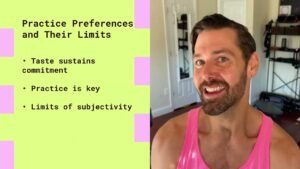
    This episode is on the topic of subjectivity in Ashtanga Yoga. This video emphasizes the importance of internal experiences over external instructions, highlighting how true understanding comes from doing rather than merely discussing. Learn about the role of breath (pranayama), the significance of bandhas, and how individual taste and preference can shape your practice. Michael also touches on the balance between subjective experience and objective assessment, providing insights into refining your yoga journey for both nourishment and growth.

    00:00 Introduction and Greeting
    00:03 Understanding Subjectivity in Ashtanga Yoga
    00:33 The Importance of Internal Experience
    01:08 The Role of Bandhas and Breath
    02:12 Developing Personal Practice
    03:36 Balancing Subjectivity and Objectivity
    04:03 Challenges in Self-Assessment
    05:08 Community Influence and Objectivity
    05:42 Conclusion and Final Thoughts

  • Discovering Zen: A Journey with Alan Watts

    Are you an Ashtanga practitioner ready to explore Zen philosophy through the lens of Alan Watts? Join us as we dive into the captivating documentary “Zen: The Best of Alan Watts” and discover how Zen principles can enhance our Ashtanga journey. Expand your understanding of yoga and find inner calm amidst the challenges of your practice. Embrace a deeper connection with yourself and the world around you. Let Alan Watts guide you on this beautiful path of self-discovery. Happy watching and happy practicing!

  • Brahmari (Bee Breath) Pranayama

    Brahmari Pranayama: The Bee Breath Technique for Calm and Clarity

    This video introduces Brahmari Pranayama, also known as Bee Breath, a powerful yet simple pranayama technique. It involves creating a gentle buzzing sound on the exhale to calm the mind, regulate the nervous system, and enhance awareness. The practice is effective for soothing anxiety, improving concentration, and preparing for meditation. The video guides viewers through the steps of Brahmari, emphasizing a comfortable posture, natural breathing, and the importance of not forcing the exhale. Brahmari is beneficial for speakers, singers, and teachers, supporting speech and vocal clarity. Consistent practice can help cultivate inner stillness and clarity.

    00:00 Brahmari (Bee Breath) Video
    00:11 Introduction to Brahmari (Bee Breath)
    00:32 How to Practice Brahmari
    00:46 Benefits of Brahmari
    01:00 Tips for Effective Practice
    01:10 Conclusion and Consistent Practice

  • Context Matters for Indigenous Insight Practices

    Decontextualizing indigenous insight practices—like those in traditional Ashtanga Yoga or other ancient systems—tends to diminish their efficacy because these practices are deeply embedded in specific cultural, spiritual, and historical contexts. This “embedding” isn’t a casual detail; it’s essential to how these systems work. When aspects of a practice are extracted or secularized, they lose the nuanced interconnections that support the whole system, similar to removing a keystone from an arch. For example, in Ashtanga Yoga, specific techniques and philosophies are not just exercises but methods developed within a layered understanding of ethics, community, and personal transformation. This is why teachers like Gregor Maehle emphasize that yoga is not just postures but part of a system that includes spiritual texts, breath work, ethics, and ritual. Removing…

Notes from the field

3 notes · members & customers welcome

  1. O
    October 23-29: Indigenous Art for Intention Setting and Renewal – the yoga.club ·

    […] Lessons from Led Intermediate— I’m thinking about teaching a “Building your Intermediate” workshop series. Saturdays after Mysore, maybe? Leave thoughts in comments. […]

  2. O
    October 30 – November 5: Halloween Yoga – the yoga.club ·

    […] Lessons from Led Intermediate— I’m thinking about teaching a “Building your Intermediate” workshop series. Saturdays after Mysore, maybe? Leave thoughts in comments.  […]

  3. N
    November 6-12: Is It Officially Winter When Street Sweeping Ends? – the yoga.club ·

    […] Lessons from Led Intermediate— I’m thinking about teaching a “Building your Intermediate” workshop series. Saturdays after Mysore, maybe? Leave thoughts in comments.  […]

Leave a note

Want more? (optional — commenting alone never subscribes you)
Comments are for members & customers. We’ll email a one-tap link to confirm it’s you.