The Information Diet Is the Practice
The Mysore room at 1404 P Street smells like effort and incense and whatever someone ate before class. I’m watching someone work through Navasana — five rounds, because that’s the count — when they mention, almost to themselves, that they don’t really read anymore. Not the practice. Articles. Long stuff. The kind of thinking that arrives in sentences and takes time.
I know exactly when this started. July 2013. Google Reader shut down, and the way most people navigated the internet died with it.
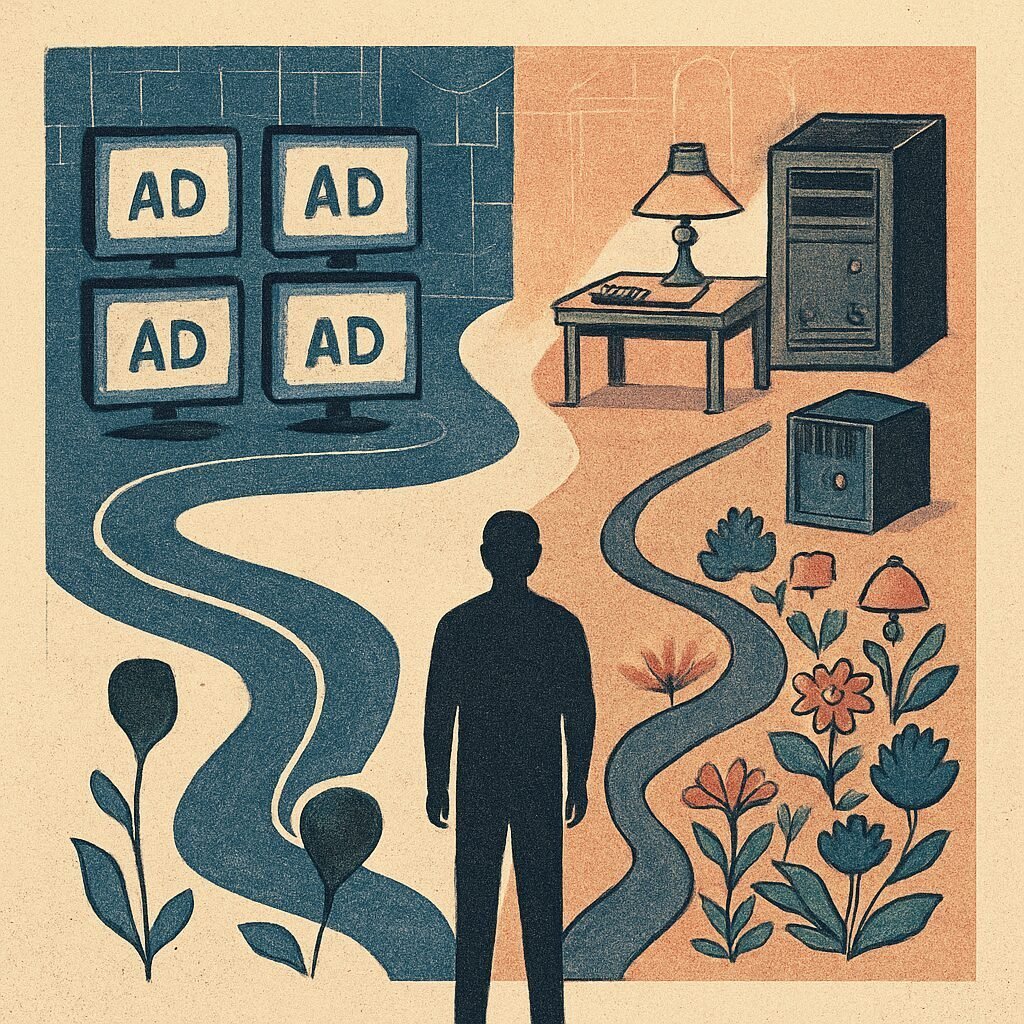
RSS — Really Simple Syndication — survived. The protocol still works. What died was the cultural expectation: that you’d choose what you read, subscribe to sources you trusted, and that the internet would deliver content in order, in sequence, without algorithmic commentary. When Google killed Reader to focus on other things, the audience scattered into social feeds. They never came back. What replaced it is what you already know: engagement-optimized timelines, a river of material tuned not to your interests but to your retention. Someone had to pay for the infrastructure, so they packaged your attention and sold it.
That’s the quiet coup most people still haven’t named. Not censorship. Not even bias. Just replacement — editorial judgment exchanged for engagement optimization. You stopped reading what you chose. You started reading whatever kept you looking.
I rebuilt. On purpose, on a private server. Now I run almost a hundred automations every day pulling content into a feed I curated myself. That sounds insane by some measures. I think “insane” is the right word if you’ve never tried to maintain actual editorial judgment about what enters your mind, and minimum viable infrastructure if you have. Three newspapers a day, maybe four. Not fighting an algorithm. Deliberate coverage. I know what I read last Tuesday. I can trace where an idea came from, which is different from just having the idea.
This is where the yoga teacher part matters.
Every week I’m working with students on problems that don’t have obvious solutions. Someone’s hip won’t cooperate. Someone else has been on the same posture for eighteen months. Constraint theory — the idea that in complex systems there’s always one binding constraint, and releasing any other tension doesn’t help until you find the actual bottleneck — is how I think about these problems. That principle didn’t come from yoga literature. It came from reading about production systems, in a feed I had built to give me range. That’s not a detour. That’s the method.
Most yoga teachers I know are consuming social media. Not entirely by choice — it’s where information appears to live now. But social media isn’t an information source. It’s a ranking mechanism. It surfaces what performs, not what’s true or useful. A cue that photographs well isn’t a better cue. A lineage claim that generates engagement isn’t a more accurate claim. What you consume shapes what you can teach. Say it slowly. It sounds obvious, and most people are not living like it’s true.
The self-help genre has a thing called “curating your feed.” I don’t mean that. Curation implies aesthetics, taste, the ability to screenshot your sources and look thoughtful. What I’m describing is more like building a nervous system. When I read something useful, if it’s yoga-relevant, it goes into the Shala Daily — a digest I send to students. Not to seem well-read. Because the connection between what I consume and what I teach is not metaphorical. It’s causal.
The algorithmic feed optimizes for what you’ll click. That’s not the same as what you’ll use. The click is momentary; the use is downstream, months later, in a room where someone’s shoulder has been stuck since spring and you’re trying to figure out why. The article you read about tendon stiffness and neurological threat response either lives in your pattern-recognition or it doesn’t. If your attention has been colonized by whatever got the most engagement this morning, it mostly doesn’t.
This is what I mean when I say practice is systems literacy. The asana practice on the mat is one system. The reading practice is another. Both require inputs, constraints, feedback, regular maintenance. Both produce outputs that don’t announce themselves at the moment of effort — they show up later, when you need them.
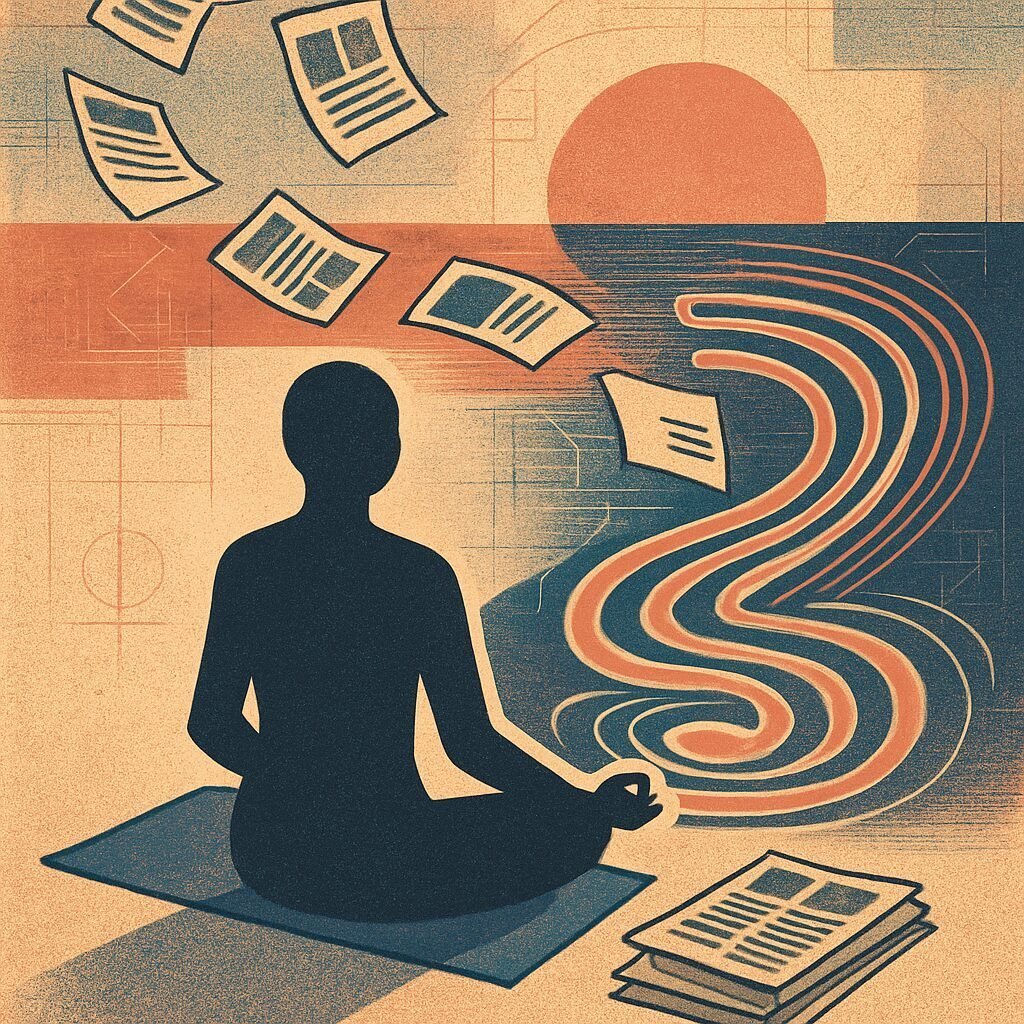
What we don’t notice when attention gets outsourced is the slow credential decay — the connections stop happening, the teaching gets thinner, and nobody in the room can quite name why. You can feel the difference between a teacher who has been reading seriously for twenty years and one who has been scrolling. I don’t know if students can articulate it, but they feel it. The quality of a correction comes from somewhere. So does the quality of a silence.
This is recoverable. You don’t need a server. You need an RSS reader, a few sources you actually trust, and the discipline to read them before you open anything else in the morning. The protocol was patient the whole time — chronological, indifferent to what anyone thought you should have read first.
When Google Reader died, the internet quietly decided that algorithmic feeds were more convenient than human ones. They are. Convenience isn’t free. We got advertisements for our attention and called it staying informed.
I got a private server.