Paradise Is Just Having Enough
The phrase came out sounding almost embarrassing. A little piece of the fat of the land. I said it in conversation and immediately heard myself want to take it back — not because it wasn’t true, but because it was too true, and too small. In an era where everyone brands their ambitions, calls their newsletter a “platform,” invokes their morning routine as spiritual infrastructure, wanting land and animals and no bill-anxiety sounds like giving up. Like settling. Like something to admit quietly, apologetically, the way you’d admit you don’t really want to be famous.
It isn’t any of those things. But I understand why it feels that way, and I spent a long time pretending I wanted something bigger.
Here’s what I’ve noticed after years of practice: the mat doesn’t expand your appetite. It contracts it. Not into asceticism — I’m not talking about renunciation as performance, the kind where you eat brown rice and call it consciousness. I mean that the daily discipline of waking up and moving through sequences that don’t care about your mood or your self-image slowly burns off the noise. What’s left is a shorter list. More precise. Quieter. One you can say out loud without adding five qualifiers and a strategic hedge.
Mine: somewhere to live without the background hum of financial dread. No ambient pressure from other people’s expectations. Some animals around. No one waiting for me to become something other than what I already am.
That’s it. The full list. A little embarrassing that it took this long to see it clearly, and a little clarifying too.
The word santosha gets deployed in yoga circles like it means “being okay with less.” That’s not quite right. Santosha is an architectural principle — the practice of understanding what a life actually requires versus what the culture has convinced you to want. Contentment isn’t low standards. It’s precision. There’s a meaningful difference between accepting a smaller life and building an accurate one. Most people don’t get to that distinction because the culture is very loud about what constitutes arrival.
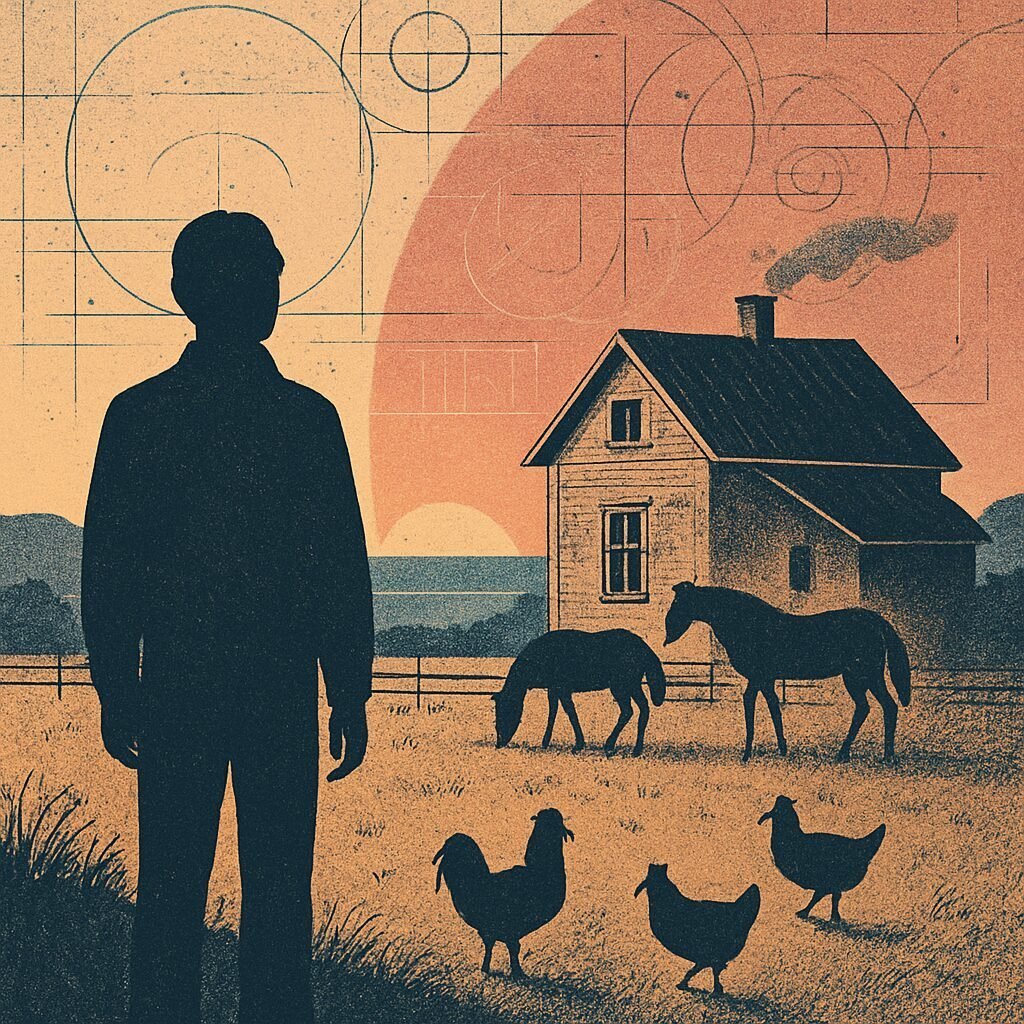
I grew up around horses and chickens. Not a farm exactly, but enough land that morning had a particular quality — feeding schedules, the smell of hay, the way an animal reads you before you’ve managed to form a sentence. I spent most of my adult life in cities after that. That was a trade I made deliberately, and I knew what I was giving up. It left a specific negative space in me. Not nostalgia, exactly. More like a stored data point: what “enough” felt like in the body when I had it. Evidence that this isn’t fantasy. It’s memory.
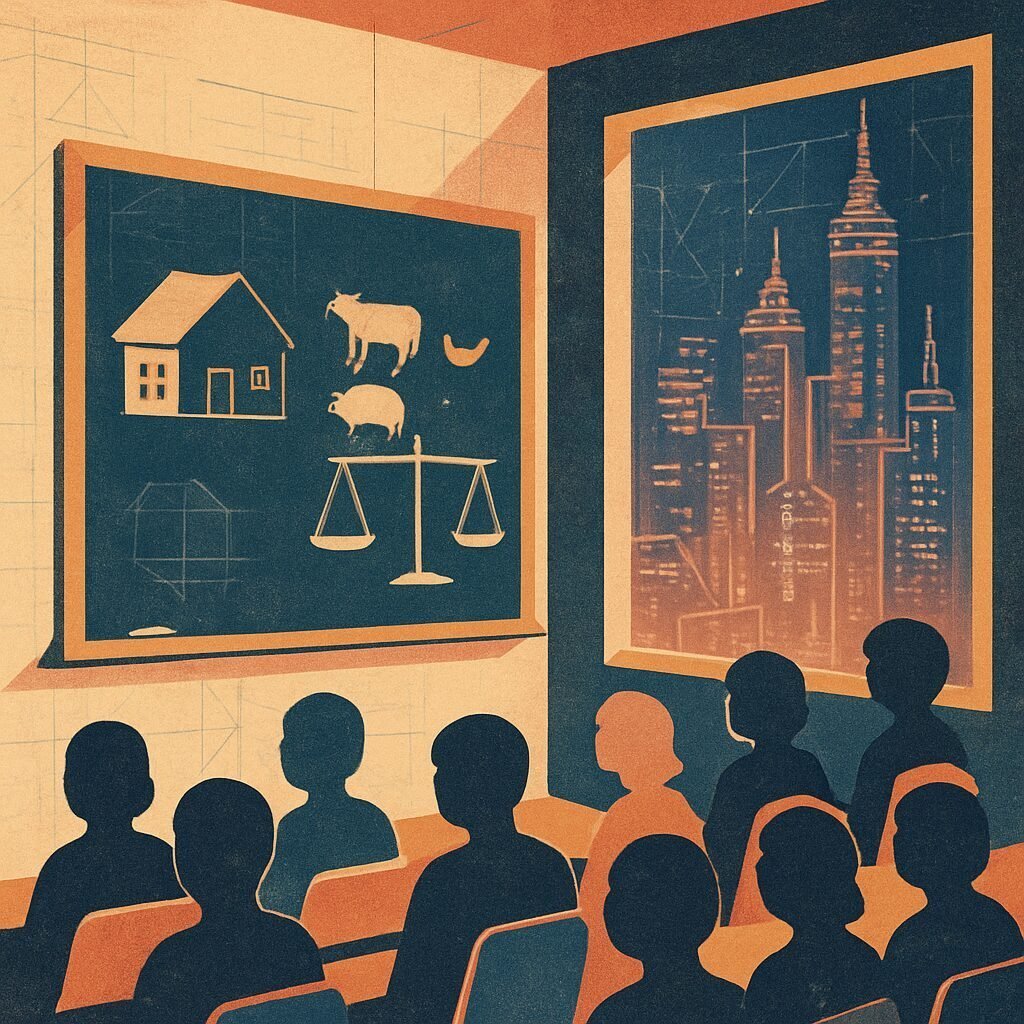
Cultural paradise is large and public. Square footage, dinner reservations, an audience for your creative process, a brand that scales. It performs. It needs to be legible to other people or it doesn’t quite count. What I’m describing does the opposite: a life that feels complete even when no one is watching, that doesn’t require a caption.
“I don’t want it just handed to me, although that would be nice.” That’s the honest version. I want it earned. The practice to mean something, the work to hold up, the systems to run because they were actually built correctly — not because I got lucky or performed the right identity at the right moment. But I also know what “earning it” typically means in the culture: optimize toward excess, want more than you need, then need more than you wanted. It’s a loop that doesn’t have a natural floor.
What I’m after is simpler and harder to defend in public: just enough. Not “enough for now.” Enough. The closed sentence. The complete system. To me, that’s kind of paradise, to be able to just have enough.
Daily practice is one of the better diagnostic tools I know for separating what you actually want from what you’ve absorbed. Long enough on the mat, and the things that seemed urgent become clearly optional. The things you kept postponing turn out to be the real ones. Most people come to practice expecting it to make them more capable — sharper, calmer, better at the things they already value. It does that. But the secondary effect, the one nobody mentions at the beginning, is that it also makes you more honest about desire. It shows you what you’re actually working toward. And sometimes what it shows you is startling in its modesty. Not a movement. Not a legacy. Not an empire built on the right combination of suffering and charisma. Just some land. Some animals. The month’s bills covered. No constant low-grade worry about whether the floor is about to give.
The ambition isn’t small — it just refuses to apologize for fitting inside a life.