Ashtanga: Healthy Ambition for Collaboration Instead of Competition
Is your competition truly ‘friendly,’ or is it just burning you out? Visit michaeljoelhall.com/coaching to book a session if you’d like to chat about your practice.
Is your competition truly ‘friendly,’ or is it just burning you out? Visit michaeljoelhall.com/coaching to book a session if you’d like to chat about your practice.

Join us on a profound journey as we delve into the essence of Pranayama, the fourth limb of yoga, where breath intertwines with life force. Explore the subtle anatomy of energy—understanding how prana, the vital life force, flows through nadis and aligns with chakras. Discover how mastering the breath not only enhances physical vitality but also fosters emotional and mental clarity. This exploration promises to unravel the philosophical depths of breath practices, inviting you to breathe deep and awaken your inner energy.
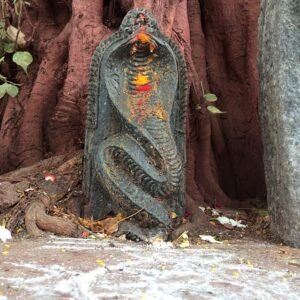
The count in Ashtanga Yoga is a key component of the practice, helping students maintain a steady rhythm and focus their attention on the breath. In Ashtanga Yoga, each posture is performed with a specific number of breaths, known as the vinyasa count. The count is typically given by the teacher, but it’s important for students to also learn the count themselves as a way to deepen their understanding of the practice. The primary and intermediate series of Ashtanga Vinyasa Yoga include a total of 72 postures, which are performed in a specific order. In a guided class, they often use a Sanskrit count. The postures in these series are considered “half vinyasa” because we don’t return to the top of the mat in between…
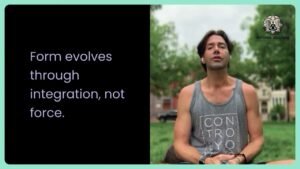
Michael Joel Hall shares his insights on alignment and form in Ashtanga Yoga, emphasizing the importance of functionality over aesthetics in postures. He discusses how stability, internal awareness, and breath play pivotal roles in developing both strength and flexibility. Hall highlights that true depth in practice arises from understanding the purpose and mechanics of poses rather than merely striving for visually perfect forms.
00:00 Introduction to Alignment in Ashtanga Yoga
00:12 Principles and Practice of Functional Alignment
00:00 Introduction to Alignment in Ashtanga Yoga
00:12 Principles and Practice of Functional Alignment
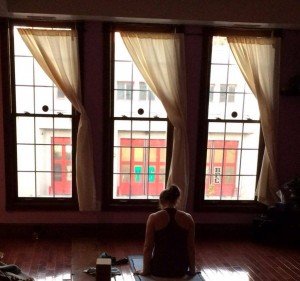
Looking to practice Ashtanga in the Washington, DC area? You’re in luck, as DC and Northern Virginia has a bounty of powerful, talented teachers… no wonder we have such an inspired (and inspiring!) community of practitioners. The following is a list of places that you can find mysore-style ashtanga vinyasa yoga: DC Ashtanga @ The Yoga Club3423 14th Street, NW WashingtonWho? Michael Joel Hall (me! kpjayi level 2 authorized) Why? A beautiful space, a lovely community. And –well– me. My approach is direct, collaborative, and encourages systems thinking and autonomy. Decidedly non-dogmatic, more interested in the pros and cons of approaches rather than the rights and wrongs. We do a good job. You’ll have to excuse me, as I’m biased, so we get to come first on…

Nearly everything my nervous system does, it does without me. The breath is the one input I can grab on purpose — so instead of just saying so, I built eight guided courses to teach it like it matters.

Every week, Michael Joel Hall weaves together questions about transformation and who gets to authorize it — from Ashtanga yoga teacher-authorization to AI consciousness, eco-death marketing, and the power of the count.
No notes yet · members & customers welcome
Michael Joel Hall’s daily reading — the field journal, critical-thinking cards, and synthesis — as a membership.
$5.50/month · cancel anytime
Join — $5.50/mo →Secure checkout on theyoga.club. A yearly option ($55) is available there too.