
Will humans one day talk to animals? This scientist is bringing us closer
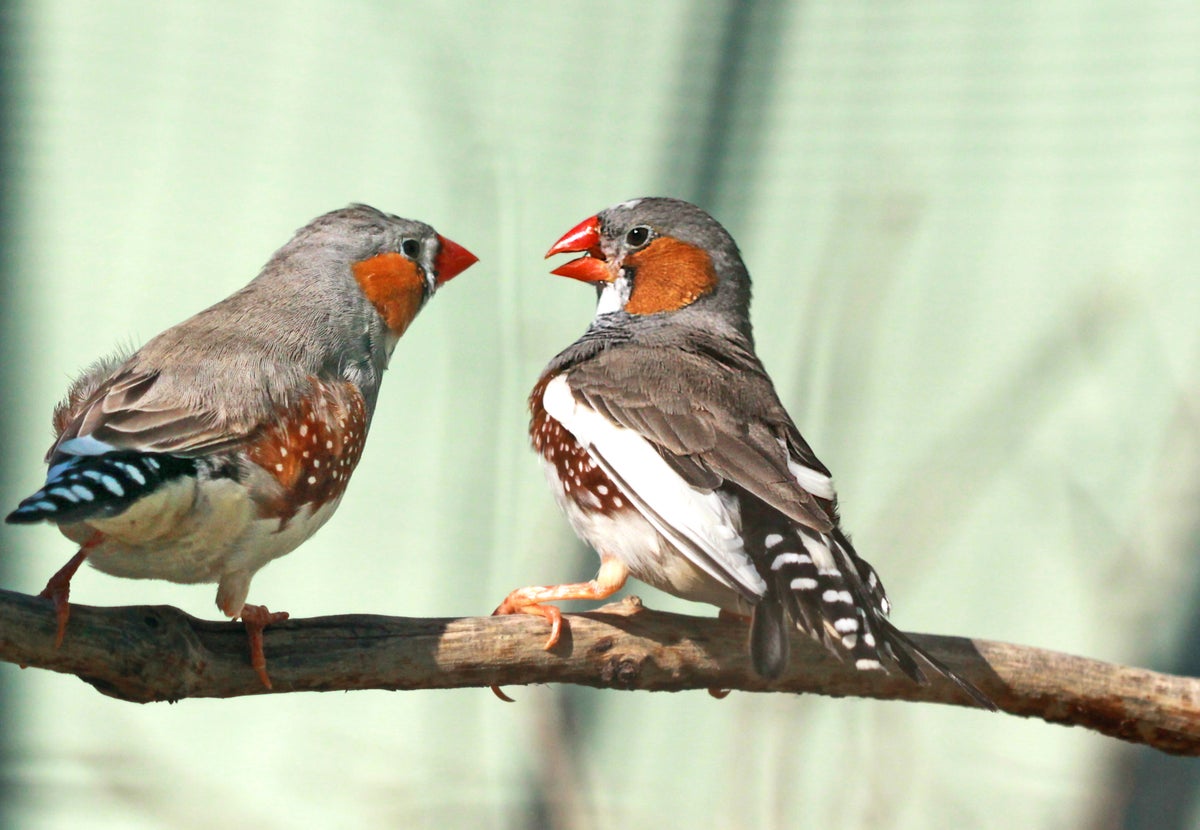 scientificamerican.comWill humans one day talk to animals? This scientist is bringing us closerJulie Elie has been studying zebra finch vocalizations for years. Now, she has won the Coller-Dolittle Prize for progress toward a world where humans can talk to animals✦ Read ad free and get the full MichaelFilter · $5.50
Part of the MichaelFilter
Members read the whole piece — the writeup, the pull-lines, and the full transcript. Unlock access for $5.50.
Unlock the full reading · $5.50 →Researcher Julie Elie identified 11 core calls in zebra finch vocabulary and verified her classifications by testing whether the birds themselves categorized calls the same way—by meaning rather than sound. Her work, which combines machine learning with behavioral context, won the 2026 Coller-Dolittle Prize for advancing two-way interspecies communication. She emphasizes that decoding signals requires both acoustic analysis and observation of context and behavior.
Teaching:
• Cueing is a call repertoire: distinguish your 'distress' cues from 'invitation' cues so students categorize by meaning, not just tone of voice
• Like the finches, students recognize the teacher's individual signature; consistency of voice across cues builds trust faster than novelty
• Train students to read context (breath, drishti, room) as part of the signal, not just the verbal instruction
• Use a small core vocabulary in class—11-ish reliable cues—rather than improvising endless variations
Writing seeds:
• Essay: 'The 11 Calls of a Shala'—what a minimum viable cueing vocabulary looks like for Mysore rooms
• Post: meaning over sound—why two cues that rhyme can land oppositely, and how to audit your teaching language
• Shala Daily entry on signature: the teacher's voiceprint as a regulatory tool for nervous systems in the room
• Ashtanga.tech piece on machine listening vs. embodied listening—what data misses when you remove behavioral context
Idea map:
• Systems literacy: communication is signal plus context, the same frame Michael uses for reading bodies in adjustments
• Embodiment: meaning is carried by behavior and situation, not just acoustic surface—mirrors his stance against decontextualized technique
• Attention as method: Elie's years of patient listening parallel the daily-practice epistemology MJH teaches
• Two-way communication echoes his coaching model—teacher and student as a feedback loop, not a broadcast
Source: https://www.scientificamerican.com/article/will-humans-one-day-talk-to-animals-this-scientist-is-bringing-us-closer/
Teaching:
• Cueing is a call repertoire: distinguish your 'distress' cues from 'invitation' cues so students categorize by meaning, not just tone of voice
• Like the finches, students recognize the teacher's individual signature; consistency of voice across cues builds trust faster than novelty
• Train students to read context (breath, drishti, room) as part of the signal, not just the verbal instruction
• Use a small core vocabulary in class—11-ish reliable cues—rather than improvising endless variations
Writing seeds:
• Essay: 'The 11 Calls of a Shala'—what a minimum viable cueing vocabulary looks like for Mysore rooms
• Post: meaning over sound—why two cues that rhyme can land oppositely, and how to audit your teaching language
• Shala Daily entry on signature: the teacher's voiceprint as a regulatory tool for nervous systems in the room
• Ashtanga.tech piece on machine listening vs. embodied listening—what data misses when you remove behavioral context
Idea map:
• Systems literacy: communication is signal plus context, the same frame Michael uses for reading bodies in adjustments
• Embodiment: meaning is carried by behavior and situation, not just acoustic surface—mirrors his stance against decontextualized technique
• Attention as method: Elie's years of patient listening parallel the daily-practice epistemology MJH teaches
• Two-way communication echoes his coaching model—teacher and student as a feedback loop, not a broadcast
Source: https://www.scientificamerican.com/article/will-humans-one-day-talk-to-animals-this-scientist-is-bringing-us-closer/
Notes from the field
No notes yet · members & customers welcome
- No notes yet. Be the first to leave one.
Join MichaelFilter
Michael Joel Hall’s daily reading — the field journal, critical-thinking cards, and synthesis — as a membership.
$5.50/month · cancel anytime
Join — $5.50/mo →Secure checkout on theyoga.club. A yearly option ($55) is available there too.