
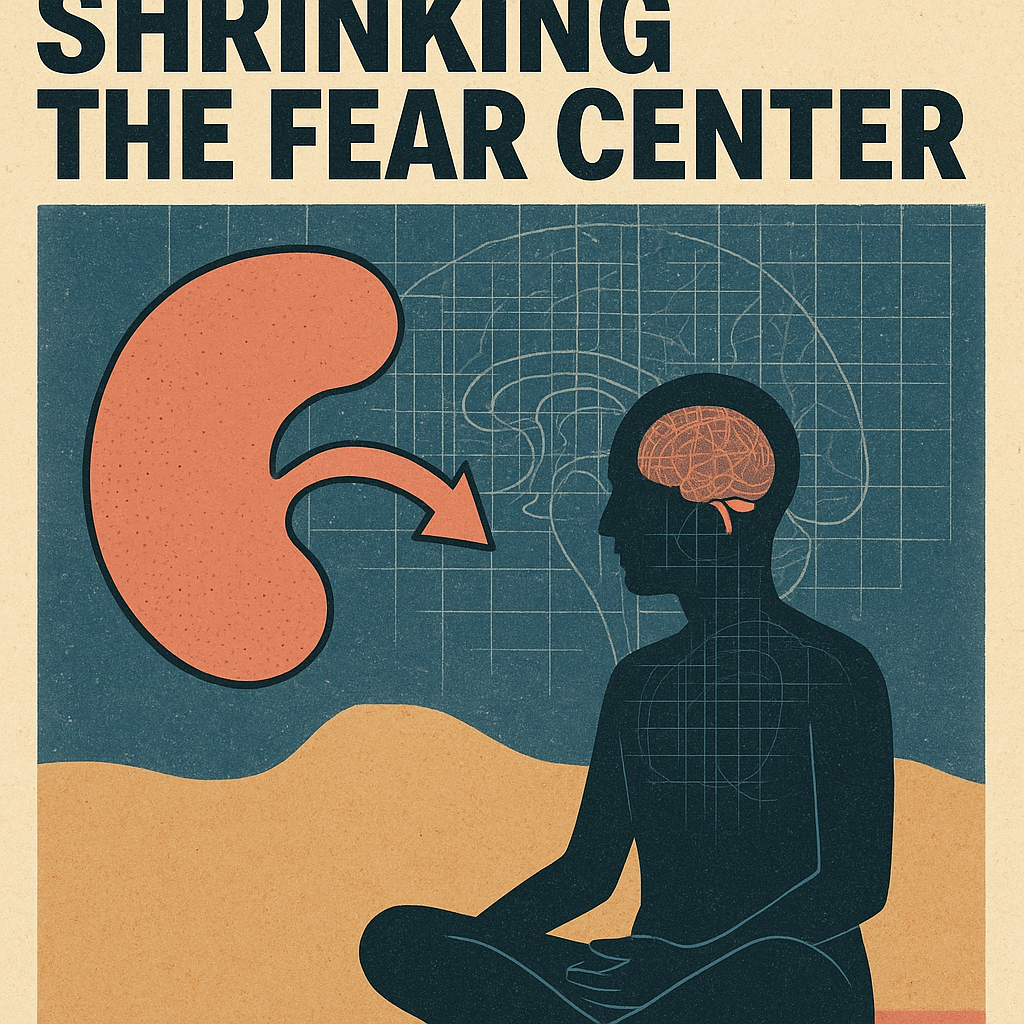
Shrinking the Fear Center
Data from over 15,000 participants in the Rotterdam Study, an ongoing population-based study in the Netherlands since 1990, revealed that people who practiced meditation and yoga had smaller right amygdala volume compared to non-practitioners. The right amygdala controls fear and aversion to unpleasant stimuli. Its volume also decreased over time among practitioners.
Among the 3,742 participants who completed both a practice questionnaire and brain MRI, 90.7% reported that meditation and yoga helped them cope with stress. The structural brain changes provide a biological basis for that subjective experience. A smaller, less reactive fear center means less automatic anxiety in response to daily stressors.
The brain region most associated with fear and negative emotions literally got smaller with practice. That is a structural change, not just a feeling.
Source: Yoga Research: Brain Structure & Function on ashtanga.tech. Original research.