Your Context Is Your Destiny
We love a genetic excuse. “Tight hips run in my family.” “I’m just not flexible.” It feels final, which is comforting, because final means off the hook.
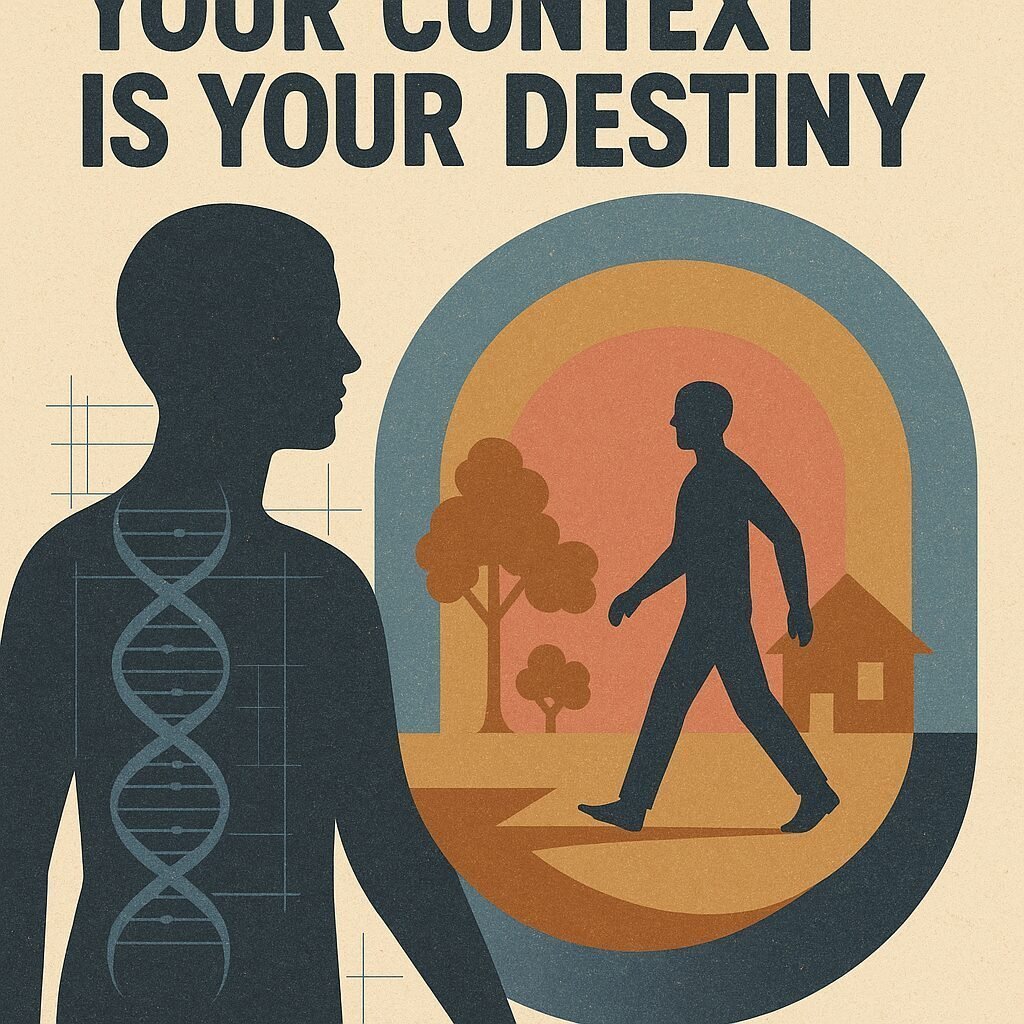
A Mount Sinai study using the All of Us biobank ran the numbers and found something inconvenient: for most common diseases, your social, behavioral, and environmental factors predict risk as well as or better than your DNA. Asthma, kidney disease, cholesterol, heart disease. And one of the meaningful predictors — sitting right next to smoking — was loneliness.
Loneliness. As a measurable health input. Let that reframe what the shala actually is.
It’s not a luxury. It’s not self-care in the bubble-bath sense. It’s a context — sleep timing, breath, stress load, and a room full of people doing hard quiet things in the same place at the same hour. That last one isn’t decoration. By this data, it’s medicine.
Here’s the practice version: you arrive with inherited tendencies AND a modifiable context. The tendencies you can’t pick. The context you build daily. Asana isn’t your destiny. The room you keep showing up to is.
So when a student treats Mysore attendance as optional — something to fit in if life allows — that’s the wrong frame. Practice isn’t a fix you apply when things go wrong. It’s a context you build so fewer things do.
Read it: Nautilus on nature vs nurture
— MJH