
King Scorpion in the Kitchen
I was five hours in and deeply proud of it.
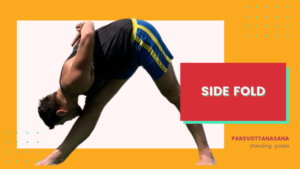
Pranayama first, then the full series, stacked before noon at Marcy’s place in Anjuna. The Arabian Sea was doing its thing a few hundred meters west. I could feel salt in the air between postures. There were jars of aloe juice on a low shelf, Ramesh’s coconut from the morning still sitting by the door. I was serious. I was devoted. I was performing devotion to an empty audience, which is the most earnest kind.
The kids who lived around the place were always in and out of the kitchen. Village kids, Goa kids, kids with a quality I would have called effortlessness if I weren’t so allergic to the word. They were never watching practice. They had actual things to do.
At some point during what I was doing—I couldn’t tell you exactly when, because I was very busy tracking my own internal state—one of them just dropped into king scorpion. On their way past. Vrschikasana, fully expressed, on the kitchen floor, while transiting between one errand and another. No setup. No breath ritual. No audience. And then they were gone.
That was the moment that cracked my head.
I didn’t know what to do with it. I knew what king scorpion cost me: the approach, the preparation, the specific quality of attention I brought to the shape of my hands before I even kicked up. The practice around the practice. Here was a kid for whom the pose was just something the body did, the way you might reach past someone to grab a dish. Not better than me at the pose. Something else entirely.
There’s a category error I had been running for years. I thought seriousness and mastery were the same thing, or at least that the first was the path to the second. What I saw in Anjuna was mastery that had never heard of seriousness. The performance was missing because the need for proof was missing. Mine was all proof. Five hours of it, carefully stacked.
It takes somebody who just doesn’t take things here that seriously.
That line arrived sometime later, trying to explain the moment to someone, and it lands differently depending on which word you stress. If you stress here—in this tradition, in this particular geometry of limbs—it sounds like a slight. Like the kids were doing something easier than what I was doing. But that’s not it. What I mean is that the grip was gone. The pose lived in them without requiring a vote from the ego about whether it was being done correctly, whether it meant something, whether a decade of early mornings had been worth it.
I get a chuckle now, knowing how hard I was. And I mean hard in the old sense—rigid, armored, performing earnestness. Not bad. I have genuine affection for that guy kneeling on the mat at Marcy’s with his jars of aloe juice and his sacred approach. He was doing the work. He just had his hand closed so tight around it that he couldn’t feel what it actually was.
The practice doesn’t need you to clutch it. That’s the thing I keep needing to learn, and it keeps arriving in forms I can’t argue with: a kid halfway through a kitchen, inverted, gone.
Systems that work don’t announce themselves. A body that has genuinely absorbed something doesn’t reach for it—it just goes. What I was doing at five hours in was real work. But I had confused the work with the seriousness of the worker. Those aren’t the same system.
There’s a kind of devotion that looks like rigor but is actually just fear in a nice outfit. The fear that if you loosen your grip, the practice will stop meaning something. That the thing you built will dissolve. That the early mornings only count if you feel their weight.
What the kid in the kitchen knew, without knowing it, was that the weight doesn’t help you balance. You balance by getting out of the way of what the body already understands.
I still keep the five hours. I still approach the mat with care. But somewhere in the approach now there’s a little room—not sloppiness, not irreverence, just the recognition that the pose doesn’t owe me anything for how seriously I took it. It happened or it didn’t. The body either knows it or it doesn’t.
Less clutching is the whole lesson, and it took a village kid and a kitchen floor to teach it.