
Wing Commander IV and the FMV future that never quite was
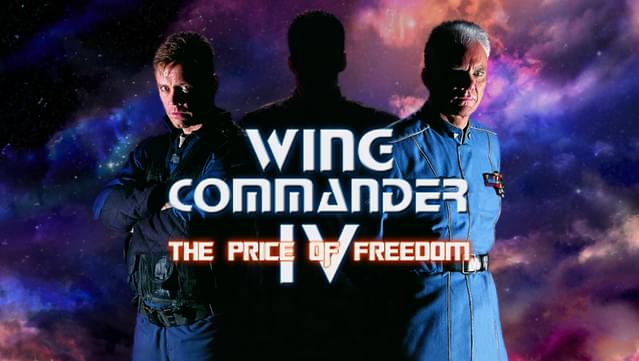 arstechnica.comWing Commander IV and the FMV future that never quite wasA retrospective on Wing Commander IV (1996), a space combat game that epitomized the mid-90s ambition to merge Hollywood production values with interactive gaming. The game featured Mark Hamill and other actors performing on 35mm film with massive sets, costing $12 million and shipping on six CD-ROM✦ Read ad free and get the full MichaelFilter · $5.50
Part of the MichaelFilter
Members read the whole piece — the writeup, the pull-lines, and the full transcript. Unlock access for $5.50.
Unlock the full reading · $5.50 →A retrospective on Wing Commander IV (1996), a space combat game that epitomized the mid-90s ambition to merge Hollywood production values with interactive gaming. The game featured Mark Hamill and other actors performing on 35mm film with massive sets, costing $12 million and shipping on six CD-ROMs with over 20 minutes of opening cutscenes before gameplay began. It represented the peak of the "full-motion video" (FMV) gaming trend that promised a "Silliwood revolution" blending movies and games, a future that ultimately never materialized.
Teaching:
• Use the FMV trend as analogy for students chasing elaborate props or gear instead of showing up to practice—sometimes the simplest tools yield the deepest work
• Frame the "20 minutes before first mission" as overthinking before stepping on the mat; cue students to notice when preparation becomes procrastination
• Discuss how Wing Commander's massive budget didn't guarantee longevity; relate to how flashy workshops don't replace daily Mysore practice
• Teach that the game's narrative climax happened off the mat (courtroom, not cockpit) as reminder that practice integrates into all of life, not just asana
Writing seeds:
• Essay comparing FMV gaming hype to modern yoga trends (AI classes, VR studios, biometric tracking)—asking what we gain and lose when we add layers between practitioner and practice
• Shala Daily post on the six-CD-ROM as metaphor for over-complication: how Ashtanga's fixed sequence is the opposite of feature creep
• Piece on the gap between aspiration and execution in both game design and practice—Wing Commander IV promised interactivity but delivered passive cutscenes; students promise daily practice but skip fundamentals
• Short essay on "the future that never was" theme: how yoga's supposed evolution toward tech and spectacle misses that the method already works
Idea map:
• Systems literacy angle: FMV games tried to graft Hollywood's system onto gaming's, creating bloat instead of synergy—similar to importing corporate wellness language into yoga
• Embodiment contrast: Wing Commander players watched actors perform heroism rather than enacting it themselves, like watching yoga videos versus practicing
• Attention economy: the game front-loaded spectacle to capture attention but couldn't sustain engagement, paralleling how flashy yoga marketing doesn't build committed students
• Practice as method: the article's nostalgia for a failed experiment echoes how students romanticize advanced poses instead of trusting the daily repetition that actually transforms
Source: https://arstechnica.com/gaming/2026/07/wing-commander-iv-and-the-fmv-future-that-never-quite-was/
Teaching:
• Use the FMV trend as analogy for students chasing elaborate props or gear instead of showing up to practice—sometimes the simplest tools yield the deepest work
• Frame the "20 minutes before first mission" as overthinking before stepping on the mat; cue students to notice when preparation becomes procrastination
• Discuss how Wing Commander's massive budget didn't guarantee longevity; relate to how flashy workshops don't replace daily Mysore practice
• Teach that the game's narrative climax happened off the mat (courtroom, not cockpit) as reminder that practice integrates into all of life, not just asana
Writing seeds:
• Essay comparing FMV gaming hype to modern yoga trends (AI classes, VR studios, biometric tracking)—asking what we gain and lose when we add layers between practitioner and practice
• Shala Daily post on the six-CD-ROM as metaphor for over-complication: how Ashtanga's fixed sequence is the opposite of feature creep
• Piece on the gap between aspiration and execution in both game design and practice—Wing Commander IV promised interactivity but delivered passive cutscenes; students promise daily practice but skip fundamentals
• Short essay on "the future that never was" theme: how yoga's supposed evolution toward tech and spectacle misses that the method already works
Idea map:
• Systems literacy angle: FMV games tried to graft Hollywood's system onto gaming's, creating bloat instead of synergy—similar to importing corporate wellness language into yoga
• Embodiment contrast: Wing Commander players watched actors perform heroism rather than enacting it themselves, like watching yoga videos versus practicing
• Attention economy: the game front-loaded spectacle to capture attention but couldn't sustain engagement, paralleling how flashy yoga marketing doesn't build committed students
• Practice as method: the article's nostalgia for a failed experiment echoes how students romanticize advanced poses instead of trusting the daily repetition that actually transforms
Source: https://arstechnica.com/gaming/2026/07/wing-commander-iv-and-the-fmv-future-that-never-quite-was/
Notes from the field
No notes yet · members & customers welcome
- No notes yet. Be the first to leave one.
Join MichaelFilter
Michael Joel Hall’s daily reading — the field journal, critical-thinking cards, and synthesis — as a membership.
$5.50/month · cancel anytime
Join — $5.50/mo →Secure checkout on theyoga.club. A yearly option ($55) is available there too.