
Something Weird Is Going on With the 66 Billion Trees China Planted in a Huge Wall
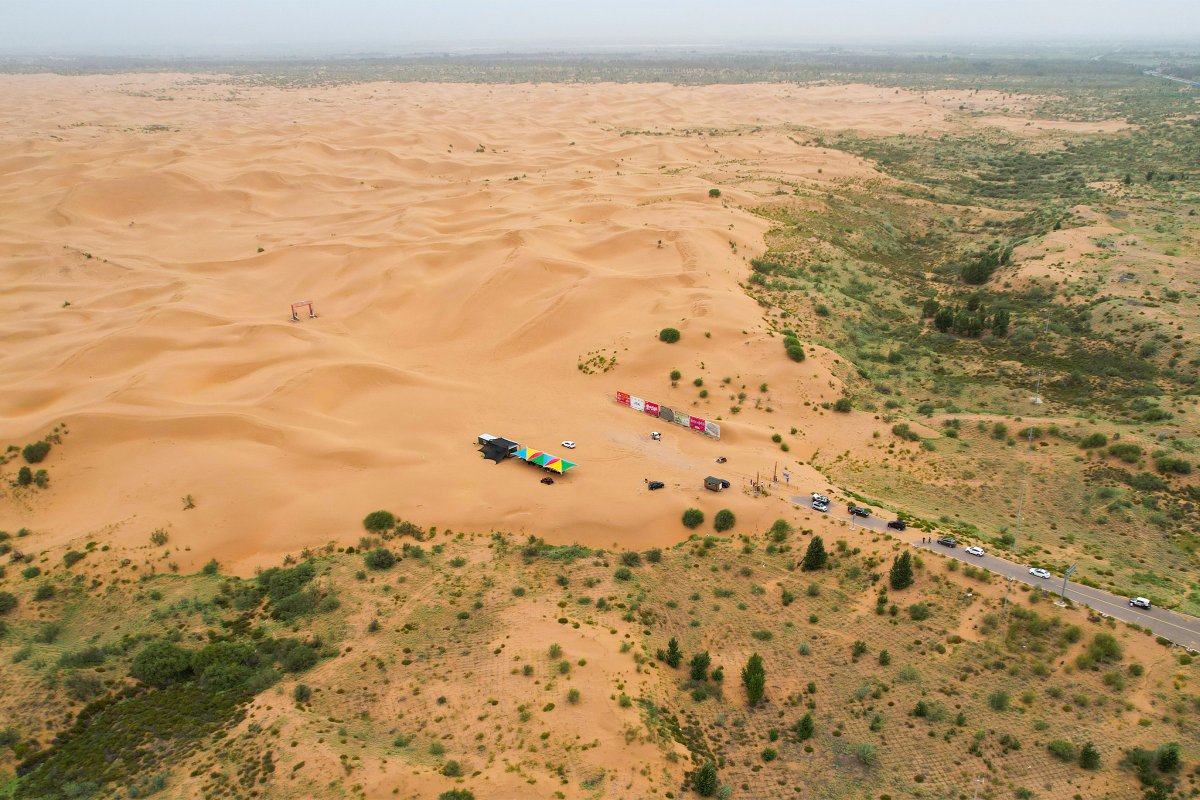 futurism.comSomething Weird Is Going on With the 66 Billion Trees China Planted in a Huge WallChina's Great Green Wall—66 billion trees planted since 1978 to stop desert expansion—shows planted forests growing 66% faster in canopy density than natural forests, likely due to youth and active management. However, researchers note this advantage is temporary; natural forests remain superior for✦ Read ad free and get the full MichaelFilter · $5.50
Part of the MichaelFilter
Members read the whole piece — the writeup, the pull-lines, and the full transcript. Unlock access for $5.50.
Unlock the full reading · $5.50 →China's Great Green Wall—66 billion trees planted since 1978 to stop desert expansion—shows planted forests growing 66% faster in canopy density than natural forests, likely due to youth and active management. However, researchers note this advantage is temporary; natural forests remain superior for long-term carbon storage and resilience, raising questions about planted forests' effectiveness in climate mitigation.
Teaching:
• Use the planted vs natural forest distinction as a metaphor for intensive practice phases versus sustainable daily rhythm—short bursts yield visible growth but consistent practice builds lasting capacity
• Frame the 'early tree die-off' problem as analogous to students forcing poses before readiness—brute force doesn't work; systems need appropriate conditions and time
• Teach that peak growth at 30-40 years mirrors practice maturity curves—intermediate practitioners often show dramatic visible progress while advanced practitioners deepen invisibly
• Connect the 'active nurturing vs left alone' dynamic to coaching value—guided practice accelerates development but self-sustaining practice builds resilience
Writing seeds:
• Essay comparing practice intensity models to forest growth patterns—when to push for visible progress versus when to settle into slow accumulation
• Shala Daily post on the myth of linear progress using the planted/natural forest data—why your practice might look stagnant while actually building long-term capacity
• Piece on 'brute force practice' failures using the early Green Wall tree deaths—why forcing asanas without systemic preparation leads to burnout or injury
• Article exploring practice as ecosystem management rather than performance optimization—what happens when we optimize for the wrong metrics
Idea map:
• Reinforces systems literacy principle that visible metrics (canopy density, pose achievement) can mislead about system health and long-term resilience
• Connects to attention economy critique—optimizing for short-term measurable outcomes (carbon uptake, Instagram poses) versus building durable capacity
• Supports embodiment framework that sustainable practice requires appropriate conditions and time, not forced acceleration through unsuitable methods
• Aligns with practice-as-method concept that the process architecture (natural growth, daily practice) matters more than intervention intensity for lasting transformation
Source: https://futurism.com/science-energy/something-weird-china-tree-wall
Teaching:
• Use the planted vs natural forest distinction as a metaphor for intensive practice phases versus sustainable daily rhythm—short bursts yield visible growth but consistent practice builds lasting capacity
• Frame the 'early tree die-off' problem as analogous to students forcing poses before readiness—brute force doesn't work; systems need appropriate conditions and time
• Teach that peak growth at 30-40 years mirrors practice maturity curves—intermediate practitioners often show dramatic visible progress while advanced practitioners deepen invisibly
• Connect the 'active nurturing vs left alone' dynamic to coaching value—guided practice accelerates development but self-sustaining practice builds resilience
Writing seeds:
• Essay comparing practice intensity models to forest growth patterns—when to push for visible progress versus when to settle into slow accumulation
• Shala Daily post on the myth of linear progress using the planted/natural forest data—why your practice might look stagnant while actually building long-term capacity
• Piece on 'brute force practice' failures using the early Green Wall tree deaths—why forcing asanas without systemic preparation leads to burnout or injury
• Article exploring practice as ecosystem management rather than performance optimization—what happens when we optimize for the wrong metrics
Idea map:
• Reinforces systems literacy principle that visible metrics (canopy density, pose achievement) can mislead about system health and long-term resilience
• Connects to attention economy critique—optimizing for short-term measurable outcomes (carbon uptake, Instagram poses) versus building durable capacity
• Supports embodiment framework that sustainable practice requires appropriate conditions and time, not forced acceleration through unsuitable methods
• Aligns with practice-as-method concept that the process architecture (natural growth, daily practice) matters more than intervention intensity for lasting transformation
Source: https://futurism.com/science-energy/something-weird-china-tree-wall
Notes from the field
No notes yet · members & customers welcome
- No notes yet. Be the first to leave one.
Join MichaelFilter
Michael Joel Hall’s daily reading — the field journal, critical-thinking cards, and synthesis — as a membership.
$5.50/month · cancel anytime
Join — $5.50/mo →Secure checkout on theyoga.club. A yearly option ($55) is available there too.