
Russia charges Telegram founder Durov with facilitating terrorism
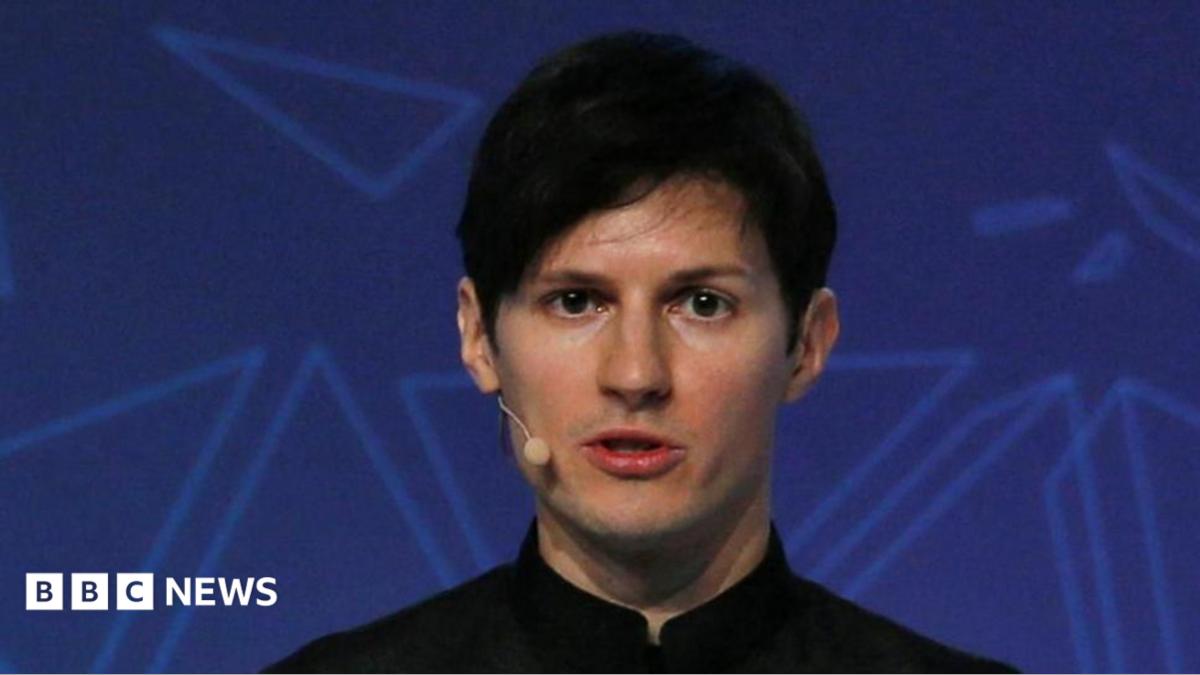 bbc.co.ukRussia charges Telegram founder Durov with facilitating terrorismRussia's FSB has charged Telegram founder Pavel Durov with facilitating terrorism, alleging the platform was used by Ukrainian intelligence for recruitment and coordinating attacks inside Russia. Durov, who lives abroad and holds French and UAE passports, faces an international arrest warrant; Teleg✦ Read ad free and get the full MichaelFilter · $5.50
Part of the MichaelFilter
Members read the whole piece — the writeup, the pull-lines, and the full transcript. Unlock access for $5.50.
Unlock the full reading · $5.50 →Russia's FSB has charged Telegram founder Pavel Durov with facilitating terrorism, alleging the platform was used by Ukrainian intelligence for recruitment and coordinating attacks inside Russia. Durov, who lives abroad and holds French and UAE passports, faces an international arrest warrant; Telegram responded by posting an image of Durov giving the middle finger.
Teaching:
• When platforms become battlegrounds: how neutral spaces (like the mat) get weaponized by competing agendas, and the teacher's role in holding boundaries without controlling outcomes
• The difference between access and accountability—Telegram won't remove channels, just as practice won't remove difficult sensations; the work is learning to be with what arises
• Durov's middle finger as embodied refusal: when to resist external control vs. when to adapt, and how students learn discernment through repeated exposure to constraint
• Systems under pressure reveal their true architecture—use this as a lens for how students' practice patterns show up when life gets chaotic
Writing seeds:
• Essay: 'The Shala Is Not Neutral'—on how practice spaces become contested territory and what it means to hold space without enforcing ideology
• Post: Platforms, practice, and the illusion of control—what Telegram's refusal to moderate teaches us about the limits of top-down intervention in complex systems
• Essay: 'Embodied Refusal and the Middle Finger Mudra'—on when resistance is practice and when it's ego, using Durov's response as a case study
• Post: What happens when your system is used against you—how Ashtanga's rigid structure can be weaponized by students or teachers, and how to recognize it
Idea map:
• Platforms as practice systems: both require governance without totalizing control; Telegram's refusal to moderate mirrors the teacher's choice not to over-cue
• Systems literacy applied to geopolitics—understanding that Telegram's architecture (encryption, minimal moderation) creates emergent behaviors neither 'good' nor 'bad' but contextual
• Attention and weaponization: how tools designed for connection (Telegram, Ashtanga) get co-opted by power structures, and the practitioner's responsibility to notice
• Embodied sovereignty vs. institutional capture—Durov's exile and middle finger as a case study in maintaining agency when systems demand compliance
Source: https://www.bbc.co.uk/news/articles/cj4kexqkpzno?at_medium=RSS&at_campaign=rss
Teaching:
• When platforms become battlegrounds: how neutral spaces (like the mat) get weaponized by competing agendas, and the teacher's role in holding boundaries without controlling outcomes
• The difference between access and accountability—Telegram won't remove channels, just as practice won't remove difficult sensations; the work is learning to be with what arises
• Durov's middle finger as embodied refusal: when to resist external control vs. when to adapt, and how students learn discernment through repeated exposure to constraint
• Systems under pressure reveal their true architecture—use this as a lens for how students' practice patterns show up when life gets chaotic
Writing seeds:
• Essay: 'The Shala Is Not Neutral'—on how practice spaces become contested territory and what it means to hold space without enforcing ideology
• Post: Platforms, practice, and the illusion of control—what Telegram's refusal to moderate teaches us about the limits of top-down intervention in complex systems
• Essay: 'Embodied Refusal and the Middle Finger Mudra'—on when resistance is practice and when it's ego, using Durov's response as a case study
• Post: What happens when your system is used against you—how Ashtanga's rigid structure can be weaponized by students or teachers, and how to recognize it
Idea map:
• Platforms as practice systems: both require governance without totalizing control; Telegram's refusal to moderate mirrors the teacher's choice not to over-cue
• Systems literacy applied to geopolitics—understanding that Telegram's architecture (encryption, minimal moderation) creates emergent behaviors neither 'good' nor 'bad' but contextual
• Attention and weaponization: how tools designed for connection (Telegram, Ashtanga) get co-opted by power structures, and the practitioner's responsibility to notice
• Embodied sovereignty vs. institutional capture—Durov's exile and middle finger as a case study in maintaining agency when systems demand compliance
Source: https://www.bbc.co.uk/news/articles/cj4kexqkpzno?at_medium=RSS&at_campaign=rss
Notes from the field
No notes yet · members & customers welcome
- No notes yet. Be the first to leave one.
Join MichaelFilter
Michael Joel Hall’s daily reading — the field journal, critical-thinking cards, and synthesis — as a membership.
$5.50/month · cancel anytime
Join — $5.50/mo →Secure checkout on theyoga.club. A yearly option ($55) is available there too.