
Clearly Fake: Zurbarán’s Uncanny Realism
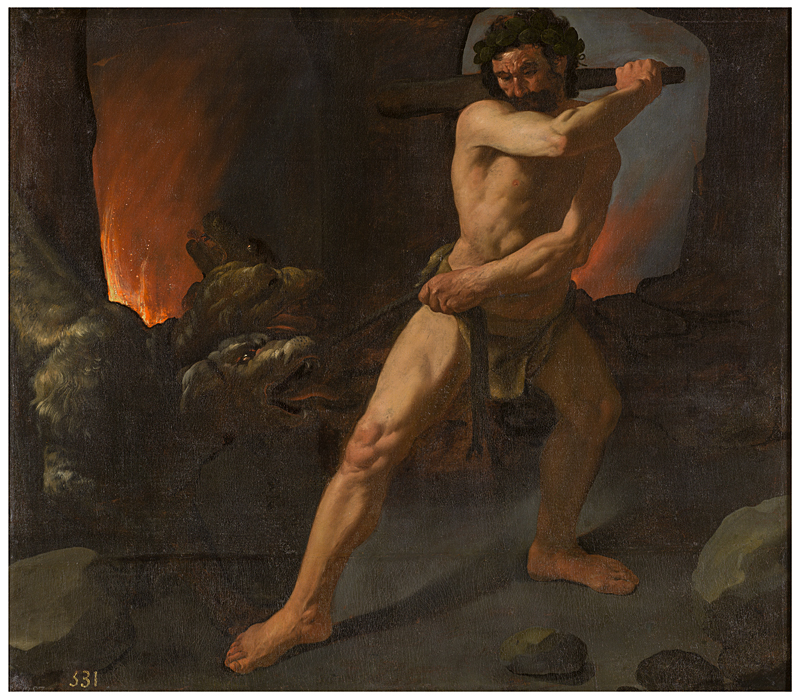 theparisreview.orgClearly Fake: Zurbarán’s Uncanny RealismAn essay on Francisco de Zurbarán's 17th-century religious paintings explores how hyper-realistic detail coexists with total implausibility, creating images meant to compel belief rather than merely depict. The author draws parallels between Counter-Reformation visual propaganda and today's AI-gener✦ Read ad free and get the full MichaelFilter · $5.50
Part of the MichaelFilter
Members read the whole piece — the writeup, the pull-lines, and the full transcript. Unlock access for $5.50.
Unlock the full reading · $5.50 →An essay on Francisco de Zurbarán's 17th-century religious paintings explores how hyper-realistic detail coexists with total implausibility, creating images meant to compel belief rather than merely depict. The author draws parallels between Counter-Reformation visual propaganda and today's AI-generated media, questioning whether audiences truly believe what they see or simply forget to doubt.
Teaching:
• Use the Zurbarán paradox in class: extreme precision in one area (breath, bandha) while ignoring context (the room, the clock) creates uncanny presence, not photographic accuracy.
• Cue students to notice when they're reaching out like 'Breathing Peter'—testing whether the sensation is real or hallucination—especially in backbends or inversions.
• Frame vinyasa as deliberate unrealism: we move through impossible sequences (jump-through, float-back) with such committed detail that the body stops asking if it's plausible.
• Teach that practice doesn't make the myth true; it makes you stop needing to verify—embodied belief vs. intellectual assent.
Writing seeds:
• Essay: 'Clearly Fake'—how Ashtanga's stylized, hyper-detailed movements function like Baroque art, demanding belief through precision rather than naturalism.
• Shala Daily post: The moment you stop checking if you can do the pose and just do it—Zurbarán's kneeling Peter reaching toward the vision, then letting go.
• Long-form: Systems literacy as Counter-Reformation pedagogy—both use repetition, detail, and controlled unreality to train perception and behavior.
• Short piece: Why we believe our practice 'works' when the claims (energy channels, bandhas as physical locks) are as implausible as floating saints—and why that's not a problem.
Idea map:
• Zurbarán's realism-plus-impossibility mirrors Ashtanga's precise form applied to physically extreme sequences—systems that compel participation through detail, not plausibility.
• The essay's question 'do people really believe or just forget to doubt' maps onto practice: we stop interrogating the method and inhabit it, a shift from skepticism to embodied literacy.
• Counter-Reformation art as early attention technology: training perception through controlled, repeatable images—exactly what daily practice does with the body.
• The 'clearly fake' deepfake and the 'clearly fake' saint vision both work when viewers stop asking if it's real—practice as a third option beyond belief and disbelief.
Source: https://www.theparisreview.org/blog/2026/07/08/clearly-fake-zurbarans-uncanny-realism/
Teaching:
• Use the Zurbarán paradox in class: extreme precision in one area (breath, bandha) while ignoring context (the room, the clock) creates uncanny presence, not photographic accuracy.
• Cue students to notice when they're reaching out like 'Breathing Peter'—testing whether the sensation is real or hallucination—especially in backbends or inversions.
• Frame vinyasa as deliberate unrealism: we move through impossible sequences (jump-through, float-back) with such committed detail that the body stops asking if it's plausible.
• Teach that practice doesn't make the myth true; it makes you stop needing to verify—embodied belief vs. intellectual assent.
Writing seeds:
• Essay: 'Clearly Fake'—how Ashtanga's stylized, hyper-detailed movements function like Baroque art, demanding belief through precision rather than naturalism.
• Shala Daily post: The moment you stop checking if you can do the pose and just do it—Zurbarán's kneeling Peter reaching toward the vision, then letting go.
• Long-form: Systems literacy as Counter-Reformation pedagogy—both use repetition, detail, and controlled unreality to train perception and behavior.
• Short piece: Why we believe our practice 'works' when the claims (energy channels, bandhas as physical locks) are as implausible as floating saints—and why that's not a problem.
Idea map:
• Zurbarán's realism-plus-impossibility mirrors Ashtanga's precise form applied to physically extreme sequences—systems that compel participation through detail, not plausibility.
• The essay's question 'do people really believe or just forget to doubt' maps onto practice: we stop interrogating the method and inhabit it, a shift from skepticism to embodied literacy.
• Counter-Reformation art as early attention technology: training perception through controlled, repeatable images—exactly what daily practice does with the body.
• The 'clearly fake' deepfake and the 'clearly fake' saint vision both work when viewers stop asking if it's real—practice as a third option beyond belief and disbelief.
Source: https://www.theparisreview.org/blog/2026/07/08/clearly-fake-zurbarans-uncanny-realism/
Notes from the field
No notes yet · members & customers welcome
- No notes yet. Be the first to leave one.
Join MichaelFilter
Michael Joel Hall’s daily reading — the field journal, critical-thinking cards, and synthesis — as a membership.
$5.50/month · cancel anytime
Join — $5.50/mo →Secure checkout on theyoga.club. A yearly option ($55) is available there too.