
A new ‘Health City’ planned for Oaxaca state is a step toward a Universal Health Service in Mexico
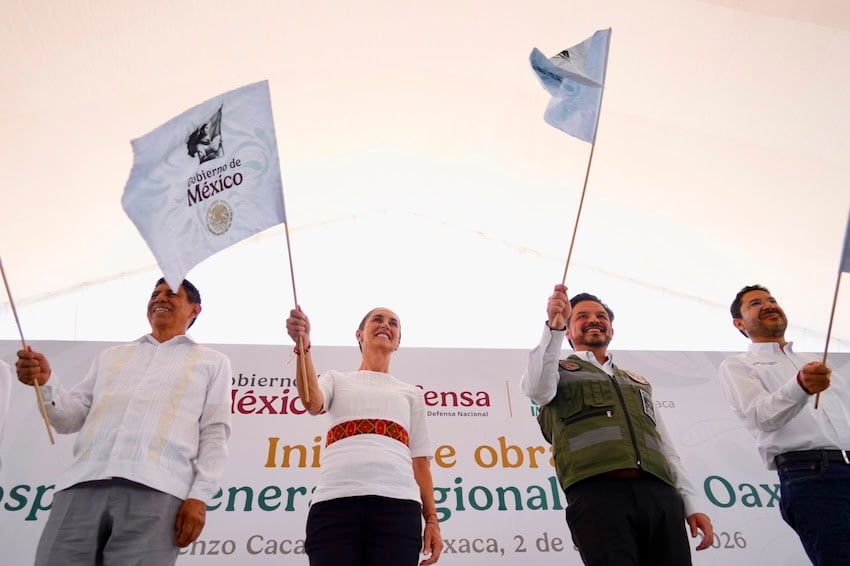 mexiconewsdaily.comA new ‘Health City’ planned for Oaxaca state is a step toward a Universal Health Service in MexicoMexico's President Sheinbaum inaugurated construction of a three-hospital complex called 'Health City' (Ñuu Tata) in Oaxaca, designed to serve nearly 1 million people as part of a new Universal Health Service system. The $580 million project includes IMSS, ISSSTE, and IMSS-Bienestar facilities with✦ Read ad free and get the full MichaelFilter · $5.50
Part of the MichaelFilter
Members read the whole piece — the writeup, the pull-lines, and the full transcript. Unlock access for $5.50.
Unlock the full reading · $5.50 →Mexico's President Sheinbaum inaugurated construction of a three-hospital complex called 'Health City' (Ñuu Tata) in Oaxaca, designed to serve nearly 1 million people as part of a new Universal Health Service system. The $580 million project includes IMSS, ISSSTE, and IMSS-Bienestar facilities with combined capacity of over 1,000 beds, representing a shift from healthcare as profit-driven enterprise to universal right.
Teaching:
• Use the Health City model as metaphor for integrated practice systems—different lineages/methods (IMSS, ISSSTE, Bienestar) serving one population, like how asana, pranayama, and meditation serve one practitioner
• Frame universal healthcare access as parallel to democratizing advanced practice—both require infrastructure investment and rejecting the idea that depth is only for elites
• Discuss 'record time' construction as example of political will creating rapid change; contrast with slow-build nature of practice transformation that can't be rushed
• Explore the '36 years of neoliberalism' framing as lens for how yoga became commodified/privatized in the West, and what reclaiming it as public good might mean
Writing seeds:
• Essay comparing healthcare infrastructure to practice infrastructure: what would a 'universal practice service' look like, and why is yoga still largely pay-to-play?
• Post on systems thinking in service delivery—how the three-hospital model mirrors the need for multiple access points (online, in-person, self-practice) in yoga teaching
• Piece exploring 'health as right vs. commodity' through lens of yoga access, teacher training costs, and who gets to claim 'advanced' practice
• Short reflection on naming (Ñuu Tata/Ciudad de la Salud/Health City) and how language shapes access to practice across cultures and communities
Idea map:
• Systems literacy: Health City as integrated service delivery system—multiple institutions, shared mission, coordinated infrastructure serving population health
• Practice as method: The 'record time' construction vs. embodied change timescales—some transformations require political will and resources, others require repetition over years
• Attention and access: Universal service model challenges who gets care/practice and on what terms—parallels to democratizing advanced yoga beyond studio/retreat model
• Embodiment and infrastructure: Physical facilities (hospitals/shalas) as containers for practice, and how material investment signals values about who deserves access
Source: https://mexiconewsdaily.com/news/new-health-city-oaxaca-state/
Teaching:
• Use the Health City model as metaphor for integrated practice systems—different lineages/methods (IMSS, ISSSTE, Bienestar) serving one population, like how asana, pranayama, and meditation serve one practitioner
• Frame universal healthcare access as parallel to democratizing advanced practice—both require infrastructure investment and rejecting the idea that depth is only for elites
• Discuss 'record time' construction as example of political will creating rapid change; contrast with slow-build nature of practice transformation that can't be rushed
• Explore the '36 years of neoliberalism' framing as lens for how yoga became commodified/privatized in the West, and what reclaiming it as public good might mean
Writing seeds:
• Essay comparing healthcare infrastructure to practice infrastructure: what would a 'universal practice service' look like, and why is yoga still largely pay-to-play?
• Post on systems thinking in service delivery—how the three-hospital model mirrors the need for multiple access points (online, in-person, self-practice) in yoga teaching
• Piece exploring 'health as right vs. commodity' through lens of yoga access, teacher training costs, and who gets to claim 'advanced' practice
• Short reflection on naming (Ñuu Tata/Ciudad de la Salud/Health City) and how language shapes access to practice across cultures and communities
Idea map:
• Systems literacy: Health City as integrated service delivery system—multiple institutions, shared mission, coordinated infrastructure serving population health
• Practice as method: The 'record time' construction vs. embodied change timescales—some transformations require political will and resources, others require repetition over years
• Attention and access: Universal service model challenges who gets care/practice and on what terms—parallels to democratizing advanced yoga beyond studio/retreat model
• Embodiment and infrastructure: Physical facilities (hospitals/shalas) as containers for practice, and how material investment signals values about who deserves access
Source: https://mexiconewsdaily.com/news/new-health-city-oaxaca-state/
Notes from the field
No notes yet · members & customers welcome
- No notes yet. Be the first to leave one.
Join MichaelFilter
Michael Joel Hall’s daily reading — the field journal, critical-thinking cards, and synthesis — as a membership.
$5.50/month · cancel anytime
Join — $5.50/mo →Secure checkout on theyoga.club. A yearly option ($55) is available there too.