
Tuesday
March 24, 2026
Spring · 2 entries

Yoga Filter #2: Systems, Suits, and Who Gets To Know
Yoga Filter: Algorithms, Translation, and Who Controls What We Know Michael Joel Hall reflects on who controls information and how algorithms sort, predict, price, and exclude, arguing they don’t remove bias but relocate it into opaque systems that resemble an old “digital caste” logic. He highlights Matthew Luko’s work translating government bureaucracy as a model for yoga teachers demystifying practice and notes his new “Tech Support Tuesday” answering Ashtanga questions. He connects this to real-world community as an antidote to tech-driven loneliness, describing how the yoga club mirrors “incidental intimacy” found in run clubs and other offline meetups. He then turns to memory research showing scientists can delete or alter mice memories, questioning what happens if suffering is removed, and contrasts deletion with yogic practice: working with samskaras, acceptance, and changing one’s relationship to pain rather than erasing it. 00:00 Weekly Theme Setup 00:15 Algorithms And Bias 00:25 Algorithms & The Digital Poorhouse 00:47 The Question Mark Suit Man 00:50 Translators And Yoga Teachers 01:04 Yoga as Translation 01:32 Tech Support Tuesday & Real Life Meetups 02:13 Deleting Memories 02:37 Joyce Carol Oates & Identity 03:08 Who Controls What We Know 03:12 The Thread: Who Decides? 03:19 Closing And Next Steps 03:21 Where Are You Going? 07:50 The Digital Poorhouse 09:34 All Eight 12:34 Forget About It
Read the essay →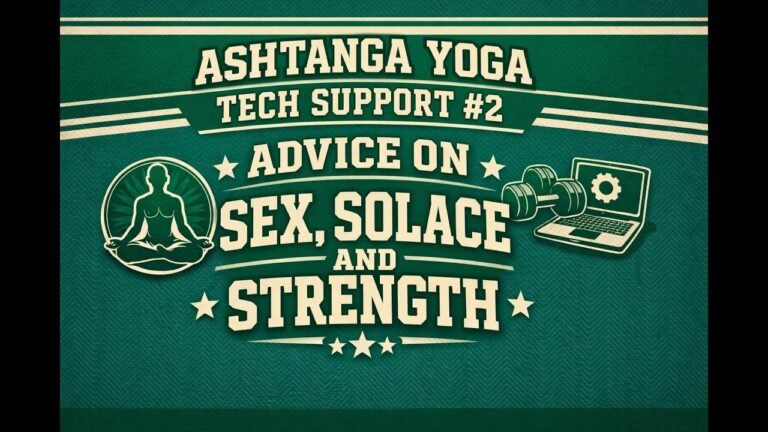
Ashtanga Yoga Tech Support #2: Solace, Sex, and Strength
Welcome back to Tech Support Tuesday. Each week, I pull questions from the yoga corners of Reddit and answer them on video. This week’s session covers three questions — grief on the mat, yoga’s quieter effects on intimacy, and whether this practice can actually change your body. visit ashtanga.tech to learn more! visit theyoga.club for more yoga! visit mjh.yoga for more from Michael Joel Hall! 🕊️ Navigating Grief in Yoga Practice One listener returned to yoga to find solace after their father passed away. During Shavasana, the tears flowed. That’s not a problem with your practice — that is your practice. Shavasana holds power in its stillness. When you’re moving through postures, your body and mind are occupied. Lying down removes those distractions and lays bare whatever you’re carrying. Crying on the mat is bearing witness. Your body has been waiting for you to stop, to allow for rest. Shavasana may have been the first time you gave it that chance. ☯️ Permission to Grieve and Move Forward If Shavasana feels too overwhelming, it’s okay to skip it occasionally. The first rule is do no harm. The yoga mat is one of the few places where you don’t need to explain yourself — nor should you judge yourself. Communicate with your teacher if necessary. Your journey on the mat is deeply personal, and sometimes laying still and letting emotions flow is the whole point. Going back to practice after a week? That says something about you. A lot of people wouldn’t. Don’t rush. You’ve got time. 🌟 Transforming Physical and Emotional Landscapes Another question explores yoga’s impact on intimacy. The physical stuff is obvious — stamina improves, you’re stronger, more flexible in every sense. Ujjayi breathing coordinates your nervous system. You learn to down-regulate on demand, and that means you’re actually present with your partner instead of stuck in your head. But the bigger shift is subtler. Ashtanga trains you to stay present with intense sensation without reacting to it. To breathe through discomfort. To notice what’s happening in your body without narrating it. These are transferable skills. When you stop bracing against your own body, everything changes — including intimacy. ⚖️ Beyond Aesthetic Goals Can yoga tone your body? Sure. Ashtanga will absolutely change your body composition — you’re holding your own weight in ways that build lean, functional muscle. Sun salutations are progressions of a push-up. Your arms, core, and legs will all get worked. But here’s the thing. Once you start practicing, you’ll probably notice something shift. You stop caring as much about what your body looks like and start caring about what it can do. Santosha — contentment — changes how you show up in every physical relationship. Self-love looks good on everyone. ✨ The Side Effects Are the Point Start with what hurts — anxiety, back pain, whatever brought you here. The toning, the calm, the adamantine body the Yoga Sutra talks about? Those are side effects. Remarkable ones. But side effects nonetheless. That’s Tech Support Tuesday #2. Three questions. Grief, connection, and what your body is actually for. Bring yours next week. 00:00 The Question 00:21 Why Shavasana Is Hard 00:49 Your Practice Is Working 01:10 The Grief Will Change 01:51 Permission to Grieve 02:41 Moving Forward 03:16 The Question 03:37 Physical Benefits 04:00 Presence & Breathwork 04:45 Body Acceptance 05:10 Connection & Self-Love 05:38 The Question 05:58 Posture & Spine Health 06:41 Anxiety & Flow State 07:28 Pain Relief 07:42 Body Composition & Strength 08:19 Beyond Aesthetics 09:08 The Takeaway
Read the essay →Get MichaelFilter
Enter your email. We'll send a one-tap link to read today's edition free, in your browser — the link works for 24 hours. Membership unlocks every issue, PDFs, and transcripts.
Already a member of theyoga.club or ashtanga.tech? You're already on file — no re-registration. We won't add you to any list.