
Justice Department subpoenas New York Times reporters over Air Force One reporting
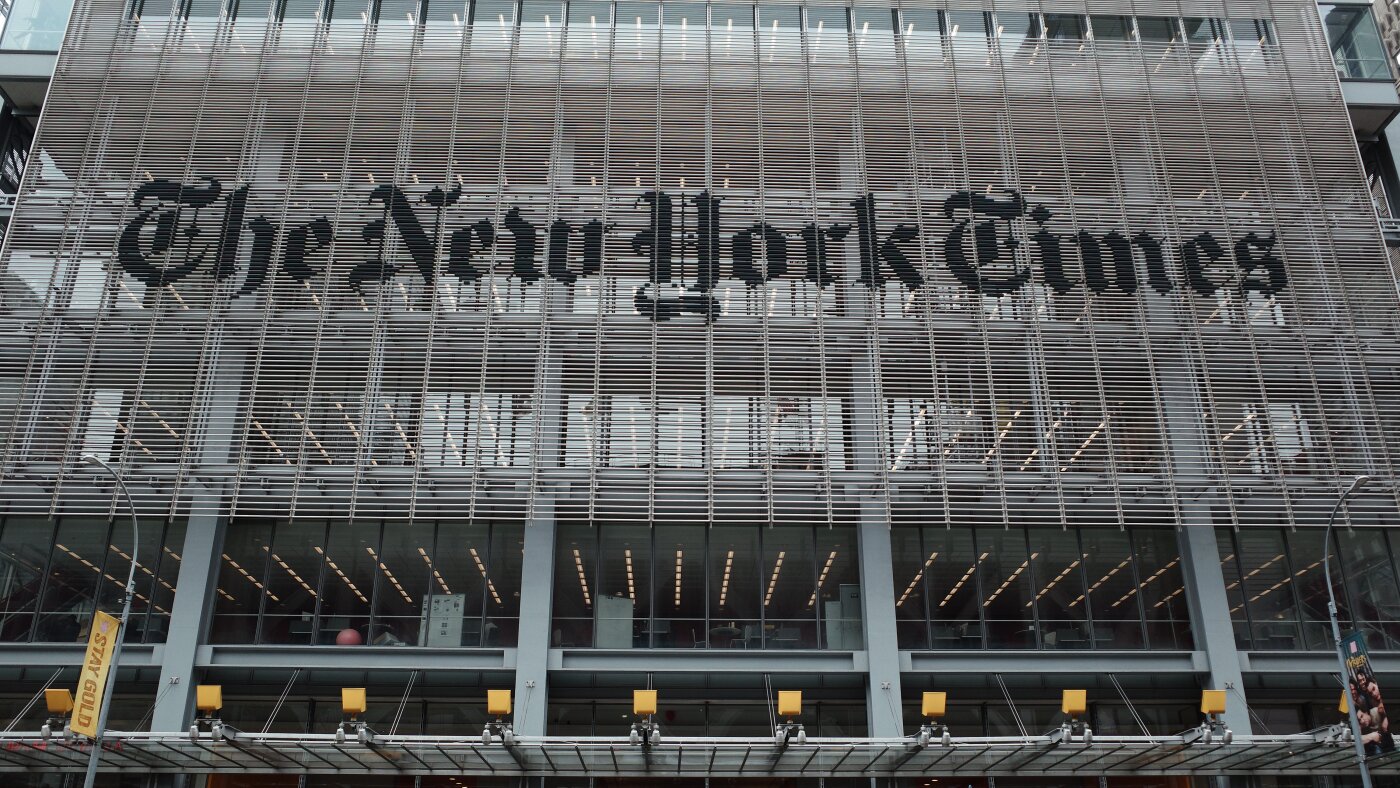 npr.orgJustice Department subpoenas New York Times reporters over Air Force One reportingThe Justice Department subpoenaed four New York Times reporters over their anonymously sourced reporting on Air Force One security concerns, demanding they testify before a grand jury. Federal agents delivered subpoenas to journalists' homes after the FBI had previously asked the Times to withhold t✦ Read ad free and get the full MichaelFilter · $5.50
Part of the MichaelFilter
Members read the whole piece — the writeup, the pull-lines, and the full transcript. Unlock access for $5.50.
Unlock the full reading · $5.50 →The Justice Department subpoenaed four New York Times reporters over their anonymously sourced reporting on Air Force One security concerns, demanding they testify before a grand jury. Federal agents delivered subpoenas to journalists' homes after the FBI had previously asked the Times to withhold the story and reveal sources, which the paper refused. This represents an escalation in the Trump administration's pattern of legal actions against major news outlets, including searches of reporters' property and multiple lawsuits.
Teaching:
• When students resist a cue or instruction, explore whether the resistance itself contains useful information rather than simply overriding it—the body's refusal to comply may be protective wisdom worth investigating
• Practice transparency about the limits of your knowledge as a teacher; acknowledging what you don't know or can't see builds more trust than claiming omniscience about a student's internal experience
• The relationship between teacher and student mirrors the tension between authority and autonomy—effective teaching creates conditions for self-discovery rather than demanding compliance with external demands
• When a student's practice deviates from the prescribed form, consider whether forcing conformity serves the system's integrity or merely your need for control
Writing seeds:
• Essay exploring how the Ashtanga system's fixed sequence creates a container for individual expression versus when adherence to form becomes authoritarian control that stifles embodied intelligence
• Post on the ethics of adjustment: when does hands-on teaching cross from supportive intervention into coercive intrusion, and how do power dynamics shape that boundary
• Piece examining anonymous sources in yoga teaching—how students reveal truths about their experience indirectly through their bodies that they won't or can't articulate verbally, and the teacher's responsibility to that information
• Essay on institutional pressure versus individual integrity in yoga practice: how the demand to perform the system perfectly can override the body's protective wisdom
Idea map:
• Systems literacy requires distinguishing between system integrity and system control—when does protecting the container become suppressing information that threatens those in power within the system
• Embodiment as a form of protected information: the body knows things it won't or can't verbalize, and coercing disclosure destroys the conditions for authentic revelation
• Attention practice reveals what wants to remain hidden: the practice of seeing clearly often threatens established structures that depend on certain things staying unseen
• The method's authority comes from its internal coherence and results, not from external enforcement—when a system requires coercion to maintain itself, it has lost its functional integrity
Source: https://www.npr.org/2026/07/11/g-s1-133160/justice-department-subpoenas-new-york-times-reporters-over-air-force-one-reporting
Teaching:
• When students resist a cue or instruction, explore whether the resistance itself contains useful information rather than simply overriding it—the body's refusal to comply may be protective wisdom worth investigating
• Practice transparency about the limits of your knowledge as a teacher; acknowledging what you don't know or can't see builds more trust than claiming omniscience about a student's internal experience
• The relationship between teacher and student mirrors the tension between authority and autonomy—effective teaching creates conditions for self-discovery rather than demanding compliance with external demands
• When a student's practice deviates from the prescribed form, consider whether forcing conformity serves the system's integrity or merely your need for control
Writing seeds:
• Essay exploring how the Ashtanga system's fixed sequence creates a container for individual expression versus when adherence to form becomes authoritarian control that stifles embodied intelligence
• Post on the ethics of adjustment: when does hands-on teaching cross from supportive intervention into coercive intrusion, and how do power dynamics shape that boundary
• Piece examining anonymous sources in yoga teaching—how students reveal truths about their experience indirectly through their bodies that they won't or can't articulate verbally, and the teacher's responsibility to that information
• Essay on institutional pressure versus individual integrity in yoga practice: how the demand to perform the system perfectly can override the body's protective wisdom
Idea map:
• Systems literacy requires distinguishing between system integrity and system control—when does protecting the container become suppressing information that threatens those in power within the system
• Embodiment as a form of protected information: the body knows things it won't or can't verbalize, and coercing disclosure destroys the conditions for authentic revelation
• Attention practice reveals what wants to remain hidden: the practice of seeing clearly often threatens established structures that depend on certain things staying unseen
• The method's authority comes from its internal coherence and results, not from external enforcement—when a system requires coercion to maintain itself, it has lost its functional integrity
Source: https://www.npr.org/2026/07/11/g-s1-133160/justice-department-subpoenas-new-york-times-reporters-over-air-force-one-reporting
Notes from the field
No notes yet · members & customers welcome
- No notes yet. Be the first to leave one.
Join MichaelFilter
Michael Joel Hall’s daily reading — the field journal, critical-thinking cards, and synthesis — as a membership.
$5.50/month · cancel anytime
Join — $5.50/mo →Secure checkout on theyoga.club. A yearly option ($55) is available there too.