Keeping the butt down when side bending is tough…. but so worth it! A commo…
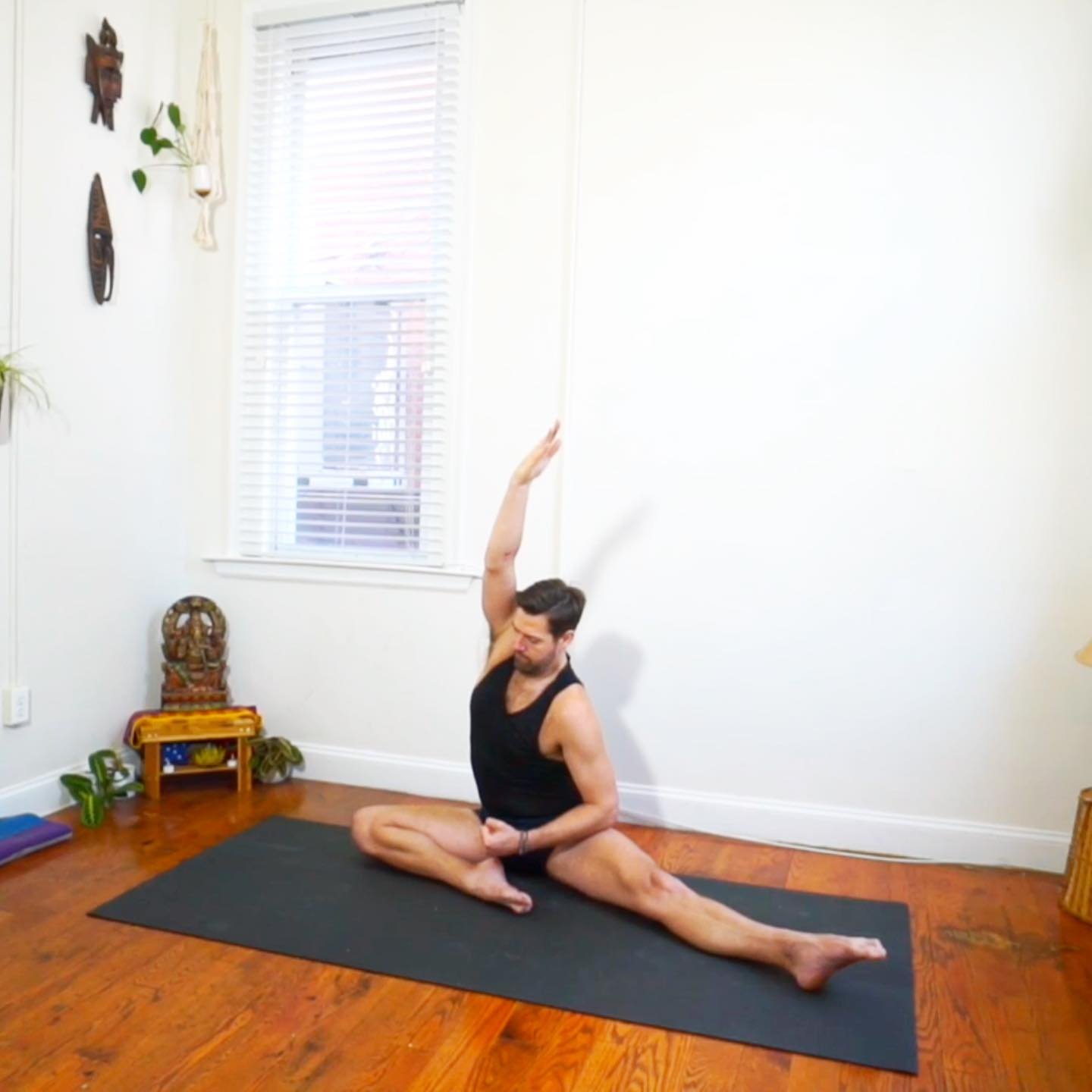
Keeping the butt down when side bending is tough.... but so worth it!
A common compensation for lateral flexion of the spine is asymetric hip elevation— and its easily masked/ignored with asymmetric leg positions. Those outter hip and thigh muscles on the pelvis are designed to move the leg away from the midline and help create an anchor so that you can work with gravity to side bend the spine. But what happens when one side starts to lift up?
The solution is in clue— find a way to keep your butt down! In this set up, I’m exploring end range of motion strength in hip external rotation and abduction— and using my bottom arm to avoid compensation (aka give my hip a chance to stay down!!).
When able to control the foundation (especially from the closer-to-center proximal part), in this case the strength of the hip, you get better at controlling the movement of the spine— and then can even add weight to it by reaching the other arm over head.
“Tight” adductors (the squeezer-inners) lead to weak abductors (the pusher-outters)— so start where you are — create a setup that helps you target what you wanna target... and enjoy the ride!
A common compensation for lateral flexion of the spine is asymetric hip elevation— and its easily masked/ignored with asymmetric leg positions. Those outter hip and thigh muscles on the pelvis are designed to move the leg away from the midline and help create an anchor so that you can work with gravity to side bend the spine. But what happens when one side starts to lift up?
The solution is in clue— find a way to keep your butt down! In this set up, I’m exploring end range of motion strength in hip external rotation and abduction— and using my bottom arm to avoid compensation (aka give my hip a chance to stay down!!).
When able to control the foundation (especially from the closer-to-center proximal part), in this case the strength of the hip, you get better at controlling the movement of the spine— and then can even add weight to it by reaching the other arm over head.
“Tight” adductors (the squeezer-inners) lead to weak abductors (the pusher-outters)— so start where you are — create a setup that helps you target what you wanna target... and enjoy the ride!
Notes from the field
No notes yet · members & customers welcome
- No notes yet. Be the first to leave one.
Join MichaelFilter
Michael Joel Hall’s daily reading — the field journal, critical-thinking cards, and synthesis — as a membership.
$5.50/month · cancel anytime
Join — $5.50/mo →Secure checkout on theyoga.club. A yearly option ($55) is available there too.