Postal People
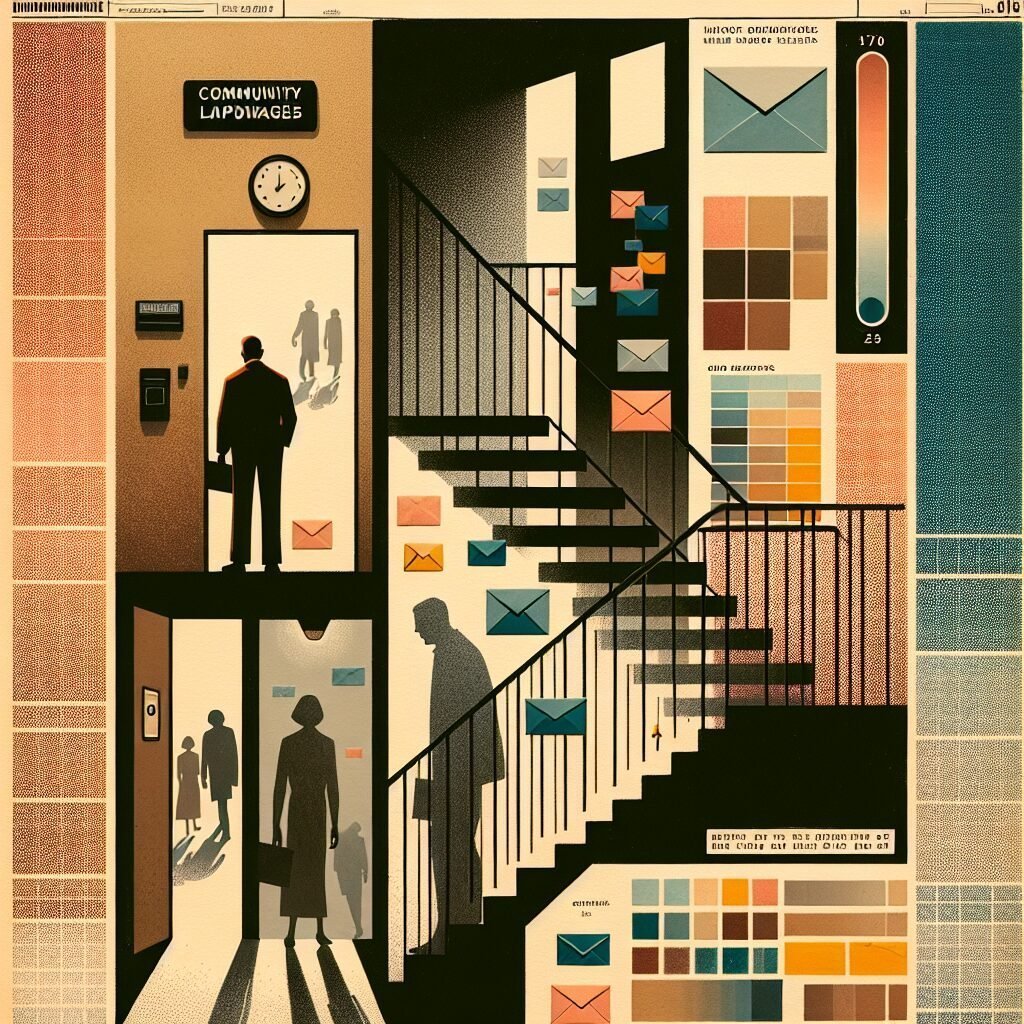
When I lived at 1418 the first time, the front door of the building had a mail slot. Not a mailbox. A slot. Mail dropped through and landed in the stairwell like loose change in a fountain. You’d push open the door and it would skid across the floor. Or sit halfway up the stairs, waiting for whoever happened to notice it first. It was a system built on vibes.
The thing about that mail slot is that I wasn’t the only one coming and going. There was David, late sixties, gentle, watchful. His mother Ethel, late eighties, still making her way down those steps. And Howard. Howard hung out in the stairwell like it was a lobby. He lived in an assisted living situation somewhere in Southeast, but came around — to look for house painting work, I suppose. He carried a brush. I never saw him paint anything. I never saw him covered in paint. But who am I to judge a man’s hustle? His daughter Hope was a housecleaner. I hired her a few times.
With all that foot traffic, you can imagine my mail delivery was less a guarantee and more a suggestion.
But here’s the thing: I didn’t care. Mail-shmael. If something important found me, great. If not, it probably wasn’t that important. When the apartment burned down and I briefly had a PO Box, I never checked it. That tells you everything you need to know about my relationship to official correspondence in my twenties.
Then I moved to Eckington. I lived in a building with actual mailboxes — inside, with little metal doors and tiny keys. Packages could arrive without a scavenger hunt. I didn’t have to send things to friends’ houses like a fugitive. WHAT. A. World. The luxury of ordinary infrastructure. A box with your name on it. Revolutionary.
When I eventually moved back to 1418, the place had grown up a little. It had mailboxes now. And we had Sean.
Sean was our mail carrier. She considered all of us her cherished customers. Not in a corporate, have-a-nice-day way. In a real way. She would chat. She would notice. When I opened the yoga club, she gave me a hard sell on print mailers like she was my marketing director. After her knee surgery, I offered advice from my side of the wellness-industrial complex. We compared notes. We checked in.
There is something quietly extraordinary about knowing the person who handles your paper trail. Your bills. Your birthday cards. The government envelopes with the aggressive fonts. The wedding invitations. The sympathy notes. Sean moved through all of it. A custodian of the in-between.
Growing up in Colonial Beach, our mailbox was about a third of a mile from the house. The carriers didn’t deliver on dirt roads. Every day was a small pilgrimage — walk or drive down, open the metal door, see what the world had to say. When I was 17 or 18, they finally paved our road. Amazing for Mom and Dad. Civilization. But I was already halfway out the door.
In my mid-twenties, my parents started taking care of my dog full time. Sebastian. Eighty pounds of ridgeback-lab optimism. I got him at 21. He knew all of his toys by name. You could say “get your duck” and he’d find the duck. Super cool.
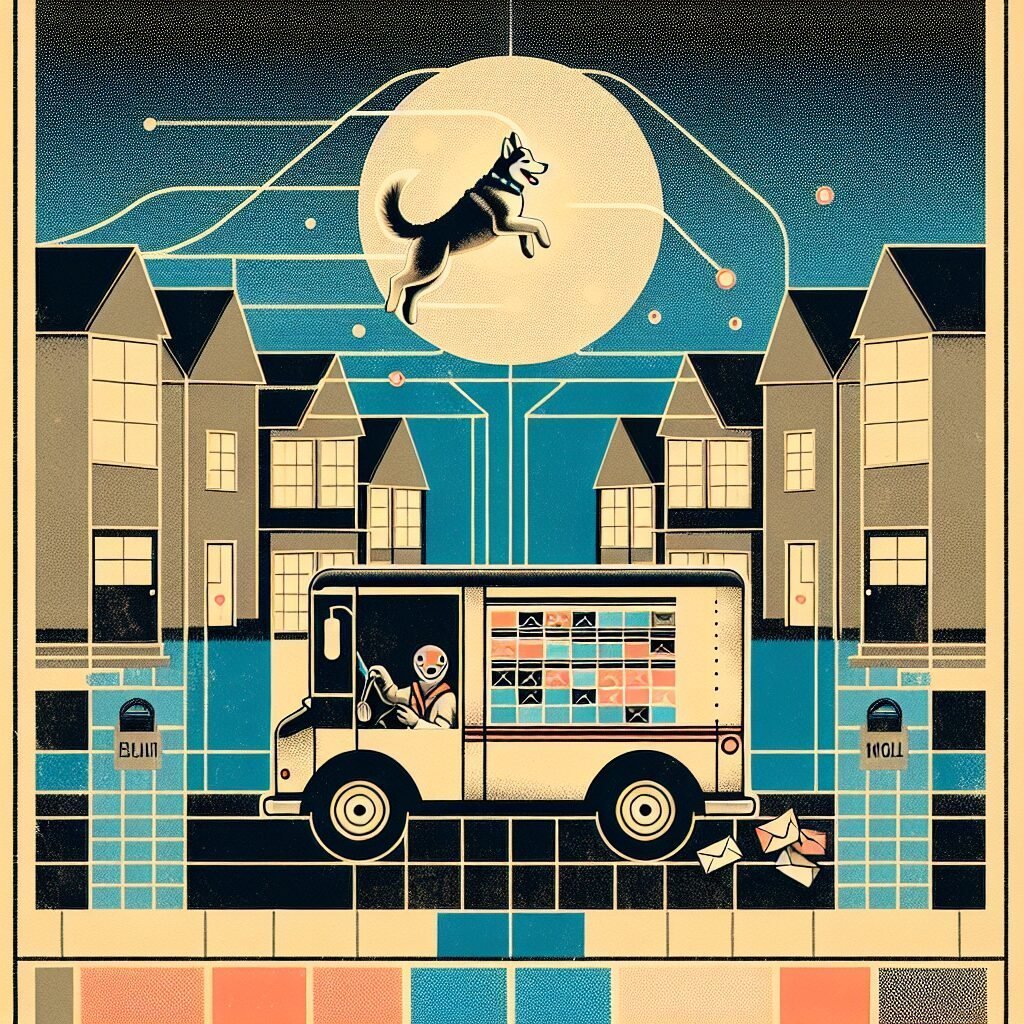
Sebastian had never seen one of those little mail trucks up close. The ones with the steering wheel on the right-hand side. What he did know was the word bye-bye. Bye-bye meant car. Adventure. Destiny.
One day, the mail truck stops at the box at the end of the newly paved road. Window down. Sebastian hears the engine. Sees his moment. And without so much as a committee meeting, he launches himself through the side window and lands directly on top of that day’s undelivered mail.
My dog. Just sitting there. On America’s correspondence.
The mail carrier did not expect an eighty-pound canine projectile. After the initial shock, and the very necessary assessment that she was, in fact, safe, she burst into hysterics. Laughter. Full-body laughter.
Sebastian knew how to make both friends and an entrance.
It could have gone very differently. Animal control. Lawsuits. Headlines. But it didn’t. Because my parents knew the woman who drove that truck. Thank God for that. It coulda been curtains for old Sea-Bass.
That’s the thing about the mail. It’s boring until it isn’t. It’s a miracle of logistics humming in the background of your life — planes and trucks and sorting machines and human beings who wake up early, walk miles, and carry the weight of your consumer habits and your emotional baggage in a canvas bag. And somehow it works. Most of the time, it just works.
I like living in community. I like knowing the people whose jobs brush up against my life. The barista. The mechanic. The woman who hands me my voter sticker. And yes, the mail carrier. Because when you know your mail carrier, the system has a face. It has a knee surgery. It has a sales pitch for your yoga studio. It has a sense of humor about an overenthusiastic dog.
I am pretty amazed the mail works at all, to be honest. The scale of it. The consistency. A birthday card dropped in a blue box somewhere finding a dirt road in Colonial Beach.
If I put up with half the malarkey and indignities these folks weathered, they’d call me postal too.