The Guilds of Practice
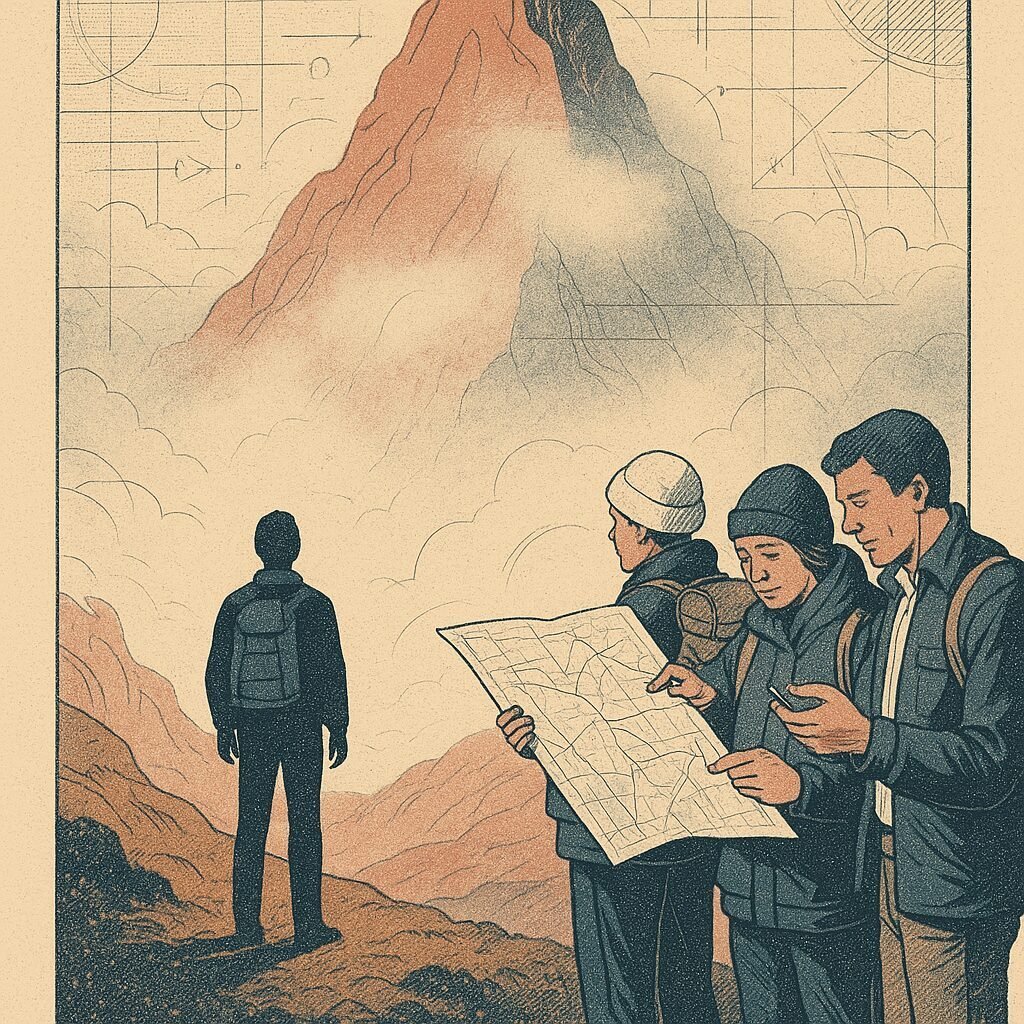
Long before studios and certification programs, disciplines like yoga, martial arts, and music moved through something closer to a guild system. Not corporations, not franchises. Communities organized around the transmission of skill.
The purpose wasn’t growth. It was continuity.
A guild-like structure worked a certain way. Knowledge passed through apprenticeship and long-term mentorship — not standardized products. Teachers were responsible for both technical instruction and the ethical development of their students. Communities stayed small enough for relationships to remain personal.
Money changed hands, but differently. Payments took the form of patronage or long-term support rather than per-transaction pricing. A teacher’s livelihood was tied to the stability of the community, not the volume of individual sales.
This structure evolved for an obvious reason: disciplines that require years of careful cultivation don’t adapt well to rapid commercialization.
A martial artist can’t be trained overnight. A musician can’t master an instrument in a weekend workshop. A yoga practitioner can’t compress decades of practice into a certification program. Skill in these traditions depends on repetition, time, and trust between teacher and student.
Markets optimized for speed and scale struggle with that.
Modern economic systems favor what can be produced quickly, replicated easily, distributed widely. Yoga resists that logic. Its benefits emerge gradually and often invisibly. The real work happens long after the novelty wears off.
Push a discipline into a highly commercial structure and predictable distortions follow. Teacher trainings get shorter and more frequent. Practices get packaged into marketable experiences. Advanced techniques get introduced prematurely because novelty sells.
The structure of the market quietly reshapes the structure of the practice.
Guild systems evolved partly to prevent exactly this. Tying teaching authority to long-term relationships and community recognition rather than market expansion created a kind of natural quality control. A teacher’s reputation depended not on branding but on the visible development of their students over time.
No historical system was perfect. But guild structures held one important insight: some forms of knowledge transmit better through stable communities than through open markets.
Yoga has largely walked away from this model. The global wellness industry treats it as a scalable commodity now. Studios expand, teacher trainings proliferate, digital platforms deliver instruction to millions simultaneously.
This has made yoga more visible and accessible in some ways. It has also introduced tensions that earlier communities rarely faced. Teachers navigate precarious incomes. Students face a confusing landscape of credentials and teaching styles. Studios struggle to balance community values with financial survival.
The question facing modern yoga communities is not whether to interact with markets. That interaction is unavoidable.
The real question is how much of the older guild logic to keep.
Some communities are already experimenting with hybrid structures — teacher collectives, cooperative studios, mentorship networks, membership-supported practice spaces. These models distribute responsibility across a community rather than concentrating it in a single commercial enterprise.
They may look modest next to the global wellness industry. But they may be more compatible with what the practice actually is.
Yoga was never designed to spread through aggressive expansion. Its transmission has always depended on patient relationships between teachers and students who return again and again to the same room, the same movements, the same breath.
The future of yoga may look less like a rapidly scaling industry and more like a network of small, resilient practice communities — each carrying the work forward in its own place, connected by shared discipline rather than centralized control.
Guilds were not designed to grow as large as possible.
They were designed to ensure the craft survived.
Michael Joel Hall is the director of The Yoga Club, a Mysore-style Ashtanga yoga program in Washington, DC, which he has led for 15 years. He writes daily at The Shala Daily. This essay is part of a series on the political economy of practice communities, alongside “The Digital Caste,” “The Architecture of Generosity,” and “The Future of Yoga Economies.”