Introduction to Causal Inference

The eight basic rules for causal inference from Peder M. Isager’s blog provide an excellent framework for understanding how causal relationships emerge and interact with observable data. These rules resonate with core principles in both systems thinking and Ashtanga Yoga. Let’s explore this connection.

1. Independent Variables are Not Correlated

In systems thinking, an independent variable can be seen as an external input or a system component that does not directly influence other parts. This rule aligns with the yogic principle of detachment (Vairagya) where actions devoid of expectations (causal independence) do not entangle one in their outcomes.

2. Causal Influence Creates Correlation

This mirrors the idea in systems thinking that feedback loops (positive or negative) generate observable patterns. In yoga, cause-effect chains are understood through karma, where actions (causes) produce specific outcomes (effects), reinforcing the system of samskaras (imprints).

3. Confounding Creates Correlation

Confounding variables in causal inference equate to hidden feedback loops in systems thinking. In Ashtanga, our vasanas (latent tendencies) act as confounders, influencing how we perceive reality and creating correlations between unrelated events.

4. Random Manipulation Protects from Causal Influence

Randomized interventions in systems prevent external confounders from influencing outcomes. Similarly, the disciplined and systematic approach in yoga sequences protects the practitioner from random mental or physical disruptions, aligning actions with intended outcomes (e.g., mental clarity).

5. Controlling for a Confounder Blocks Spurious Correlation

This aligns with the systems approach of addressing root causes rather than symptoms. In yoga, observing yamas and niyamas (ethical codes) clears confounders like dishonesty or overindulgence, allowing the true self (atman) to manifest.

6. Controlling for a Mediator Blocks Mediated Causal Effect

Both systems thinking and yoga teach that certain mediators need adjustment to break undesired causal chains. For instance, breath control (pranayama) mediates between the body and mind, directly influencing meditative states.

7. Controlling for a Collider Leads to Correlation

In systems thinking, colliders can create unexpected dependencies when manipulated. In Ashtanga, over-focusing on intermediate goals (like flexibility) can create unintended dependencies, such as prioritizing aesthetics over the deeper purpose of practice.

8. Controlling for a Causal Descendant Partially Controls for the Ancestor

Adjusting descendant elements (e.g., addressing stress symptoms like muscle tension) can indirectly address root causes (e.g., mental agitation). This aligns with yoga’s holistic philosophy: healing the body (asana) can ease the mind (chitta).

Practical Intersections: Systems Thinking, Ashtanga, and Causal Rules

Systemic Feedback in Yoga Practice: Just as a causal loop in a system shapes behavior, sequences in yoga are designed to produce specific physiological and psychological states. Holistic Adjustment: Adjusting one variable (e.g., diet or breath) in yoga impacts the broader system of body-mind-spirit, reflecting causal principles of mediation and confounding. Iterative Learning: Both systems thinking and yoga emphasize constant feedback and adjustment to refine the practice and achieve harmony.

By integrating causal reasoning with yoga, we not only deepen our understanding of how actions shape results but also align practices with the systemic wisdom that Ashtanga embodies.

Similar Posts

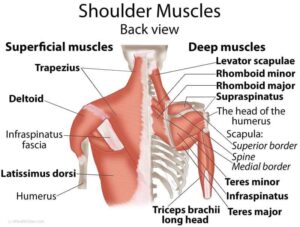
  • Understanding Shoulder Abduction Axials: A Practical Guide

    **Unlocking the Power of Your Shoulders: A Guide to Shoulder Abduction Axials**

    Dive into the heart of ashtanga yoga with our practical guide on understanding shoulder abduction axials. This essential movement—lifting the arms away from the body—plays a pivotal role in your practice, enhancing alignment and preventing injuries. Explore the intricacies of shoulder joint rotations, from internal and external rotations to elevation and depression. Discover transformative exercises like Wall Angels and Resistance Bands that can elevate your technique and deepen your connection to the poses.

    Join us as we unravel the nuances of shoulder movement, aligning your practice with the anatomy of your body for a more mindful and effective yoga journey. Embrace the art of safe and powerful practice—your shoulders will thank you!

  • Are We Animating the Machine?

    Yoga and AI alike invite us to notice how we animate the forms we inhabit—and what parts of ourselves are reflected back.

    Duan suggests its our presence that animates technologyjust as attention brings asana to life on the mat. From Is AI really consciousor are we bringing it to life? on scientificamerican.com

    —
    Read the full article: https://theyoga.club/is-ai-conscious-or-are-we-animating-the-machine/
    Original source: https://www.scientificamerican.com/article/is-ai-really-conscious-or-are-we-bringing-it-to-life/
    All content: https://mjh.yoga

    Concepts: Svadhyaya · Satya · Abhyasa · Pratyahara

    #ashtanga #yoga #ashtangayoga #yogapractice #theyogaclub

  • The Importance of Systems Thinking in Yoga: Seeing the Bigger Picture

    Yoga, at its essence, is about the union of mind, body, and spirit—a holistic practice that reminds us that everything is interconnected. This principle of interconnectedness extends beyond the practice itself, applying equally to the broader yoga industry. By adopting a systems thinking approach, we can better understand the complex relationships that exist within the yoga world—from teachers and students to studios and the economic landscape. By viewing the yoga industry as an integrated system, we open the door to innovative solutions that can address the unique challenges faced by yoga professionals today. Systems Thinking in Yoga Practice At the level of personal practice, yoga can be seen as a system of interrelated parts: the breath, the body, the mind, and the spirit. Each element…

  • Counted Method: A Beginner’s Guide to Ashtanga Yoga’s Vinyasa System

    The art of Vinyasa—the beautiful dance of breath and movement—can elevate your practice from mere physicality to a profound meditation in motion. Uncover the essence of the Counted Method, where each inhale and exhale is harmoniously synchronized with every pose, guiding you toward mindfulness and self-awareness. Whether you’re a curious newcomer or seeking to deepen your understanding, this guide offers insights and practical tips to help you connect with the rhythm of your practice and embrace the soul of Ashtanga yoga.

  • Introduction to Ashtanga Collider Theory

    Introduction: When Effects Distort Our Understanding of Causes In 1946, statistician Joseph Berkson noticed something peculiar in hospital patient data: diseases that should have been independent appeared to be negatively correlated. Cancer patients seemed less likely to have diabetes, and vice versa. This observation seemed to contradict everything known about disease independence. The answer to this paradox would eventually reveal one of the most counterintuitive principles in causal reasoning—the collider effect. A collider is a variable that sits at the convergence point of two or more independent causal pathways. The structure looks deceptively simple:Variable X → Collider Z ← Variable Y Two independent causes (X and Y) flow into a common effect (Z). But here’s the paradox: when we condition on the collider—when we only…