
Arepa Zone: “After 12 years in business, we’re facing the biggest challenge we’ve ever encountered.”
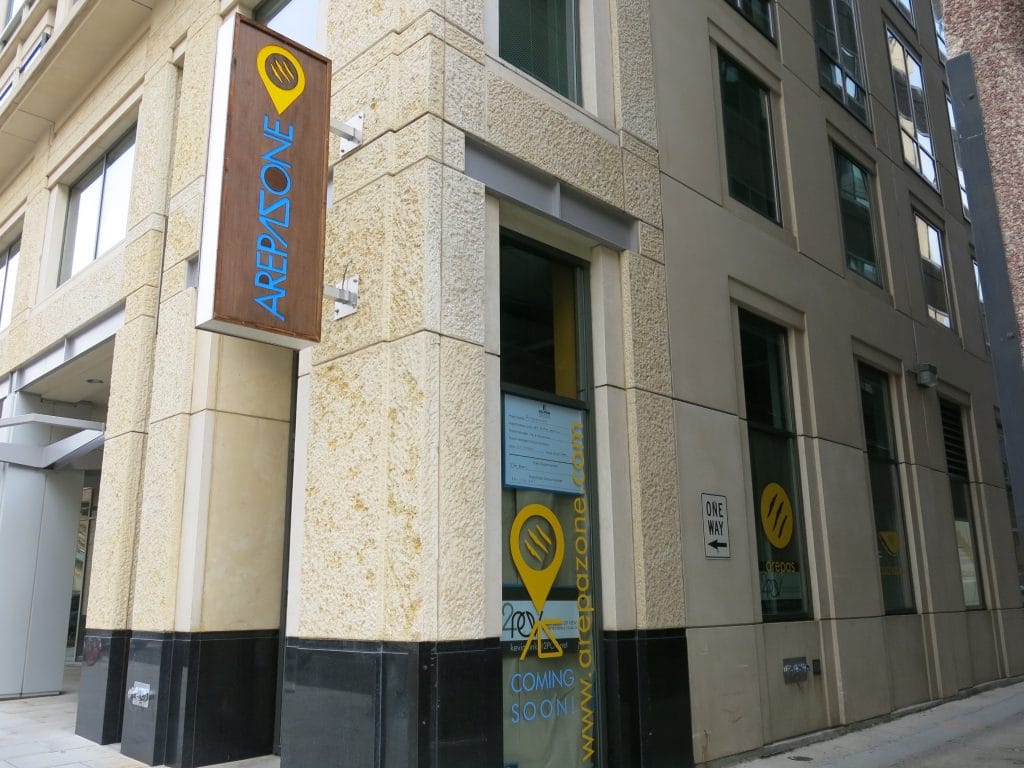 popville.comArepa Zone: “After 12 years in business, we’re facing the biggest challenge we’ve ever encountered.”Arepa Zone, a 12-year-old Venezuelan restaurant in DC, is facing severe financial strain after permitting delays and construction overruns at their new College Park location, compounded by slower sales across all locations. The owners are publicly asking their community to purchase gift cards or sto✦ Read ad free and get the full MichaelFilter · $5.50
Part of the MichaelFilter
Members read the whole piece — the writeup, the pull-lines, and the full transcript. Unlock access for $5.50.
Unlock the full reading · $5.50 →Arepa Zone, a 12-year-old Venezuelan restaurant in DC, is facing severe financial strain after permitting delays and construction overruns at their new College Park location, compounded by slower sales across all locations. The owners are publicly asking their community to purchase gift cards or store credit to provide immediate cash flow, marking a vulnerable departure from their usual behind-the-scenes problem-solving approach.
Teaching:
• Use this as a case study in sustainable practice economics: students often treat drop-ins as 'support' but monthly commitments (like gift cards here) create the stability that keeps a shala viable through rough patches
• Frame the vulnerability piece in terms of asking for help with practice—many students wait until crisis to reach out, but naming difficulty early (like these owners did) creates space for actual support rather than emergency rescue
• Connect to the 12-year timeline and community-building: consistent practice over a decade creates relationships (first dates to marriages, children growing up) that become the container when things get hard
• Teach the difference between transactional support and systemic support—buying one meal helps today, but committed monthly membership (their gift card model) addresses the structural issue
Writing seeds:
• Essay on practice economies and the gift card model: why monthly unlimited passes (prepaid commitment) create shala sustainability vs. drop-in culture that feels supportive but doesn't address cash flow realities
• Piece on vulnerability in teaching—when and how to name that enrollment is down, that you're struggling, that the shala needs support, without making it students' burden to carry
• Short post connecting 12 years of Arepa Zone to 12 years of daily practice: what accumulates, what becomes irreplaceable, what community actually means when tested by economic pressure
• Systems literacy angle: how permitting delays and construction overruns mirror the unseen structural forces that kill small businesses and shalas—it's rarely the teaching or the food, it's the systems you can't control
Idea map:
• Direct parallel to shala economics and MJH's own sustainability challenges—the gift card ask is exactly the monthly membership model that creates predictable cash flow vs. drop-in unpredictability
• Connects to his embodiment work: being vulnerable isn't easy for business owners (or teachers) used to solving problems behind the scenes—what does it mean to practice asking for help structurally, not just individually
• Systems literacy core: the restaurant didn't fail at food or community-building (12 years of relationships), it got crushed by permitting systems, construction costs, economic forces outside their control—same pattern in yoga business
• Attention and method: they're not asking for charity, they're offering a specific transactional method (gift cards with discount) that aligns customer benefit with business need—practice as designed exchange, not just goodwill
Source: https://www.popville.com/2026/08/arepa-zone-needs-your-support/
Teaching:
• Use this as a case study in sustainable practice economics: students often treat drop-ins as 'support' but monthly commitments (like gift cards here) create the stability that keeps a shala viable through rough patches
• Frame the vulnerability piece in terms of asking for help with practice—many students wait until crisis to reach out, but naming difficulty early (like these owners did) creates space for actual support rather than emergency rescue
• Connect to the 12-year timeline and community-building: consistent practice over a decade creates relationships (first dates to marriages, children growing up) that become the container when things get hard
• Teach the difference between transactional support and systemic support—buying one meal helps today, but committed monthly membership (their gift card model) addresses the structural issue
Writing seeds:
• Essay on practice economies and the gift card model: why monthly unlimited passes (prepaid commitment) create shala sustainability vs. drop-in culture that feels supportive but doesn't address cash flow realities
• Piece on vulnerability in teaching—when and how to name that enrollment is down, that you're struggling, that the shala needs support, without making it students' burden to carry
• Short post connecting 12 years of Arepa Zone to 12 years of daily practice: what accumulates, what becomes irreplaceable, what community actually means when tested by economic pressure
• Systems literacy angle: how permitting delays and construction overruns mirror the unseen structural forces that kill small businesses and shalas—it's rarely the teaching or the food, it's the systems you can't control
Idea map:
• Direct parallel to shala economics and MJH's own sustainability challenges—the gift card ask is exactly the monthly membership model that creates predictable cash flow vs. drop-in unpredictability
• Connects to his embodiment work: being vulnerable isn't easy for business owners (or teachers) used to solving problems behind the scenes—what does it mean to practice asking for help structurally, not just individually
• Systems literacy core: the restaurant didn't fail at food or community-building (12 years of relationships), it got crushed by permitting systems, construction costs, economic forces outside their control—same pattern in yoga business
• Attention and method: they're not asking for charity, they're offering a specific transactional method (gift cards with discount) that aligns customer benefit with business need—practice as designed exchange, not just goodwill
Source: https://www.popville.com/2026/08/arepa-zone-needs-your-support/
Notes from the field
No notes yet · members & customers welcome
- No notes yet. Be the first to leave one.
Join MichaelFilter
Michael Joel Hall’s daily reading — the field journal, critical-thinking cards, and synthesis — as a membership.
$5.50/month · cancel anytime
Join — $5.50/mo →Secure checkout on theyoga.club. A yearly option ($55) is available there too.