
National Gallery security staff segregated like ‘second-class citizens’, curator claims
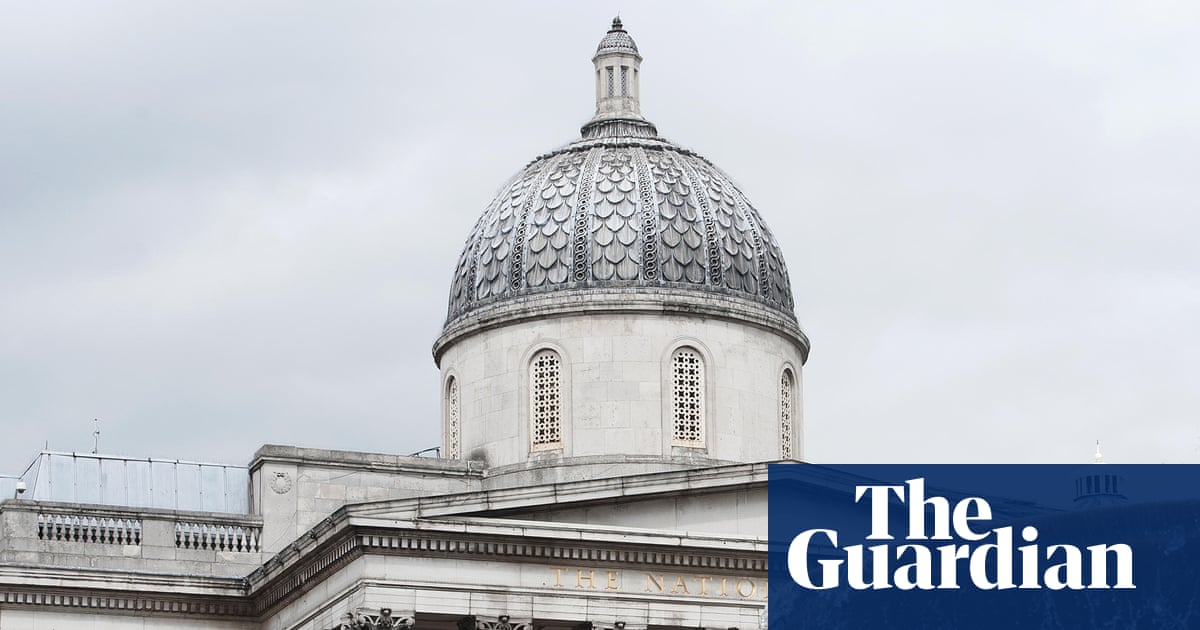 theguardian.comNational Gallery security staff segregated like ‘second-class citizens’, curator claimsThe National Gallery faces allegations that its outsourced security staff—predominantly from minority ethnic backgrounds—are segregated from the institution's mainly white employees. While permanent staff access a subsidized hub with natural light and quality facilities, security guards are confined✦ Read ad free and get the full MichaelFilter · $5.50
Part of the MichaelFilter
Members read the whole piece — the writeup, the pull-lines, and the full transcript. Unlock access for $5.50.
Unlock the full reading · $5.50 →The National Gallery faces allegations that its outsourced security staff—predominantly from minority ethnic backgrounds—are segregated from the institution's mainly white employees. While permanent staff access a subsidized hub with natural light and quality facilities, security guards are confined to a poorly ventilated basement space with broken furniture and rodent problems, raising questions about institutional discrimination and two-tier workplace systems.
Teaching:
• Use the two-tier facilities story as a prompt for students to examine how their own practice spaces reflect or challenge hierarchies—who feels welcome in the shala, who gets eye contact, whose questions get time
• Frame the security guards' invisibility as parallel to how students often ignore foundational elements (breath, bandhas, drishti) while chasing advanced poses—what we relegate to the basement of attention reveals our values
• Explore how outsourcing (security to CIS, teaching to drop-in subs) creates structural distance that lets institutions avoid accountability—students can ask what they outsource in their own practice (discipline to apps, presence to playlists)
• Connect the guards monitoring four rooms at once to the fragmented attention students bring to practice—trying to watch breath, alignment, the teacher, and the person next to them simultaneously compromises the integrity of all four
Writing seeds:
• Essay: 'What We Relegate to the Basement'—how the National Gallery story reveals what any system (museum, yoga studio, personal practice) actually values versus what it claims to value, using facility access as a diagnostic for institutional integrity
• Shala Daily post: 'The Two-Tier Shala'—short reflection on how yoga spaces create visible and invisible hierarchies (teacher platforms, premium mat spots, who gets adjustments) and what students can do to notice and disrupt them
• Longer piece connecting the security guards' situation to the Ashtanga authorization system—how outsourcing legitimacy to Mysore creates similar dynamics where some practitioners are 'in-house' (authorized, certified) and others are perpetually contractors
• Post exploring the 'four rooms at once' problem as a metaphor for modern practice—students trying to monitor Instagram, Insight Timer, their Garmin, and their breath simultaneously, and why systems literacy means designing for focused attention rather than fragmented surveillance
Idea map:
• The two-tier facility system is a perfect case study in systems literacy—the National Gallery's stated values (inclusion, care) are contradicted by its spatial and operational design, showing how systems reveal truth more reliably than mission statements
• The basement versus hub distinction maps directly onto MJH's embodiment work—where we literally place bodies in space (dark basement, bright hub) reflects and reinforces power structures, just as where we place attention in practice creates hierarchy among body parts and sensations
• The security guards' invisibility despite their essential role parallels how foundational practices (breath, bandhas) are treated in modern Ashtanga—acknowledged as important but given minimal resources, attention, or status compared to flashy asana
• The union's focus on 'absolute contempt' and the Equality Act connects to MJH's interest in practice as method—both require making implicit systems explicit, naming what's actually happening versus what's claimed, and using structure (legal frameworks, practice frameworks) to hold institutions accountable
Source: https://www.theguardian.com/artanddesign/2026/aug/02/national-gallery-security-staff-segregated
Teaching:
• Use the two-tier facilities story as a prompt for students to examine how their own practice spaces reflect or challenge hierarchies—who feels welcome in the shala, who gets eye contact, whose questions get time
• Frame the security guards' invisibility as parallel to how students often ignore foundational elements (breath, bandhas, drishti) while chasing advanced poses—what we relegate to the basement of attention reveals our values
• Explore how outsourcing (security to CIS, teaching to drop-in subs) creates structural distance that lets institutions avoid accountability—students can ask what they outsource in their own practice (discipline to apps, presence to playlists)
• Connect the guards monitoring four rooms at once to the fragmented attention students bring to practice—trying to watch breath, alignment, the teacher, and the person next to them simultaneously compromises the integrity of all four
Writing seeds:
• Essay: 'What We Relegate to the Basement'—how the National Gallery story reveals what any system (museum, yoga studio, personal practice) actually values versus what it claims to value, using facility access as a diagnostic for institutional integrity
• Shala Daily post: 'The Two-Tier Shala'—short reflection on how yoga spaces create visible and invisible hierarchies (teacher platforms, premium mat spots, who gets adjustments) and what students can do to notice and disrupt them
• Longer piece connecting the security guards' situation to the Ashtanga authorization system—how outsourcing legitimacy to Mysore creates similar dynamics where some practitioners are 'in-house' (authorized, certified) and others are perpetually contractors
• Post exploring the 'four rooms at once' problem as a metaphor for modern practice—students trying to monitor Instagram, Insight Timer, their Garmin, and their breath simultaneously, and why systems literacy means designing for focused attention rather than fragmented surveillance
Idea map:
• The two-tier facility system is a perfect case study in systems literacy—the National Gallery's stated values (inclusion, care) are contradicted by its spatial and operational design, showing how systems reveal truth more reliably than mission statements
• The basement versus hub distinction maps directly onto MJH's embodiment work—where we literally place bodies in space (dark basement, bright hub) reflects and reinforces power structures, just as where we place attention in practice creates hierarchy among body parts and sensations
• The security guards' invisibility despite their essential role parallels how foundational practices (breath, bandhas) are treated in modern Ashtanga—acknowledged as important but given minimal resources, attention, or status compared to flashy asana
• The union's focus on 'absolute contempt' and the Equality Act connects to MJH's interest in practice as method—both require making implicit systems explicit, naming what's actually happening versus what's claimed, and using structure (legal frameworks, practice frameworks) to hold institutions accountable
Source: https://www.theguardian.com/artanddesign/2026/aug/02/national-gallery-security-staff-segregated
Notes from the field
No notes yet · members & customers welcome
- No notes yet. Be the first to leave one.
Join MichaelFilter
Michael Joel Hall’s daily reading — the field journal, critical-thinking cards, and synthesis — as a membership.
$5.50/month · cancel anytime
Join — $5.50/mo →Secure checkout on theyoga.club. A yearly option ($55) is available there too.