Artist Uniform: The Anti-Fashion Art Duo Who Accidentally Became Style Icons
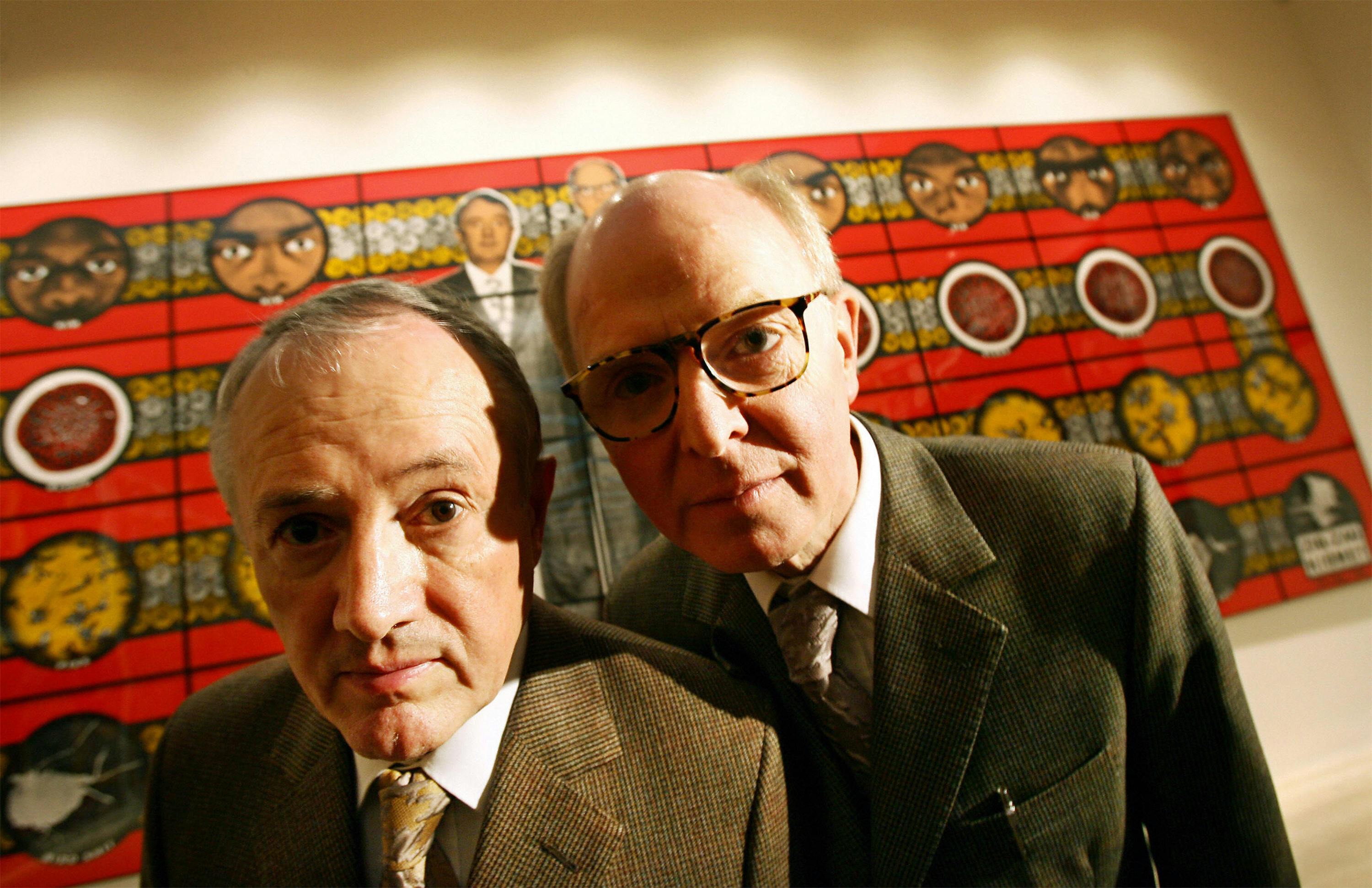 highsnobiety.comArtist Uniform: The Anti-Fashion Art Duo Who Accidentally Became Style IconsGilbert & George, a British artist duo, have worn identical tweed suits daily since the late 1960s as a 'living sculpture,' creating a stark contrast with their vibrant, kaleidoscopic artwork. Despite claiming no interest in fashion, their unchanging uniform has made them style icons, inspiring coll✦ Read ad free and get the full MichaelFilter · $5.50
Part of the MichaelFilter
Members read the whole piece — the writeup, the pull-lines, and the full transcript. Unlock access for $5.50.
Unlock the full reading · $5.50 →Gilbert & George, a British artist duo, have worn identical tweed suits daily since the late 1960s as a 'living sculpture,' creating a stark contrast with their vibrant, kaleidoscopic artwork. Despite claiming no interest in fashion, their unchanging uniform has made them style icons, inspiring collections from Moschino, Jonathan Anderson, and Supreme. Their suits, made by immigrant tailors in East London, represent working-class roots and demonstrate how consistency itself becomes a form of rebellion.
Teaching:
• Use the Gilbert & George model to discuss how daily practice uniform (same mat spot, same time, same sequence) creates container for transformation—the consistency is the art, not decoration
• Cue the contrast between external stillness and internal vibrancy: holding postures with traditional alignment while breath and attention create kaleidoscopic internal experience
• Introduce 'living sculpture' concept when students resist repetition—the practice makes you the artwork, not the poses themselves
• Apply to breath ratio work: like wearing same suit daily, maintaining consistent ujjayi creates space for subtle variations to become visible
Writing seeds:
• Essay: 'The Ashtanga Uniform'—how doing the same sequence daily (like wearing same suit) makes micro-changes visible and creates identity through repetition rather than novelty
• Shala Daily post: contrast between traditional practice container (like tweed suits) and the wild internal experience it enables—structure as liberation framework
• Short piece on 'working-class tailors' angle: how Ashtanga's accessibility (no props, minimal space) mirrors immigrant neighborhood shops vs Savile Row—practice as democratic art form
• Systems essay: Gilbert & George as example of constraint-based creativity—how limiting variables (one outfit, one sequence) paradoxically increases sensitivity to change and depth
Idea map:
• Directly connects to practice-as-method: the suit/sequence is not the point, it's the container that makes the living sculpture/practitioner visible over time
• Embodies systems literacy through constraint: reducing external variables (fashion/pose variation) increases signal-to-noise ratio for internal shifts
• Relates to attention economy: in world of infinite choice (fashion trends/yoga styles), radical consistency becomes the rebellious act that builds depth
• Links to 'functional Ashtanga' concept: immigrant tailors vs Savile Row parallels accessible daily practice vs luxury yoga—both create legitimate art through different systems
Source: https://www.highsnobiety.com/p/gilbert-george-supreme-jw-anderson/
Teaching:
• Use the Gilbert & George model to discuss how daily practice uniform (same mat spot, same time, same sequence) creates container for transformation—the consistency is the art, not decoration
• Cue the contrast between external stillness and internal vibrancy: holding postures with traditional alignment while breath and attention create kaleidoscopic internal experience
• Introduce 'living sculpture' concept when students resist repetition—the practice makes you the artwork, not the poses themselves
• Apply to breath ratio work: like wearing same suit daily, maintaining consistent ujjayi creates space for subtle variations to become visible
Writing seeds:
• Essay: 'The Ashtanga Uniform'—how doing the same sequence daily (like wearing same suit) makes micro-changes visible and creates identity through repetition rather than novelty
• Shala Daily post: contrast between traditional practice container (like tweed suits) and the wild internal experience it enables—structure as liberation framework
• Short piece on 'working-class tailors' angle: how Ashtanga's accessibility (no props, minimal space) mirrors immigrant neighborhood shops vs Savile Row—practice as democratic art form
• Systems essay: Gilbert & George as example of constraint-based creativity—how limiting variables (one outfit, one sequence) paradoxically increases sensitivity to change and depth
Idea map:
• Directly connects to practice-as-method: the suit/sequence is not the point, it's the container that makes the living sculpture/practitioner visible over time
• Embodies systems literacy through constraint: reducing external variables (fashion/pose variation) increases signal-to-noise ratio for internal shifts
• Relates to attention economy: in world of infinite choice (fashion trends/yoga styles), radical consistency becomes the rebellious act that builds depth
• Links to 'functional Ashtanga' concept: immigrant tailors vs Savile Row parallels accessible daily practice vs luxury yoga—both create legitimate art through different systems
Source: https://www.highsnobiety.com/p/gilbert-george-supreme-jw-anderson/
Notes from the field
No notes yet · members & customers welcome
- No notes yet. Be the first to leave one.
Join MichaelFilter
Michael Joel Hall’s daily reading — the field journal, critical-thinking cards, and synthesis — as a membership.
$5.50/month · cancel anytime
Join — $5.50/mo →Secure checkout on theyoga.club. A yearly option ($55) is available there too.