Why do AI company logos look like buttholes?
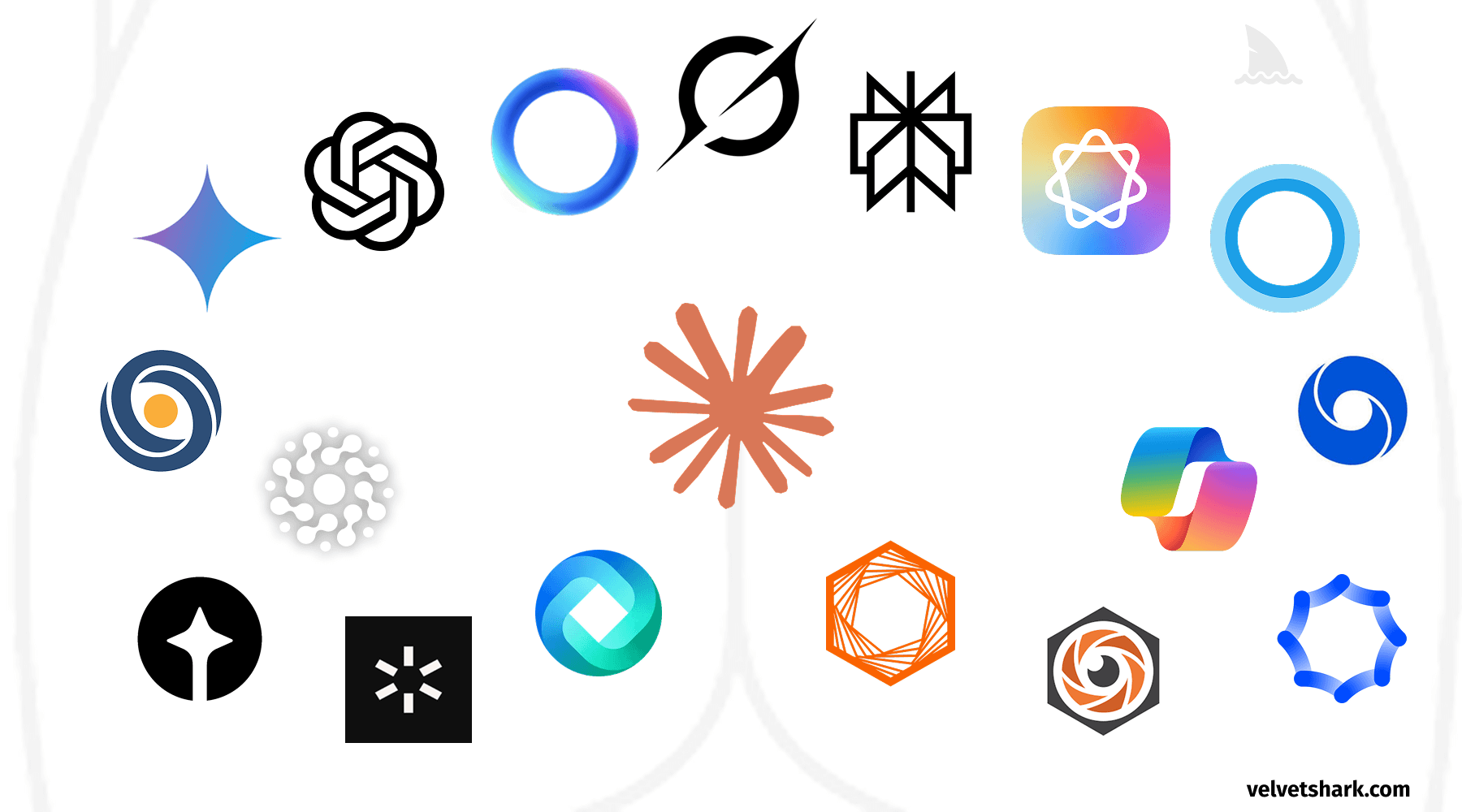 velvetshark.comWhy do AI company logos look like buttholes?A satirical analysis of AI company logo design trends, observing that many (OpenAI, Anthropic, Google, Meta) feature circular shapes with central voids and gradients that unintentionally resemble anatomical openings. The piece attributes this convergence to circular design psychology (wholeness, non✦ Read ad free and get the full MichaelFilter · $5.50
Part of the MichaelFilter
Members read the whole piece — the writeup, the pull-lines, and the full transcript. Unlock access for $5.50.
Unlock the full reading · $5.50 →A satirical analysis of AI company logo design trends, observing that many (OpenAI, Anthropic, Google, Meta) feature circular shapes with central voids and gradients that unintentionally resemble anatomical openings. The piece attributes this convergence to circular design psychology (wholeness, non-threatening), copycat effects, design-by-committee risk aversion, and the tech industry's paradoxical fear of standing out despite claims of innovation.
Teaching:
• Use the copycat effect as a metaphor for students who mimic external forms (alignment, breath count) without understanding internal function—practice becomes performance rather than inquiry
• The design-by-committee dynamic mirrors how students average everyone's cues into safe middle ground instead of finding their own anatomical truth in each asana
• Circular psychology (wholeness, completion) connects to the Ashtanga series as closed loops—but real practice isn't about safe, gradient smoothness; it's about finding edges and asymmetries
• Pareidolia (seeing patterns where none exist) is exactly what happens when students impose idealized shapes onto their bodies instead of reading what's actually present
Writing seeds:
• Essay: 'The Copycat Effect in Asana'—how Instagram yoga creates visual conformity that obscures functional diversity, with students chasing identical-looking poses despite wildly different skeletal structures
• Shala Daily post: 'Design by Committee vs. Embodied Authority'—why averaging everyone's alignment cues produces safe but meaningless instruction, and how to trust your own sensory data instead
• Longform: 'Pareidolia on the Mat'—exploring how we project idealized forms (the perfect Trikonasana, the Instagram backbend) onto our practice instead of seeing what's actually happening in our tissues
• Short essay: 'The Butthole Era of Yoga Branding'—analyzing how yoga studios, teacher trainings, and wellness brands all converge on the same safe, circular, gradient-heavy aesthetic that signals 'legitimate' but says nothing
Idea map:
• Systems literacy lens: the logo convergence is a legibility problem—companies optimize for looking like 'serious AI' to external observers rather than expressing actual differentiation, just as students optimize for looking like 'real yoga' rather than developing functional capacity
• Attention economy: the copycat effect reveals how design follows established visual language to capture attention through familiarity, paralleling how yoga content replicates viral forms rather than exploring embodied nuance
• Practice as method: the piece's historical design trends mirror how practice traditions evolve through imitation and saturation before the next wave—Ashtanga's own history shows similar conformity cycles around 'correct' form
• Embodiment vs. representation: the gap between OpenAI's flowery explanation and the actual logo is the gap between what we say practice is about (transformation, presence) and what it often looks like (performing recognizable shapes)
Source: https://velvetshark.com/ai-company-logos-that-look-like-buttholes
Teaching:
• Use the copycat effect as a metaphor for students who mimic external forms (alignment, breath count) without understanding internal function—practice becomes performance rather than inquiry
• The design-by-committee dynamic mirrors how students average everyone's cues into safe middle ground instead of finding their own anatomical truth in each asana
• Circular psychology (wholeness, completion) connects to the Ashtanga series as closed loops—but real practice isn't about safe, gradient smoothness; it's about finding edges and asymmetries
• Pareidolia (seeing patterns where none exist) is exactly what happens when students impose idealized shapes onto their bodies instead of reading what's actually present
Writing seeds:
• Essay: 'The Copycat Effect in Asana'—how Instagram yoga creates visual conformity that obscures functional diversity, with students chasing identical-looking poses despite wildly different skeletal structures
• Shala Daily post: 'Design by Committee vs. Embodied Authority'—why averaging everyone's alignment cues produces safe but meaningless instruction, and how to trust your own sensory data instead
• Longform: 'Pareidolia on the Mat'—exploring how we project idealized forms (the perfect Trikonasana, the Instagram backbend) onto our practice instead of seeing what's actually happening in our tissues
• Short essay: 'The Butthole Era of Yoga Branding'—analyzing how yoga studios, teacher trainings, and wellness brands all converge on the same safe, circular, gradient-heavy aesthetic that signals 'legitimate' but says nothing
Idea map:
• Systems literacy lens: the logo convergence is a legibility problem—companies optimize for looking like 'serious AI' to external observers rather than expressing actual differentiation, just as students optimize for looking like 'real yoga' rather than developing functional capacity
• Attention economy: the copycat effect reveals how design follows established visual language to capture attention through familiarity, paralleling how yoga content replicates viral forms rather than exploring embodied nuance
• Practice as method: the piece's historical design trends mirror how practice traditions evolve through imitation and saturation before the next wave—Ashtanga's own history shows similar conformity cycles around 'correct' form
• Embodiment vs. representation: the gap between OpenAI's flowery explanation and the actual logo is the gap between what we say practice is about (transformation, presence) and what it often looks like (performing recognizable shapes)
Source: https://velvetshark.com/ai-company-logos-that-look-like-buttholes
Notes from the field
No notes yet · members & customers welcome
- No notes yet. Be the first to leave one.
Join MichaelFilter
Michael Joel Hall’s daily reading — the field journal, critical-thinking cards, and synthesis — as a membership.
$5.50/month · cancel anytime
Join — $5.50/mo →Secure checkout on theyoga.club. A yearly option ($55) is available there too.