
If You Want Animals to Understand You, Speak Slowly
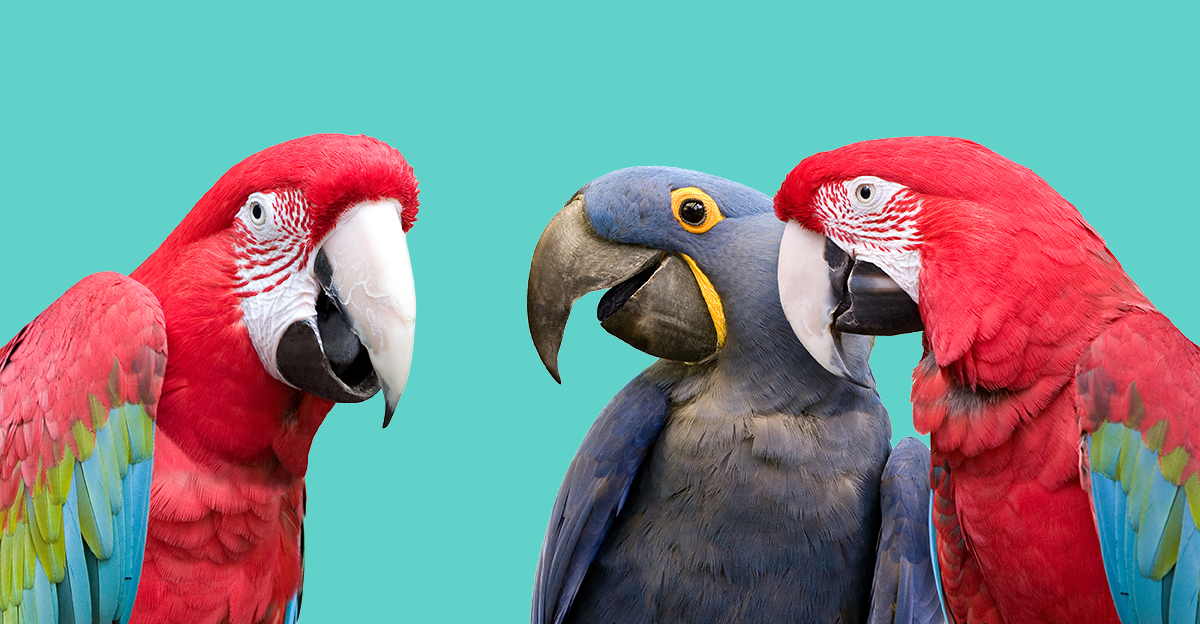 nautil.usIf You Want Animals to Understand You, Speak SlowlyResearch analyzing 2,000+ vocalizations across 98 species found animals communicate at roughly 2.7 Hz (three vocalizations per second), a rhythm likely evolved because brains process sound structure best at this speed. Humans speak faster due to complex language needs, but revert to this ancestral r✦ Read ad free and get the full MichaelFilter · $5.50
Part of the MichaelFilter
Members read the whole piece — the writeup, the pull-lines, and the full transcript. Unlock access for $5.50.
Unlock the full reading · $5.50 →Research analyzing 2,000+ vocalizations across 98 species found animals communicate at roughly 2.7 Hz (three vocalizations per second), a rhythm likely evolved because brains process sound structure best at this speed. Humans speak faster due to complex language needs, but revert to this ancestral rhythm when clarity matters—slowing down when there's noise or difficulty understanding.
Teaching:
• Cue breath rhythm at ~3 seconds per inhale/exhale in challenging poses to match the brain's optimal processing speed for integrating instruction
• When students struggle with a transition, slow your verbal cue rate to the ancestral 2.7 Hz rhythm so the nervous system can actually parse what you're saying
• Use the 'speak slower in noise' principle: in a packed room or when students are fatigued, drop cue density to one clear instruction every 3-4 seconds
• Frame pranayama as tuning to the body's ancestral communication frequency—breath as the rhythm the nervous system evolved to understand
Writing seeds:
• Essay: 'The Shala as Signal Environment'—how room noise, music volume, and cue density create or destroy the conditions for students to process instruction
• Post contrasting fast-paced vinyasa cueing with Ashtanga's slower count system as a return to optimal neurological processing speed
• Piece on why beginners need fewer, slower cues: their nervous systems are in 'high noise' conditions and require ancestral rhythm to parse new movement language
• Short on breath count as evolutionary communication technology—why five-count breath works better than arbitrary timing
Idea map:
• Connects to systems literacy: the nervous system is a signal-processing system with evolutionary constraints on input rate—practice design must respect those limits
• Reinforces attention economy thinking: faster cueing isn't better cueing; there's an optimal information transfer rate the body evolved to handle
• Supports embodiment framework: slowing down isn't just pedagogical niceness, it's matching instruction rate to the brain's actual processing architecture
• Links to practice-as-method: the count system in Ashtanga may accidentally preserve an ancestral rhythm that makes the practice more neurologically coherent
Source: https://nautil.us/if-you-want-animals-to-understand-you-speak-slowly-1282586/
Teaching:
• Cue breath rhythm at ~3 seconds per inhale/exhale in challenging poses to match the brain's optimal processing speed for integrating instruction
• When students struggle with a transition, slow your verbal cue rate to the ancestral 2.7 Hz rhythm so the nervous system can actually parse what you're saying
• Use the 'speak slower in noise' principle: in a packed room or when students are fatigued, drop cue density to one clear instruction every 3-4 seconds
• Frame pranayama as tuning to the body's ancestral communication frequency—breath as the rhythm the nervous system evolved to understand
Writing seeds:
• Essay: 'The Shala as Signal Environment'—how room noise, music volume, and cue density create or destroy the conditions for students to process instruction
• Post contrasting fast-paced vinyasa cueing with Ashtanga's slower count system as a return to optimal neurological processing speed
• Piece on why beginners need fewer, slower cues: their nervous systems are in 'high noise' conditions and require ancestral rhythm to parse new movement language
• Short on breath count as evolutionary communication technology—why five-count breath works better than arbitrary timing
Idea map:
• Connects to systems literacy: the nervous system is a signal-processing system with evolutionary constraints on input rate—practice design must respect those limits
• Reinforces attention economy thinking: faster cueing isn't better cueing; there's an optimal information transfer rate the body evolved to handle
• Supports embodiment framework: slowing down isn't just pedagogical niceness, it's matching instruction rate to the brain's actual processing architecture
• Links to practice-as-method: the count system in Ashtanga may accidentally preserve an ancestral rhythm that makes the practice more neurologically coherent
Source: https://nautil.us/if-you-want-animals-to-understand-you-speak-slowly-1282586/
Notes from the field
No notes yet · members & customers welcome
- No notes yet. Be the first to leave one.
Join MichaelFilter
Michael Joel Hall’s daily reading — the field journal, critical-thinking cards, and synthesis — as a membership.
$5.50/month · cancel anytime
Join — $5.50/mo →Secure checkout on theyoga.club. A yearly option ($55) is available there too.